Losing your Hyundai wheel lock key is more common than you’d think — and way more stressful when you’ve got a flat tire and can’t get the wheel off. This guide walks you through every option, from ordering a replacement key to emergency removal when you’re completely stuck. Stick around — there’s a fix here for every situation.
What Is a Hyundai Wheel Lock Key, Anyway?
Your Hyundai most likely came with wheel locks made by McGard, one of the biggest names in automotive wheel security. Instead of a standard hex lug nut, wheel locks have a unique, computer-generated pattern on their face. No ordinary socket fits them — you need the specific key tool that matches your lock’s pattern.
That’s the whole point. It stops casual thieves from jacking your rims in a parking lot. But it also means that if you lose the key, you’ve got a problem.
Here’s a quick breakdown of what you’re dealing with:
| Specification | Detail |
|---|---|
| Material | Through-hardened restricted chemistry steel |
| Thread Size | M12 x 1.5 (most models) or M12 x 1.25 |
| Proof Load | 135,000–160,000 PSI |
| Plating | Triple-nickel chrome |
| Seat Geometry | 60-degree cone seat |
The triple-nickel chrome plating isn’t just for looks. It keeps the lock pattern clean and corrosion-free so your key actually engages properly after years of road salt and harsh weather.
Find Your Key Code First — Before Anything Else
Before you order anything or call anyone, you need to find your wheel lock key code. This code is the most important piece of information for a Hyundai wheel lock key replacement.
Where to Look for Your ID Card
Every genuine Hyundai wheel lock set ships with an ID registration card that lists your unique pattern code. Check these spots:
- Glove box — most common location
- Center console
- Trunk area near the spare tire and tool kit
- Your email if you registered the set online
The code is usually 8, 9, 17, or 18 digits depending on the lock generation. If you find it, you’re already 90% of the way to solving your problem.
What If the Card Is Gone?
Don’t panic. A few things can still save you:
- Your VIN won’t directly pull the key code. Many people assume their dealer can just look it up — but wheel locks are often a dealer-installed accessory, not factory-recorded in the VIN database.
- Dealerships keep service records. Your dealer may have the part number on file from installation. Call and ask.
- Dealers carry master key sets. A Hyundai service tech can physically test different patterns to find your match. It takes time but it works.
Pro tip: If you still have your locks and key but haven’t registered yet — do it right now at McGard’s customer service portal. It takes five minutes and saves you a massive headache later.
How to Order a Hyundai Wheel Lock Key Replacement
Once you have your code, ordering is straightforward. You’ve got three main channels.
Order Directly from McGard
This is the cleanest option. McGard requires that replacement keys come directly from them — not third-party stores — to make sure you get a precision-matched tool.
Your options:
- Online: Visit cs.mcgard.com, enter your registration number, and pay by credit card
- Phone: Call McGard at 1-800-444-5847 — useful if you don’t have your code
- Mail: Send your original registration card to McGard’s HQ in Orchard Park, New York
Cost: A single replacement key runs $15–$40. McGard also offers a BOGO50 promo — buy a second key at 50% off. Get two. Seriously, just get two.
Turnaround: 7–10 business days.
Go to a Hyundai Dealership
If you need an immediate fix, head to your dealer. They won’t usually have your exact replacement key in stock, but they’ll carry complete OEM wheel lock sets and can swap everything out in one visit.
Expect to pay $60–$70 for the lock set, plus labor. Some dealerships have charged over $200 for the full service. It’s pricey, but you get proper torque specs and zero risk to your alloy wheels.
Check Online Marketplaces
Sites like eBay carry McGard replacement keys at $30–$60, with 2–5 day shipping. Just make sure you’re buying the exact code match — there are no universal fits here.
| Procurement Channel | Key Only | Full Set | Turnaround |
|---|---|---|---|
| McGard Direct | $15–$40 | $42–$60 | 7–10 business days |
| Hyundai Dealership | Not available | $60–$70 | Same day |
| Online Marketplaces | $30–$60 | $30–$55 | 2–5 business days |
| Professional Locksmith | $50–$100 (removal) | N/A | Immediate |
Emergency Removal: When You Have No Key and No Code
Sometimes you need that wheel off now. Maybe you’ve got a flat on the highway, or you bought the car used and it came with no key. Here’s how to handle it.
Use a Lug Nut Extractor Socket
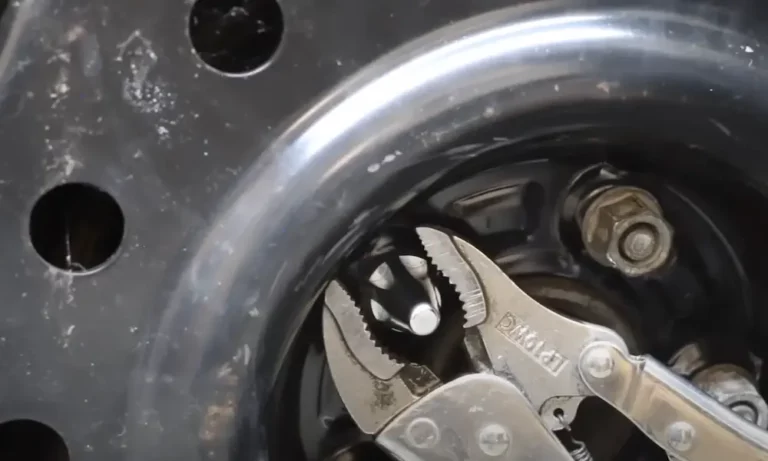
Tools like the Ken-Tool Universal Emergency Wheel Lock Remover or the CTA Emergency Lug Nut Remover work on a reverse-taper design. You attach them to an impact wrench, spin counter-clockwise, and the tapered threads dig into the lock as they turn.
These tools get the job done. But they destroy the lock in the process — plan to replace all four locks after.
The Socket-Pounding Method
This is the classic DIY fix. Grab a 12-point socket that’s slightly smaller than the wheel lock’s outer diameter — usually 19mm or 21mm. Hammer it onto the lock until it bites into the chrome plating. Then use a breaker bar to unscrew it.
As many Hyundai owners on Reddit have confirmed, this works — but it trashes the lock and can scratch your wheel if the socket slips. Use it when you’re out of options.
Call a Mobile Locksmith or Tire Shop
A mobile automotive locksmith can come to you. They carry professional-grade extractors and know how to remove seized locks without wrecking your wheel studs or rims.
Typical costs:
- Call-out fee: $75–$150
- Removal of one lock: $50–$100
- Full set of four locks removed: $120–$250
Most mobile locksmiths also carry standard lug nuts to replace your wheel locks on the spot, so you can drive away safely. Check AutoLocksmiths.com for pricing near you.
What You’ll Need to Prove Ownership
Whether you’re at a dealership or calling a locksmith, expect to show proof that you own the car. This isn’t bureaucratic nonsense — it’s how the system prevents wheel theft.
Bring:
- Government-issued photo ID (driver’s license or passport)
- Vehicle title or current registration
- VIN verification — the provider will check the dashboard or door jamb
If you just bought the car and haven’t received your title yet, bring a notarized bill of sale. Some states, like New York, have specific proof of ownership requirements worth checking before your visit.
Most service providers will also ask you to sign a liability waiver before any destructive removal. That’s standard — sign it and move on.
Keep Your Wheel Lock Key Safe Going Forward
Once you’ve sorted your Hyundai wheel lock key replacement, don’t let this happen again.
A few habits that actually help:
- Register your code immediately at McGard’s website — takes two minutes
- Order a second key now using the BOGO50 code for 50% off
- Store one key in the glove box and keep the backup somewhere at home
- Never use an impact gun on your wheel locks — it rounds off the pattern fast
- Hand-tighten first, then use a torque wrench to hit the 80–100 ft-lbs your Hyundai requires
- Apply a greaseless lubricant like LPS-1 to the lock pattern once a year to prevent seizing
That’s it. A little prep now means no sweating over a flat tire on the side of the road at 10 PM.
Are Wheel Locks Actually Worth It?
Fair question. Within the automotive community, there’s genuine debate about this. Critics point out that extraction tools are cheap and widely available, and determined thieves in high-crime areas often carry their own master key sets.
But here’s the realistic take: wheel locks stop opportunistic theft. A thief who wants a quick, quiet job will skip your car for one that’s easier. McGard doesn’t claim their locks are impenetrable — they’re a deterrent, not a vault. For most owners in most neighborhoods, that’s enough.
If you live somewhere with a high rate of rim theft, wheel locks paired with a visible alarm system is a solid combo. If you’re in a low-risk area and find the locks more hassle than help, switching back to standard lug nuts is a completely reasonable call.