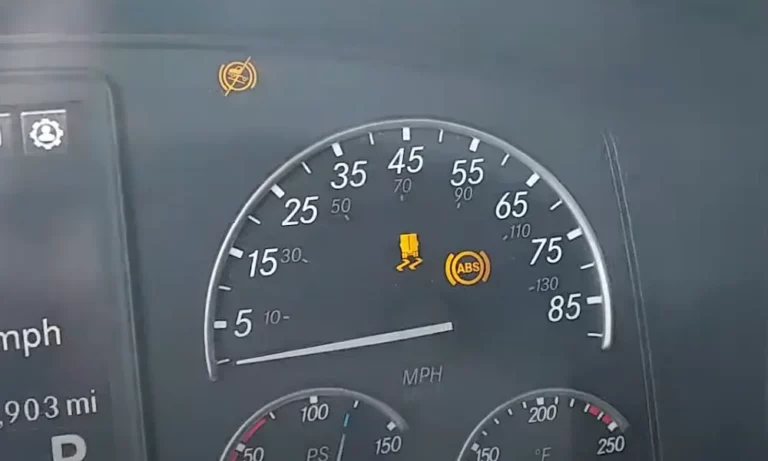
Ever noticed that pesky ABS light glowing on your Freightliner’s dashboard? It’s not just an annoying indicator—it’s a warning that your anti-lock braking system has detected a problem. While your regular brakes still work, you’re missing crucial safety features and risking DOT violations that could put you out of service and lead to costly fines. Let’s break down why this happens and how you can fix it without breaking the bank.
What Does the Freightliner ABS Light Really Mean?
When your Freightliner’s ABS light comes on and stays lit, your truck is telling you something important: the anti-lock braking system has found a fault and has shut itself down as a safety measure. Your standard brakes will still function, but you’ve lost the protection that prevents wheel lockup during emergency stops.
This isn’t just about safety—it’s about compliance too. DOT regulations require functioning ABS systems on trucks and tractors made after March 1998 and trailers manufactured after March 2001. An illuminated ABS light can result in violations, out-of-service citations, and CSA points against both you and your carrier.
Most Common Causes of Freightliner ABS Light Issues
Faulty Wheel Speed Sensors
Wheel speed sensors are the number one culprit behind ABS light problems on Freightliners. These sensors monitor how fast each wheel is rotating and report back to the ABS control module. When they fail, your ABS system can’t do its job.
Common wheel sensor issues include:
- Dirty tone rings: Mud, road grime, and brake dust build up on the tone ring, causing erratic readings
- Incorrect sensor gap: The sensor should be positioned correctly near the tone ring—too far away and it won’t generate enough voltage
- Wiring problems: Damaged wires or corroded connections in the sensor circuit
- Failed sensors: Normal sensors should have resistance between 700-3000 ohms—readings outside this range point to sensor failure
Studies show that roughly 70% of Freightliner ABS light problems are related to sensor issues, making this the first place you should check.
Wiring Harness Problems
Freightliners are notorious for ABS wiring issues. The thin wiring harnesses used in these systems are vulnerable to damage from:
- Chafing: Wires rubbing against metal parts can wear through insulation
- Corrosion: Water and road salt can corrode connections, especially at junction points
- Physical damage: Broken wires from impacts or maintenance work
- Heat exposure: Wiring near hot components can deteriorate over time
One technician study found that wiring problems account for about 15% of Freightliner ABS light issues, particularly in older models or trucks operating in harsh conditions.
Blown Fuses and Electrical Issues
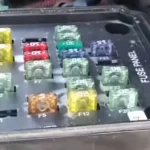
Sometimes the fix is as simple as replacing a blown fuse. Common ABS-related fuses that fail on Freightliners include:
| Fuse Number | Function | Amperage | Common in Models |
|---|---|---|---|
| F43 | Trailer ABS | 30-amp | Newer Freightliners |
| F25/F26 | ABS power feed | 30-amp | Most models |
| F16 | ABS battery supply | 15-amp | M2 models |
Before diving into complex diagnostics, always check these fuses first—it could save you hours of troubleshooting.
Mechanical Issues Affecting ABS Function
Mechanical problems can also trigger your ABS light:
- Loose wheel bearings: Excessive play creates inconsistent sensor readings
- Damaged tone rings: Dents or corrosion on the tone ring cause signal interruptions
- Brake component issues: Problems with drums, rotors, or related hardware can affect sensor operation
According to maintenance records, mechanical issues account for approximately 10% of ABS light triggers in commercial trucks.
ABS Module Failure
In some cases, the ABS control module itself fails. This is typically the most expensive repair and should only be suspected after ruling out more common issues. Module failures account for less than 5% of ABS light issues but can be costly to fix.
How to Diagnose Your Freightliner ABS Light Problem
Read the Fault Codes
Modern Freightliners make diagnosis easier by displaying ABS fault codes through the dashboard:
- Use your steering wheel controls to navigate to the diagnostics menu
- Look for ABS-related codes (such as SPN 790, 791, 793, 794)
- Note the sensor location indicated by the code:
- A = left front
- B = right front
- C = left rear drive
- D = right rear drive
These codes will point you directly to the problem area, saving significant diagnostic time. Professional technicians rely on these codes as their first diagnostic step.
Perform a Visual Inspection
Get your hands dirty with a thorough visual inspection:
- Check each wheel sensor for visible damage or contamination
- Look for proper sensor positioning—it should be snug against the tone ring
- Inspect wiring for chafing, breaks, or corrosion
- Examine connections for looseness or green corrosion
- Look at tone rings for damage or excessive buildup
This visual inspection can identify up to 40% of ABS issues without special tools.
Test the Electrical Components
If visual inspection doesn’t reveal the problem:
- Measure sensor resistance with a multimeter (should be 700-3000 ohms)
- Test voltage generation by spinning the wheel by hand (should produce 0.6-0.9V AC)
- Check for power supply to the ABS module
- Verify ground connections are clean and tight
Fixing Your Freightliner ABS Light Issues
DIY Fixes You Can Handle
- Clean sensors and tone rings: Remove accumulated dirt and debris using a clean rag and brake cleaner. Experienced drivers report this simple maintenance can fix up to 25% of sensor issues.
- Adjust sensor position: Push sensors in until they contact the tone ring, then pull back slightly (about 1/16″). The spring clip will maintain proper position.
- Replace blown fuses: Check the fuse box diagram (usually on the cover) to locate ABS fuses, then replace any that are blown.
- Secure loose connections: Clean corroded connections with electrical contact cleaner and ensure all plugs are fully seated.
| Common Repair | Average Cost (DIY) | Average Cost (Shop) | Difficulty Level |
|---|---|---|---|
| Clean sensors | $5 (cleaner) | $75-150 | Easy |
| Replace sensor | $30-80 per sensor | $150-250 per sensor | Moderate |
| Replace fuse | $5-10 | $75-100 | Very Easy |
| Repair wiring | $15-30 | $150-300 | Moderate to Difficult |
Component Replacement Tips
If you need to replace parts:
- ABS sensors: Always use the proper sensor for your specific model and position. Apply dielectric grease to the connector to prevent future corrosion.
- Wiring repairs: Use proper gauge wire and heat-shrink connectors for lasting repairs. Avoid electrical tape, which will fail quickly in a truck environment.
- Securing wiring: Use cable ties and protective loom to prevent future chafing issues.
According to maintenance statistics, properly replaced sensors with new spring clips last 3-5 times longer than sensors installed without new hardware.
Preventive Maintenance to Avoid ABS Light Problems
Keep your Freightliner’s ABS system healthy with these preventive measures:
- Regular inspections: Include ABS components in your pre-trip inspection routine
- Clean sensors periodically: During routine service, clean sensor areas to prevent buildup
- Protect wiring: When doing other repairs, be mindful of ABS wiring
- Check connections: Apply dielectric grease to electrical connections during maintenance
- Address warning signs early: If you notice intermittent ABS light flickering, investigate before it becomes a constant problem
Professional fleet managers have found that proactive maintenance reduces ABS-related downtime by up to 70%.
When Your ABS Light Persists Despite Repairs
If you’ve tried the basics and your Freightliner’s ABS light remains on:
- Check for multiple issues: Sometimes more than one problem exists
- Look for pattern failures: Research known issues for your specific Freightliner model
- Consider environmental factors: Extreme conditions can affect diagnostics
- Verify repairs: After fixing one issue, clear codes and test thoroughly
Industry data shows that about 15% of persistent ABS light issues involve multiple component failures, so don’t stop at fixing just one problem.
The Real Costs of Ignoring Your Freightliner ABS Light
Ignoring that ABS light isn’t just about avoiding a fix—it comes with real consequences:
- DOT violations: Fines ranging from $100-500 per occurrence
- Out-of-service orders: Costing $600-1000 in lost revenue per day
- CSA points: Affecting both driver and carrier scores
- Safety risks: Reduced braking performance in emergency situations
- Increased stopping distance: Up to 30% longer on slippery surfaces
- Insurance implications: Potential coverage issues after accidents
Federal safety data shows that trucks with non-functioning ABS systems are involved in 20-30% more loss-of-control accidents during emergency braking situations.
Special Considerations for Different Freightliner Models
Different Freightliner models have unique ABS quirks:
- Cascadia models: Often experience F43 fuse issues and sensor corrosion at the front wheels
- M2 models: Commonly have wiring harness chafing near the frame rails
- Older FL models: Typically suffer from module connection issues
- Columbia models: Frequently experience sensor spring clip failures
Knowing these model-specific tendencies can help you target your diagnosis for faster resolution.
Tools You’ll Need to Fix Freightliner ABS Light Issues
For effective ABS troubleshooting, you’ll need:
- Digital multimeter
- Wire brush or emery cloth
- Dielectric grease
- Proper size torx bits and sockets
- Wire strippers and crimpers
- Heat shrink tubing
- Brake cleaner
- Flashlight
- Service manual for your specific model
Investing in these basic tools can save you hundreds in service calls for simple ABS issues.
Your Freightliner’s ABS light is more than just an annoying dashboard glow—it’s telling you something important about your truck’s safety systems. With the right approach, you can diagnose and fix most issues yourself, saving money and avoiding those dreaded DOT violations. Take action now to keep your rig safe, compliant, and on the road where it belongs.