Looking for the fuse box in your Freightliner M2 but can’t seem to find it? You’re about to discover that your truck doesn’t just have one fuse box—it has several, strategically placed throughout the vehicle. This guide will walk you through every location, helping you quickly troubleshoot electrical issues without wasting hours searching in the wrong places.
Main Power Distribution Module (PDM) Location
The heart of your Freightliner M2’s electrical system is the main Power Distribution Module (PDM). You’ll find this primary fuse box under the hood on the left front fender, just forward of the bulkhead module. This location makes it relatively accessible during routine maintenance checks.
To access this main fuse box:
- Open the hood of your Freightliner M2
- Look at the left front fender area
- Locate the black box with wire clips securing the lid
- Pull down on these wire clips to open the cover
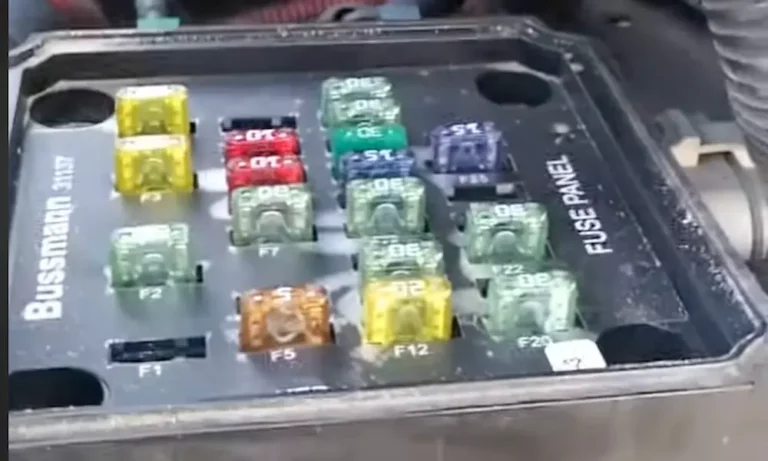
Inside, you’ll find 22 color-coded mini blade-type fuses ranging from 5 to 30 amps, plus four spare fuse positions. The lid contains a detailed sticker diagram showing exactly which fuse controls each circuit—extremely helpful when troubleshooting specific electrical problems.
What makes the Freightliner M2’s electrical system unique is its multiplexed design. Unlike older trucks that use traditional relays, the PDM itself performs relay functions, creating a more integrated and efficient system.
Battery Power Fuse Location
The highest-amperage fuses in your Freightliner M2 aren’t in the main PDM. Instead, they’re located near the batteries themselves. These aren’t your standard mini fuses—they’re heavy-duty megafuses that protect the main power distribution circuits.
Looking for these battery power fuses? Check:
- Near the battery box
- On dedicated megafuse mounts
- Connected to the main power cables
You’ll find three 125-amp fuses (typically labeled M1 and M2) and one high-capacity fuse of either 150 or 250 amps (labeled M3). These critical components protect the entire electrical system from catastrophic failures and are worth checking if you’re experiencing total electrical system shutdown.
Chassis and Trailer Fuse Box Locations
Many drivers and technicians miss these important fuse boxes when troubleshooting. The chassis and trailer fuse boxes are mounted on brackets, typically located on the left-hand frame rail aft of the cab or on a crossmember at the end of the frame rail.
These secondary fuse boxes control:
- Tail lights
- Brake lights
- Turn signals
- Trailer electrical connections
- Marker lamps
The chassis module fuse box contains both mini-blade fuses and various 12-volt relays. This location is particularly important to check when experiencing lighting issues. Many technicians report finding blown fuses here when dealing with non-functioning tail lights or brake lights.
Hidden and Additional Fuse Box Locations
Some Freightliner M2 configurations include what technicians often call “hidden” fuse boxes. These additional power distribution points are located behind the driver’s seat in certain models. This location isn’t documented as prominently in owner’s manuals, which is why many owners discover it only after exhausting other troubleshooting options.
Another less-known location includes fuse panels mounted in the spare tire storage box in the upper right-hand corner. This configuration-specific location varies depending on your truck’s specific build and optional equipment.
If you’re having persistent electrical issues after checking the main locations, these hidden fuse boxes are worth investigating. They often control auxiliary systems or added equipment.
Under-Frame Fuse Panel Locations
For comprehensive troubleshooting, don’t forget to check underneath your Freightliner M2. The undercarriage may contain additional fuse blocks mounted on crossmembers or frame rails. These panels typically control:
- Running lights
- Additional tail light circuits
- Brake light backups
- Turn signal functions
Accessing these requires either getting underneath the vehicle or removing access panels from the side of the truck. They’re easily overlooked but can be the source of many lighting-related electrical issues.
Fuse Types and Identification Guide
The Freightliner M2 uses several different types of fuses across its various fuse box locations. Here’s a quick reference guide:
| Fuse Box Location | Fuse Types | Amperage Range | Common Functions |
|---|---|---|---|
| Main PDM | Mini blade-type | 5-30 amps | Engine control, HVAC, ABS |
| Battery Area | Megafuses | 125-250 amps | Main power distribution |
| Chassis Module | Mini blade | 5-20 amps | Lighting, accessories |
| Under-frame | Mini and standard | 5-30 amps | External lighting |
| Hidden Locations | Various | 5-30 amps | Auxiliary systems |
Each fuse is color-coded based on its amperage rating, making identification easier:
- Tan: 5 amp
- Brown: 7.5 amp
- Red: 10 amp
- Blue: 15 amp
- Yellow: 20 amp
- Clear/White: 25 amp
- Green: 30 amp
Common Fuse Failures in Freightliner M2
Based on technician reports and service documentation, certain fuses in the Freightliner M2 tend to fail more frequently than others:
- Chassis module fuse (F13) – Often blows due to issues with the fuel water separator heater
- Bulkhead module fuses (F7, F15, F22) – Frequently involved in electrical problems affecting 12-volt outlet functionality and wiper fluid systems
- Lighting circuit fuses – Located in the chassis fuse box, these commonly fail due to moisture intrusion or wiring chafing
When replacing fuses, always use the correct amperage rating. Using a higher-rated fuse might seem like a quick fix, but it can cause serious damage to wiring and components.
Electrical System Maintenance Tips
Preventive maintenance can save you from roadside electrical failures. Here are some best practices for maintaining your Freightliner M2’s electrical system:
- Regular visual inspections – Check all fuse boxes for signs of moisture, corrosion, or heat damage
- Clean connections – Remove and clean battery terminals and ground connections every 6 months
- Verify proper fuse ratings – During maintenance, confirm all fuses match the specified amperage
- Test voltage drops – Use a multimeter to check for voltage drops across major circuits
- Document changes – Keep a log of any fuse replacements to identify recurring issues
Fleet managers should implement annual fuse box inspections as part of their preventive maintenance programs. This simple step can prevent many common electrical failures.
Freightliner M2 Model-Specific Variations
The exact number and location of fuse boxes varies significantly based on your specific M2 model. Here’s a quick reference:
| M2 Model | Main PDM Location | Secondary Fuse Box Locations |
|---|---|---|
| M2 106 | Left front fender | Frame rail, behind driver’s seat |
| M2 112 | Left front fender | Frame rail, behind driver’s seat, spare tire box |
| M2 with PTO options | Left front fender | Additional boxes near PTO components |
| Custom upfitted M2 | Left front fender | Various locations based on upfitter |
Body builders and fleet operators frequently add auxiliary fuse panels for specialized equipment, further expanding the electrical distribution system. If your truck has been modified from its original configuration, you might have additional fuse boxes in non-standard locations.
Using the Diagnostic Connector for Electrical Troubleshooting
The Freightliner M2 features a diagnostic connector that can help identify electrical issues. This connector is typically located under the dash on the driver’s side.
When connected to a diagnostic scanner, you can:
- Read trouble codes related to electrical systems
- Monitor voltage levels across different circuits
- Test the function of various electrical components
- Identify which module is reporting faults
This diagnostic approach can save hours of hunting for blown fuses, especially in cases where the issue isn’t a simple fuse failure but rather a control module or wiring problem.
Electrical System Architecture Overview
Understanding the overall architecture of your Freightliner M2’s electrical system helps with more effective troubleshooting. The system follows a hierarchical design:
- Battery power distribution – High-amperage circuits protected by megafuses
- Main PDM – Primary power distribution and control
- Secondary modules – Chassis, lighting, and auxiliary control
- End devices – Lights, motors, solenoids, etc.
Power flows from the batteries through the megafuses to the main PDM, which then distributes it to secondary modules before reaching end devices. When troubleshooting, follow this same path to logically isolate where the failure occurs.
Professional Freightliner M2 Electrical Resources
For complex electrical issues, several resources can provide additional help:
- Freightliner’s online technical documentation provides detailed electrical diagrams
- Service bulletins often address common electrical issues for specific model years
- Freightliner dealer technicians have access to proprietary diagnostic tools
- Third-party repair information systems like Mitchell or AllData offer comprehensive wiring diagrams
Many electrical issues in the Freightliner M2 have been documented and resolved through these channels, potentially saving you from repeating troubleshooting steps others have already perfected.
Upgrading and Modifying Your Freightliner M2’s Electrical System
If you’re adding aftermarket equipment to your Freightliner M2, understanding the fuse box locations and available circuits is crucial. Here are best practices:
- Identify spare fuse positions in the main PDM (typically F6, F23, F24, F25, F26)
- Use proper gauge wiring for any additions
- Consider adding a dedicated auxiliary fuse panel for multiple accessories
- Document all modifications for future reference
- Use relays to protect factory circuits when adding high-current devices
Following these guidelines prevents overloading factory circuits and maintains the integrity of your truck’s electrical system.
Diagnosing Intermittent Electrical Issues
Intermittent electrical problems are the most challenging to resolve. When dealing with these in your Freightliner M2:
- Check for loose connections at all fuse boxes
- Inspect wire harnesses for chafing where they pass through frame members
- Look for moisture intrusion points around door seals and windshield edges
- Test components under vibration conditions
- Monitor voltage levels during operation
Many intermittent issues in the Freightliner M2 trace back to ground connections or wire harness chafing. Pay special attention to areas where wiring passes near moving parts or sharp edges.
Documenting Your Freightliner M2’s Electrical System
Creating your own electrical system documentation can save significant time during future troubleshooting:
- Photograph each fuse box with the cover removed
- Record the location and function of each fuse
- Note any non-standard or aftermarket additions
- Keep a log of replaced fuses and when they were changed
- Store a set of spare fuses in an accessible location in the truck
This personalized documentation becomes invaluable, especially for fleets with multiple Freightliner M2 trucks or when different technicians might work on the same vehicle.
By understanding all the fuse box locations in your Freightliner M2, you’ll save valuable time during electrical troubleshooting and maintain better control over your truck’s complex electrical systems.