That dreaded yellow glow on your dashboard can make any trucker’s heart sink. When your Freightliner’s check engine light comes on, it doesn’t always mean disaster—but it definitely demands your attention. Let’s walk through what this warning means, what might be causing it, and what steps you should take to get back on the road safely.
Understanding the Different Warning Lights in Your Freightliner
First things first—not all warning lights are created equal. Your Freightliner has several warning indicators that look similar but mean very different things:
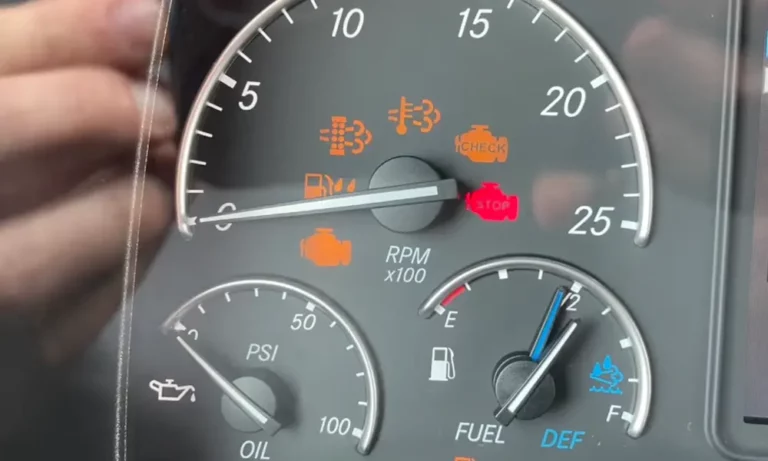
- Malfunction Indicator Lamp (MIL): This is a solid yellow light with no text inside. It’s related to emissions issues and usually lets you finish your shift before needing service.
- Check Engine Light: Look for the yellow light that actually says “engine” inside it. This warns you about engine conditions like low oil pressure, coolant issues, or high DPF soot levels.
- Stop Engine Light: This is the red alert you never want to see. When this lights up, you need to shut down your engine right away—usually within 30-60 seconds—to prevent serious damage.
Knowing which light you’re dealing with helps determine how urgently you need to respond. The NHTSA recommends familiarizing yourself with all dashboard indicators for safety reasons.
Common Causes of a Freightliner Check Engine Light
DEF System Problems
DEF (Diesel Exhaust Fluid) issues are among the most common culprits in modern Freightliners. These problems might include:
- Poor quality DEF from certain truck stops
- Under-pressurization in the DEF system
- Clogged DEF pump or injectors
- DEF crystallization in lines or components
Many drivers report recurring check engine lights after filling up with DEF at certain locations. The quality matters tremendously.
DPF System Issues
Your Diesel Particulate Filter (DPF) is designed to catch soot particles, but when it gets clogged, your check engine light often responds. Watch for:
- Loss of power when accelerating
- Higher fuel consumption
- Unusual burning smell from your exhaust
- Truck entering limp mode
When your DPF needs regeneration (the process of burning off accumulated soot), your truck will typically let you know through warning lights.
EGR System Malfunctions
EGR (Exhaust Gas Recirculation) problems frequently trigger check engine warnings along with:
- Rough idling or stalling
- Black smoke pouring from your exhaust
- Worse fuel efficiency
- Noticeable power loss
Turbocharger Troubles
Your turbo can also set off the check engine light when experiencing:
- Power loss under load
- Excessive black smoke
- Whining or siren-like noise
- Oil leaks around the turbo housing
Basic Maintenance Issues
Sometimes it’s the simple things that trigger warnings:
- Loose or faulty fuel cap
- Low coolant or oil levels
- Bad sensors
- Electrical connection problems
How to Access Diagnostic Codes Through Your Dashboard
Most Freightliner Cascadia models let you read basic diagnostic codes right from your dashboard—no special tools needed:
- Use the steering wheel buttons (look for the plus/minus signs)
- Navigate to “Park Menu” and press enter
- Scroll down to “Diagnostics” and press enter
- View active fault codes including SPN (Suspect Parameter Number) and FMI (Failure Mode Indicator) codes
These codes help pinpoint what’s wrong, even if you’ll need a mechanic to fix it.
Basic Reset Procedure You Can Try
If you suspect a temporary electrical glitch might be causing your check engine light, try this reset:
- Turn the battery disconnect switch to OFF for 15 minutes
- During this waiting period, check all fluid levels (oil, coolant, DEF)
- Turn the battery switch back to ON
- Turn the ignition to the “on” position (without starting) three times
- On the fourth time, start the engine
This process often clears temporary fault codes. If the light comes back on immediately, you’re dealing with an active problem that needs addressing.
Warning Signs That Demand Immediate Action
Flashing Check Engine Light
If your check engine light is flashing rather than staying solid, pull over immediately and shut down. A flashing light signals a severe problem that could cause expensive engine damage if you keep driving.
Multiple Warning Lights Together
When your check engine light appears alongside other warnings, here’s how to prioritize:
- Check Engine + Stop Engine: Stop immediately and shut down
- Check Engine + DPF Light: Perform a parked regeneration as soon as possible
- Check Engine + DEF Light: Address DEF system issues quickly before they trigger a derate
Understanding DPF Regeneration Requirements
Modern Freightliners need periodic DPF regeneration to burn off accumulated soot. Different warning light combinations tell you how urgently you need to regen:
| Warning Light Combination | What It Means | Action Required |
|---|---|---|
| DPF Light Solid | Regeneration needed | Complete current mission, then regenerate |
| DPF Light Flashing | Regeneration required soon | Find a safe place to perform parked regen |
| DPF + Check Engine | Immediate parked regeneration needed | Pull over when safe and perform regen |
| DPF + Check Engine + Stop Engine | Critical situation | Pull over immediately – engine will shut down within 30 seconds if you don’t perform regen |
Professional Diagnostic Tools for Freightliners
While basic troubleshooting works for simple issues, comprehensive diagnosis requires professional scan tools like:
- DDDL (Detroit Diesel Diagnostic Link)
- Freightliner ServiceLink
- Jaltest diagnostic software
These tools perform advanced functions like forced regenerations, parameter adjustments, and component testing that you can’t do through the dashboard alone.
Prevention Tips to Avoid Check Engine Lights
Keep these maintenance habits to reduce your chances of seeing that unwanted glow:
- Maintain coolant levels at the maximum line (not just within the acceptable range)
- Use high-quality DEF from trusted suppliers
- Drive highway miles regularly to enable passive DPF regeneration
- Replace fuel filters according to schedule
- Consider using DEF additives or DPF cleaning products for optimal performance
Recognizing When You Need Professional Help
Seek immediate professional assistance when:
- Reset procedures don’t clear the light after multiple attempts
- Multiple warning lights stay active
- Your engine performance drops significantly
- Forced regeneration attempts fail
- Diagnostic codes show hardware failures
Real-World Experience: DEF Quality Issues
Many drivers report that DEF quality varies dramatically between suppliers. One Freightliner owner shared: “I kept getting check engine lights and derates until I stopped buying DEF from certain truck stops. Now I only use DEF from dealers or major chains with high turnover, and haven’t had a problem in six months.”
| DEF Issue Signs | Potential Solutions |
|---|---|
| White crystals around DEF tank | Clean area with warm water |
| Check engine light after DEF fill | Try different DEF supplier |
| DEF gauge reading incorrectly | Check DEF sensor connections |
| Recurring DEF-related codes | Consider DEF system cleaning |
The Cost of Ignoring Your Check Engine Light
Ignoring your Freightliner’s check engine light can lead to:
- Engine derates limiting your speed and power
- Complete engine shutdown in serious cases
- Expensive repairs that could have been minor fixes
- Breakdowns in inconvenient locations
- Missed delivery deadlines and lost income
One Freightliner owner learned this lesson the hard way: “I ignored a check engine light for three days because I was on a tight schedule. Ended up with a cracked DPF that cost $3,800 to replace, plus three days of downtime. The original issue would have been a $200 sensor.”
How Temperature Affects Your Freightliner’s Systems
Extreme temperatures can trigger check engine lights due to how they affect your truck’s systems:
- Cold Weather: DEF can freeze at 12°F (-11°C), causing system problems
- Hot Weather: Cooling system issues become more common, triggering warnings
During winter months, maintain your DEF tank above 25% to reduce freezing risk, as the system uses engine coolant to keep DEF fluid.
Diagnostic Tables: Common Fault Codes and Their Meanings
| Fault Code Range | System Affected | Common Causes |
|---|---|---|
| SPN 1569 | Engine Protection System | Coolant level, oil pressure, engine temp |
| SPN 3216, 3226, 3251 | Aftertreatment System | DEF quality, injector, dosing issues |
| SPN 3031-3036 | Exhaust System | DPF clogging, soot buildup, regen needed |
| SPN 3697 | DEF Tank | Contamination, level sensor failure |
| SPN 4094 | NOx Conversion | Catalyst efficiency, DEF quality issues |
Understanding these code ranges helps you communicate effectively with mechanics when describing your truck’s issues.
The Evolution of Emissions Systems in Freightliners
Emissions systems have evolved significantly in Freightliners since 2007, with each generation bringing new complexities:
- 2007-2009: Initial DPF systems with passive regeneration
- 2010-2016: Addition of SCR systems requiring DEF
- 2017-Present: More sophisticated sensors and integrated emissions management
Newer trucks have more sophisticated diagnostics but also more complex systems that can trigger check engine lights. The Environmental Protection Agency standards drove these changes to reduce diesel emissions.
Understanding your truck’s specific emissions equipment generation helps you better troubleshoot check engine light issues.
Working With Your Dealer or Independent Shop
When you need professional help, choosing between dealer service and independent shops involves several factors:
- Dealers have the latest factory diagnostic tools and software updates
- Independent shops often offer lower labor rates and faster scheduling
- Warranty considerations may require dealer service
- Some independent technicians specialize in emissions systems repairs
Whichever you choose, bring your diagnostic codes and detailed observations about when the light appeared to help technicians pinpoint the problem faster.
Remember: your Freightliner’s check engine light is trying to tell you something important. Paying attention to it early can save you from major headaches and expenses down the road. Stay proactive about maintenance, use quality fluids and parts, and you’ll keep those warning lights at bay more often than not.