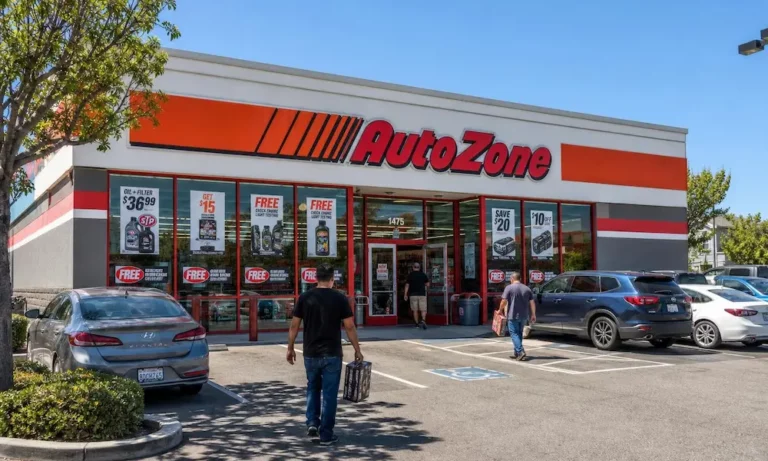
Your car won’t start. You turn the key and hear nothing — or worse, a rapid clicking sound. There’s a good chance your starter is dead. Before you panic about the bill, let’s break down exactly how much a starter costs at AutoZone, what affects the price, and how to avoid overpaying for parts or labor.
What Does a Starter Actually Do?
A starter motor is a high-torque electric motor that physically cranks your engine to life. It draws a massive surge of current from your battery, spins the flywheel, and gets the combustion cycle going. Once your engine runs on its own, the starter disengages until the next time you turn the key.
When it fails, symptoms include sporadic cranking, a total no-start, or that fast clicking noise most drivers dread hearing in a parking lot.
How Much Does a Starter Cost at AutoZone?
The short answer: anywhere from $64.99 to nearly $300, depending on your vehicle and the brand you choose. That’s a wide range, so here’s what actually drives the price.
Entry-Level Starters ($64.99 – $99.99)
These are remanufactured units built for older, common vehicles. Think high-mileage daily drivers or fleet cars where budget is the priority. Brands like TotalPro and value-tier Duralast units land here.
They’re not junk — they’re rebuilt with functional components — but the warranty is shorter, which we’ll cover below.
Mid-Range Starters ($109.99 – $167.99)
This is the sweet spot for most drivers. AutoZone’s starter catalog shows popular units priced at $109.99, $114.99, $124.99, $136.99, $139.99, and $149.99. Most are remanufactured Duralast or Valucraft units that cover the majority of common vehicles on the road.
Premium Starters ($167.99 – $299.99)
High-displacement trucks, performance engines, luxury vehicles, or cars with start/stop technology need beefier starters. These units have more engineering behind them, and the price reflects it. Specific Duralast Gold units hit as high as $299.99 before core charges.
Here’s a quick snapshot of the pricing tiers:
| Price Range | Typical Brand | Part Type | Best For |
|---|---|---|---|
| $64.99 – $99.99 | TotalPro, Valucraft | Remanufactured | Older vehicles, tight budgets |
| $109.99 – $167.99 | Duralast, Valucraft | Remanufactured | Most standard daily drivers |
| $167.99 – $203.99 | Duralast, ACDelco | Remanufactured/New | Complex or higher-demand engines |
| $254.99 – $299.99 | Duralast Gold, ACDelco | 100% New | Heavy-duty, performance, start/stop |
Don’t Forget the Core Charge
Here’s the part that surprises a lot of first-time buyers. When you purchase a remanufactured starter, AutoZone adds a $40 core charge to your total at checkout. Some premium new units carry a lower charge of $10 or $15.
This deposit is fully refundable — no tricks, no fine print. You bring your old starter back to the store, hand it over with your receipt, and you get $40 back immediately.
Why does this exist? The remanufacturing supply chain depends on recovering old starter housings. The core deposit is basically a recycling incentive. According to AutoZone’s own data, this system keeps approximately 54,000 tons of automotive cores out of landfills every year.
Practical tip: Keep the box your new starter came in. AutoZone asks you to use it when returning the old core. It contains the oil and grime from a component that’s been inside an engine bay for years.
If you ordered online and need to mail the core back, detach the return form on the back of your shipping invoice. Just make sure you drain any fluids from the old starter first — flammable automotive fluids can’t be shipped via standard carriers.
New vs. Remanufactured: Which Should You Buy?
This is one of the most common questions people ask, and the answer isn’t as obvious as you’d think.
What “Remanufactured” Actually Means
A remanufactured starter isn’t a used part. It’s a fully rebuilt unit where every internal wear component — brushes, bushings, contactor points — gets replaced with brand-new materials. The outer housing is recycled, but everything inside that affects performance is new.
According to AutoZone, quality remanufactured starters go through triple testing at the component, sub-assembly, and final unit level before they ship. A high-quality remanufactured unit can last over 100,000 miles — the same lifespan you’d expect from a brand-new part.
The Price Difference
Remanufactured starters typically cost 30 to 50 percent less than their brand-new equivalents. For most standard repairs, they’re the smarter choice financially.
Brand-new starters make sense when:
- You want zero previously used components
- Your vehicle has a complex electrical system or start/stop technology
- You plan to keep the vehicle for a long time and want maximum peace of mind
Brand Breakdown: What AutoZone Carries
AutoZone stocks a wide range of brands across different price and quality tiers. Here’s how they compare:
| Brand | Condition | Warranty | Key Notes |
|---|---|---|---|
| Duralast Gold | 100% New | Lifetime | All-new components, triple-tested, OE specs |
| Duralast | Premium Remanufactured | Lifetime | New wear parts, recycled housing, triple-tested |
| Bosch | New & Reman | 2 Years | German engineering, heavy-duty solenoid |
| Valucraft | Remanufactured | 1 Year | Value pricing, reliable for older vehicles |
| TotalPro | Remanufactured | 1 Year | Budget-focused, often uses permanent magnet design |
| ACDelco | Varies | Varies | Strong OE pedigree, wide price range |
| Sierra Marine | New/Reman | Varies | Explosion-proof for boat applications |
| Powermaster | New | Varies | High-torque for modified or racing engines |
The Lifetime Warranty Math
Duralast and Duralast Gold starters both carry a limited lifetime free replacement warranty. That means if the starter fails while you own the vehicle, AutoZone replaces it at no cost.
Compare that to Valucraft and TotalPro, which cap coverage at one year. If your $125.99 budget starter fails at 14 months, you’re buying another one at full price. For a car you plan to keep for years, the lifetime warranty on a mid-range Duralast often makes more long-term financial sense — even if it costs $30 more upfront.
Note: To claim a warranty replacement, the starter must fail AutoZone’s in-store bench test. They won’t swap it out without the test confirming the fault.
What Affects the Price of Your Specific Starter?
Your vehicle’s engineering directly determines what you’ll pay. A few key variables:
- Engine size and compression ratio — Bigger, higher-compression engines need more torque to crank, which means a more complex (and costly) starter.
- Gear tooth count — Common configurations are 9-tooth and 13-tooth pinion gears. Rare configurations cost more due to lower production volumes.
- Rotation direction — Starters must rotate in the correct direction for your engine layout. Wrong direction means engine damage.
- Mounting type — Flange mounts, pad mounts, and bolt-on designs vary by application.
- Start/stop technology — Vehicles with automatic stop/start systems can engage the starter 50 to 100 times per day instead of the typical 4 to 10. Starters built for this duty cycle use tougher internal components and carry a higher price tag.
The Total Cost With Labor — and How to Avoid It
Here’s where the numbers can jump sharply. Professional starter replacement runs between $150 and over $1,100 for parts and labor combined.
The spread is almost entirely about accessibility. On older rear-wheel-drive trucks, the starter bolts directly to the bell housing. A mechanic can reach it in under an hour.
On many modern front-wheel-drive cars, the starter sits buried under the intake manifold. The tech has to drain coolant, remove fuel rails, disconnect wiring harnesses, and unbolt the intake plenum before they can even see the starter. That’s several hours of labor tacked onto a $150 part.
Do It Yourself and Cut the Bill in Half (or More)
If you’re comfortable with basic tools, replacing a starter on an accessible engine is one of the more manageable DIY jobs. AutoZone provides step-by-step replacement guides and access to ALLDATA repair instructions for your exact vehicle.
The key safety steps before you start:
- Disconnect the negative battery terminal to prevent electrical arcing
- Chock the rear wheels
- Engage the parking brake firmly
- Consult a service manual specific to your vehicle
Borrow the Tools for Free
Don’t own a torque wrench or specialized socket set? AutoZone’s Loan-A-Tool program lets you borrow nearly 100 professional-grade tools by putting down a fully refundable deposit equal to the tool’s retail price. There’s no time limit on how long you can keep it.
Return the tool when the job’s done and you get your full deposit back. The program covers everything from basic ratchets to ball joint separators and specialized pullers.
Test Before You Buy: Don’t Misdiagnose the Problem
Before you spend any money on a starter, make sure the starter is actually the problem. A weak battery, a failing alternator, corroded terminals, or a blown fuse can produce the exact same symptoms — a car that won’t start.
Quick diagnostic rule: If the car starts fine with jumper cables but dies again without them, the problem is almost certainly your battery or alternator, not the starter.
AutoZone offers free battery, alternator, and starter testing at every store location. Battery and alternator tests happen with the car in the parking lot. Starter tests require you to remove the unit and bring it to the counter, where it goes into a bench tester that simulates a real engine start. The test takes about five minutes.
This step costs you nothing. Skipping it and buying the wrong part costs you real money.
The Commercial vs. Retail Price Gap
One thing worth knowing if you use a mechanic: AutoZone runs a separate commercial pricing tier for professional repair shops. A starter that retails for $169.99 on the shelf might go to a high-volume commercial account for around $99.99.
Shops buy at wholesale and mark the part up to retail on your invoice. That markup is how they cover overhead beyond their labor rate. It’s standard practice across the industry — not a scam, just how the aftermarket works.
The Bottom Line on Starter Costs at AutoZone
So, how much does a starter cost at AutoZone? Here’s the quick summary:
- Part only: $64.99 to $299.99 depending on vehicle and brand
- Core charge: Usually $40, fully refundable when you return the old part
- With professional labor: $150 to $1,100+
- DIY total cost: Just the part price, minus the core refund
The smartest move before buying anything is to use AutoZone’s free testing services to confirm the starter is actually the fault. Then match the brand tier to how long you plan to keep the vehicle — lifetime warranty if you’re keeping it, value tier if you’re selling soon. Return your old core the same day and get your $40 back.
That’s the whole playbook.