Wondering how much a radiator flush costs at Jiffy Lube? Prices shift depending on where you live, what you drive, and what extras get added. This post breaks down the real numbers, what the service includes, and how Jiffy Lube stacks up against competitors. Stick around — there’s a comparison table that could save you a chunk of cash.
What Does a Radiator Flush at Jiffy Lube Actually Cost?
Here’s the honest answer: there’s no single price. Jiffy Lube runs on a franchise model, meaning each location sets its own rates. Your zip code, your vehicle, and your local labor market all affect what you pay.
That said, here’s a solid baseline:
- Standard passenger cars: $100 to $250
- Luxury, imported, or high-performance vehicles: $200 to $400
- Bundled service packages (e.g., coolant flush + transmission flush): $400+
Reddit users have flagged this firsthand. One Corolla owner shared they were quoted over $400 for a combined coolant and transmission flush after a routine oil change visit.
Pricing by Region
Location makes a real difference. Here’s what the data shows:
| Region | Typical Starting Price | Why It Costs More or Less |
|---|---|---|
| Mountain States & Midwest | $120 – $137 | Competitive quick-lube density, standard green coolant formulas |
| West Coast & Metro Areas | $200 – $250 | Strict waste disposal laws, higher property and labor costs |
| Luxury & Performance Vehicles | $200 – $400 | Proprietary coolant chemistry, complex multi-reservoir systems |
Colorado pricing from Jiffy Lube franchises typically lands between $129.99 and $136.99 for a standard vehicle. Meanwhile, Southern California locations often start at $200 for the same job.
Get a Price Before You Drive Over
Jiffy Lube offers a MyJiffyLube online estimate tool where you enter your vehicle’s year, make, and model to get a localized starting price. It’s not a locked-in quote — technicians confirm the final cost on-site — but it gives you a real ballpark.
How to Pay Less With Coupons
Jiffy Lube coupons are easy to find and worth grabbing before you go. The official coupons page is a good first stop. You can also check:
- Promotional codes like NCWYS2 or 6MSNQ2 for 10% off additional maintenance services, including coolant flushes
- Flat-rate deals such as $10 off major fluid exchange services at select locations
- Local coupon platforms like Valpak for region-specific deals
What Does the Service Actually Include?
A radiator flush and a fluid top-off are not the same thing. That matters.
Jiffy Lube’s standard Signature Service oil change includes a free top-off of up to two quarts of coolant within 3,000 miles of service. But topping off old, contaminated fluid doesn’t clean anything. It just adds fresh coolant to a dirty system.
A full radiator coolant fluid exchange goes much further.
Here’s what a standard Jiffy Lube coolant service covers:
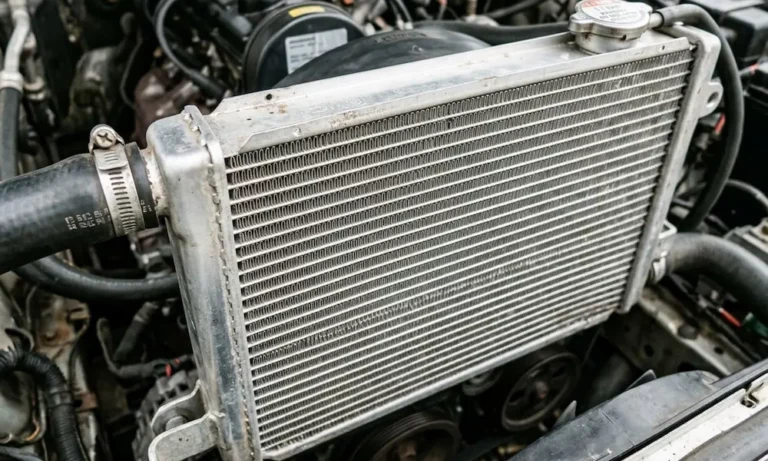
- Visual inspection of the radiator, reservoir, overflow tank, and hoses
- Fluid condition check — healthy coolant should be bright and transparent (green, red, yellow, pink, blue, or purple depending on your vehicle). Dark, murky fluid means it’s time for a full exchange.
- Full system evacuation of old, depleted coolant
- Refill with fresh fluid that meets your vehicle’s manufacturer specs
Some franchise locations go further. Jiffy Lube New Mexico and Blauvelt Jiffy Lubes in Maryland and Pennsylvania add:
- Cooling system pressure test
- Radiator cap pressure inspection and replacement if needed
- Thermostat, water pump, and drive belt inspection
Not every location offers this level of service, so it’s worth calling ahead.
How Jiffy Lube Compares to the Competition
Wondering if Jiffy Lube is your best bet? Here’s how it lines up against other national chains and shop types:
| Provider | Cost Range | Service Time | Key Details |
|---|---|---|---|
| Jiffy Lube | $100 – $250 | 15 – 30 min | Drive-through convenience; coupons widely available |
| Valvoline Instant Oil Change | $110 – $130 | ~20 min | Stay-in-car service; claims 30–50% savings vs. dealers |
| Firestone Complete Auto Care | ~$150 | 45 – 60 min | Includes cleaning additive, pressure test, 1 gallon of coolant |
| Pep Boys | ~$100+ | 45 – 90 min | Multi-tier options; $15 surcharge for hybrid/EV vehicles |
| Independent Mechanic | $120 – $250 | 60 – 90 min | Variable rates; custom coolant options; more thorough bleeding |
| Franchise Dealership | $200 – $300 | 1 – 3 hrs | OEM fluids, certified techs, full diagnostic checks |
Valvoline Instant Oil Change markets itself as a fast, stay-in-car alternative priced between $110 and $130, positioning savings of 30% to 50% versus dealerships.
Firestone Complete Auto Care charges around $149.99 but bundles in a cleaning additive, full pressure test, and one gallon of standard coolant. They also run periodic cardholder deals like $30 off.
Pep Boys offers three service tiers — an evaluation, a drain-and-fill, and a full chemical flush. Their entry price is competitive, but watch for the mandatory $15 surcharge on hybrids and EVs. That extra charge covers the labor needed to disable high-voltage systems and access battery cooling loops.
What Your Specific Car Might Cost
According to RepairPal’s national estimates, here’s what drivers typically pay across popular models:
| Vehicle | National Average Cost |
|---|---|
| Toyota Camry | $244 – $307 |
| Honda Civic | $270 – $316 |
| Toyota Corolla | $269 – $353 |
| Honda Accord | $304 – $356 |
| Nissan Altima | $388 – $456 |
| Honda CR-V | $299 – $349 |
| Chevy Silverado 1500 | $625 – $693 |
A Silverado owner staring down a $693 dealer bill will find Jiffy Lube’s $150 flat rate very appealing. Just know that large trucks often exceed the coolant volume included in standard packages — expect a surcharge for each extra gallon your cooling system needs.
Risks Worth Knowing Before You Book
Quick-lube chains trade speed for depth. That’s the deal. Here’s what can go wrong if things aren’t done right.
Wrong Coolant Chemistry
Modern vehicles don’t use generic green antifreeze. They need specific formulations:
- GM vehicles: Dex-Cool
- Toyota: Super Long Life Coolant
- Volkswagen: G12 or G13
- Honda: Type 2
- Ford: Yellow coolant
These formulations are chemically incompatible. Mix the wrong ones and you can end up with a gel-like sludge that blocks your radiator and heater core. The result? Overheating, and potentially a blown head gasket. Always confirm which coolant your car requires before any service starts.
Air Pockets Left in the System
After a coolant flush, the system needs to be “burped” — that means cycling the engine until the thermostat opens and any trapped air escapes. Air pockets can block heat transfer near the cylinder head, causing localized overheating, warped heads, or coolant erupting from the overflow reservoir.
At a high-volume quick-lube where the goal is finishing in 15 minutes, this step sometimes gets rushed. It’s worth asking your technician how they handle bleeding after a flush.
Hidden Surcharges
Low advertised prices often don’t cover your full vehicle. Standard packages typically include one to two gallons of coolant. Larger trucks, SUVs, and vans can require three to four gallons or more. Each extra gallon costs more — and you won’t find that in the headline price.
Why Skipping This Service Costs More in the Long Run
A coolant flush every 30,000 to 60,000 miles (or every 2 to 5 years) is far cheaper than the repairs you’re avoiding. Here’s what neglected coolant can eventually damage:
| Component | Typical Repair Cost |
|---|---|
| Coolant hose | $50 – $200 |
| Radiator pressure cap | $10 – $30 |
| Thermostat | $100 – $300 |
| Water pump | $300 – $750 |
| Radiator assembly | $150 – $1,000 |
| Cylinder head gasket | $1,500 – $2,500+ |
Acidic, degraded coolant corrodes water pump bearings, eats through radiator joints, and degrades rubber hoses. If your engine overheats badly enough to blow a head gasket, you’re looking at a repair bill that can exceed the value of an older car entirely.
Paying $130 to $200 now beats paying $2,000 later — that math is pretty hard to argue with.
What About DIY?
It’s technically possible to flush your own coolant, but it’s messier and more involved than most people expect. You need to:
- Safely elevate the vehicle
- Route drain lines to capture all old fluid
- Store used coolant in sealed containers for proper disposal at a certified facility
- Vacuum-fill or manually burp the system to remove all air pockets
For most drivers, the time investment and disposal hassle make paying a professional the more practical choice — as long as you verify the correct coolant specs and confirm the air-bleeding process before they start.