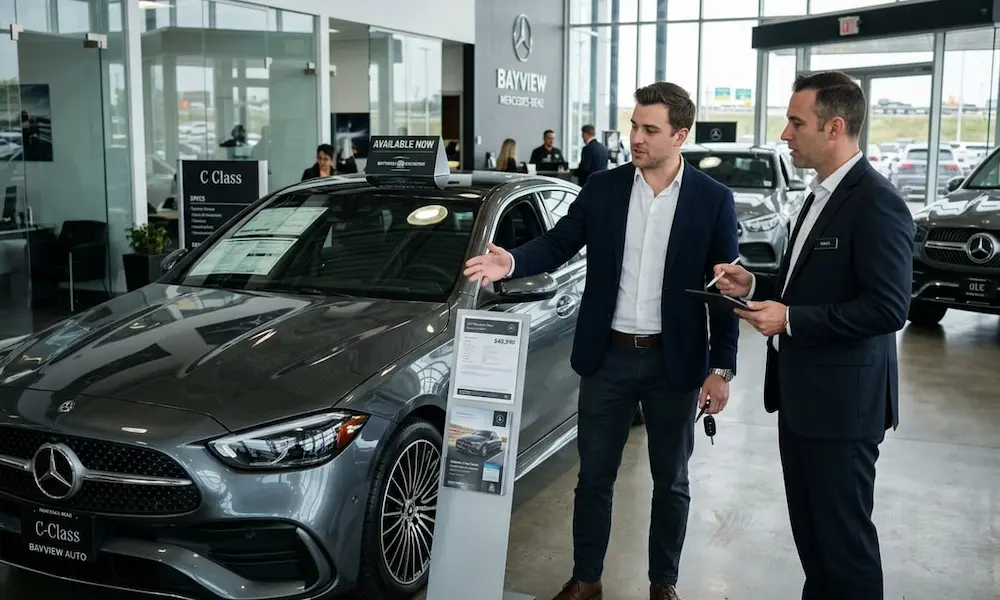
Ready to get behind the wheel before you buy? The rules around test drives are more complex than you’d think — and getting them wrong could cost you real money. Whether you’re 16, 18, or shopping at Tesla, CarMax, or Carvana, this guide breaks down exactly what you need to know before you ask for those keys.
The Short Answer: You Need to Be 18 (Usually)
The standard minimum age to test drive a car at most US dealerships is 18 years old. That’s not an arbitrary number. It’s tied directly to the age of majority — the point where you can legally sign contracts, take on debt, and be held financially responsible.
Here’s why dealerships care so much about that:
- You can’t buy a car if you’re under 18 — contracts signed by minors are legally voidable
- Lenders won’t approve financing for minors
- Insurance policies can’t be held independently by someone under 18
- A test drive with zero purchase power is a liability with no upside for the dealer
So if you’re 18 or older with a valid license, you’re good to go at most lots.
Can a 16 or 17-Year-Old Test Drive a Car?
Yes — but only under strict conditions. Dealers recognize that teen buyers are a real market segment, especially for first cars. So most will accommodate younger drivers if the following boxes are checked.
What you’ll need if you’re under 18:
- A valid provisional or restricted driver’s license (not just a permit)
- A parent or legal guardian physically present in the car
- That guardian must sign liability waivers on your behalf
- The parent should ideally show proof of auto insurance
The guardian’s presence isn’t just a formality. They’re legally assuming financial responsibility for whatever happens during that drive.
What About Learner’s Permit Holders?
This is where most dealers draw a hard line. The majority of dealerships won’t let permit holders test drive at all, even with a licensed adult riding shotgun. A minority will allow it if accompanied by a licensed adult 21 or older — but don’t count on it.
The logic is simple: permit holders have minimal road experience, and insurers treat them as high-risk. Most dealership managers won’t accept that exposure.
How Graduated Driver Licensing Affects Your Test Drive
Your state’s Graduated Driver Licensing (GDL) system directly shapes what a dealer will let you do. Here’s how the stages typically map to dealership policies:
| License Stage | Minimum Age | Supervision Required | Can You Test Drive? |
|---|---|---|---|
| Learner’s Permit | 15.5 years | Licensed adult (21+) required | Rarely — most dealers say no |
| Provisional License | 16 years | Parent or guardian must ride along | Yes, with adult present |
| Advanced Provisional (12+ months held) | 17 years | Most dealers still want a guardian | Sometimes independently at select dealers |
| Full Unrestricted License | 18 years | None required | Yes, independently |
What If You Want to Test Drive a Sports Car or Luxury Vehicle?
Standard sedans and crossovers? Eighteen is fine. High-performance sports cars, luxury models, or specialty EVs? Many dealerships bump the minimum age to 21.
Think Mustang, Corvette, WRX, or anything with serious acceleration. Dealers assume — often correctly — that younger drivers don’t have the financial resources to buy these cars or the experience to handle them safely.
If you’re 18 and determined to test drive a performance vehicle, expect the salesperson to ask:
- Can you prove funds for a significant down payment (often $10,000–$15,000)?
- Do you have a co-signer?
- Can you pass a financial pre-qualification?
Reddit threads from the sales side confirm this: young buyers get scrutinized hard before anyone hands over performance car keys.
Dealerships Can Say No — Full Stop
Here’s something most buyers don’t realize: dealerships are private businesses, and their cars are private property. Meeting the age minimum and having a valid license doesn’t guarantee you a test drive.
Sales staff are trained to qualify buyers before handing over keys. If you can’t articulate a genuine intent to buy, seem more interested in a joyride than a purchase, or can’t answer basic questions about financing — expect a polite but firm refusal.
This isn’t personal. It’s liability management.
Age Rules at Major National Retailers
The traditional dealership isn’t the only way to test drive a car anymore. Here’s how the biggest national players handle age and access:
Tesla Demo Drives
Tesla runs a tiered age policy across its retail locations:
- Model 3 and Model Y: 18 years old minimum
- Cybertruck: 21 years old minimum
- Overnight or self-serve demo drives (using the Tesla app with no employee present): 21 years old minimum for all models
Tesla’s self-serve option lets you locate, unlock, and drive solo — which is exactly why they raise the bar to 21 for those programs.
CarMax 24-Hour Test Drive
CarMax offers a 24-hour test drive program so you can test a car during your actual daily routine. The baseline age is 18, but the program comes with significant requirements:
- Valid driver’s license
- Verified proof of comprehensive and collision insurance — mandatory
- No more than 150 miles driven during the 24 hours
- Maximum of two 24-hour drives per 30-day window
- Vehicle returned in the same condition it left in
- Some luxury and performance models are excluded entirely
Even if you’re 18 and insured, salespeople retain discretion about approving these drives — and younger buyers sometimes face pushback regardless of the rules on paper.
Carvana 7-Day Trial Period
Carvana works differently from everyone else. You buy the car first, then evaluate it. Here’s the flow:
- Purchase and finance the vehicle online
- Vehicle is delivered or picked up from a vending machine
- You get a brief 20-minute initial drive
- A 7-day trial period begins — up to 400 miles included
- Miles beyond 400 cost $1.00 each
The age requirement is 18 because you’re signing a purchase contract. Your personal insurance covers the vehicle from day one. And here’s the critical catch: if any accident occurs during those 7 days, regardless of fault, the trial period ends immediately and the car is yours — damaged or not.
Quick Comparison Table
| Retailer | Minimum Age | Insurance Required? | Time/Mileage Limit | Who Bears Primary Liability |
|---|---|---|---|---|
| Traditional Dealership | 18 (16–17 with parent) | Recommended, not always required | 15–30 mins, local route | Dealership’s garage policy |
| Tesla Demo Drive | 18 (21 for Cybertruck/overnight) | Valid license required | Standard 30–45 mins | Tesla corporate liability |
| CarMax 24-Hour Drive | 18 | Yes — comprehensive & collision | 24 hours / 150 miles | Driver’s personal insurance |
| Carvana 7-Day Trial | 18 (must purchase first) | Yes — full coverage required | 7 days / 400 miles | Driver’s personal insurance |
What Documents Do You Need for a Test Drive?
Showing up prepared makes everything faster. Here’s what most dealerships want to see:
- Valid, unexpired driver’s license — this is non-negotiable. Dealers will photocopy or scan it before you drive
- Proof of insurance — not always legally required for a short supervised drive, but showing it speeds up the process significantly
- Signed liability waiver — you’ll agree that you’re responsible for the vehicle during the drive
- Parent/guardian — required if you’re under 18, and they’ll need to sign paperwork too
Who Pays If Something Goes Wrong During a Test Drive?
This is where it gets genuinely important — and where a lot of people have wrong assumptions.
Your Insurance Goes First
Most people assume the dealership handles everything if there’s an accident during a test drive. That’s not how it works. Under the permissive use doctrine, when a dealer hands you the keys, your personal auto insurance becomes the primary coverage.
Example: You cause $40,000 in damage but only carry $10,000 in property damage liability. Your policy pays the first $10,000. The dealership’s insurance covers the remaining $30,000 — and then their insurer may come after you for reimbursement through a process called subrogation.
Dealership Garage Liability Insurance
Every dealership carries garage liability insurance — it’s legally required. This policy acts as a backstop when:
- The test driver has no insurance at all
- The driver’s coverage limits are exhausted
- A mechanical failure caused the accident (not driver error)
But here’s the catch: if a dealer hands keys to someone unlicensed, underage, or visibly impaired, that policy can be voided for the incident entirely. That’s why dealers are so strict about verification.
The Salesperson in the Passenger Seat Changes Things
If a salesperson rides with you and actively directs your route or encourages specific maneuvers, courts can view the drive as a joint venture. That means the dealership shares liability — not just you. The exact split depends on your state’s comparative negligence rules.
Negligent Entrustment: The Dealer’s Biggest Legal Fear
If a dealer knowingly hands keys to someone unfit to drive — visibly drunk, unlicensed, or clearly reckless — they can be held directly liable under the negligent entrustment doctrine. This is why age minimums and license checks aren’t suggestions. They’re legal protection for the business.
Test Driving a Private Sale Car: Different Rules Apply
Buying from a private seller? The dynamics shift completely — and the risk lands almost entirely on the owner.
There’s no universal age rule in private sales. The seller decides. But the insurance reality is harsh: if a prospective buyer damages the car during a test drive, the seller’s personal insurance pays first — including the deductible and the premium hike that follows.
If you’re selling a car privately, protect yourself:
- Check the buyer’s license — photograph it
- Ask to see their insurance card
- Never let someone drive alone — ride along every time
- Hold their car keys or a second ID during the drive to deter theft
Private sellers who skip these steps are taking a genuine financial gamble every time someone pulls out of the driveway.
FAQs About Test Drive Age Requirements
What happens if I get a speeding ticket during a test drive?
The ticket goes to the registered owner (the dealership) first, since it’s their plate. But dealerships use the test-drive agreement and your copied license to transfer the violation to you through the court system. You’re on the hook for the ticket.
Can I test drive a commercial truck with a regular license?
No. Any vehicle over 26,001 pounds or designed to carry 16+ passengers requires a Commercial Driver’s License (CDL). Letting a standard license holder drive one is textbook negligent entrustment.
What are dealer plates, and why do they matter during a test drive?
Dealer plates (D-plates) are issued by the state DMV to licensed retailers. They let dealerships legally operate unregistered inventory on public roads — which is exactly what happens during your test drive. They signal the vehicle is covered under the dealer’s garage liability policy while you evaluate it.
Can a dealership refuse a test drive because of bad weather?
Absolutely. Dealerships can suspend all test drives during snow, ice, heavy rain, or severe fog. Their asset, their call — and it’s a smart liability decision.
Can a dealership make me take a breathalyzer before a test drive?
No — dealers aren’t law enforcement and can’t compel chemical testing. But under negligent entrustment rules, sales staff are trained to watch for signs of impairment. If they suspect it, they’ll refuse the drive, and they’re legally smart to do so.
Do I need my own insurance to test drive a car at a dealership?
For a short, supervised dealership test drive, it’s not always legally required — the dealer’s garage policy provides a backstop. But for extended programs like CarMax’s 24-hour drive, verified comprehensive and collision coverage is mandatory. Either way, having insurance makes the whole process smoother and protects you if something goes wrong.