Buying a car is exciting — until someone asks if you have insurance to drive it home. So, do car dealerships offer temporary insurance? The short answer is: not exactly. But there are real, legal ways to get covered on the spot. This post breaks down every option clearly, so you leave the lot legally protected without overpaying.
What “Temporary Car Insurance” Actually Means in the U.S.
Let’s clear this up first. True short-term car insurance — meaning standalone coverage lasting less than six months — is extremely rare in the U.S. Most major insurers won’t write those policies. The math doesn’t work for them. Underwriting costs eat up any profit from a short policy term.
When specialty insurers do offer compressed coverage, you pay for the privilege:
- Standard monthly coverage: ~$30/month on a normal annual policy
- Short-term monthly coverage: ~$80/month through specialty providers
- Weekly policies: ~$30 per week, often with a 30-day minimum
That 30-day minimum means you could pay up to $200 just to cover one day of driving. And here’s a real red flag — if you see ads for “one-day” or “hourly” car insurance, those are often scams or deceptive marketing. Steer clear.
So, What Do Car Dealerships Actually Offer?
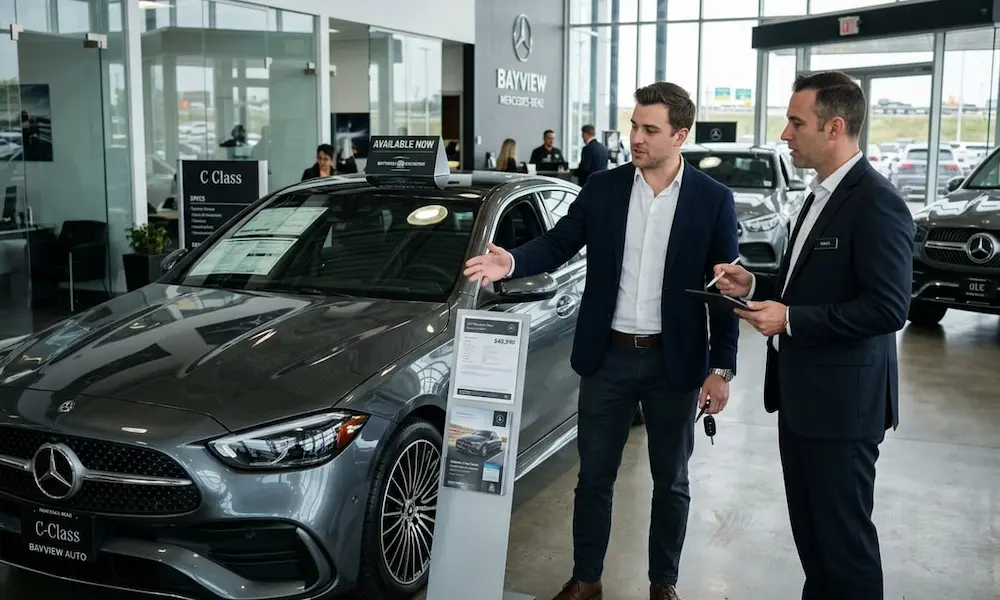
Dealerships can’t underwrite or sell insurance themselves — that’s illegal. But they do the next best thing through their Finance and Insurance (F&I) department.
The F&I manager acts as a licensed intermediary, connecting you to preferred insurance carriers at the point of sale. They enter your details and the vehicle’s info into software linked to third-party insurers. You get a standard six-month policy bound on the same day — which satisfies the legal requirement to drive off the lot.
Want to use it as temporary coverage? Buy the policy, drive home, then cancel it once you’ve set up a better long-term plan. Carriers must refund the unused, prorated portion of your premium — though some charge a small cancellation fee.
One thing to watch: dealerships often earn commissions from their preferred insurance partners. That means the F&I manager might push a pricier option. Get independent quotes before you visit the showroom so you’re not flying blind.
What Else Does the F&I Department Sell?
While you’re in that chair, the F&I manager will likely present a full menu of add-on products. None of them are required — but they’ll be presented like they are. Here’s what’s on the table:
| Product | What It Does | Worth It? |
|---|---|---|
| Car Insurance | Binds a same-day policy via dealer partners | Yes — if you need to drive home today |
| GAP Insurance | Covers the gap between loan balance and car value after a total loss | Yes — especially on financed or leased vehicles |
| Extended Warranty | Covers mechanical repairs after the factory warranty expires | Depends on the car and your risk tolerance |
| Key Replacement | Replaces lost or damaged electronic keys | Useful for multi-driver households |
| Paintless Dent Repair | Fixes minor dings without repainting | Good for preserving resale value |
| Windshield Protection | Covers glass repair or replacement | Smart for highway or rural drivers |
| Tire & Road Hazard | Covers tire damage from potholes and debris | Helpful in cities with rough roads |
If You Already Have Insurance: The Grace Period Option
Already have a policy on another car? You might not need to do anything at the dealership. Most active policies include a built-in grace period that automatically extends coverage to a newly acquired vehicle.
The ISO Personal Auto Policy form (PP 00 01) — the standard template most U.S. insurers use — defines exactly how this works. But the details matter a lot. Here’s what you need to know:
The 14-day reporting rule: Under updated ISO standards, both additional and replacement vehicles must be reported to your carrier within 14 days to bind coverage retroactively to the purchase date.
The physical damage gap: This is the one that catches people off guard. If your existing policy only has liability coverage (no comprehensive or collision), your automatic physical damage coverage on the new car lasts only four days with a $500 deductible. After day four? Zero coverage for collision or comp — even if your liability coverage technically continues.
Here’s how the major carriers stack up:
| Insurance Carrier | Grace Period | Physical Damage Window | Notification Deadline |
|---|---|---|---|
| Progressive | 30 days | Extends existing terms | 30 days from purchase |
| Geico | 14–30 days | Extends existing terms | Within the grace window |
| State Farm | 14 days | Extends existing terms | 14 days from purchase |
| Safeco / Allstate | 30 days (liability only) | 4 days only | 4 days for physical damage |
| American Family | 30 days (liability only) | 4 days only | 4 days for physical damage |
Important: If you have policies with multiple insurers, the grace period disappears entirely. You’d have zero automatic coverage on the new car. Schedule it immediately with one of your carriers.
How State Laws Change Everything
Your state determines what you can legally get away with at the dealership. The rules vary wildly across the country.
New York is the strictest. The vehicle registration system links directly to active insurance databases. You can’t register a car — or drive it off the lot — without a formally bound, active policy. Zero grace period. Full stop.
Texas is more flexible. You can use proof of coverage from an existing policy to drive the new car home, with up to 30 days to finalize your policy. But Texas mandates minimum liability limits of 30/60/25, which must be met.
Alabama has no official state-mandated grace period for used car purchases. Uninsured buyers get zero days of leniency. After 14 days without coverage, you risk fines between $500–$1,000, a registration hold, and a mandatory SR-22 filing.
Georgia requires minimum limits of 25/50/25, but separates state liability mandates from lender requirements. State law makes physical damage coverage optional — but your lender will require it if you’re financing.
New Hampshire is the only U.S. state with no auto insurance mandate at all. But drivers must still prove financial responsibility if they cause an accident.
| State | Mandate | Minimum Liability | Grace Period | Severity |
|---|---|---|---|---|
| New York | Yes | State-defined | None | Extreme |
| Texas | Yes | 30/60/25 | Up to 30 days | High |
| Georgia | Yes | 25/50/25 | 7–30 days (carrier-dependent) | High |
| Alabama | Yes | 25/50/25 | 0 days for uninsured buyers | Severe |
| New Hampshire | No | N/A | Not applicable | Moderate |
Other Ways to Get Short-Term Coverage
If the dealership’s F&I route doesn’t appeal to you, here are smarter alternatives:
Buy and cancel a standard policy. This is the cleanest workaround. Buy a six-month policy from a major carrier, pay the first month, get real coverage, then cancel once your long-term plan is in place. You get a prorated refund for unused premiums. You also avoid the sketchy specialty insurers entirely.
Non-owner car insurance. Don’t own a vehicle but borrow or rent cars regularly? Non-owner policies give you secondary liability coverage at a much lower cost than a standard policy. Keep in mind — they don’t cover physical damage to the vehicle you’re driving.
Permissive use. Borrowing someone’s car? If the owner’s policy includes a permissive use clause, their liability and physical damage coverage may extend to you as an occasional driver. Check the policy details — there are usually limits on how many days per year this applies.
Pay-per-mile insurance. This is a genuinely good option for low-mileage drivers. You pay a small daily base rate plus a per-mile fee — typically 4 to 8 cents per mile. If you only drive on weekends or for short bursts, your premium reflects that. No paying for coverage you’re not using.
The Rise of Manufacturer-Built Insurance at Dealerships
Here’s something changing the game fast: automakers are building their own insurance programs directly into the dealership experience.
Toyota Insurance Management Solutions operates as a licensed insurance agency across all 50 states. Participating Toyota dealerships use a proprietary digital platform to show buyers real-time quotes from more than 23 partner carriers — right from the showroom floor. Uninsured buyers can bind a customized policy in minutes before they leave.
The buyer benefits too. Toyota’s captive insurance offers optional endorsements that guarantee the use of genuine OEM parts in collision repairs — not cheaper aftermarket alternatives. That protects the car’s value long-term.
For manufacturers, it creates recurring revenue and keeps collision repairs inside their certified network. For buyers, it’s a faster, more integrated experience. Expect more automakers to follow this model.
What You Should Do Before Your Next Car Purchase
Don’t walk into a dealership without a plan. Here’s your pre-purchase checklist:
- Call your insurer first. Confirm your exact grace period and whether physical damage coverage extends automatically to a new vehicle
- If you only carry liability, add the new car to your policy within four days to avoid a physical damage gap
- Get independent quotes before you sit with the F&I manager — you’ll have real numbers to compare
- Know your state’s rules. If you’re in New York or Alabama, you need active coverage before you touch the keys
- Consider the buy-and-cancel strategy if you’re between insurers and need immediate, trustworthy coverage without overpaying
The short answer to “do car dealerships offer temporary insurance” is: they offer something close — but the real solution depends on your state, your existing coverage, and how long you actually need protection. Know the options, and you won’t get caught paying $200 for a policy you needed for one afternoon.