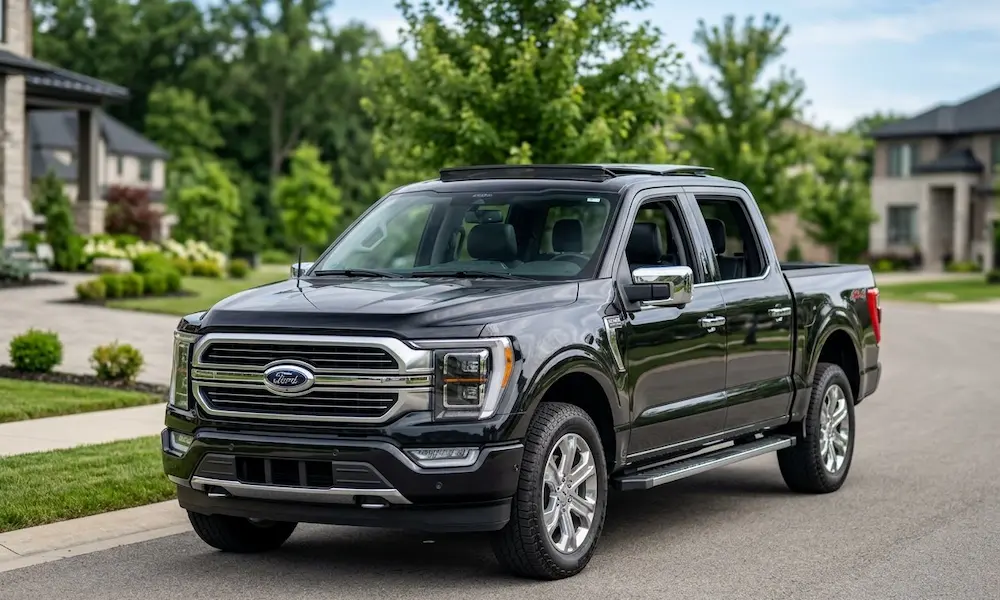
If your Ford truck rattles like a diesel on cold starts, you might be staring down a $3,000+ repair bill. The Ford cam phasers recall situation has left thousands of F-150, Expedition, and Navigator owners holding the bag on a manufacturing defect Ford quietly managed through limited programs instead of a full recall. Here’s everything you need to know before that rattle destroys your engine.
What Are Cam Phasers and Why Do They Fail?
Cam phasers control when your engine’s valves open and close. They’re hydraulic actuators that use pressurized oil to adjust camshaft timing on the fly. This improves power, fuel economy, and emissions all at once.
Inside each phaser sits a small spring-loaded locking pin. When you shut the engine off, oil pressure drops to zero. That pin locks the phaser rotor in place so nothing rattles on your next cold start. Simple concept. Terrible execution on 2017–2020 Gen 2 3.5L EcoBoost engines.
The locking pin in these second-generation phasers is inherently defective. It slips, shears, or fails to engage entirely. When you start a cold engine — one that’s been sitting six or more hours — the pin can’t hold the rotor. With no hydraulic pressure yet to stabilize things, the heavy camshaft violently smashes around inside the phaser housing.
The result? A loud, unmistakable cold start rattle that owners and mechanics compare to a diesel idling or marbles shaking in a metal can.
The rattle lasts two to five seconds. Then oil pressure builds, the phaser stabilizes, and the engine runs perfectly. Until the next cold start. And the next. And the next — each one grinding the internals closer to catastrophic failure.
Which Vehicles Are Affected?
This defect is strictly limited to second-generation 3.5L EcoBoost engines built within specific production windows. Ford quietly updated the phaser design in late 2019 and early 2020, but millions of trucks and SUVs left the factory with the bad hardware.
| Vehicle | Model Years | Assembly Plant | Affected Build Dates |
|---|---|---|---|
| Ford F-150 (Standard, Raptor, Limited) | 2017–2020 | Dearborn | March 10, 2016 – Nov 30, 2019 |
| Ford F-150 (Standard, Raptor, Limited) | 2017–2020 | Kansas City | April 15, 2016 – Nov 30, 2019 |
| Ford Expedition | 2018–2020 | Kentucky Truck | March 14, 2017 – Nov 30, 2019 |
| Lincoln Navigator | 2018–2020 | Kentucky Truck | March 16, 2017 – Dec 21, 2019 |
Source: NHTSA Customer Satisfaction Program 21N03
Vehicles built after these dates received the updated phaser design from the factory and generally don’t suffer from the cold start rattle. If you’re shopping for a used Gen 2 EcoBoost, the build date on the door jamb sticker is the most important number on the vehicle.
What Happens If You Ignore the Rattle?
Ford officially classifies this as an “undesirable noise” with no effect on safety or performance. Independent mechanics and engineers strongly disagree with that assessment.
Here’s what actually happens when you keep driving a rattling phaser:
- Sheared pin fragments circulate through the oil system and score your main bearings, rod bearings, and cylinder walls
- Timing chain destruction — the violent shock loads batter the chains, tensioners, and plastic guides until they fail
- Jumped timing chain — if the chain skips a tooth, piston-to-valve contact destroys the engine instantly
- Limp mode — the PCM detects massive timing discrepancies and cuts power to protect what’s left of your engine
Total engine replacement after catastrophic phaser failure routinely exceeds $15,000. The cold start rattle is not a quirk. It’s a countdown timer.
Your check engine light may store codes P0016 or P0017 — crankshaft-to-camshaft timing correlation failures — once things get bad enough. But by the time those codes appear permanently, significant damage has likely already occurred.
Ford’s Three-Program Response: What They Did (And Didn’t Do)
Ford never issued a mandatory safety recall for this defect. Instead, the automaker deployed three sequential Customer Satisfaction Programs — a voluntary approach that let Ford control eligibility windows, mileage caps, and expiration dates.
Program 21B10: The Software Attempt
Ford’s first move was a software update to the Powertrain Control Module. The idea was to surge oil into the phasers the instant the starter engaged, hydraulically locking the rotor before the physical pin could fail. Ford required this update be completed by February 28, 2022 — a hard deadline that disqualified owners who simply didn’t know about it.
The update also created new problems. Many owners left the dealership with severe low-RPM engine shudder and erratic transmission behavior. And if you had aftermarket engine tuning software installed, the flash wiped it completely.
Program 21N08: Fixing What 21B10 Broke
Ford issued this reactionary program to undo the transmission shudder caused by 21B10. Technicians reverted the PCM software back to the original factory calibration if shudder was confirmed on a test drive. This effectively returned the vehicle to the exact mechanical state where the phasers would eventually destroy themselves — but resolved the immediate driveability complaints.
Program 21N03: The Actual Hardware Fix (With Strings Attached)
This program finally authorized replacing the defective phasers with updated hardware. But it came with two major catches.
Catch one: The program expired completely on January 1, 2023. Gone. Done. Every vehicle still exhibiting the defect after that date became the owner’s full financial problem.
Catch two: Coverage was prorated based on mileage at the time of repair. Here’s what that looked like:
Ford F-150 and Expedition Coverage (Program 21N03)
| Mileage at Repair | Ford Pays | You Pay |
|---|---|---|
| 0 – 69,999 miles | 100% | 0% |
| 70,000 – 79,999 miles | 66% | 34% |
| 80,000 – 89,999 miles | 33% | 67% |
| 90,000+ miles | 0% | 100% |
Lincoln Navigator Coverage (Program 21N03)
| Mileage at Repair | Lincoln Pays | You Pay |
|---|---|---|
| 0 – 79,999 miles | 100% | 0% |
| 80,000 – 89,999 miles | 66% | 34% |
| 90,000 – 99,999 miles | 33% | 67% |
| 100,000+ miles | 0% | 100% |
Source: NHTSA Bulletin MC-10201669-0001
An owner whose truck started rattling at 85,000 miles paid two-thirds of an expensive engine teardown for the exact same defect as someone who got free coverage at 65,000 miles. The engineering failure was identical. The financial treatment was not.
What the Actual Repair Involves
The repair follows Technical Service Bulletin 22-2200, which governs the current standard procedure. It takes a skilled technician one and a half to two full days. The front clip and upper engine block come completely apart — intake manifold, valve covers, timing cover, timing chains, all four cam phasers.
The critical detail: You must verify the replacement phasers carry the ML3Z prefix, not the original defective HL3Z units. Ford’s engineers redesigned the internal locking mechanism using a “cap over spring” design that prevents the shear forces causing the original failures.
The updated part numbers are:
- Intake phasers: ML3Z-6256-A (need 2)
- Exhaust phasers: ML3Z-6C525-A (need 2)
Since the engine is already completely apart, most specialists strongly recommend replacing the timing chains, tensioners, plastic guides, and the internal water pump at the same time. The 3.5L EcoBoost uses an internal water pump driven by the timing chain system. If that pump fails later, it dumps coolant directly into your oil pan and destroys the engine. Replacing it now costs mostly just parts — the labor is already paid for.
What repairs cost today (program expired):
- Baseline phaser replacement: $2,500–$3,500
- Comprehensive repair with chains, tensioners, guides, water pump: $4,500–$6,300
- Engine replacement after catastrophic failure: $15,000+
Your Legal Options If Ford Won’t Help
Ford’s decision to call this a “noise issue” rather than a safety defect has generated significant class action litigation. Plaintiffs argue Ford knowingly sold defective vehicles, breached implied warranties, and violated the Magnuson-Moss Warranty Act.
The honest reality? Class actions against Ford are hard to win. Courts have historically narrowed these cases significantly, and even successful settlements often pay individual members almost nothing relative to their repair costs.
Lemon Law is often a more effective path. If your vehicle is still under the factory powertrain warranty (or an extended warranty), and Ford can’t permanently fix the rattle after multiple attempts, your truck may qualify for a mandatory buyback under your state’s Lemon Law. California owners have particularly strong protections under the Song-Beverly Consumer Warranty Act.
To build a strong lemon law case:
- Request a printed repair order every single visit — make sure the complaint is recorded in your exact words
- Record video of the cold start rattle with the date and time visible
- Document every dealer visit — dates, mileage, what they did or didn’t do
Note that Ford uses the National Center for Dispute Settlement (NCDS) rather than BBB Auto Line for arbitration. NCDS awards are non-binding on consumers, so you can reject a low offer and still pursue civil litigation.
Buying a Used 2017–2020 EcoBoost? Read This First
The expired 21N03 program transferred a massive hidden liability onto used truck buyers. Here’s how to protect yourself.
Before you let anyone start the truck:
- Place your hand on the engine block or exhaust manifold — it must be completely cold
- If the engine is warm, walk away or come back six or more hours later
- If it rattles for two to five seconds on startup, you’re looking at a minimum $3,000 repair — negotiate accordingly or leave
Sellers are financially motivated to warm up the engine before you arrive. A warmed-up truck with failed phasers sounds completely normal. A genuinely cold start reveals everything.
If a 2017–2019 EcoBoost has passed 75,000 miles on original phasers without rattling, treat it as a mechanical anomaly and budget for the repair anyway. At this mileage, it’s a question of when, not if.
Frequently Asked Questions
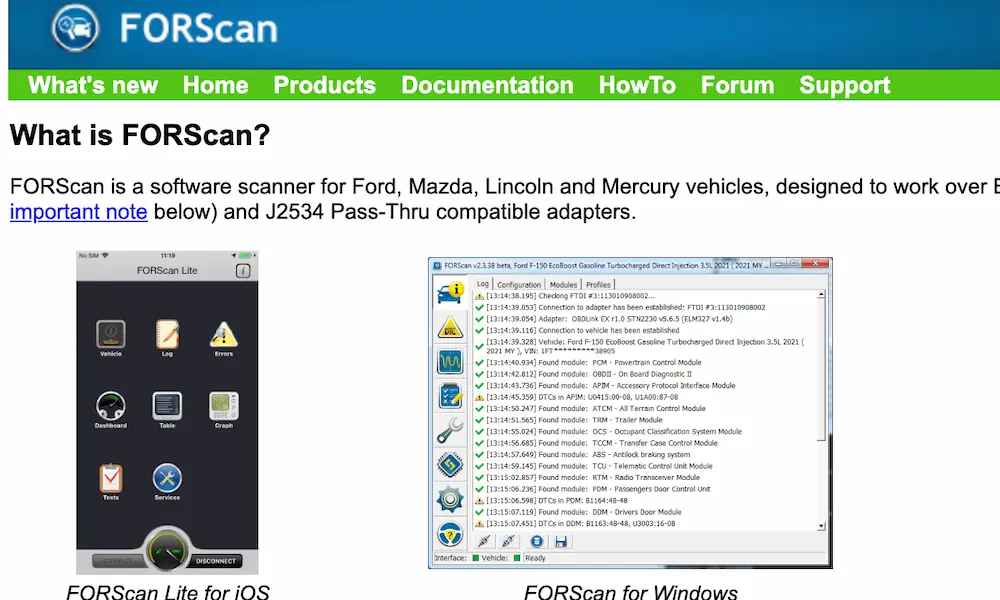
Can an OBD-II scanner detect a failing phaser before the rattle starts?
Generally no. Codes P0016 and P0017 only trigger once the camshaft is significantly out of timing correlation. By the time those codes appear permanently, the physical damage is already severe and the rattle has likely been happening for months.
Does using a cheap oil filter make cam phaser wear worse?
It can. Ford’s OEM Motorcraft filters use a silicone anti-drain back valve that keeps oil in the upper engine galleys overnight. Cheap aftermarket filters use inferior rubber valves that let oil drain completely, creating a dry cold start that accelerates wear on the phaser’s locking pin.
Are Ford Transit vans with the 3.5L EcoBoost affected by these programs?
No. The Transit uses a different powertrain architecture suited for commercial use. Programs 21B10, 21N08, and 21N03 apply specifically to the F-150, Expedition, and Navigator platforms within the build dates listed above.
Will a completely failed phaser trigger limp mode?
Yes. If the phaser disintegrates or timing jumps, the PCM detects massive misfires, cuts turbocharger function, and forces limp mode to limit further damage. Significant internal engine damage has likely already occurred at that point.
How does the cam phaser issue affect trade-in value?
Competing dealerships know this defect well. If your truck rattles on a cold start, the appraiser will deduct the full retail repair cost — typically $3,500–$4,500 — from your trade-in offer immediately. That directly eats into your equity position, making this a problem that hits you twice.