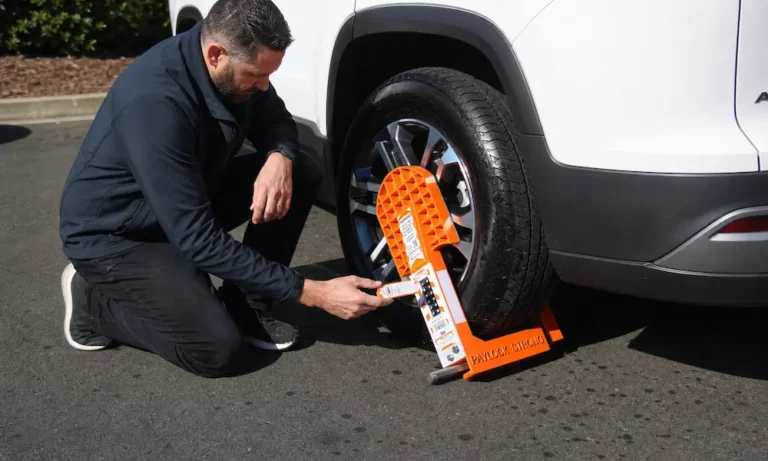
Found a bright yellow clamp hugging your wheel? This guide walks you through exactly how to remove a boot from your car — the right way. You’ll learn the step-by-step removal process, what happens if you try to force it off, and how to fight the charge if you think it’s unfair. Read to the end before you touch anything.
First, Take a Breath — Then Do This
Don’t touch the boot yet. Seriously.
Your first move is to read the notice on your windshield or driver’s side window. It contains three things you need right away:
- The device’s serial number
- Your total outstanding balance
- A 24/7 contact phone number or website
That notice is your roadmap. Everything starts there.
What Kind of Boot Is on Your Car?
Not all boots work the same way. Knowing your device type changes how you remove it.
Traditional Steel Clamp
This is the classic yellow metal device clamped around your wheel. These are built from high-strength steel with a plate that covers your lug nuts completely. You can’t remove the tire to slide it off. An enforcement officer must come to you physically with a key.
Electronic Self-Release Boot (Like a PayLock SmartBoot)
This one has a keypad built right into the device. PayLock SmartBoot units weigh around 15 pounds and resist up to 4,000 pounds of pressure. Once you pay online or by phone, you get a release code. You type it in yourself — no officer needed.
The Barnacle (Windshield Suction Device)
This device sticks directly to your windshield using suction cups that grip with 1,000 pounds of vacuum force. It blocks your entire field of view and comes equipped with GPS tracking and a motion-activated alarm. Miss the alarm and an enforcement officer gets a notification immediately.
How to Remove a Boot From Your Car: Step-by-Step
For Electronic Keypad Boots
This process works for self-release systems used by agencies like the NYC Sheriff’s Office, Seattle PD, and universities like the University of Miami.
- Grab the notice from your window. Find the serial number and contact information.
- Call the 24/7 help line or visit the payment portal listed on the notice.
- Pay your full balance. This covers unpaid tickets, interest, admin fees, and the booting surcharge. If you’re paying by card, the name on the card must match the vehicle’s registered owner — or you’ll need to submit a photo ID.
- Get your release code. After payment, you’ll receive a 4- or 5-digit code.
- Enter the code on the boot’s keypad. The internal lock disengages.
- Remove the boot from your wheel.
- Return the device to the designated drop-off location within 24–48 hours. Miss the deadline and daily late fees kick in fast.
For Traditional Mechanical Clamp Boots
No keypad? You need an officer to come to you.
- Pay your full balance online, by phone, or in person at the municipal payment center.
- Call dispatch to schedule officer removal. In NYC, expect a 2–4 hour wait window.
- Check timing rules. Some cities only send officers during business hours (8 AM–5 PM). Payments made after 11 PM in certain jurisdictions may push your release to the next morning.
- Wait at or near your vehicle. Don’t leave — if it’s towed before the officer arrives, your costs just multiplied.
For Barnacle Windshield Devices
Rutgers University and San Diego State University both use this system. Here’s how it works:
- Scan the QR code on the device, or go to web.pay.barnacleparking.com on your phone.
- Enter the 5-digit device number printed on the outer shell.
- Enter your mobile number. You’ll get a 3-digit verification code by text.
- Pay your balance — this includes the citation, a non-refundable deployment fee ($50–$150), and a refundable security deposit ($200–$300).
- Get your 4-digit release code by text. Enter it on the device keypad and press “Enter” three times.
- Wait 30 seconds. The suction cups release slowly via an internal motor.
- Gently peel the Barnacle off your windshield. Fold it in half with the yellow cups facing inward. Carry it by the handle.
- Return it to the official drop box within 12–24 hours to get your deposit back.
City-by-City Boot Rules at a Glance
Different cities have different thresholds and fees. Here’s what you need to know:
| City / Institution | Boot Trigger | Boot Fee | Return Window | Tow Escalation |
|---|---|---|---|---|
| New York City | $350+ in default judgments | $142–$185 | 24 hours | 48 hours before tow |
| Seattle | 4+ unpaid parking tickets | $145 flat fee | 24 hours | Standard municipal impound |
| Los Angeles | 5+ citations older than 30 days | Citation-dependent | 24 hours | 48-hour grace, then tow |
| University of Miami | No permit or unpaid citations | Institutional fee | Immediate return | Immediate tow + disciplinary referral |
| Florida International University | Multiple unpaid citations | Institutional fee | 48 hours | $300 device replacement after $200 max late fee |
Why You Should Never Force a Boot Off
This part is critical. Attempting DIY boot removal isn’t just risky — it can land you in court.
The Vehicle Damage Is Severe
Driving even a few feet with a boot attached will warp your alloy wheel, shred your brake lines, blow your tire, and destroy your suspension. The repair bill will be far higher than any citation you were avoiding.
Some people try deflating their tire to slide the boot off. Commercial-grade devices like the California Immobilizer stay locked even on a flat tire, so this doesn’t work and trashes your wheel paint in the process.
Trying to pry a Barnacle off your windshield with a screwdriver? You’ll shatter the glass. Your insurer won’t cover it because the act was illegal. You pay out of pocket — every cent.
The Legal Consequences Are Real
Under California Penal Code Section 594, cutting or grinding off a municipal boot counts as vandalism of government property. Penalties include fines, community service, and possible jail time.
In New York, damaging a boot triggers criminal charges plus a mandatory $500 equipment replacement fee.
In Texas, unauthorized removal is classified as criminal mischief — fines start at $500, and extreme cases result in arrest.
Remove the boot and drive away? Expect a bench warrant. If officers spot your car without plates — a common evasion attempt — they’ll read your VIN through the windshield and tow it immediately.
What If You Think the Boot Is Wrong?
You have real options here. But timing matters more than most people realize.
Dispute Before You Pay (Important in Some Cities)
In Rochester, NY, you must dispute before paying. Once you pay, you’ve legally admitted liability and waived your right to a hearing. There are no exceptions.
If the office is closed, wait until it opens — even if that means your car sits overnight.
Pay First, Dispute Later (Some Cities Allow This)
In Houston, TX, you can pay to release the vehicle and then visit the Municipal Courts at 1400 Lubbock Street to file a formal appeal and request a refund. Check your city’s specific policy before assuming either pathway applies.
Grounds for a Full Fee Waiver
You may get all charges dropped in these situations:
- You paid the tickets before the boot went on. Bring receipts or bank statements to the adjudication office.
- The violations belong to the previous owner. Show your bill of sale, title, and registration date.
- The car was stolen when the tickets were issued. Bring a certified police report showing the exact stolen and recovery dates.
- You have active bankruptcy proceedings. Present your petition paperwork — the automatic stay legally compels your vehicle’s release.
- The registered owner is deceased. An estate executor can present a death certificate and estate documents to resolve outstanding holds.
Renting a Car That Got Booted?
You’re dealing with two parties now — the enforcement agency and the rental company.
Follow this documentation protocol the moment you find the boot:
- Photograph everything — the boot, its serial number, nearby signs, curb markings, your rental agreement, and the vehicle’s position relative to parking signs.
- Verify who issued the boot. If the notice has no official city branding or contact details, it could be a scam. Call local police to confirm it’s legitimate before paying anyone.
- Pay through the official portal only. Then call the rental company right away to notify them.
Keeping the rental company informed prevents them from charging you extra administrative penalty fees on top of everything else.
Private Parking Lots: Know Your Rights
Getting booted in a private lot — a shopping center, apartment complex, or business parking area — is a different legal situation entirely.
In Georgia, private property booting has no common-law basis. The Georgia Supreme Court ruled that physically immobilizing a car actually forces the “trespass” to continue, which constitutes unlawful conversion. It’s illegal unless a specific local ordinance says otherwise.
Tennessee went further. The MOTION Act, effective July 1, 2024, bans private booting statewide. Breaking this law is a criminal misdemeanor. Where local ordinances permit it at all, fees are capped at $75 and the boot must come off within 30–45 minutes of payment.
In Chicago, if you return to your car before the boot is fully attached, the operator must remove it for free — immediately. The operator must also hand you a timestamped receipt and a copy of the Consumer Bill of Rights.
In New York City’s private lots, the boot fee is capped at $25 and must be removed within 30 minutes of payment.
In Louisiana, private operators must photograph your car before booting it. No photo proof, no legal boot. You also have 10 days to request a hearing.
If a private lot boot feels predatory — wrong fees, no signage, or pressure tactics — check your state laws and file a complaint with your city’s consumer protection office or the relevant licensing authority.