Your car stalls, won’t start, or throws a P0315 code — and you don’t own a scanner. Sound familiar? Learning how to reset crankshaft position sensor without scanner is totally doable if you follow the right steps. This guide breaks down exactly what to do, why it works, and how to handle the quirks of GM, Ford, Nissan, and Toyota systems. Stick around — the fix might be simpler than you think.
What Does the Crankshaft Position Sensor Actually Do?
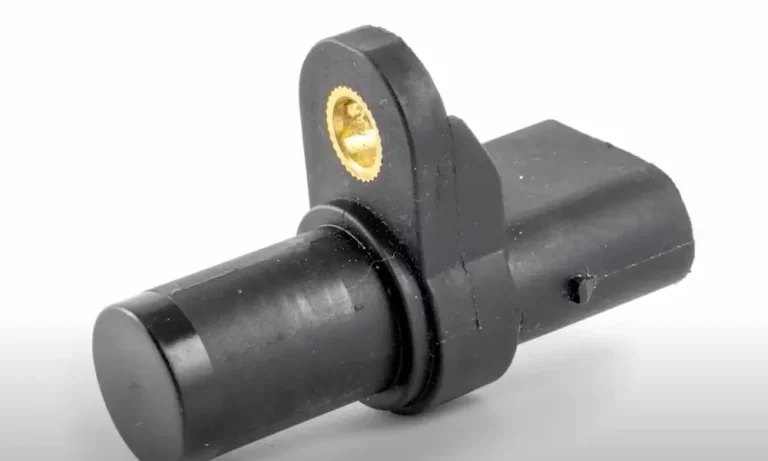
The crankshaft position (CKP) sensor is essentially your engine’s heartbeat monitor. It tracks two things: how fast the crankshaft spins (RPM) and where it sits relative to Top Dead Center (TDC). Your car’s powertrain control module (PCM) needs this data to fire the spark plugs and inject fuel at the right millisecond. Miss that window, and the engine stumbles, stalls, or flat-out refuses to start.
When you replace the sensor — or disconnect the battery — the PCM loses its stored “snapshot” of how your specific reluctor wheel behaves. That’s when a relearn becomes necessary.
Why Does the PCM Need to “Learn” the Sensor?
Here’s something most people don’t realize. The teeth on your reluctor wheel aren’t perfectly spaced. Tiny manufacturing variations — fractions of a millimeter — create signal “noise” at high RPM. Without a stored reference map, the PCM can’t tell the difference between that noise and an actual misfire.
Federal OBD-II regulations require your PCM to detect misfires that cause emissions increases. To do that accurately, it needs to map the unique physical profile of your reluctor wheel. That mapping process is the “relearn.”
Codes That Tell You a Relearn Is Needed
Before you start any procedure, confirm which code you’re dealing with. Not every code means you need a relearn — some point to hardware failure first.
| DTC | What It Means | What You Should Do |
|---|---|---|
| P0315 | Variation not learned — PCM has no reference data | Perform relearn immediately |
| P0335 | Complete sensor circuit failure | Replace sensor first, then relearn |
| P0336 | Intermittent or noisy signal | Relearn recommended after inspection |
| P1336 | GM-specific: CASE learn not done | Relearn required |
A P0315 code is the clearest sign you need a relearn. A P0335 means fix the hardware first.
How to Reset Crankshaft Position Sensor Without Scanner: The Universal Method
This five-phase drive cycle works on most OBD-II vehicles built after 1996. Follow each phase in order — skipping steps won’t work.
Phase 1: Prep the Car First
Don’t just jump in and drive. A few checks save you a lot of frustration:
- Fuel level: Keep it between 30% and 70%. The PCM won’t run certain learning modes if the EVAP monitor flags a fault.
- Cold soak: Let the car sit for at least eight hours — ideally overnight — in temperatures below 90°F. The PCM needs the coolant temperature and air temperature sensors to read within 5°C of each other.
- Check for other codes: A separate fault (bad O2 sensor, vacuum leak) can block the relearn from completing. Clear those first.
Phase 2: Battery Disconnect and Memory Clear
Disconnect the negative battery terminal. Then press and hold the brake pedal for 30–45 seconds. This drains the capacitors and forces the PCM to drop its adaptive memory — including any corrupt variation map — back to factory defaults.
Reconnect the battery. On many post-2010 vehicles, this disconnect may trigger a P0315 code, but that’s actually what you want. It tells you the PCM is ready to learn.
Phase 3: Cold Start and Idle Warmup
Start the engine and let it idle for 2–3 minutes in Park or Neutral. Here’s the key move most people miss: turn on all accessories — headlights, heater blower, rear defroster. Loading the electrical system forces the PCM to observe crankshaft behavior under real-world idle stress. Watch the idle settle into its normal range as the engine warms up.
Phase 4: City Driving and Highway Cruise
Drive at 25–40 mph on city roads. Make a few complete stops and normal accelerations. Once the engine hits operating temperature — around 158°F (70°C) — move to a highway.
Maintain a steady 55–60 mph for at least 5–10 minutes. Use cruise control if you have it. Constant throttle = steady crankshaft signal = easier learning. This steady-state phase lets the PCM stabilize its fuel trims before the critical next step.
Phase 5: The Coast-Down (Most Important Step)
This is where the actual relearn happens. From 55–60 mph, lift completely off the throttle and coast down to 45 mph — or all the way to a stop — without braking and without shifting.
During this coast, the PCM enters Deceleration Fuel Cut-Off (DFCO) mode. No combustion means the crank spins purely on vehicle momentum. The PCM uses this window to map the reluctor wheel’s unique mechanical noise profile.
Repeat this coast-down 4–5 times. The PCM needs multiple data points to build a statistically reliable map. This multi-pass approach is what makes the relearn stick.
Phase 6: Final Idle and Power Cycle
After your last coast-down, stop the car and let it idle for 2 minutes with the brake applied. Then turn the engine off and wait at least 30–60 seconds. This power cycle is when the PCM writes the new learned data from temporary memory into permanent storage. Don’t skip it.
After restarting, drive normally for two full drive cycles and confirm the Check Engine Light stays off.
Manufacturer-Specific Relearn Procedures
The universal drive cycle works for many cars, but GM, Nissan, Ford, and Toyota have their own tricks. Here’s what you need to know.
GM: The CASE Learn (Stationary Rev Method)
GM calls this the Crankshaft Angle Sensor Error (CASE) Learn. Many GM PCMs will enter passive learn mode when P1336 or P0315 is present.
Here’s the stationary sequence for most GM V6 and V8 engines (4.3L, 5.3L, 5.7L):
- Set the parking brake and chock the drive wheels.
- Warm the engine to at least 158°F (70°C).
- With the transmission in Park or Neutral, press the brake pedal firmly.
- Rev the engine to the fuel cutoff point — typically 4,000–5,150 RPM.
- The moment the engine hits the rev limiter (you’ll feel a stumble), release the throttle immediately.
- The PCM maps the variation during that split-second RPM drop back to idle.
Repeat 3–5 times. The idle will smooth out noticeably when the learn is complete.
Nissan: The “3-5-7-10” Pedal Sequence
Nissan uses a precise timed pedal sequence to reset ECM parameters after a CKP sensor replacement. Timing matters here — don’t rush it.
| Step | Action | Timing |
|---|---|---|
| 1 | Turn ignition ON (don’t start) | Wait 3 seconds |
| 2 | Fully press and release accelerator pedal | 5 times in 5 seconds |
| 3 | Wait with pedal released | 7 seconds |
| 4 | Press and hold accelerator pedal | Hold 10–20 seconds |
| 5 | Watch the MIL (Check Engine Light) | Wait for it to go solid |
| 6 | Release pedal and start engine | Within 3 seconds of solid light |
A successful sequence drops the RPM sharply as the ECM recalibrates idle and timing maps to the new sensor data.
Ford: Neutral Profile Correction
Ford’s system is primarily drive-based. The PCM looks for three clean decelerations from 60 mph down to 40 mph. That’s it. Follow the coast-down steps from the universal method above, and you’ll hit those three clean passes naturally.
Ford also has a hidden Engineering Test Mode on many models — including the F-150 and Mustang. Hold the “OK” button on the steering wheel while cycling the ignition to ON. This gives you raw sensor data readouts so you can confirm the new sensor is actually communicating with the PCM before you bother with a relearn.
Toyota: Drive Straight, Then It Fixes Itself
Toyota links the CKP relearn to its stability and traction control systems. After a battery disconnect or sensor replacement, the VSC light often comes on alongside the Check Engine light. On newer models, simply driving forward in a straight line at 10–20 mph for a short stretch after completing the main drive cycle usually clears everything.
On older Toyotas (1998–2004), a pedal sequence involving five gas pedal presses and six brake pedal presses resets the ECM security and timing parameters.
What If the Relearn Won’t Complete?
If the codes come back or the car still stumbles after multiple attempts, the problem likely isn’t the software — it’s the hardware.
Check the Air Gap and Sensor Tip
The gap between the sensor tip and the reluctor wheel teeth must be within spec. Even a slightly oversized gap — common with budget aftermarket sensors — produces a signal too weak for the PCM to map. Also, CKP sensors are magnetic. They attract metal shavings from engine oil like a magnet attracts iron filings. Any debris on the tip creates phantom signals the PCM can’t learn away.
Test for Thermal Intermittent Failure
CKP sensors commonly fail only when hot. The car starts fine cold, runs for 20 minutes, then stalls — and won’t restart until the sensor cools down. If that pattern sounds familiar, test resistance and voltage while the engine is at operating temperature, not just cold.
| Sensor Type | Test Point | Expected Reading |
|---|---|---|
| 2-Wire VR | Resistance across pins | Per manufacturer spec |
| 3-Wire Hall Effect | Reference voltage | 5V or 12V from PCM |
| 3-Wire Hall Effect | Ground | Less than 0.1V |
| 3-Wire Hall Effect | Signal while cranking | Toggling 0V–5V square wave |
If the sensor tests good but the car won’t start, try unplugging it entirely. If the fuel and voltage gauges suddenly wake up, the sensor is internally shorted and dragging down the PCM’s 5V reference bus — replace it immediately.
Check the Cam-Crank Correlation
The PCM constantly compares CKP data against the camshaft position sensor. If your timing chain is stretched or a tensioner has slipped, the cam-crank relationship falls outside the allowable window and the relearn will fail every time. A P0017 code alongside P0315 is a strong hint that mechanical timing — not the sensor — is your real problem.
Quick-Reference Checklist Before You Start
- ✅ Fuel tank between 30–70%
- ✅ Car cold-soaked for 8+ hours below 90°F
- ✅ Battery disconnected and capacitors drained
- ✅ All accessories turned on during idle warmup
- ✅ Engine fully at operating temp before highway phase
- ✅ Cruise control used during 55–60 mph cruise
- ✅ 4–5 clean coast-downs from 60 mph to 45 mph
- ✅ Engine off for 30–60 seconds after final idle
- ✅ Two full drive cycles completed before confirming fix
Knowing how to reset crankshaft position sensor without scanner isn’t just a money-saving trick — it’s a fundamental skill for anyone who works on their own car. Follow the phases in order, respect the timing on brand-specific sequences, and don’t skip the power cycle at the end. Your PCM does the hard work; you just need to give it the right conditions to learn.