Your car feels sluggish, smells like rotten eggs, and the check engine light won’t quit. Sound familiar? A clogged catalytic converter might be your culprit. This guide breaks down exactly how to unclog a catalytic converter — from a $20 bottle of additive to professional-grade cleaning. Stick around, because the fix depends entirely on what’s clogging it.
What’s Actually Happening Inside Your Catalytic Converter
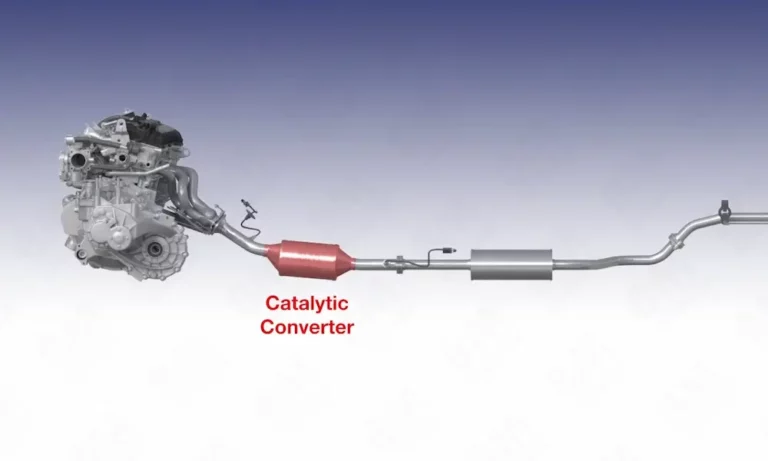
Your catalytic converter isn’t just a metal box. Inside sits a fragile ceramic honeycomb coated with precious metals — platinum, palladium, and rhodium. These metals trigger chemical reactions that convert toxic exhaust gases into less harmful ones.
When those honeycomb channels get blocked, exhaust can’t flow freely. Your engine chokes, power drops, and fuel economy tanks.
The tricky part? Not all clogs are equal — and the wrong fix can waste your time and money.
Why Catalytic Converters Get Clogged
Clogging almost never happens randomly. It’s a symptom of an upstream problem you haven’t fixed yet. Here are the three main culprits:
Carbon and Soot Buildup
Short city trips and frequent idling keep exhaust temperatures low. When temperatures stay below 325°C (617°F), soot doesn’t burn off — it accumulates. This is the only type of clog you can actually clean.
Thermal Melt (The Bad One)
Engine misfires send unburned fuel into the converter. That fuel ignites on the ceramic substrate, superheating it past 1,600°F. The honeycomb cells fuse together permanently. No cleaner, no soak, nothing fixes this — you need a replacement.
Chemical Poisoning
Coolant leaks introduce silicone into the exhaust stream. That silicone coats the precious metal catalyst with a glassy film. Oil-burning engines deposit phosphorus and zinc from anti-wear additives. Once poisoned, the converter is chemically dead — cleaning won’t revive it.
Quick Diagnosis Table:
| Clog Type | Cause | Cleanable? |
|---|---|---|
| Carbon/Soot | Short trips, low temps | ✅ Yes |
| Thermal Melt | Engine misfires | ❌ No — replace |
| Silicone Poisoning | Coolant leak | ❌ No — replace |
| Oil Ash (Phosphorus/Zinc) | Engine burning oil | ⚠️ Sometimes |
How to Confirm You Actually Have a Clog
Don’t guess. Run these checks first.
Backpressure Test
Remove the upstream oxygen sensor and thread in a low-pressure gauge. Here’s what the numbers mean:
| Engine State | Normal Reading | Clogged Threshold |
|---|---|---|
| Idle | Under 1.0 PSI | Over 1.25 PSI |
| 2,500 RPM | Under 2.0 PSI | Over 3.0 PSI |
High readings that stay elevated tell you the substrate has collapsed or melted. Fluctuating readings that improve under load? That’s loose carbon — cleanable.
Infrared Temp Check
Point an infrared thermometer at the inlet and outlet pipes of the converter.
- Healthy converter: Outlet runs roughly 100°F hotter than the inlet (the chemical reaction generates heat)
- Clogged or dead converter: Inlet equals or exceeds outlet temperature — no reactions happening
Vacuum Gauge Test
Connect a vacuum gauge to the intake manifold. Rev to 2,500 RPM and hold it. A healthy engine’s vacuum recovers quickly. If vacuum keeps dropping while you hold the RPM steady, your engine can’t push exhaust out fast enough — classic restriction.
Method 1: Fuel Additive (Try This First)
If your diagnostics point to carbon buildup, start here. It’s cheap, takes 30 minutes, and works surprisingly well on mild clogs.
How These Cleaners Actually Work
Products like Cataclean don’t function like soap washing a dish. Their active ingredients — petroleum distillates, acetone, and xylene — survive the combustion process. They reach the converter as vapor and chemically alter carbon bonds, letting soot oxidize at lower temperatures and exit as gas.
Higher-end products like Chevron Techron use polyetheramine (PEA) to clean your fuel injectors too — cutting new soot production while clearing old deposits.
How to Use Them Correctly
- Add the cleaner to a tank that’s ¼ to ½ full — keeps the concentration high
- Drive at sustained highway speeds for 15–30 minutes (2,000–3,000 RPM)
- Don’t just idle in your driveway — the high-load heat (above 600°F) is what activates the chemistry
| Brand | Best For | Use Frequency |
|---|---|---|
| Cataclean | Full exhaust system, O2 sensors | Every 3 months |
| BG 44K | Injectors and combustion chamber | Every 10,000 miles |
| Chevron Techron | Prevention and light carbon | Every oil change |
Method 2: The Italian Tune-Up
This sounds like a myth, but there’s real science behind it. Drive your car hard — highway speeds, sustained RPMs — for 30 minutes or more.
Carbon soot needs to hit 325°C to oxidize into gas and exit the exhaust. Urban driving rarely reaches that threshold. A hard highway run pushes exhaust temps high enough to trigger “passive regeneration,” burning off light soot deposits naturally.
The limits: This won’t fix a severely clogged converter — and in that case, trapping extra heat during a high-RPM run can actually accelerate substrate melting. Use this as prevention or for very light fouling, not as an emergency cure.
Method 3: Manual Off-Vehicle Cleaning
Additive didn’t cut it? You can pull the converter and soak it. This works well for heavily soot-loaded converters that are still structurally intact.
Removing Rusted Bolts Without Breaking Them
Exhaust bolts rust solid. Break one and you’re drilling and tapping threads — a bad day. Use these strategies instead:
- Penetrating oil (Kroil or Deep Creep): Apply 24–48 hours before you wrench — their ultra-low surface tension creeps into microscopic thread gaps
- Induction heater: Heats the nut cherry-red in seconds using magnetic fields, no open flame needed — expands the metal and breaks the rust bond
- The wax trick: Heat the bolt, then touch a paraffin candle to the threads — molten wax wicks deep by capillary action
The Soak and Rinse Process
Submerge the converter in an industrial degreaser solution for up to 24 hours. Agitate it occasionally to move fluid through the channels. Then rinse with low-pressure water only — high pressure cracks the fragile ceramic walls.
The Critical Drying Step
This is where people destroy their converters after cleaning them.
The converter must dry completely before reinstallation — sometimes 24 hours in a warm, dry space. If any moisture remains in the porous ceramic when you fire up the engine, it flash-boils into steam. That internal pressure shatters the substrate instantly. A clean converter becomes a bag of ceramic shards.
Method 4: Professional Ultrasonic Cleaning
For stubborn cases, professional shops use ultrasonic cleaning tanks. High-frequency sound waves create millions of microscopic cavitation bubbles that implode against the honeycomb surface, physically stripping ash and soot without touching the delicate washcoat. Studies show this process can restore up to 99% of original flow capacity.
Some shops also use dual-temperature steam machines that circulate 200°C steam through the converter, reducing NOx and CO emissions by over 90% and potentially extending the unit’s life by two to three years.
Know the Law Before You Touch Anything
Under Section 203 of the Clean Air Act, removing or disabling an emissions control component is a federal offense. Cleaning your converter to restore function is completely legal. “Gutting” the substrate and installing a test pipe is not — and carries serious civil penalties.
If you need a replacement, the rules differ by state:
| State Type | Part Required | Warranty |
|---|---|---|
| EPA States | EPA-compliant converter | 2 years / 25,000 miles |
| CARB States (CA, NY, CO, ME) | CARB-approved with visible EO number | 5 years / 50,000 miles |
CARB converters contain higher precious metal concentrations and must match your vehicle’s specific engine family — check the EO number database before buying.
The Real Cost of Waiting
Replacement catalytic converters are expensive because of the precious metals inside — and those metals never get consumed in the reaction, they stay in the substrate forever.
| Vehicle Type | Aftermarket Part | OEM Part | Total With Labor |
|---|---|---|---|
| Economy Sedan (e.g., Corolla) | $200–$500 | $900–$1,200 | $1,000–$1,500 |
| Pickup Truck (e.g., F-150) | $350–$700 | $800–$2,400 | $1,200–$3,000 |
| Hybrid (e.g., Prius) | $1,000–$1,500 | $1,800–$3,000 | $2,200–$4,000 |
One thing people miss: even a dead converter holds significant scrap value — anywhere from $50 for a small aftermarket unit to over $1,400 for a hybrid OEM unit. Always reclaim that value when you replace.
How to Stop This From Happening Again
The converter is a downstream victim of upstream problems. Fix the source and the converter takes care of itself.
- Replace spark plugs on schedule — misfires are the fastest path to a melted substrate
- Address oil burning and coolant leaks immediately — both chemically poison the catalyst in ways no cleaning reverses
- Replace aging O2 sensors — a lazy sensor causes the engine to run rich, loading the converter with fresh soot
- Take a 30-minute highway drive weekly if you mostly drive in the city — this triggers passive regeneration and burns off light soot before it builds into a real problem
- Use a PEA-based fuel cleaner quarterly — it keeps injectors clean, which means cleaner combustion and less soot reaching the converter in the first place
With consistent habits, a catalytic converter can easily last beyond 150,000 miles. The goal isn’t just knowing how to unclog a catalytic converter — it’s making sure you rarely have to.