Picked up the wrong coolant for your Jeep or Ram and now you’re not sure if it’ll work? Or maybe your purple coolant has turned orange and you’re wondering if someone already made a costly mistake? Either way, this guide breaks down every validated MS-12106 coolant equivalent, what to avoid, and why getting this wrong can turn your cooling system into something resembling peanut butter.
What Is MS-12106 Coolant?
MS-12106 is Chrysler’s official coolant specification for vehicles built from the 2013 model year onward. It covers Chrysler, Dodge, Jeep, and Ram vehicles under the Stellantis (formerly FCA) umbrella.
It’s a pure Organic Acid Technology (OAT) formula. That means it’s completely free of silicates, phosphates, borates, and nitrites. Instead, it uses long-chain organic acids to target corrosion only where it starts—not coating every surface like older coolants did. That selective approach is why it lasts 10 years or 150,000 miles.
The factory fill is purple. That color matters more than you’d think—we’ll get to that shortly.
MS-12106 vs. MS-9769: Know the Difference
Before 2013, Chrysler used MS-9769, a Hybrid Organic Acid Technology (HOAT) coolant. HOAT mixes organic acids with inorganic silicates. It worked well for aluminum engines at the time, but silicates degrade faster and limit service life to around 5 years or 100,000 miles.
MS-12106 replaced MS-9769 entirely. These two fluids are chemically incompatible. Mixing them causes a catastrophic reaction—more on that below.
MS-12106 vs. MS-90032: Are They the Same?
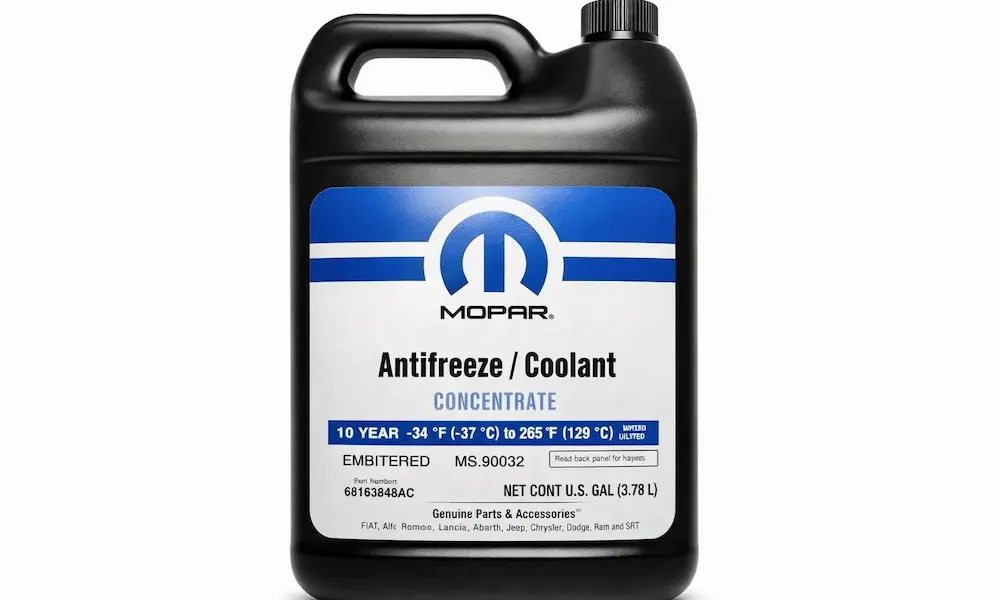
Almost. MS-90032 is the Mopar OAT concentrate spec. MS-12106 is the prediluted 50/50 version. The chemistry is identical—MS-90032 mixed 50/50 with distilled water equals MS-12106. The only technical difference is that MS-12106 includes a bittering agent for anti-ingestion safety compliance. In terms of engine protection, they’re the same fluid.
MS-12106 Specs: The Benchmarks That Matter
Any coolant claiming MS-12106 equivalency must meet these physical and chemical requirements:
| Parameter | Required Value (50/50 Mix) |
|---|---|
| Chemistry | OAT — silicate & phosphate free |
| Color | Purple (violet) |
| pH | 8.1 – 9.0 |
| Specific Gravity | 1.065 – 1.080 |
| Freeze Protection | -37°C (-34°F) |
| Boil Protection | 129°C (265°F) at 15 psig |
| Service Interval | 10 years / 150,000 miles |
| Reserve Alkalinity | > 1.5 mL |
| Foam Break Time | < 150 mL (5 seconds) |
The Best MS-12106 Coolant Equivalents
Mopar OEM Options (Best Choice)
If you want zero guesswork, go straight to the source.
- Mopar 68163849AB — 50/50 prediluted, meets MS-12106 exactly. Ready to pour, no mixing needed.
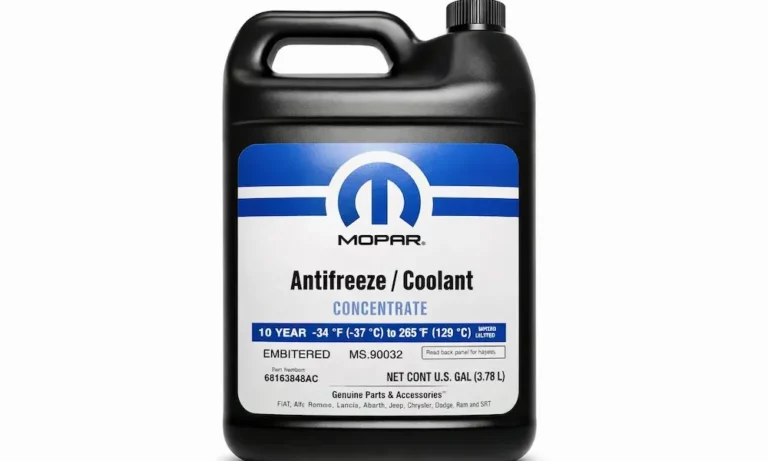
- Mopar 68163848AB — Full concentrate, meets MS-90032. Mix 50/50 with distilled water only for full MS-12106 protection.
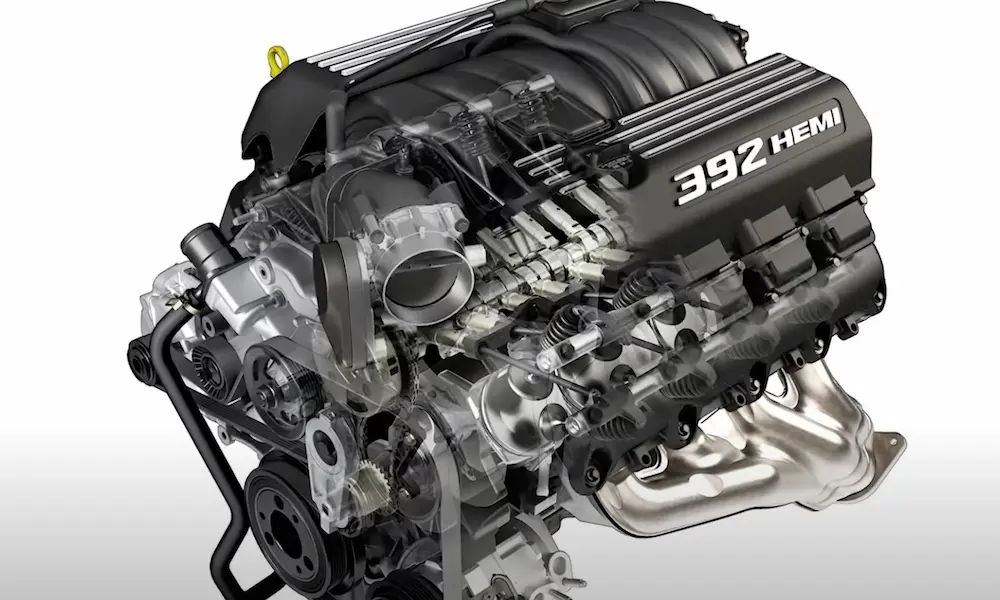
Both are purple and engineered specifically for Pentastar V6 and HEMI V8 engines.
Prestone American Purple (AF6900)
Prestone MAX American Purple targets Jeep, Ram, Dodge, and Chrysler vehicles from 2000 onward. It’s purple, OAT-based, and explicitly marketed as an MS-12106 compatible replacement. Prestone backs it with a 15-year / 350,000-mile protection guarantee.
The Prestone Platinum American Purple version works the same way and is widely available at Walmart in 50/50 form.
Watch out: Prestone’s universal “all vehicles” line uses a Cor-Guard inhibitor package that claims compatibility with OAT, HOAT, and IAT fluids. That sounds convenient, but those universal bottles typically don’t carry specific MS-12106 certification. Stick to the purple American Vehicle bottles.
Aisin ACD-007 (Purple)
The Aisin Extended Life Purple is a 50/50 prediluted OAT coolant engineered specifically for Stellantis vehicles. Its product data sheet explicitly lists compatibility with MS-12106, MS-90032, and MS-9769G. It’s a solid, well-documented alternative.
Zerex American Vehicle Orange (Valvoline)
Don’t let the color fool you. Zerex American Vehicle Orange is a pure OAT formula—silicate free, phosphate free—and its carboxylate chemistry aligns with the MS-12106 requirement. The orange dye is a manufacturer choice, not a chemistry difference.
Zerex G30 (pink) is another pure OAT option. It’s phosphate and silicate-free and uses a compatible inhibitor package for Chrysler cooling systems.
Skip Zerex G40. It’s a silicated OAT (Si-OAT) designed for European vehicles like Mercedes and Audi. Its purple color creates confusion, but it contains silicates, which disqualifies it from true MS-12106 equivalency for North American Pentastar and HEMI platforms.
PEAK OET North American Orange
PEAK Original Equipment Technology North American Orange explicitly recommends its product where FCA/Chrysler MS-12106 is specified. It’s ethylene glycol-based, silicate-free, phosphate-free OAT chemistry. Another orange option that does the job correctly.
Quick Cross-Reference Table
| Brand | Product | Color | Chemistry | MS-12106 Compatible |
|---|---|---|---|---|
| Mopar | 68163849AB (50/50) | Purple | OAT | ✅ OEM |
| Mopar | 68163848AB (Conc.) | Purple | OAT (MS-90032) | ✅ OEM |
| Prestone | MAX American Purple AF6900 | Purple | OAT | ✅ |
| Aisin | ACD-007 | Purple | OAT | ✅ |
| Zerex | American Vehicle Orange | Orange | OAT | ✅ |
| Zerex | G30 | Pink | OAT | ✅ |
| Zerex | G40 | Purple | Si-OAT | ⚠️ Not for HEMI/Pentastar |
| PEAK | OET North American Orange | Orange | OAT | ✅ |
| Turbo Power | OAT Extended Life | Orange | OAT | ✅ |
| Pentosin | Pentofrost SF 8114107 | Pink | OAT (silicate-free) | ✅ |
What Happens When You Mix OAT and HOAT
This is the most critical section in this entire post. Read it carefully.
When MS-12106 (OAT) contacts MS-9769 (HOAT), the silicate stabilizers in the HOAT fluid react with the organic acids in the OAT fluid. The silicates drop out of suspension almost immediately. What you get is a thick, brown sludge that technicians describe as peanut butter or mud.
The damage this causes:
- Heater core blockage — sludge settles in low-flow areas first, killing cabin heat
- Radiator restriction — engine overheating follows quickly
- Water pump seal failure — precipitated solids act as an abrasive
- Aluminum corrosion — the destabilized fluid stops protecting engine surfaces
- Ammonia odor — the chemical reaction can produce ammonia gas, detectable when you remove the radiator cap
The Chrysler TSB 07-004-12 is emphatic: if mixing is suspected, drain the system completely, back-flush it, and refill with correct Mopar OAT fluid. There’s no halfway fix.
The Purple Dye Problem: Why Color Isn’t Reliable
Here’s where most mistakes happen. New MS-12106 is purple. But heat and air exposure degrade the dye over time. Within 20,000 to 30,000 miles, that purple fluid can fade to pink or orange—the exact same colors as the HOAT fluid you’re supposed to avoid.
An owner or untrained tech sees orange coolant, assumes it’s the old HOAT spec, tops off with HOAT, and starts the gelation process without realizing it.
How to avoid this:
- Check the sticker on your coolant reservoir—Chrysler vehicles built since 2013 carry an “OAT” label or reference MS-12106/MS-90032 directly
- Don’t rely on color alone—ever
- Use a refractometer to check glycol concentration, not a hydrometer
The Chrysler-mandated Refractometer Tool 8286 measures refractive index to confirm actual glycol concentration. A hydrometer can’t tell OAT from HOAT—a refractometer can help you confirm what’s actually in the system. The correct target is 50% ethylene glycol and 50% distilled water.
Maintenance Rules You Can’t Skip
Always Use Distilled Water
Tap water contains calcium, magnesium, and chlorides. These react with OAT organic acids to form scale and accelerate pitting in aluminum components. Use distilled or deionized water every time you dilute a concentrate. Prediluted 50/50 bottles from brands like Mopar and Zerex already use demineralized water—that’s part of what you’re paying for.
Flush the Right Way
A simple drain at the 10-year mark isn’t enough. A proper back-flush involves:
- Removing the thermostat to allow full system flow
- Flushing the heater core independently through its inlet and outlet ports
- Flushing the radiator in reverse flow to dislodge sediment from the bottom
- Refilling with a vacuum filler to eliminate air pockets
Air pockets cause localized boiling inside the engine, which breaks down OAT inhibitors faster and accelerates corrosion in exactly the spots you’re trying to protect.
Watch Your Concentration
Systems below 40% glycol concentration risk freezing in cold climates—cracked blocks and split radiators follow. Systems above 70% glycol actually have worse freeze and heat transfer performance. The 50/50 target exists for a reason. Check concentration with a refractometer at every coolant service.