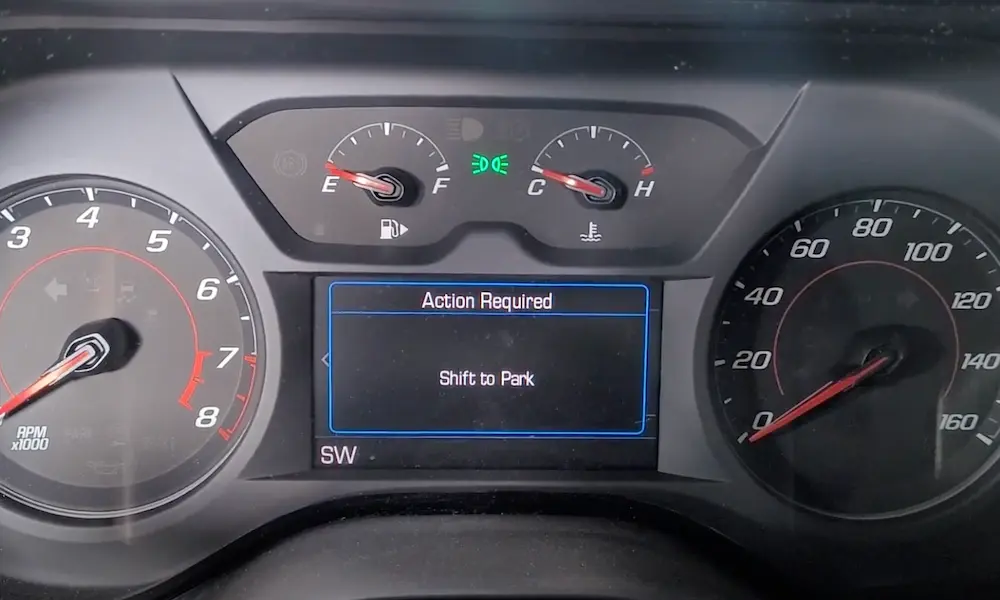
If your Silverado’s dashboard just lit up with “Service 4WD,” you’re probably here looking for answers. The good news? You’re not stuck replacing the whole thing just yet. Most Chevy Silverado transfer case problems have clear causes—and if you catch them early, you can save yourself thousands. Let’s dig into what’s actually breaking, why it happens, and what you can do about it.
The Infamous “Pump Rub” Issue (1999-2007 Models)
Here’s the nasty truth about GMT800 Silverados: they’ve got a design flaw that’ll quietly destroy your transfer case while you’re none the wiser.
How Pump Rub Actually Happens
Your transfer case uses a small pump to circulate oil. In NP261 and NP263 models, this pump “floats” on the shaft and stays put thanks to five aluminum tabs that sit in pockets cast into the magnesium case. Sounds fine, right?
Wrong. Those aluminum tabs are harder than the magnesium case. Every time you drive, vibration causes those tabs to slowly grind through the soft magnesium like a drill bit. Eventually, they punch a hole straight through the case.
The hole usually appears around the 5 or 7 o’clock position—high enough that fluid doesn’t leak when you’re parked. It only seeps out while driving and the pump’s running. You won’t see puddles in your driveway. By the time you hear grinding noises, your bearings and gears have already run dry and cooked themselves.
The Real Fix (Not Just a Band-Aid)
Don’t just replace the case with another stock unit. You’ll reset the clock on the same failure.
The permanent solution is a pump rub kit (also called a “case saver”). These kits replace the pump housing with a billet aluminum or steel version that has much wider tabs. More surface area means the load spreads out instead of concentrating at five tiny points.
If you catch it before internal damage occurs, a shop can install the kit for $600-$800. That’s mostly labor for dropping the transfer case and splitting it open. Compare that to $2,000-$3,500 for a full replacement after catastrophic failure, and the math is pretty clear.
Early detection is everything. Crawl under your truck and inspect the upper rear section of the transfer case. Look for fresh oil or a small hole. Clean the area first—it’s easy to miss under years of road grime.
The “Service 4WD” Message: What’s Actually Breaking
That dreaded dashboard message isn’t one problem—it’s a catch-all for about a dozen different failures. Let’s break down the most common culprits by generation.
GMT800 Era: The Encoder Motor Position Sensor
If you’re getting code C0327, your encoder motor position sensor is shot.
This sensor tells the Transfer Case Control Module (TCCM) where the shift fork actually is. Inside, it uses resistive tracks with wiping contacts—basically 2003 technology that wears out. Debris builds up, the tracks degrade, and eventually the resistance values go haywire.
The TCCM sees garbage data and panics. It throws the truck into safe mode, won’t let you shift, and displays “Service 4WD.”
You can replace just the sensor, but since you’ve got to pull the motor anyway and these trucks are 15+ years old, most techs replace the whole encoder motor assembly. Budget $450-$900 depending on whether you go OEM or aftermarket.
The Ground That Everyone Forgets
Before you throw money at sensors and modules, do this first: clean ground G110.
This ground point lives on the driver’s side frame rail or the back of the engine block. It handles grounding for the TCCM and encoder motor. Road salt and moisture turn it into a corroded mess, creating resistance in the ground circuit.
Even tiny amounts of resistance throw off the voltage readings the TCCM uses to interpret sensor data. You’ll chase codes, replace parts, and still have the same problem—all because of a crusty ground connection.
Find G110, unbolt it, wire brush both the frame and the terminal ring down to bare metal, hit it with some dielectric grease, and bolt it back down tight. This fixes a shocking number of electrical gremlins.
Chain Stretch and Clunking Noises (2007-2018 Models)
When GM switched to Magna Powertrain cases (MP3023, MP3024) in 2007, they solved pump rub but created new headaches. These units run a chain drive, and that chain doesn’t love high torque.
What Chain Stretch Sounds Like
You’ll hear a loud clunk or ratcheting under hard acceleration, especially when towing or using Auto 4WD mode. That’s the chain—now elongated from wear—slapping against the inside of the aluminum case or skipping over sprocket teeth.
Don’t confuse this with rear diff noise. To check, drain the transfer case fluid and look for aluminum shavings. That’s proof the chain’s beating up the case walls. You can also stick a borescope through the drain hole to visually check chain slack.
If you ignore it, the chain can wear through the case (creating a leak) or snap entirely, turning your transfer case into an expensive paperweight.
The 2014-2015 Recall You Might’ve Missed
GM issued recall 14192A for 2014-2015 Silverado 1500 and HD models with the NQH transfer case. The problem? Electrical noise could trick the TCCM into shifting to Neutral while driving.
Lose power while moving and it’s dangerous. Worse, if it happens while parked, your truck can roll away even though the transmission’s in Park. The parking pawl is in the transmission—upstream of the transfer case. If the case is in Neutral, that pawl does nothing.
The fix is a software reflash that requires a cleaner, more sustained signal to command Neutral. If you own one of these trucks and haven’t had the recall done, get it handled. It’s free and prevents a genuine safety hazard.
Water Intrusion Nightmare (2019-2023 Models)
The newest Silverados have a quality control disaster on their hands: water getting into electrical connectors.
TSB 22-NA-187: The Corrosion Problem
Technical Service Bulletin 22-NA-187 addresses widespread failures caused by inadequate sealing at the transfer case actuator motor and front axle actuator connectors.
Water and road salt sneak past the connector seals. The moisture corrodes the pins, turning them green with copper oxide. Resistance goes up, circuits open, and you get codes like C119B (Actuator Supply Voltage) or lost communication errors.
Here’s the nasty part: water can wick up inside the wire insulation through capillary action. It travels through the harness like a sponge, potentially reaching the TCCM or junction blocks and wreaking electrical havoc far beyond the original leak point.
Cleaning the pins doesn’t cut it. You need to replace the actuator motor (the pins are integrated), replace the pigtail harness section, and coat the new connections with dielectric grease (NyoGel specifically) to keep water out.
If you’ve got a 2019-2023 Silverado throwing 4WD codes, disconnect the actuator connectors and inspect for green corrosion. It’s the first thing to check.
Single-Speed vs. Two-Speed: Know What You Bought
The 2019+ T1XX platform introduced the NP0 transfer case—a single-speed unit with no low range. It’s standard on many light-duty trims (Custom, RST).
If you bought your truck new, you probably knew this. If you bought used, you might not realize what you’re missing until you try to pull a boat up a steep ramp or crawl over rocks.
The NP0 lacks the 2.72:1 low-range gear reduction found in the two-speed NQH unit. For daily driving and light towing, it’s fine. For serious off-road work or pulling heavy loads up grades, it’s a limitation.
Early NP0 units also had output shaft seal leaks. If you run Auto 4WD frequently, fluid loss can cause clutch slippage. Updated seals and oil slingers address this, but it’s worth checking if you’ve got an early 2019 build.
Diagnostic Codes Decoded
Here’s a quick reference for the most common trouble codes you’ll see:
| Code | What It Means | What’s Probably Wrong |
|---|---|---|
| C0327 | Encoder circuit fault | Worn position sensor; bad ground |
| C0306 | Motor circuit failure | Open motor winding; blown 4WD fuse |
| C0569 | System config error | TCCM needs relearn or reprogramming |
| C119B | Actuator supply voltage | Water in connector (2019+ models) |
| U0102 | Lost communication with TCCM | Dead module; power/ground loss |
Before replacing anything, always check power, ground, and fuse integrity. Half the “bad modules” people replace just had corroded grounds.
Fluid: The Maintenance Everyone Skips
Transfer case fluid is the most neglected fluid in your truck. It’s also critical, especially if you’ve got an active 4WD system with wet clutches.
Getting the Fluid Right
Do not use the wrong fluid. Using regular ATF in an NP246 (which requires Auto-Trak II) will cause clutch chatter and failure.
| Transfer Case | Correct Fluid | Color | Notes |
|---|---|---|---|
| NP261/NP263 | Dexron VI | Red | Dex VI is backward compatible with older Dex III spec |
| NP246 | Auto-Trak II (88900402) | Blue | Mandatory. Do NOT substitute ATF. |
| MP3023/MP3024 | Dexron VI | Red | Magna cases use ATF even for active units |
| NP0 | Dexron VI | Red | Sensitive to fluid level and condition |
If you’re not sure which case you have, check the RPO codes in your glovebox. NP8 = Auto-Trak II (blue). NQH or NQF = Dexron VI (red).
How Often to Change It
Severe service (towing, off-road, plowing): every 25,000-30,000 miles.
Normal use: every 50,000 miles.
The capacity is only about 2 quarts. Heat degrades it fast, and in active cases, clutch material contaminates the fluid. Regular changes flush out debris and replenish friction modifiers.
Repair or Replace? The Money Question
When your transfer case dies, you’ve got options. Here’s how the costs shake out:
Minor Repairs
Output shaft seals: $20-$50 in parts, $150-$300 in labor. Easy win if you caught a leak early.
Pump rub fix (before catastrophic failure): $80 case saver kit plus 4-6 hours labor = $600-$900 total. Cheap insurance compared to replacement.
Encoder motor: $300-$600 part, 1 hour labor = $450-$800. Bolt-on external repair.
Full Replacement
If you’ve got hard part failure (exploded planetary gears, snapped chain, burnt clutches), you’re looking at replacement:
- Used/junkyard unit: $800-$1,500. Cheapest option but you’re gambling on inheriting the same problems.
- Remanufactured: $2,100-$3,500. Comes with a warranty (1-3 years). Solid choice for most people.
- Aftermarket upgrade: $2,500-$4,000. Fixes design flaws with billet parts and upgraded case halves. Overkill unless you’re building a serious rig.
The Bottom Line
Chevy Silverado transfer case problems aren’t mysterious. Each generation has specific weak points:
1999-2007 (GMT800): Pump rub will kill it. Install a case saver kit proactively. Clean ground G110 for electrical issues.
2007-2018 (GMT900/K2XX): Listen for chain slap. Get the 2014-2015 recall done if applicable. Keep TCCM software updated.
2019-2023 (T1XX): Protect those actuator connectors from water. Use dielectric grease. Check for green corrosion if you get codes.
Catch these issues early and you’re looking at a few hundred bucks. Ignore them and you’re buying a whole new transfer case. Your call.