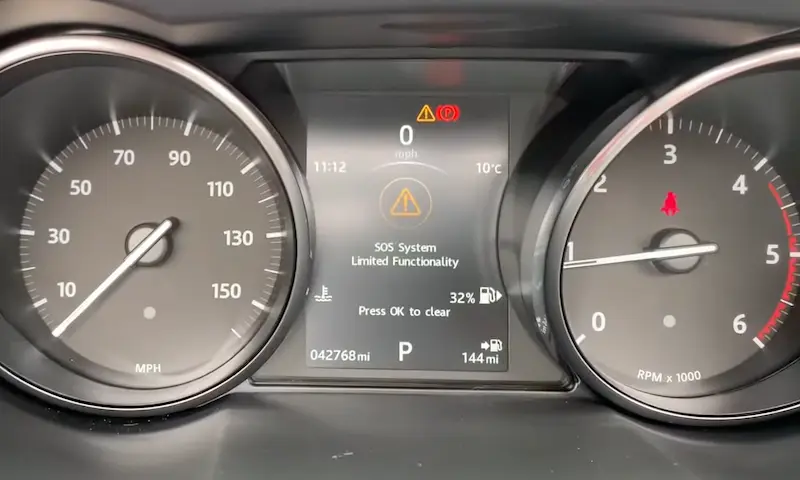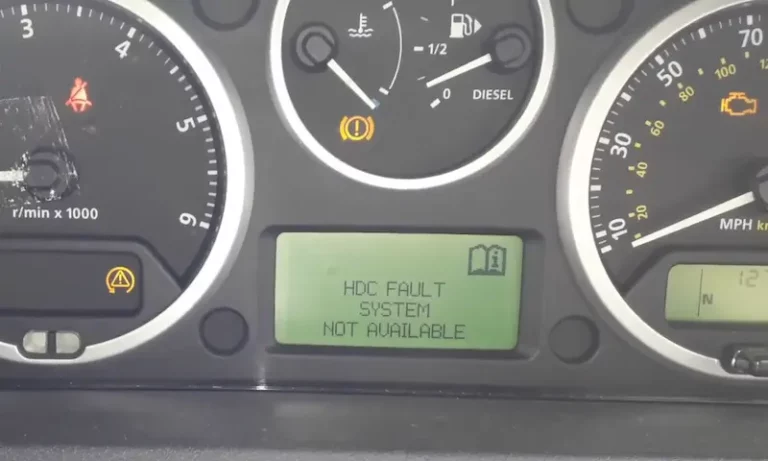
That dreaded “HDC Fault System Not Available” message just lit up your dashboard, and now you’re wondering if your wallet’s about to take a serious hit. Good news: most Range Rover HDC system faults aren’t the wallet-draining disasters they seem. This guide walks you through the real causes, proven fixes, and what you’ll actually spend to get your Hill Descent Control working again.
What the HDC System Actually Does
Your Hill Descent Control works like reverse cruise control. Instead of keeping you moving at steady speed on flat roads, it maintains controlled descent speed on steep hills by automatically pumping your brakes. You just steer—the system handles everything else.
The HDC system connects multiple components including your ABS module, brake system, steering angle sensor, and wheel speed sensors. These parts communicate through your vehicle’s CAN bus network. When working properly, HDC lets you focus entirely on steering while the system manages braking automatically during steep descents.
When HDC Works (And When It Won’t)
HDC only functions below 31 mph. Above that speed, you’ll see “HDC Not Available: Speed Too High” on your dashboard. At speeds over 50 mph, the system shuts off completely and you’ll need to reactivate it manually.
You’ll also see “HDC Not Available in This Gear” if you’re in high gear. That’s normal—not a fault.
Why Your Range Rover HDC Fault Happened
Your Battery’s Probably the Culprit
Here’s something most Range Rover owners don’t realize: the HDC system is ridiculously sensitive to voltage drops. Even minor fluctuations can trigger that fault message.
A battery that seems fine for starting your vehicle might still cause HDC faults. Your alternator could be failing, or you might just have corroded battery terminals. Any of these issues can make your HDC system freak out and display multiple unrelated warning messages.
The battery causes 60-70% of all HDC faults. That’s why it’s always your first check.
That Tiny Brake Light Switch Costs $20 and Breaks Everything
Your brake light switch does way more than just turn on your brake lights. This $15-30 part controls multiple vehicle functions, and when it fails, your Range Rover thinks multiple systems are broken.
Brake light switch failure is especially common in L320 Range Rover Sport models. When this switch goes bad, you’ll typically see the HDC fault alongside transmission errors and suspension issues.
The switch sends signals to various control modules. When it fails, those modules interpret the missing signal as a system fault. That’s why one cheap part can trigger three or four different dashboard warnings.
Your Steering Angle Sensor Lost Its Mind
Steering angle sensor problems cause about 10-15% of HDC faults. This happens especially after wheel alignments or suspension work.
The sensor can physically detach from your steering column, or it might just need recalibration after maintenance. Since HDC relies on steering position data to modulate brakes correctly, a wonky steering angle sensor kills the whole system.
How to Diagnose Your Range Rover HDC System Fault
Start With the Easy Stuff
Check your battery first. You need 12.6 volts or higher when the engine’s not running. Don’t just check if it starts your vehicle—get it load tested. Many auto parts stores do this free.
Test your brake lights next. Press the pedal and make sure all brake lights illuminate immediately. They should turn off instantly when you release the pedal. Any delay or inconsistent operation can trigger HDC faults.
Try a system reset before you spend money. Turn off your ignition, remove the key, and wait 30 seconds to several minutes. For stubborn faults, disconnect your battery for 10-30 minutes. This clears stored fault codes and resets system parameters.
Get the Right Diagnostic Tool
Generic OBD-II scanners won’t cut it for Range Rover HDC faults. You need Land Rover-specific diagnostic equipment.
The GAP IID Tool BT, Launch Creader Elite JL, or iCarsoft LR scanners read Land Rover-specific fault codes and perform system calibrations. These cost $120-600, but they’ll pay for themselves if you own a Range Rover long-term.
Standard scanners might show basic engine codes, but they can’t access ABS, suspension, or HDC system data. They’re practically useless for this problem.
When Multiple Systems Fail Simultaneously
Seeing HDC Fault + Transmission Fault + Suspension Lowered all at once? That’s usually your brake light switch.
Multiple unrelated system errors typically point to CAN bus communication faults or severe electrical issues affecting multiple control modules. These situations need professional diagnosis—they’re not DIY-friendly.
Common fault codes include U0126 (Lost communication with Steering Angle Sensor) and U0428 (Invalid Data Received from Steering Angle Sensor). You’ll need specialized knowledge of Land Rover’s network architecture to fix these.
DIY Fixes That Actually Work
Replace Your Battery (Even If It Seems Fine)
Your battery might start the vehicle perfectly but still cause HDC faults. Range Rovers demand more from batteries than most vehicles.
A quality replacement battery costs $100-200. Clean your terminals thoroughly before installing the new battery. Corroded connections cause as many problems as bad batteries.
Range Rover batteries typically need replacement every 3-5 years, regardless of how well they seem to work. The HDC system just doesn’t tolerate aging batteries.
Swap That Brake Light Switch
This is the best bang-for-your-buck repair you’ll ever do on a Range Rover. The switch costs $15-30 and takes 5-15 minutes to replace.
Here’s a money-saving tip: many Range Rover models use the same brake light switch as Ford Focus vehicles. You can grab the Ford part for less money—it’s the exact same component.
If you see HDC faults combined with transmission or suspension warnings, replace this switch before you do anything else. It fixes multiple problems with one cheap part.
Recalibrate Your Steering Angle Sensor
Sometimes your steering angle sensor just needs recalibration, not replacement. Turn your steering wheel fully lock-to-lock while stationary. This can reset the sensor.
If the sensor physically detached from the steering column, some owners have successfully reattached it with epoxy adhesive. That’s a temporary fix, though—proper reattachment or replacement is better long-term.
Use your diagnostic tool to clear fault codes after recalibration. The HDC system should work properly once the sensor provides accurate data again.
What You’ll Actually Pay for Repairs
| Repair Type | DIY Cost | Professional Cost | Difficulty Level |
|---|---|---|---|
| Battery Replacement | $100-200 | $150-300 | Easy |
| Brake Light Switch | $15-30 | $80-150 | Easy |
| System Reset/Recalibration | $0-120 (tool) | $80-200 | Easy-Moderate |
| Steering Angle Sensor | $50-200 | $200-400 | Moderate-Difficult |
| CAN Bus/Electrical Diagnosis | N/A | $200-500+ | Professional Only |
Independent Specialist vs. Dealership
Dealerships charge $150-200 per hour for labor. Independent Land Rover specialists typically charge $80-120 per hour with the same expertise.
For complex electrical diagnosis, find a specialist who knows Range Rovers specifically. The money you save going independent adds up fast—just don’t sacrifice expertise for cost on complicated problems.
Keep Your HDC System Healthy
Battery Maintenance Prevents Most Problems
Test your battery annually. Don’t wait for starting problems—HDC faults appear way before your battery struggles to crank the engine.
Clean your battery terminals every six months. Corrosion creates resistance, and resistance creates voltage drops. Voltage drops trigger HDC faults.
Replace batteries proactively at 4-5 years. Waiting for failure costs more when you factor in diagnostic time and multiple repair shop visits.
Test Your Brake Lights Regularly
Check brake light operation before off-road trips when you’ll actually need HDC. Press the pedal and verify all lights work correctly.
Intermittent brake light switch failures cause intermittent HDC faults. If your HDC fault comes and goes, your brake light switch is probably dying.
Tell Your Mechanic About Steering Angle Sensors
Lots of HDC faults happen immediately after routine maintenance. Why? Technicians don’t always recalibrate the steering angle sensor after alignments or suspension work.
Tell any shop working on your steering or suspension that they must recalibrate the steering angle sensor when they’re done. It’s a Land Rover-specific requirement that general mechanics often miss.
Warning Signs You Shouldn’t Ignore
Intermittent HDC faults that appear after driving specific distances signal developing electrical issues. Don’t ignore these—they get worse.
Multiple system warnings appearing together suggest CAN bus communication problems. These need immediate professional attention.
HDC activating unexpectedly or brake pedal pulsation during normal driving indicate sensor or control module problems. These affect vehicle safety and control—get them diagnosed quickly.
The Bottom Line on Range Rover HDC Faults
Most Range Rover HDC system faults come from three causes: battery issues (60-70%), brake light switch failures (15-20%), and steering angle sensor problems (10-15%). That’s actually good news—these are manageable repairs.
Start with the battery and brake light switch. These fixes cost under $250 total and solve the majority of HDC faults. You can do both yourself with basic tools.
Invest in a quality diagnostic tool if you plan to keep your Range Rover long-term. It pays for itself after 2-3 dealership diagnostic fees.
The HDC system looks intimidating, but it’s more accessible to DIY maintenance than you’d think. Systematic troubleshooting resolves most faults without professional help. Save the shop visits for genuine electrical mysteries—you’ll handle everything else just fine.