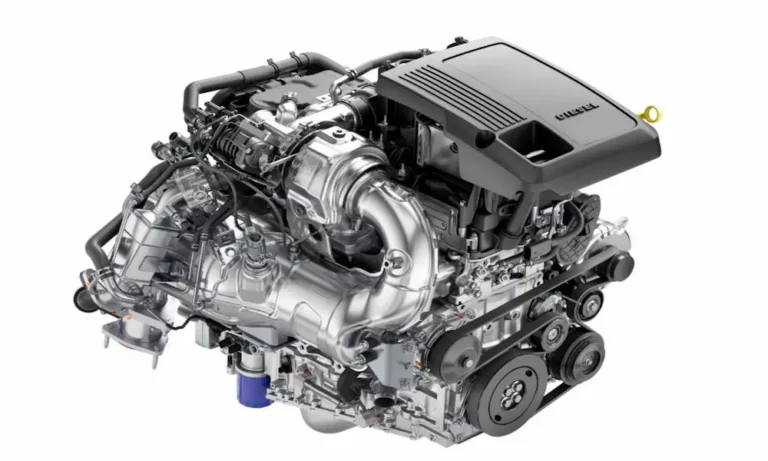
Got a Duramax and you’re staring at a fresh oil filter wondering exactly how much oil to pour in? This guide covers every generation, the right filter for your truck, and what happens if you get the number wrong. Stick around — the filter section alone could save your engine.
The Short Answer: How Much Oil Does a 6.6 Duramax Take?
Every 6.6L Duramax diesel — from the 2001 LB7 right through to the 2025 L5P — takes 10.0 quarts (9.5 liters) with a filter change. Skip the filter and you’re looking at roughly 9.2 quarts instead.
That number hasn’t budged in over two decades. GM and Isuzu deliberately kept the Duramax 6.6 oil capacity at 10 quarts across every generation for a smart reason — a larger oil reservoir gives detergents more room to neutralize acids and keeps soot particles suspended before they turn into sludge in your turbo oil lines.
Oil Capacity by Generation (Every Engine Code)
Despite massive jumps in power output — from 300 hp in the original LB7 to 470 hp and 975 lb-ft in the 2024 L5P — the oil capacity stayed rock solid. Here’s the full breakdown:
| Engine Code | Model Years | With Filter | Without Filter |
|---|---|---|---|
| LB7 | 2001–2004 | 10.0 qts (9.5 L) | 9.2 qts (8.7 L) |
| LLY | 2004.5–2005 | 10.0 qts (9.5 L) | 9.2 qts (8.7 L) |
| LBZ | 2006–2007 | 10.0 qts (9.5 L) | 9.2 qts (8.7 L) |
| LMM | 2007.5–2010 | 10.0 qts (9.5 L) | 9.2 qts (8.7 L) |
| LML | 2011–2016 | 10.0 qts (9.5 L) | 9.2 qts (8.7 L) |
| L5P (First Gen) | 2017–2019 | 10.0 qts (9.5 L) | 9.2 qts (8.7 L) |
| L5P (Second Gen) | 2020–2025 | 10.0 qts (9.5 L) | 9.5 qts (9.0 L) |
Notice the 2020+ “without filter” figure bumped up slightly to 9.5 quarts. GM revised internal oil passage volumes and switched to a slimmer filter that retains less residual oil when you pull it off.
How Does the Diesel Compare to Other Engines in the Same Trucks?
If you’ve ever wondered why the diesel takes so much more oil than the gas V8 sitting next to it on the lot, here’s the answer:
| Engine | Fuel Type | Oil Capacity (With Filter) |
|---|---|---|
| 6.6L Duramax Diesel | Diesel | 10.0 qts |
| 6.6L L8T V8 | Gasoline | 8.0 qts |
| 3.0L Duramax I6 | Diesel | 7.0 qts |
| 2.8L Duramax I4 | Diesel | 6.0 qts |
| 6.0L Vortec V8 | Gasoline | 6.0 qts |
The diesel’s high combustion pressures and turbocharger demands generate significantly more heat and soot. Those extra quarts give you a bigger chemical buffer to handle it all.
The Right Oil Filter for Your Duramax (Don’t Guess This One)
This is where a lot of Duramax owners get tripped up — especially anyone who just upgraded to a 2020 or newer truck.
2001–2019: AC Delco PF2232
The PF2232 filter served the Duramax faithfully for nearly 20 years. It uses a 13/16-16 UN thread, measures 3.71 inches in outer diameter, and carries a 30-micron rating. It works perfectly for every Duramax from the LB7 through the 2017–2019 L5P.
2020–2025: AC Delco PF63 (Part #12735811)
GM redesigned the L5P engine bay in 2020, and the old filter simply won’t fit. The PF63 filter uses an M22 x 1.5 thread (not the same as the PF2232), features a slimmer body to clear the updated oil cooler, and uses advanced polyester media. You can also grab it from BackwoodsDiesel or direct from eBay’s OEM listings.
Bottom line: If your truck is 2020 or newer, the PF2232 physically won’t thread on. Don’t force it. Grab the PF63.
Why the Anti-Drainback Valve Matters
Both filters include an anti-drainback valve. When your engine sits overnight, this valve stops oil from draining back into the sump. On startup, your turbo gets pressurized oil almost immediately instead of running dry for a few seconds. Those few seconds matter — Duramax turbos spin at over 120,000 RPM and they don’t forgive dry starts.
Which Oil Should You Run? API Specs and Viscosity
The right oil depends heavily on your model year. The 2007.5 LMM introduced the Diesel Particulate Filter (DPF), and that changed everything about oil chemistry.
API Ratings: A Hard Line at 2007.5
- 2001–2007 (LB7, LLY, LBZ): API CI-4 or CH-4 oils work fine. These engines don’t have a DPF, so high-sulfated-ash oils aren’t a problem.
- 2007.5–Present (LMM, LML, L5P): You need API CK-4 (Low-SAPS) oil. High sulfated ash from older CI-4 oils clogs the DPF’s ceramic honeycomb. Clogged DPF means limp mode. A lot of limp mode.
CK-4 also delivers better aeration control — critical for the L5P’s high-pressure oil pump that feeds both the fuel injection system and the turbocharger.
Viscosity Guide by Temperature
| Ambient Temperature | Recommended Viscosity | Notes |
|---|---|---|
| Above 0°F (-18°C) | 15W-40 | Standard for towing and high heat |
| Below 0°F (-18°C) | 5W-40 | Required for cold-start protection |
| Extreme cold | 0W-40 | Arctic service only |
The 15W-40 grade is still the industry workhorse for most Duramax owners. But 5W-40 full synthetic is gaining ground fast — especially for turbo protection and cold-weather starts. Avoid 10W-30, 10W-40, or 20W-50. GM’s own documentation discourages these because they don’t provide the right film thickness for the Duramax’s main bearings.
What Happens If You Fill It Wrong?
The 10-quart target isn’t just a suggestion. Here’s what goes sideways on both ends:
Overfilling
Pour in more than 10 quarts and your crankshaft counterweights start slapping the oil surface. That creates foam — and foamed oil is full of air bubbles. Air compresses; oil doesn’t. Foamed oil can’t maintain bearing pressure, and bearing pressure is what keeps metal from touching metal at high RPM.
You’ll also see reduced fuel economy from crank drag.
Underfilling
Drop below 9 quarts and oil pressure can fall during steep grades or hard cornering. The CP3 or CP4 high-pressure fuel pump and the turbocharger both need constant oil flow. Either one running low on lubrication is an expensive repair — and the CP4 failures on some LML engines are already well-documented.
Always check the dipstick after filling. Let the engine sit for five minutes, then check again.
Oil Change Intervals: Normal vs. Hard Use
The modern Duramax uses an Oil Life Monitor (OLM) system that calculates degradation based on RPM, temperature, and run time.
- Normal driving: Change oil every 7,500 to 10,000 miles
- Severe duty (towing, high idle, off-road): Drop to every 5,000 miles
EGR-equipped trucks accumulate soot and acidic blow-by faster than non-EGR engines. If you’re running an EGR-delete kit, you may stretch intervals slightly — though keep emissions regulations in your area in mind before going that route.
The 2024 L5P Oil Cooler Upgrade
For the 2024 model year, GM fitted the L5P with a high-capacity oil cooler that delivers a 31% improvement in heat reduction. This supports the truck’s 975 lb-ft torque rating without changing the 10-quart oil volume requirement.
Owners of 2001–2019 trucks can retrofit this cooler with minor modifications (trimming the driver-side manifold heat shield). It’s a solid upgrade if you’re doing heavy towing or building a performance rig. Lincoln Diesel Specialties stocks the OEM cooler with fitment notes for older trucks.
Full Fluid Capacity Reference for the 6.6L Duramax
Engine oil is just one piece of the puzzle. Here’s a quick reference for the other critical fluids:
| Fluid | Application | Service Fill | Total Capacity | Fluid Type |
|---|---|---|---|---|
| Engine Oil | All Duramax | 10.0 qts | 10.0 qts | API CK-4 |
| Allison 1000 (6-speed) | 2006–2019 | 7.4 qts | 12.7–20 qts | Dexron VI |
| GM-Allison 10L1000 | 2020+ | 14.37 qts | 20.6–22.1 qts | Dexron ULV |
| Transfer Case (NV263XHD) | 4WD trucks | 2.0 qts | 2.0 qts | Auto-Trak II |
| Front Differential (9.25″) | 4WD | 1.8 qts | 1.83 qts | 75W-90 Synthetic |
| Rear Differential (AAM 11.5″) | All | 3.17–5.0 qts | ~4.0 qts | 75W-90 Synthetic |
One important flag on the 2020+ transmission: the 10-speed Allison 10L1000 uses Dexron ULV, which is not interchangeable with the older Dexron VI. Use the wrong fluid and you’ll have shift quality problems quickly.
Don’t Forget Coolant and DEF
- Coolant: Ranges from 20.3 quarts on the early LB7 up to 31.5 quarts on the late L5P. Use Dex-Cool 50/50 premix with a 5-year/150,000-mile service schedule.
- DEF (2011+ trucks): Crew cab/long box trucks typically carry a 7-gallon DEF tank. Standard cab models usually get a 5.3-gallon tank. Running DEF low triggers warning lights and eventually a reduced power state, so keep it topped up.
Duramax in Chevrolet Express and GMC Savana Vans
The 6.6L Duramax also powered the Chevrolet Express and GMC Savana vans under the LGH engine code. This de-tuned version ran at around 250 hp to handle the van’s tighter cooling setup, but the block and oil sump stayed the same. Oil changes on these vans still call for the full 10.0-quart fill.
The Three Rules That Protect Your Duramax
Before you crack open that next jug of oil, keep these straight:
- 2020+ trucks need the PF63 filter — the old PF2232 won’t physically fit and using the wrong filter risks oil leaks and pressure loss.
- Any truck with a DPF (2007.5+) needs API CK-4 oil — old CI-4 oils kill the DPF over time, and a DPF replacement isn’t cheap.
- 10 quarts is the number — not 9, not 11. Check the dipstick after a 5-minute settle. That extra step takes 30 seconds and tells you everything you need to know.
The 6.6L Duramax is built to last — it’s designed with plenty of engineering margin. But that margin disappears fast if you shortcut the lubrication. Get the capacity right, use the correct oil spec, and install the proper filter for your year. Your turbo, your bearings, and your fuel pump will all thank you.