You’re staring at your car in the driveway, wondering if wrapping it makes financial sense. Maybe you want a fresh look, or you’re worried about rock chips destroying your new ride’s paint. The truth is, “is car wrapping worth it” doesn’t have a simple yes-or-no answer. It depends entirely on what you’re trying to accomplish. Here’s everything you need to make the right call.
The Confusion: “Car Wrap” Means Two Different Things
Here’s where most people get tripped up. When you say “car wrap,” you could be talking about two completely different products with totally different purposes.
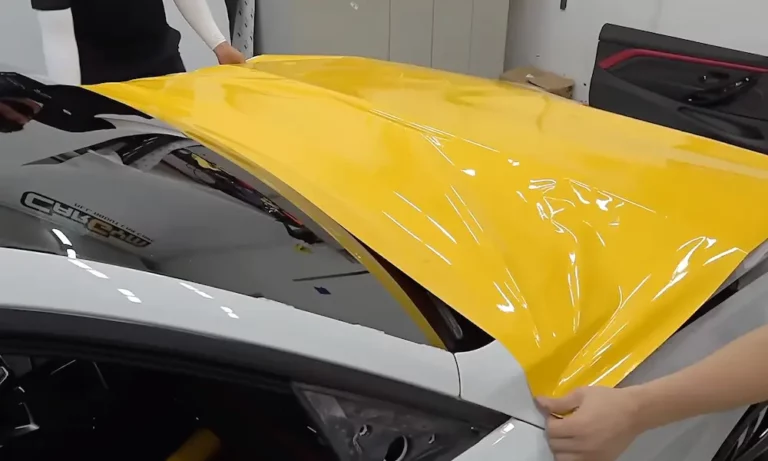
Vinyl Wraps: The Color-Change Option
Vinyl wraps are made from PVC plastic. Their job? Change how your car looks. That’s it.
These wraps measure 3 to 4 mil thick (a mil is one-thousandth of an inch). They come in every color and finish you can imagine—gloss, matte, satin, chrome, even color-shifting finishes that look different depending on the angle.
The protection vinyl offers is minimal. It’ll guard against minor scratches and UV fading, but don’t expect it to stop rock chips or gravel damage. The material simply isn’t thick enough.
Paint Protection Film: The Shield for Your Paint
Paint Protection Film (PPF) is a different beast. It’s made from thermoplastic polyurethane and exists for one reason: to protect your factory paint from damage.
PPF measures 6 to 10 mil thick—often twice as thick as vinyl. This extra thickness lets it absorb impacts from road debris, rock chips, and scratches. Modern PPF includes “self-healing” technology. When it gets light scratches, applying heat (from the sun or warm water) makes them disappear as the material re-flows.
When Vinyl Wraps Are Worth Every Penny
So is car wrapping worth it for aesthetics? Absolutely—if you understand what you’re buying.
Endless Customization Without the Commitment
Vinyl wraps offer unlimited aesthetic options. Want a matte black finish that you can’t get from the factory? Done. Thinking about chrome or color-shifting film? Go for it.
The main finishes include:
- Gloss: Traditional high-shine look, easiest to maintain
- Matte: Modern flat finish, shows fingerprints easily, can’t be waxed
- Satin: The balanced middle ground—subtle sheen, easier care than matte
- Chrome & Metallic: Eye-catching mirror finishes, more delicate
- Textured & Color-Shift: Carbon fiber patterns and chameleon effects
The Financial Case: Wrap vs. Paint
A professional full-vehicle vinyl wrap costs $2,500 to $5,000. Compare that to a high-quality repaint: $6,000 to $10,000 or more.
But here’s the real financial win: wraps are reversible. When you’re done with the color, you remove it and reveal your original factory paint underneath. This preserves your resale value.
A non-factory repaint permanently changes your car and almost always decreases its value. Buyers get suspicious about repaints, assuming accident damage or poor bodywork. With vinyl, you get to experiment without financially compromising your car’s core value.
Installation time? One to three days for a wrap. A quality repaint takes weeks.
How Long Will It Last?
Quality vinyl wraps last 3 to 7 years with proper care. But that number changes based on:
Material Quality: Premium brands like 3M and Avery Dennison last 5-7 years. Cheap materials might crack or fade in 2-3 years.
Finish Type: Gloss lasts longest (3-7 years). Matte and satin go 3-5 years. Fluorescent colors fade fastest—sometimes in just 3 months with constant sun exposure.
Environmental Exposure: UV rays are vinyl’s worst enemy. A garaged car’s wrap lasts significantly longer than one parked outside 24/7.
The Maintenance Reality
Here’s what most people don’t realize: wrapped cars need special care.
Hand wash only using pH-neutral soap. Brush-style automatic car washes will scratch the vinyl and can catch edges, tearing the film. Even touchless car washes aren’t ideal—high-pressure jets can lift edges.
Bird droppings, bug splatter, and tree sap must come off immediately. These acidic substances permanently stain vinyl, often within hours.
For matte and satin finishes, never use wax or polish. It’ll fill the texture and create a splotchy, ruined finish.
When PPF Makes Perfect Financial Sense
Is car wrapping worth it for protection? With PPF, yes—especially for new or high-value vehicles.
The Technology Behind the Protection
That 6-10 mil thick polyurethane acts as a sacrificial shield. It’s engineered to absorb impacts that would otherwise chip your paint.
The self-healing feature is worth the cost. Light scratches only damage the top polymer layer. When heat hits it, the material “heals” itself, re-flowing smooth and making scratches vanish. Vinyl can’t do this.
Myth alert: Older PPF yellowed over time. Modern high-quality PPF from brands like XPEL, STEK, and SunTek includes UV inhibitors and comes with 10-year warranties specifically covering yellowing.
The Resale Value Equation
Here’s the hard data: vehicles with PPF command 10-15% higher resale value compared to unprotected equivalents.
Let’s do the math. A full-front PPF install costs around $1,900. A full-body install runs about $6,000.
On a $100,000 vehicle, that $6,000 PPF install (6% of the car’s value) preserves $10,000-$15,000 in resale value. That’s a positive ROI of 66% to 150%. The protection costs less than the value it saves.
For collector and high-performance cars, PPF is now an expectation. A buyer looking at a used Porsche or Lamborghini without PPF immediately assumes front-end damage and devalues the car accordingly.
| Feature | Vinyl Wrap | Paint Protection Film (PPF) |
|---|---|---|
| Primary Purpose | Change color/finish | Protect from impacts |
| Material | PVC | Polyurethane |
| Thickness | 3-4 mil | 6-10 mil |
| Self-Healing | No | Yes |
| Rock Chip Defense | Minimal | Excellent |
| Lifespan | 3-7 years | 5-12 years |
| Customization | Unlimited colors | Mostly clear |
Superior Winter Performance
If you’re in a salt-belt region, pay attention. Polyurethane is chemically inert. Road salt cannot react with or damage PPF. It sits on the surface until you wash it off.
Vinyl, on the other hand, can become brittle in extreme cold. PPF remains flexible and fully protective in sub-zero temperatures. For Chicago winters or similar climates, this alone makes PPF worth it.
PPF vs. Ceramic Coating: Understanding the Difference
This confusion costs people money. PPF and ceramic coating aren’t competing products—they serve completely different functions.
What Ceramic Coatings Actually Do
Ceramic coating is a liquid polymer that chemically bonds to paint or PPF. Its value is in surface properties, not thickness.
It makes your car:
- Extremely hydrophobic (water beads off)
- Significantly easier to clean
- More resistant to chemical stains and UV fading
- Glossier
A professional ceramic coating costs $500 to $2,000 and lasts 2 to 5 years.
What Ceramic Coatings Don’t Do
Ceramic coating offers no meaningful protection against physical impacts. It’s a thin, hard shell that can’t absorb energy from rock chips or scratches.
The Ultimate Combo: Ceramic Over PPF
High-end detailers apply ceramic coating on top of PPF for the best of both worlds:
- PPF provides the physical impact shield
- Ceramic coating adds hydrophobic, easy-clean properties
This combo also extends PPF life by protecting it from environmental contaminants.
| Threat | Vinyl Wrap | Ceramic Coating | PPF |
|---|---|---|---|
| Rock Chips | No | No | Yes |
| Light Scratches | Low | Low | Yes (Self-Heals) |
| Chemical Stains | Low | Excellent | High |
| UV Fading | Medium | Excellent | High |
| Easy Cleaning | Low | Excellent | Medium |
| Customization | Excellent | No | Low |
What You’ll Actually Pay in 2025
These figures come from professional installers in the Chicago area. Prices vary by vehicle size and installer quality.
Vinyl Wrap Costs
Full Vehicle Wraps:
- Sedan/Coupe: $3,000-$4,900
- SUV/Truck: $3,200-$5,700
- Luxury/Exotic: $5,500-$10,000
Partial Wraps:
- Hood: $249-$595
- Roof: $279-$595
- Chrome Delete: $279-$1,100
Paint Protection Film Costs
Partial Front Package: (Bumper, partial hood/fenders)
- Starting at $950-$1,000
Full Front/”Track Pack”: (Full bumper, hood, fenders, mirrors, headlights)
- Sedan/Coupe: $1,700-$2,395
- SUV/Truck: $1,850-$2,395
This is the highest-value package. You get superior protection for the most vulnerable areas at less than half the cost of a full aesthetic wrap.
Full Vehicle PPF:
- Sedan/Coupe: $5,499-$8,995
- SUV/Truck: $5,999-$8,995
The Installer Matters More Than You Think
A bad installation is money down the drain. The difference between a cheap shop and a premium installer justifies the price gap.
Does Wrapping Damage Paint?
On factory paint: No. High-quality vinyl and PPF installations are completely safe on original, factory-cured paint. The wrap actually protects the paint underneath.
The real risk: aftermarket paint. If your car was repainted after an accident (especially at a low-quality shop), the bond between new paint and the body is often weak. When you remove the wrap, it can pull that bad paint off with it. This is paint failure, not wrap failure.
What Separates Good Installers from Bad Ones
Preparation: Top installers don’t wrap dirty cars. For PPF, the paint must undergo full paint correction (polishing) first. PPF magnifies any existing scratches or swirl marks if applied over them.
Technique: Professionals know proper squeegee methods and heat application to stretch film without compromising it.
Edge Work: Cheap installs cut film at panel edges, leaving visible seams. Premium installs wrap film around the inside of panel edges, making it invisible and preventing peeling.
Your budget should prioritize installer quality over brand (among top-tier options). A master installer with mid-tier film produces better, longer-lasting results than a poor installer with expensive film.
Top Brands to Consider
Vinyl Wrap Brands:
- 3M (Series 2080): Industry standard, 5-7 year lifespan
- Avery Dennison (SW900): Easy to apply, 5-7 year lifespan
- Oracal (970RA): German quality, vibrant colors, 5-7 years
PPF Brands:
- XPEL: Market leader, 10-year warranty
- STEK: Top competitor, 10-year warranty, includes nano-ceramic top coat
- SunTek: High quality, 10-year warranty
- 3M (Scotchgard Pro): Original military technology, 7-year warranty
The Business Case: Wrapping for Advertising
For businesses, the question “is car wrapping worth it” has a clear answer: absolutely.
Mobile Billboard Economics
A wrapped company vehicle generates 30,000 to 70,000 visual impressions per day in metro areas. The Cost-Per-Thousand-Impressions (CPM) is as low as $0.15.
Compare that to online ads with CPMs of $1.00 to $12.00. Vehicle wraps are dramatically cheaper.
The ROI Calculation
A $3,000 wrap that generates $15,000 in new business has a 400% ROI. Local service businesses report vehicle wraps as their highest-ROI marketing spend, with some seeing 30%+ increases in inquiries.
The wrap works 24/7 for its entire 5-7 year lifespan. That’s years of advertising for a one-time cost.
Tax Benefits
Vehicle wrap costs are tax-deductible as advertising expenses. This includes materials, design, and installation.
The cost can be fully deducted in the year of installation under Section 179, or depreciated over time. If the vehicle serves both business and personal use, only the business-use percentage is deductible. Consult a tax professional for compliance.
Making Your Decision
Is car wrapping worth it? Here’s how to decide based on your situation:
You want a new look: Get a vinyl wrap. It’s cheaper than repainting, reversible, and won’t hurt resale value. Just be ready for the maintenance commitment.
You just bought a new car: Get a full-front PPF package. For $1,700-$2,150, you protect the highest-impact areas and preserve resale value. Add ceramic coating for easier washing.
You own a high-value vehicle: Get full-vehicle PPF plus ceramic coating. The $7,000-$10,000 cost will return at resale through 10-15% value preservation.
You run a local business: Get a full advertising wrap. The ROI beats almost every other marketing option, and it’s tax-deductible.
The “worth” of wrapping depends entirely on what you need it to do. Match the product to your goal, choose a quality installer, and the investment pays off.