When you’re buying a car from Carvana, you’ll likely be offered their extended warranty plan called CarvanaCare. It sounds appealing on the surface—protection against expensive repairs for a relatively small monthly payment. But is it actually worth your money? I’ve researched the ins and outs of this program to help you make an informed decision before you check that box at checkout.
What Exactly Is CarvanaCare?
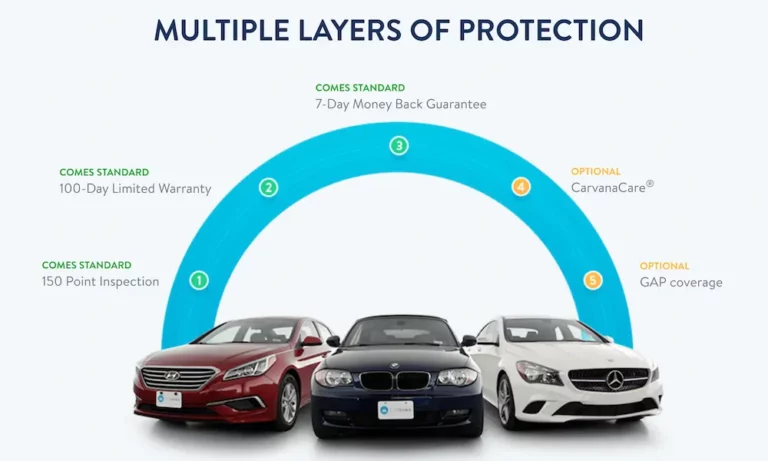
CarvanaCare is Carvana’s extended warranty program administered by SilverRock Automotive, a third-party company operating since 2014. The program offers three coverage tiers with monthly costs typically ranging from $30-55 depending on your vehicle and chosen plan.
Each plan includes:
- A $100 deductible for in-network repairs ($350 for out-of-network)
- Coverage extending up to 5 years or 90,000 miles total
- 24/7 roadside assistance
- Rental car reimbursement
- Access to SilverRock’s repair facility network (claimed to be 10,000+ shops)
Let’s break down what each tier actually covers.
CarvanaCare Coverage Plans Explained
Essential Plan: Basic Protection
The Essential plan is CarvanaCare’s entry-level option covering basic powertrain components:
- Engine
- Transmission
- Front/rear wheel drive systems
- Basic electrical components related to these systems
This covers critical parts like the engine control module, transmission control module, fuel injection systems, and drivetrain assemblies. It’s similar to a standard powertrain warranty but with less coverage than what you’d get with a new car.
Plus Plan: Expanded Coverage
The Plus plan significantly increases your protection by adding:
- Heating and A/C systems
- Steering components
- Suspension systems
- Brake systems
- Cooling systems
- Comprehensive electrical coverage
This tier covers components like ABS control modules, power steering systems, HVAC actuators, and various sensors that commonly fail as vehicles age.
Premier Plan: Maximum Protection
The Premier plan includes everything in the Plus plan and adds:
- Cosmetic protection
- Tire and wheel damage coverage
- Maintenance services (three oil changes and tire rotations for one year)
While these additions provide extra value, the maintenance component is quite limited compared to what your car will need over several years.
What’s Not Covered By CarvanaCare?
Like all warranties, CarvanaCare has exclusions you should be aware of:
- Regular maintenance items (beyond the limited Premier plan benefits)
- Wear-and-tear components
- Pre-existing conditions
- Damage from neglect or abuse
- Commercial vehicle use
What makes these exclusions particularly problematic is how strictly SilverRock interprets and enforces them, which leads us to the most crucial aspect of this warranty.
The SilverRock Problem: Why CarvanaCare Often Disappoints
While the coverage on paper looks comprehensive, CarvanaCare’s value is significantly diminished by SilverRock’s administration issues. The Better Business Bureau reports 517 complaints against SilverRock with a B rating, indicating substantial customer service problems.
Claims Processing Nightmares
Customer complaints reveal several troubling patterns:
- Claims being denied after initial approval
- Repair shops refusing to work with SilverRock due to payment delays
- Customers forced to move vehicles between multiple facilities when initial inspections don’t align with SilverRock’s assessments
One documented case involved a customer whose timing chain failure was initially approved but later denied, leaving them with an $8,000 repair bill. This isn’t an isolated incident—the pattern appears systemic.
The “Network” That Shops Avoid
Despite claims of a 10,000+ repair facility network, many shops are reluctant to work with SilverRock. Multiple complaints indicate that repair facilities specifically refuse SilverRock claims due to:
- Payment delays
- Excessive authorization requirements
- Disputes over covered repairs
- Administrative burden
This significantly limits where you can actually get your car fixed, which defeats much of the purpose of having the warranty in the first place.
Communication Breakdowns and Repair Delays
The authorization process frequently involves multiple inspections and back-and-forth communication that can extend repair timelines by weeks. Customers report:
- Being told different information by different representatives
- Customer service representatives having limited access to claims review departments
- Extended periods without their vehicle while waiting for approvals
These delays are particularly problematic if you depend on your vehicle for work or daily transportation.
Cost vs. Value: Is CarvanaCare Worth the Money?
Let’s examine the numbers to determine if CarvanaCare provides good value.
Monthly Cost Comparison
| Warranty Provider | Monthly Cost | Deductible | BBB Rating |
|---|---|---|---|
| CarvanaCare | $30-55 | $100 in-network/$350 out-of-network | B (SilverRock) |
| CARCHEX | $100-200 | $0-100 options | A+ |
| Endurance | $80-180 | $0-200 options | A+ |
| Manufacturer Extended | $80-160 | Often $0 | Varies by brand |
CarvanaCare’s monthly pricing is certainly competitive. However, the lower cost comes with significant trade-offs in service quality and claims reliability.
The Hidden Costs
The true cost of CarvanaCare goes beyond the monthly payment:
- Time cost: Days or weeks without your vehicle while waiting for approvals
- Stress cost: Fighting for coverage of legitimate claims
- Shop limitations: Potentially using lower-quality repair facilities that accept SilverRock
- Unexpected expenses: Potential for denied claims even after initial approval
These hidden costs can easily exceed any savings from the lower monthly payment.
Better Alternatives to CarvanaCare
If you’re looking for more reliable extended warranty protection, consider these alternatives:
CARCHEX
While more expensive ($100-200 monthly), CARCHEX offers:
- A+ BBB rating
- Direct claims payment to repair facilities via credit card
- Acceptance at any licensed repair facility
- More consistent claims approval process
Endurance
Similar to CARCHEX, Endurance provides:
- Comprehensive coverage options
- Better administrative reliability
- More transparent claims process
- Additional perks like roadside assistance and rental car coverage
Manufacturer Extended Warranties
For newer vehicles, manufacturer extended warranties typically offer:
- Zero deductibles
- Broader dealer network acceptance
- Direct manufacturer backing for claims processing
- Often transferable to new owners if you sell the car
Self-Insuring
Instead of paying for CarvanaCare, consider putting that $30-55 monthly payment into a dedicated savings account for car repairs. After two years, you’d have $720-1,320 set aside without the hassle of fighting for claim approvals.
What Auto Professionals Say About CarvanaCare
Automotive service professionals consistently report negative experiences with SilverRock:
- Many shops have implemented policies to avoid SilverRock work altogether
- Service advisors report excessive authorization requirements
- Repair facilities cite payment delays and disputes over covered repairs
- Some dealers and independent shops require customers to pay upfront and seek reimbursement themselves
This industry resistance creates a practical limitation where quality repair facilities may refuse service, forcing you to use potentially less qualified providers.
Real Customer Experiences With CarvanaCare
Let’s look at what actual customers report about their CarvanaCare experiences:
The Good
A small percentage of customers report straightforward claims experiences:
- Simple repairs sometimes get approved without much hassle
- Roadside assistance generally works as expected
- Basic maintenance services under the Premier plan are delivered as promised
The Bad
Unfortunately, more complex situations reveal the warranty’s limitations:
- Multiple inspections required before authorization
- Claims initially approved then later denied
- Representatives giving conflicting information
- Repair facilities refusing to work with SilverRock
The Ugly
The most concerning reports involve:
- Customers left with thousands in repair bills despite having coverage
- Vehicles rendered inoperable for weeks during authorization disputes
- Being shuttled between multiple repair facilities for repeated inspections
- Having to involve attorneys or file complaints with regulatory agencies to get resolution
When CarvanaCare Might Make Sense (Rare Cases)
Despite the issues, there are limited scenarios where CarvanaCare might be worth considering:
- Short-term ownership: If you plan to sell the vehicle within 1-2 years
- Simple vehicles: Cars with minimal electronics and straightforward mechanical systems
- Patient owners: If you have a backup vehicle and can wait through lengthy claims processes
- Informed negotiators: If you’re experienced in dealing with warranty administrators and can advocate effectively
Making Your Decision: Is CarvanaCare Worth It?
Based on comprehensive analysis of coverage, administration, costs, and customer experiences, CarvanaCare is difficult to recommend for most car buyers. The administrative problems and claims processing issues create unacceptable risks that contradict the primary purpose of warranty protection.
CarvanaCare is particularly unsuitable for:
- High-mileage or older vehicles requiring complex diagnostics
- Vehicles with sophisticated electronics or turbochargers
- Your only vehicle that you depend on daily
- Anyone who can’t afford unexpected repair costs despite having coverage
The Bottom Line on CarvanaCare
When you buy an extended warranty, you’re purchasing peace of mind and financial protection against unexpected repairs. CarvanaCare’s attractive pricing is undermined by its problematic administration through SilverRock, creating situations where that peace of mind often proves illusory.
The warranty business model relies on collecting more in premiums than paying out in claims. While this is true for all warranty providers, SilverRock’s approach to claims processing appears to aggressively minimize payouts through administrative friction rather than transparent exclusions.
For most car buyers, the higher upfront cost of a more reputable warranty provider—or simply saving the monthly payment in a dedicated repair fund—will likely provide better protection and less frustration than CarvanaCare.
Before signing up for any extended warranty, remember to:
- Research the administrator (not just the seller)
- Speak with local repair shops about their experiences with the warranty company
- Read the contract carefully, especially the exclusions
- Check customer reviews and complaints with the BBB and NHTSA
Your future self will thank you for doing this homework now, rather than discovering the limitations of your coverage when you’re already facing a repair emergency.