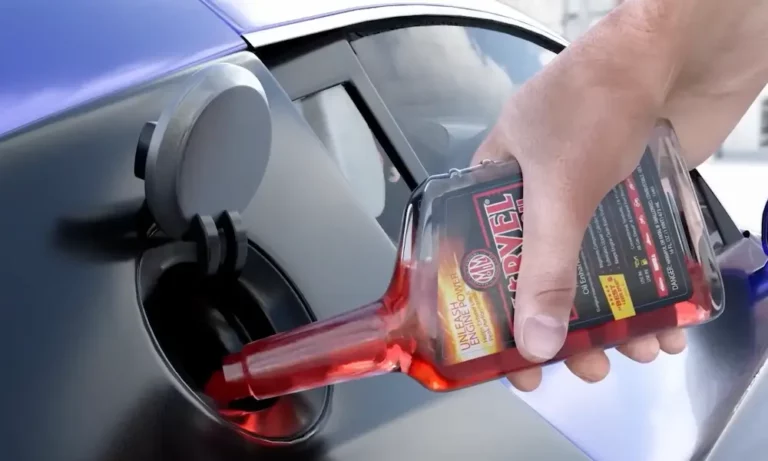
You’ve seen the bottles at the gas station. You’ve heard the claims. But standing there with a $15 bottle of fuel injector cleaner in your hand, you’re wondering if it’s legit or just expensive snake oil. Let’s cut through the marketing hype and figure out if fuel injector cleaner is actually worth your money.
What Fuel Injector Cleaner Actually Does
Here’s the deal: fuel injector cleaner isn’t magic, but it’s not useless either. The science is actually pretty straightforward.
When your engine shuts down, leftover fuel in the injectors gets hot. That heat causes the fuel to break down and form sticky deposits—think of it like burnt sugar coating the inside of a pan. Over time, these deposits restrict fuel flow and mess up the spray pattern your engine needs for clean combustion.
A quality fuel injector cleaner uses detergent chemicals that dissolve these deposits and carry them away to be burned in the combustion chamber. The key word here is quality—not all cleaners are created equal, and that’s where things get interesting.
The Chemistry That Actually Matters
You’ll find two main types of active ingredients in fuel cleaners, and the difference between them is huge.
Polyisobutylene Amine (PIBA) is the older chemistry. It’s cheap, and it works okay for light cleaning. The problem? PIBA doesn’t burn cleanly. While it’s removing deposits from your fuel injectors, it can actually create new deposits on your piston tops and cylinder heads. Not exactly a great trade-off.
Polyetheramine (PEA) is the gold standard. This stuff can handle serious heat without breaking down, which means it survives long enough to clean the hottest parts of your engine. Even better, PEA burns completely during combustion, leaving nothing behind. Research shows PEA-based cleaners can restore up to 94% of injector flow when used correctly.
The catch? PEA is expensive. That $5 bottle at the discount store? It’s probably just kerosene and alcohol. The $25 bottle with high PEA concentration? That’s where you’ll see actual results.
Here’s a quick breakdown of what’s actually in popular brands:
| Product | Main Chemistry | What It’s Good For |
|---|---|---|
| Red Line SI-1 | High PEA (30-50%) | Serious cleaning power for restoration |
| Chevron Techron Concentrate | PEA-based | Industry standard, recommended by major automakers |
| BG 44K Platinum | Proprietary PEA blend | Professional-grade, what dealerships use |
| Seafoam | Petroleum/Alcohol | Good for moisture, weak for carbon deposits |
Your Engine Type Changes Everything
This is where most people get it wrong. Whether fuel injector cleaner is worth it depends entirely on what kind of engine you have.
Port Fuel Injection (Older Cars)
If you’ve got a car from before 2012-ish, you probably have Port Fuel Injection (PFI). These engines spray fuel onto the back of the intake valves before it enters the cylinder.
For PFI engines, fuel injector cleaner is absolutely worth it. The cleaner physically washes over everything—the fuel pump, lines, injectors, intake valves, and combustion chamber. It’s a complete system clean from a simple bottle additive.
You’ll see real improvements in rough idle, hesitation, and fuel economy if deposits were your problem.
Gasoline Direct Injection (Newer Cars)
Modern cars use Gasoline Direct Injection (GDI), which sprays fuel directly into the cylinder at crazy high pressure (over 2,900 PSI). It’s more efficient, but there’s a problem.
The intake valves in a GDI engine never get washed with fuel. They only see air and oil vapor from the crankcase ventilation system. That oil vapor bakes onto the hot valves and forms hard carbon deposits that a tank additive will never touch—because the additive never reaches those valves.
So is fuel injector cleaner worth it for GDI engines? Yes, but only for maintaining the injectors themselves. Those injectors are exposed to combustion heat and clog easily. A bottle of PEA cleaner keeps them flowing properly.
But if you’ve got a rough idle or power loss from intake valve deposits, you’ll need a different approach entirely—either an aerosol spray through the intake or professional walnut blasting.
The Top Tier Fuel Factor
Here’s something most people don’t know: if you’re already using Top Tier gasoline, you might not need additives at all.
Top Tier fuel contains significantly more detergent than the EPA minimum standard. How much difference does it make? AAA testing found that engines running non-Top Tier fuel developed 19 times more deposits after just 4,000 miles compared to those using Top Tier fuel.
The price difference? About 3 cents per gallon. On an annual basis, that’s roughly $18 for someone driving 15,000 miles per year.
Compare that to buying two bottles of quality cleaner at $15 each ($30), and the math becomes obvious. Consistent use of Top Tier fuel is cheaper and more effective than alternating between cheap gas and cleanup additives.
That said, Top Tier stations aren’t always available. If you’re stuck buying whatever fuel is at the rural gas station on your road trip, regular use of a PEA-based cleaner becomes essential maintenance.
What You’ll Actually Save
Let’s talk real numbers. Is fuel injector cleaner worth it from a pure cost standpoint?
Clogged injectors can reduce fuel economy by 5-10% because the engine computer compensates for poor atomization by adding more fuel. Here’s what that looks like in practice:
Example: 2018 Ford F-150
- Annual mileage: 15,000 miles
- Normal MPG: 18
- Fuel price: $3.50/gallon
- Normal annual fuel cost: $2,916
If deposits drop your efficiency to 17.1 MPG (a 5% loss), your fuel cost jumps to $3,070—that’s $154 wasted per year.
One bottle of quality cleaner costs about $25. If it restores your baseline MPG, you’ve saved $129 in the first year alone. Even a conservative 2% improvement pays for the bottle.
And that doesn’t count avoiding a $150-300 fuel injector replacement down the road.
The Timing Trick Nobody Tells You
Here’s a pro tip that can save you from expensive damage: always use fuel system cleaner one tank before your oil change.
Why? PEA-based cleaners are potent solvents. During combustion, a small amount inevitably gets past the piston rings and into your engine oil. Once there, it thins the oil and can attack the protective additive package.
If you time it right—add the cleaner, run through that tank, then immediately change your oil—you get maximum cleaning benefit while flushing out any contaminated oil. Drive for months with solvent-thinned oil, and you’re asking for accelerated bearing wear.
When Cleaner Won’t Fix It
Let’s be real: fuel injector cleaner isn’t a magic cure-all. If you’ve got a constant misfire that lights up your check engine light, the problem is probably electrical, not deposits.
Dead ignition coils, fouled spark plugs, and failed injector solenoids don’t respond to chemicals in your gas tank. In those cases, running bottle after bottle is just throwing money away.
Professional mechanics agree: cleaners work great for maintenance and mild performance loss. For serious problems, you need actual diagnostics.
If a bottle doesn’t improve things after one tank, stop. You’re dealing with a mechanical failure that requires tools, not additives.
The Diesel Engine Exception
Diesel owners need to pay attention to something totally different: stiction.
Many older diesel engines use oil pressure to actuate the fuel injectors. Over time, the engine oil breaks down and forms varnish inside the injector, causing sticking and rough running—especially on cold starts.
Here’s the thing: fuel additives poured into your diesel tank clean the fuel nozzle, which helps with atomization and fuel economy. But they do absolutely nothing for stiction, because stiction is an oil-side problem.
If you’ve got a diesel that runs rough until it warms up, you need an oil additive, not a fuel additive. Different problems require different solutions.
What the Car Companies Actually Say
The automotive industry sends mixed signals, which creates confusion.
Hyundai and Kia explicitly recommend fuel additives in their owner’s manuals if you don’t use Top Tier gas. They suggest a bottle every 7,500 miles. That’s a tacit admission that their GDI engines are sensitive to fuel quality.
BMW, on the other hand, generally advises against aftermarket additives—but they sell their own branded cleaner for troubleshooting. Their position emphasizes prevention through quality fuel over reactive chemical treatments.
Most professional mechanics land somewhere in between. They’ll tell you that regular use of quality PEA cleaners (Techron, BG 44K, Red Line SI-1) keeps systems healthy, but they’re skeptical that a bottle will resurrect a truly dead engine.
The Verdict: Is Fuel Injector Cleaner Worth It?
Yes—but only if you buy the right product and use it correctly.
Buy cleaners with Polyetheramine (PEA). Skip the cheap bottles that rely on solvents alone. Brands like Chevron Techron, BG 44K, and Red Line SI-1 contain the chemistry that actually works.
Know your engine type. For PFI engines, tank additives are comprehensive cleaners. For GDI engines, they maintain injectors but won’t touch intake valve deposits—you’ll need additional induction cleaning for those.
Use Top Tier fuel consistently. It’s the cheapest insurance policy you can buy. Save additives for supplemental maintenance rather than constant damage control.
Time it with your oil changes. Add cleaner one tank before you’re due for fresh oil. This maximizes cleaning while eliminating the risk of long-term oil contamination.
Don’t expect miracles. If your car has serious drivability issues, get proper diagnostics. Cleaners excel at prevention and mild restoration, not raising the dead.
The bottom line? A $25 bottle of quality fuel injector cleaner that saves you $129 in fuel costs and prevents a $300 injector replacement is absolutely worth it. Just make sure you’re buying chemistry, not marketing.