
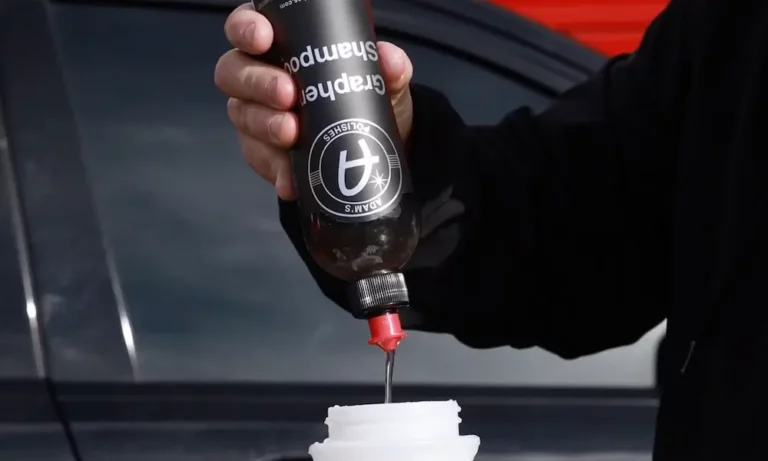
Ever noticed those shiny cars that seem to repel water like magic? That might be graphene at work. As car care evolves beyond traditional waxes, graphene technology has emerged as the new premium option at car washes nationwide. But with prices often double or triple what you’d pay for a basic wash, you’re right to wonder: is graphene car wash actually worth the money, or is it just another expensive gimmick?
What Is Graphene Car Wash Technology?
Graphene is a single layer of carbon atoms arranged in a hexagonal pattern, making it incredibly strong yet flexible. When applied to your car, graphene forms covalent bonds with ceramic matrices creating a protective barrier that’s remarkably durable.
Unlike traditional car waxes that sit on the surface, graphene technology:
- Creates a stronger molecular bond with your paint
- Forms a super-slick surface that water and dirt struggle to stick to
- Provides protection that lasts significantly longer than conventional products
How Graphene Compares to Other Car Protection Options
Before diving into your wallet for graphene, let’s see how it stacks up against other options:
| Protection Type | Average Duration | Water Repellency | UV Protection | Typical Cost |
|---|---|---|---|---|
| Traditional Wax | 1-3 months | Moderate | Minimal | $15-30 |
| Polymer Sealant | 4-6 months | Good | Moderate | $50-100 |
| Ceramic Coating | 1-2 years | Excellent | Very Good | $100-250 |
| Graphene Coating | 2-7 years | Superior | Excellent | $300-800 |
Testing shows graphene treatments achieve contact angles of 115-125°, exceeding ceramic coatings (105-110°). In practical terms, this means water beads up and rolls off more effectively.
The Real Benefits of Graphene Car Wash
Superior Water Repellency
The most immediately noticeable benefit of graphene is its extreme hydrophobic effect. Water doesn’t just bead—it actively sheets off your vehicle. This translates to:
- 40% faster water sheeting during rainfall
- Less water spots after drying
- Cleaner appearance between washes
One test showed graphene-treated vehicles maintaining cleanliness for 18-22 days in urban environments, compared to 12-15 days for ceramic-protected vehicles.
Exceptional Durability
Graphene’s most compelling advantage is its longevity:
- Maintains 92% gloss retention after extensive UV exposure
- Shows 62% fewer microscratches than ceramic coatings after repeated washing
- Creates a hardness rating of 9H on the pencil hardness scale (very scratch resistant)
Laboratory weathering tests confirm graphene outperforms traditional coatings in maintaining protection over time.
Heat Dissipation Benefits
Graphene is an excellent thermal conductor, which means:
- Your car’s surface temperature stays cooler in direct sunlight
- Paint experiences less thermal stress and potential damage
- Reduced likelihood of water spotting in hot weather
Cars in hot climates particularly benefit from this unique property of graphene technology.
Dust and Dirt Resistance
The anti-static properties of graphene reduce dust accumulation by 60-70% compared to uncoated vehicles. This means:
- Your car stays cleaner longer
- Less frequent washing is needed
- Airborne contaminants like pollen don’t stick as readily
The Downsides of Graphene Car Wash
Premium Cost
The most obvious drawback is price:
- Graphene wash packages range from $30-50 per month for subscription services
- Professional graphene detailing applications cost $300-800
- This represents a 120-150% increase over basic ceramic treatments
Application Requirements
For maximum effectiveness, graphene coating requires:
- Thorough surface preparation taking 4-6 hours
- Proper pH-neutral washing techniques
- Specific curing conditions
Studies show improper installation can reduce effectiveness by 40-60%, which is particularly concerning with DIY applications.
Environmental Sensitivity
While graphene excels in most conditions, it has vulnerabilities:
- Shows 18-25% faster degradation in coastal environments due to salt exposure
- May cause galvanic corrosion concerns when applied to mixed-metal body panels
- Performance can vary significantly between brands
Is Graphene Car Wash Worth It for You?
Who Should Invest in Graphene
Graphene makes the most financial sense if you:
- Own a premium or collector vehicle where maximum paint preservation matters
- Live in areas with harsh environmental conditions (intense sun, heavy pollution)
- Plan to keep your vehicle long-term (5+ years) to amortize the cost
- Dislike frequent car washing and want maximum time between cleanings
When amortized over a 5-year period, graphene’s extended durability brings the annualized cost to $60-160, compared to $100-240 for ceramic recoating and $180-400 for frequent wax applications.
Who Should Skip Graphene
Graphene probably isn’t worth it if you:
- Lease vehicles or trade in frequently (under 3 years)
- Own older vehicles where pristine paint isn’t a priority
- Live in moderate climates with minimal environmental stressors
- Enjoy frequent washing as part of your routine
Real Results: What Users Experience with Graphene
A 2024 survey of 1,200 detailing customers revealed:
- 68% reported satisfaction with graphene’s self-cleaning properties
- 53% noted reduced washing frequency
- 41% expressed frustration with premium pricing
- 29% observed inconsistent performance across brands
Customer experiences vary widely, with professional-grade formulations significantly outperforming consumer products in durability tests.
How to Get the Most Value from Graphene Car Wash
If you decide graphene is worth exploring, maximize your investment by:
1. Choose Professional Application
DIY graphene products rarely match professional results. Look for:
- Detailing shops with certified graphene installation experience
- Proper surface preparation protocols
- Warranties that stand behind the application
2. Maintain Correctly
Even the best graphene coating needs proper maintenance:
- Use pH-neutral car wash soaps only
- Avoid automatic car washes with abrasive brushes
- Apply graphene boosters every 3-6 months to maximize longevity
3. Consider Hybrid Solutions
For better value, explore:
- Ceramic-graphene hybrid coatings that balance cost and performance
- SiO2-infused spray sealants between professional applications
- PPF (paint protection film) in high-impact areas with graphene elsewhere
Alternative Solutions to Consider
If graphene seems too expensive, consider these alternatives:
- Ceramic spray coatings – Offer 6-12 months protection at a fraction of graphene’s cost
- Polymer sealants – Provide good protection for moderate climates at budget-friendly prices
- DIY ceramic coatings – Mid-range option with good durability when properly applied
Making Your Decision
Is graphene car wash worth it? The answer depends entirely on your specific situation:
- For premium vehicles in harsh environments with long-term ownership plans: YES
- For leased vehicles or those in moderate climates with frequent turnover: PROBABLY NOT
- For most people in between: CONSIDER HYBRID SOLUTIONS
The ultimate value of graphene lies in its remarkable durability and performance properties, but these benefits only matter if you’ll own your vehicle long enough to experience them.
Rather than falling for marketing hype, evaluate your specific needs, environment, and ownership timeline. For some drivers, graphene car wash represents the pinnacle of paint protection and worthwhile investment. For others, more moderate solutions offer better value aligned with their actual needs.


