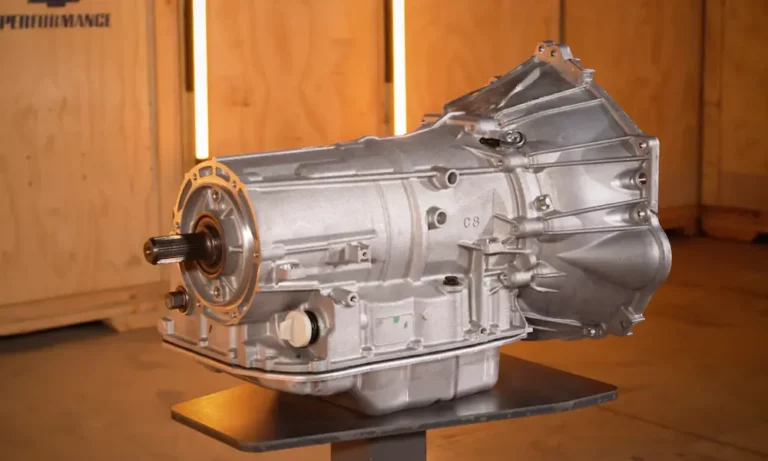
Staring at a $5,000 transmission repair estimate? You’re probably wondering if you should fix your car or dump it. Here’s the truth: it depends on your car’s value, age, and condition. Let’s break down exactly when transmission replacement makes sense and when you’re throwing money away.
The 50% Rule: Your First Decision Filter
Here’s the baseline most mechanics use: if repair costs exceed 50% of your vehicle’s current market value, you’re better off selling.
But that’s just a starting point. The real calculation gets more nuanced.
For older vehicles, experts suggest stricter thresholds:
- 40% for cars over 150,000 miles
- 35% for vehicles with previous major repairs
- 30% for vehicles with multiple existing problems
Why the tighter limits? Because your transmission won’t be the last thing to break. Older vehicles tend to develop problems in clusters, and you don’t want to replace a transmission only to face engine failure six months later.
Check your car’s value on Kelley Blue Book right now. Got that number? Keep it handy.
What You’ll Actually Pay
Transmission costs vary wildly depending on what route you take:
| Repair Option | Cost Range | Expected Lifespan |
|---|---|---|
| Minor repairs | $300-$1,400 | Varies by issue |
| Rebuilt transmission | $1,500-$3,500 | 100,000-150,000 miles |
| Used transmission | $800-$1,500 | Unknown (risky) |
| New transmission | $4,000-$8,000 | 150,000-300,000 miles |
Don’t forget labor. That’ll add another $500-$1,600 depending on your vehicle’s complexity. Front-wheel-drive cars with transverse-mounted engines? More expensive to work on.
When Replacement Actually Makes Sense
You’ve got a newer car with under 100,000 miles, and the transmission just died. Yeah, fix it.
Here’s why: your vehicle’s already taken the biggest depreciation hit. New cars lose 20-30% of their value the moment you drive off the lot. If you buy a replacement vehicle, you’re eating that loss again.
High-value vehicles justify the expense. If your car’s worth $12,000 and a transmission costs $4,500, you’re preserving $7,500 in equity. That math works.
The rest of the car is solid. No engine problems, suspension’s tight, body’s clean. The transmission’s your only major issue? Replace it.
It’s special to you. Maybe it’s a classic. Maybe it was your dad’s truck. Sentimental value counts, even if the spreadsheet says otherwise.
You maintain it religiously. Documented oil changes, transmission fluid services every 30,000-60,000 miles, clean maintenance records. Well-maintained vehicles deserve investment because they’ll keep running after the repair.
When You’re Wasting Your Money
Mileage over 150,000-200,000 miles. At this point, you’re entering the danger zone. Multiple systems are approaching end-of-life. Fix the transmission today, replace the engine next year.
Your car’s worth less than $5,000. The math just doesn’t work. You’ll spend more than the car’s worth, creating instant negative equity.
Multiple things are breaking. Transmission’s shot AND the engine’s burning oil AND the suspension’s clunking? Your car’s telling you it’s done. Listen.
It’s got a failing CVT past 100,000 miles. CVT transmissions can’t be rebuilt like conventional automatics. They require complete replacement, often costing $6,000-$8,000. Nissan CVTs particularly have awful reliability records, frequently failing before 100,000 miles.
Your Replacement Options Explained
Minor Repairs
Sometimes it’s just a solenoid or sensor. Under $1,400? Do it. These fixes buy you time without major investment.
Rebuilt Transmissions
Your existing transmission gets torn down, worn parts replaced, then reassembled. Middle-ground pricing at $1,500-$3,500 makes this attractive for vehicles in decent shape.
Quality rebuilds last 100,000-150,000 miles with proper maintenance. Make sure you get a warranty (more on that below).
Remanufactured Units
Different from rebuilt. These are factory-rebuilt to original specifications with new parts. They offer similar performance to new transmissions at reduced costs.
New Transmissions
Premium option, premium price. You’re looking at $4,000-$8,000 installed, but you’ll get 150,000-300,000 miles of service with proper care.
For newer vehicles under 100,000 miles, new transmissions make the most sense.
The Warranty Question
This matters more than you think. Replacement transmissions typically include warranties ranging from 12 months to lifetime coverage, depending on who does the work.
National chains often offer better warranties than local shops. AAMCO provides 36-month/50,000-mile coverage on their rebuilds. That’s solid protection.
Read the fine print. Some warranties are parts-only. Others cover parts and labor. Some require you to maintain the vehicle at their shop. Know what you’re getting.
Warning Signs You Can’t Ignore
Your transmission’s trying to tell you something. Listen for:
Slipping gears – Engine revs but the car doesn’t accelerate proportionally. Dangerous and getting worse.
Delayed engagement – You shift into drive or reverse and nothing happens for 2-3 seconds. That’s internal wear.
Grinding or whining noises – Transmission bearings or gears are failing. Ignoring this leads to catastrophic failure.
Burning smell – Overheating transmission fluid. Pull over immediately. Continuing to drive can cause complete failure.
Fluid leaks – Check your driveway. Red or brown puddles mean trouble. Transmission fluid doesn’t “burn off” like oil. If it’s low, it’s leaking.
Check engine light – Modern vehicles monitor transmission performance. A check engine light might indicate transmission trouble before you notice symptoms.
Early diagnosis can mean the difference between a $800 repair and a $5,000 replacement.
Vehicle Age and Mileage Sweet Spots
Here’s where the decision gets clearer:
Under 100,000 miles – Replace the transmission unless the vehicle’s worth under $3,000.
100,000-150,000 miles – Calculate carefully. Apply the 50% rule. Consider overall condition.
150,000-200,000 miles – You’re in the questionable zone. Other components are aging too. Use the 40% rule.
Over 200,000 miles – Replacement rarely makes sense unless it’s a commercial vehicle or has exceptional maintenance history.
The CVT Problem
CVT (Continuously Variable Transmission) vehicles need special consideration. These transmissions can’t be rebuilt like conventional automatics.
Nissan, Subaru, and some Honda models use CVTs. When they fail, you’re looking at complete replacement. No rebuild option exists.
Nissan CVT issues are particularly notorious. Models from 2013-2017 with CVTs have class-action lawsuits for premature failure.
If you’ve got a high-mileage CVT vehicle (over 100,000 miles) and the transmission fails, seriously consider selling rather than repairing.
Maintenance History Matters
Two identical cars, same year, same mileage. One gets regular transmission fluid changes. The other never has the fluid touched.
Guess which one justifies a transmission replacement?
Transmission fluid changes every 30,000-60,000 miles dramatically extend transmission life. If you’ve maintained your vehicle properly, you’ve earned the right to invest in it.
No maintenance records? That changes the calculation. A neglected vehicle with one major failure probably has more coming.
Your Driving Conditions Factor In
How you use your vehicle affects this decision.
Frequent towing – Transmissions work harder and wear faster. Even a new transmission will have reduced lifespan.
City driving – Stop-and-go traffic accelerates transmission wear. Heat buildup causes faster degradation.
Highway miles – Easier on transmissions. Highway mileage extends transmission life.
Aggressive driving – Hard acceleration and frequent high-speed driving reduce transmission longevity.
Consider whether your driving style will let you get value from a replacement transmission.
Running the Numbers
Here’s your actual decision framework:
- Get your car’s current value – Use Kelley Blue Book or Edmunds. Be honest about condition.
- Get three quotes – One from a dealer, one from a transmission specialist, one from an independent mechanic.
- Calculate the percentage – Repair cost divided by vehicle value. Is it over 50%? Over 40% if your mileage is high?
- Assess overall condition – What else needs work in the next year? Factor those costs in.
- Consider your needs – Do you need absolute reliability for work? Can you tolerate occasional repairs?
| Vehicle Value | Mileage | Maximum Repair Threshold |
|---|---|---|
| Under $5,000 | Any | $2,500 (50%) |
| $5,000-$10,000 | Under 150,000 | $5,000 (50%) |
| $5,000-$10,000 | Over 150,000 | $3,500 (40%) |
| Over $10,000 | Under 150,000 | $5,000-$8,000 (50%) |
| Over $10,000 | Over 150,000 | $4,000-$6,000 (40%) |
What About Selling As-Is?
Sometimes the best move is cutting your losses.
A car with transmission failure still has value. The engine, body, interior, and other components are worth something. Junkyards pay $200-$500 for non-running vehicles. Private buyers might pay more for a project car.
Calculate what you’d get selling as-is versus the cost of repair and eventual resale value. Sometimes selling now makes more financial sense.
Getting Professional Opinions
Don’t rely on one mechanic’s diagnosis. Transmission problems can mimic other issues.
Get at least two opinions from reputable transmission specialists. Not general mechanics – transmission specialists. These folks diagnose transmission problems daily.
Some issues that seem like transmission failure are actually:
- Faulty sensors ($200 fix)
- Low fluid levels ($100 fix)
- Computer problems ($300 fix)
- Torque converter issues ($800 fix)
A $5,000 transmission replacement when you needed a $200 sensor? That hurts.
Making Your Final Call
Is it worth replacing a transmission? Here’s your cheat sheet:
Replace if:
- Your car’s under 100,000 miles
- Vehicle value exceeds repair cost by 2x or more
- The rest of the car’s in excellent condition
- You’ve maintained it properly
- It’s special to you
Don’t replace if:
- Mileage exceeds 200,000
- Repair costs exceed 50% of vehicle value
- Multiple systems are failing
- Maintenance history is poor
- It’s a high-mileage CVT vehicle
The decision isn’t always clear-cut. Sometimes it comes down to your specific situation, risk tolerance, and whether you can afford a vehicle payment.
But now you’ve got the framework to make an informed choice instead of an emotional one. Get those quotes, run the numbers, and trust the math.
Your wallet will thank you.