You’re broken down on the side of the highway at 11 PM. Do you call AAA or press that blue OnStar button? If you’re not sure which service you actually need—or whether you need both—you’re about to find out. Let’s cut through the marketing fluff and figure out what these services really do.
What’s the Real Difference Between AAA and OnStar?
Here’s the thing: AAA and OnStar aren’t really competitors. They’re solving different problems.
AAA is about getting you and your car home. It’s a membership that follows you, not your vehicle. Whether you’re driving your truck, your spouse’s sedan, or a rental car in another state, AAA covers you. The service shines when you need a tow, a new battery installed on the spot, or fuel delivery.
OnStar is about keeping you safe in an emergency. It’s built into your GM vehicle (Chevy, GMC, Buick, Cadillac) and monitors crash sensors 24/7. If you smash into a tree and can’t reach your phone, OnStar’s automatic crash response sends help to your exact GPS coordinates without you lifting a finger.
Think of it this way: OnStar calls the ambulance. AAA calls the tow truck.
AAA Membership Tiers: What You’re Actually Paying For
AAA pricing varies slightly by region, but the tier structure stays consistent. The real difference? How far they’ll tow your car.
Classic Membership (~$65/year)
This is the bare-bones option. You get four service calls per year, but here’s the catch: they’ll only tow you 5 miles. That’s barely enough to reach the nearest gas station, let alone your trusted mechanic across town.
Who it’s for: City dwellers who rarely venture beyond a few miles from home.
Plus Membership (~$100/year)
This is where AAA becomes genuinely useful. You get 100-mile towing, which means you can bypass that sketchy roadside garage and get your car to a shop you actually trust—or straight to your driveway.
You also get free fuel delivery (they cover the gas cost, not just the service), extended locksmith reimbursement up to $100, and up to $750 in trip interruption coverage if you break down more than 100 miles from home.
Who it’s for: Most drivers. It’s the sweet spot for price and coverage.
Premier Membership (~$125/year)
Premier bumps towing to 200 miles once per year (plus three 100-mile tows). You also get home and car locksmith coverage up to $150, trip interruption coverage up to $1,500, and—this is wild—up to $25,000 in emergency medical transportation reimbursement.
Who it’s for: Road trippers, RV owners, and anyone who regularly drives long distances.
OnStar Plans: Free vs. Paid (And Why 2025 Changed Everything)
GM flipped the script in 2025. If you bought a 2025 or newer GM vehicle, you now get OnStar Basics for free for eight years. That includes:
- Automatic crash response (the big one)
- Remote lock/unlock via the mobile app
- Google Maps integration and voice commands
This is huge. Crash response used to cost $30/month. Now it’s baked into every new GM vehicle.
Paid OnStar Tiers (For Older Vehicles or Extra Features)
If you drive an older GM or want premium features, here’s what paid plans look like:
Safety & Security Plan (~$30/month): Adds stolen vehicle assistance, crisis assist (connects you to help during natural disasters), and roadside assistance. But here’s the problem: OnStar’s roadside towing typically goes to the nearest dealership, not necessarily your home or preferred shop.
OnStar One (~$40-50/month): Bundles safety features with unlimited Wi-Fi data. That’s nearly $600/year—six times the cost of AAA Plus.
Guardian App ($15/month): This standalone app extends crash detection and roadside assistance to any vehicle via your smartphone. Sounds great, but the towing limit is only 25 miles—half of what AAA Plus offers for a fraction of the annual cost.
Towing: Where AAA Crushes OnStar
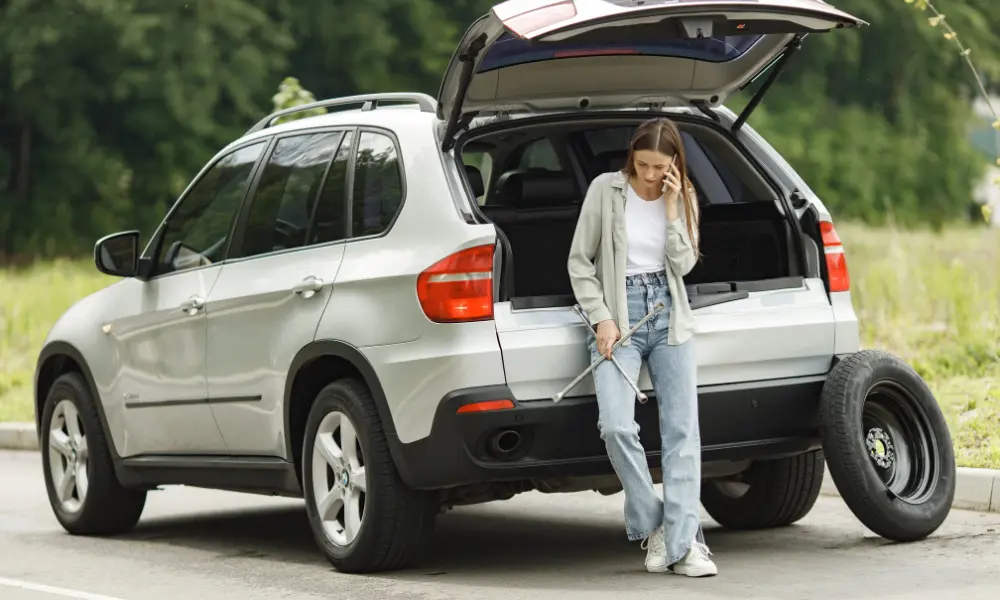
Let’s get specific. You’re 60 miles from home when your transmission dies.
With AAA Plus: They tow you 100 miles—straight to your driveway if you want. You choose the destination within your mileage limit.
With OnStar: They tow you to the nearest GM dealership. If that dealership is 10 miles away but your house is 60 miles in the opposite direction, you’re going to the dealership. Going home instead? You’ll pay overage charges for the extra mileage.
With OnStar Guardian App: You get 25 miles max. That 60-mile tow home? You’re paying out of pocket for 35 miles of it.
The verdict here isn’t even close. For towing flexibility and distance, AAA’s coverage dominates.
Dead Battery? AAA Actually Fixes It
Here’s where AAA shows a level of service OnStar can’t match.
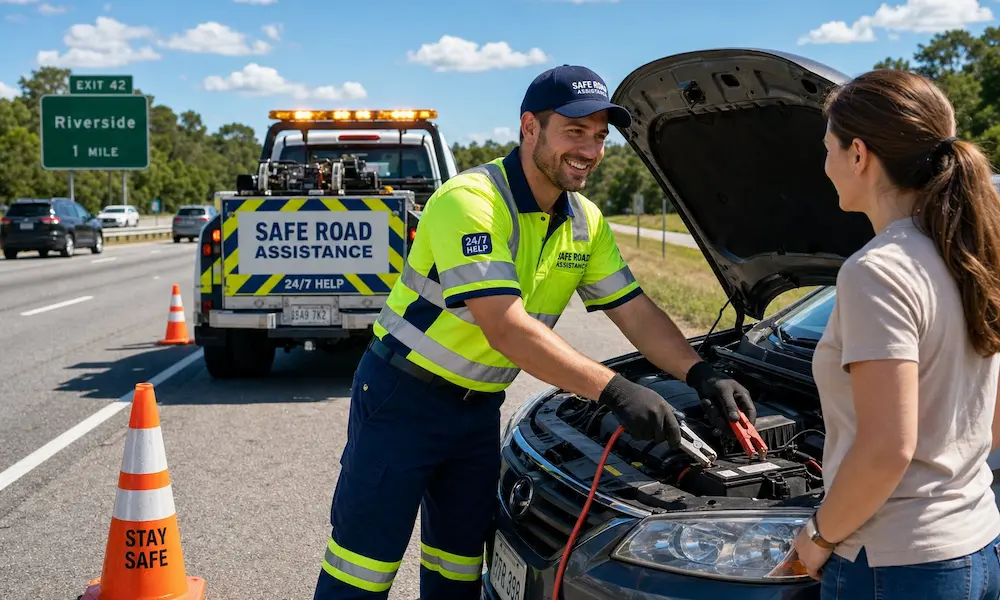
AAA sends a mobile battery truck. The tech tests your battery, and if it’s dead, they sell and install a new one right there on the roadside. You get a minimum $25 member discount, and the battery comes with a 3-year nationwide warranty. If it dies again in three years, they replace it for free.
OnStar sends a jump start. That’s it. If your battery won’t hold a charge (which is common), you still need to drive to a shop and buy a battery yourself.
One service solves the problem permanently. The other gives you a 20-minute patch.
Crash Response: OnStar’s Killer Feature
This is where OnStar earns its keep—and it’s not even close.
OnStar’s system monitors your vehicle’s accelerometers, airbag deployment sensors, and rollover detectors. When you crash, the system transmits impact force, direction, seatbelt usage, and GPS coordinates to OnStar’s emergency center instantly.
Here’s what makes it lethal: OnStar advisors are Tri-ACE certified by the International Academies of Emergency Dispatch—the same certification 911 operators hold. They can give you CPR instructions, talk you through controlling bleeding, or coach someone through childbirth while emergency responders race to your location.
If you’re unconscious, they automatically dispatch paramedics to your exact coordinates without you having to do anything.
AAA has nothing remotely comparable. If you crash and can’t dial your phone, AAA can’t help you. Their dispatchers handle logistics, not medical emergencies. They’ll transfer you to 911, but that requires you to be conscious and capable of making the call.
For rural drivers or anyone with medical conditions, this feature alone justifies OnStar.
Locked Out? OnStar Wins (If You Drive a GM)
Picture this: keys are locked in your car, engine running, in a sketchy parking lot at night.
With OnStar (GM vehicle): You call. An advisor sends a satellite signal to your car. Your doors unlock in under two minutes. No waiting, no locksmith fee.
With AAA: They dispatch a physical locksmith. You wait 30-60 minutes (or longer). AAA reimburses $50-$150, but if the locksmith can’t pick the lock and has to drill it, you might still owe money out of pocket.
OnStar’s remote unlock is borderline magic—but it only works on GM vehicles with active service.
The Guardian App: OnStar’s Attempt to Follow You Anywhere
OnStar realized they had a problem: their service was locked to GM vehicles. So they built the Guardian app to bring crash detection and roadside help to your smartphone, regardless of what you drive.
The Good: It extends crash response to non-GM cars. You can add up to seven family members. If your kid crashes their Honda, the app detects it and connects them to an OnStar advisor.
The Bad: Smartphone sensors aren’t as precise as vehicle-grade hardware. The app drains battery. On iPhones, the app can’t automatically connect to an advisor—it alerts them, but they have to call you back, and you have to answer. If your phone’s dead or destroyed in the crash, you’re out of luck.
And remember that 25-mile towing limit? It’s a dealbreaker for serious roadside coverage.
The Hidden Value: AAA’s Discount Empire
Here’s something most people miss: AAA isn’t just roadside assistance. It’s a discount club that can easily pay for itself.
Book a hotel through AAA’s partnerships with Marriott, Hilton, or Hyatt, and you’ll save 5-10% per night. Rent a car through Hertz with your AAA membership, and you can save up to 20% plus waived fees for young drivers.
One week-long family vacation can save you $100-$200—more than the cost of the annual membership. OnStar offers zero comparable discount network.
Who Should Get What?
Let’s make this practical.
You Drive a 2025+ GM Vehicle
Get AAA Plus. Skip paid OnStar upgrades.
You already have free crash response and remote unlocking through OnStar Basics for eight years. Paying $360/year for OnStar’s Safety plan just to get towing makes no sense when AAA Plus gives you better towing (100 miles vs. “nearest dealer”) for $100/year.
Exception: If you desperately need in-car Wi-Fi or stolen vehicle assistance, consider OnStar’s connectivity plans. But for roadside and safety? AAA + free OnStar Basics is unbeatable.
You Drive Multiple Cars or Non-GM Vehicles
Get AAA Plus or Premier.
OnStar’s Guardian app tries to compete here, but that 25-mile towing cap is a joke compared to AAA’s 100-200 mile range. Plus, AAA covers you in any vehicle—your car, your spouse’s car, your friend’s car, even a rental.
You’re a Rural or Long-Distance Driver
Get both: OnStar (embedded hardware) + AAA Premier.
Rural areas create two risks: spotty cell coverage and long distances to repair shops. OnStar’s roof-mounted antenna connects where your phone won’t, giving you a lifeline in dead zones. But the nearest GM dealership might be 80 miles away and closed on weekends.
AAA Premier’s 200-mile tow gets you home or to a competent mechanic, regardless of where the dealership is.
You’re Elderly or Medically Vulnerable
Get OnStar (and consider keeping AAA for logistics).
OnStar’s automatic crash response and medically trained advisors are life-saving if you have a stroke, heart attack, or diabetic emergency while driving. The service detects the crash and dispatches help even if you’re unconscious.
AAA can’t do that. You’d need to be able to dial your phone and explain the situation.
The Bottom Line: They’re Not Really Competitors
Comparing AAA vs OnStar is like comparing a hardware store to a fire extinguisher. They’re both useful, but they do fundamentally different jobs.
OnStar saves lives in emergencies. It’s a safety system designed for the worst-case scenario: serious crashes, medical crises, stolen vehicles. If you drive a GM and want automatic crash response with medically trained advisors standing by 24/7, OnStar delivers.
AAA saves time and money during breakdowns. It’s a logistics service designed for mechanical failures: dead batteries, flat tires, and long tows to the shop of your choice. The discount ecosystem is a bonus that often covers the membership cost.
For most drivers with newer GM vehicles, the winning strategy is simple: lean on the free OnStar Basics for crash safety and remote access, then add AAA Plus for superior towing and battery service. You get the best of both worlds for about $100/year instead of $600+.
If you don’t drive a GM, AAA Plus is the no-brainer choice. OnStar’s Guardian app sounds good on paper, but its 25-mile towing limit and smartphone dependence make it a weak substitute for dedicated roadside coverage.
One service calls the ambulance. The other calls the tow truck. Figure out which problem keeps you up at night, and buy accordingly.