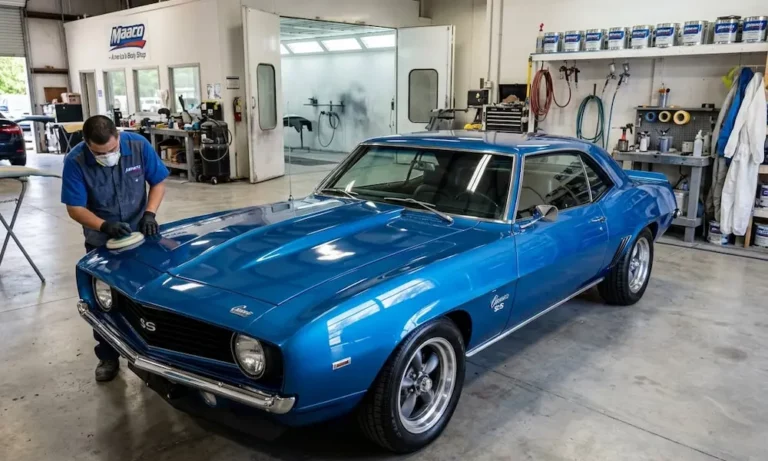
You want a fresh paint job without spending $10,000. Maaco keeps coming up. But is a Maaco paint job worth it, or will you regret it the moment you drive off the lot? The answer depends heavily on your car, your budget, and what you’re willing to do before you hand over the keys. Stick around — this breakdown covers everything.
What Makes Maaco So Cheap in the First Place
Maaco isn’t cutting corners on paint quality alone. The real savings come from slashing labour hours.
Traditional body shops remove every piece of trim — door handles, headlights, bumpers, mirrors — before a single drop of paint touches your car. That process alone takes dozens of skilled labour hours. Maaco skips all of that. Instead, technicians use masking tape and paper to cover what they don’t want painted.
The result? Your car moves through the shop in three to five days instead of weeks. That speed is how Maaco keeps prices low — and it’s also the source of most complaints.
The Real Problem with Masking Instead of Removing
When painters mask instead of remove, the new paint doesn’t wrap around panel edges. It stops abruptly at a tape line. Over time, those hard edges:
- Collect dirt and wax residue
- Crack from heat expansion and road vibration
- Peel away from the surface prematurely
There’s also overspray risk. If masking paper isn’t sealed perfectly, atomised paint drifts onto your windows, wheels, and rubber trim. And tape removal timing matters more than people think — pull it too early and paint smears, leave it too long and it tears the finish.
Breaking Down the Three Paint Packages
Maaco isn’t a one-size-fits-all service. You’re choosing a coating technology, not just a price point. Here’s exactly what you get at each tier.
| Paint Package | Coating Type | Stages | Warranty | Best For |
|---|---|---|---|---|
| Basic | Synthetic Enamel | Single-Stage | 1 Year | Work trucks, vinyl wrap prep, quick resale |
| Preferred | Urethane | Single-Stage | 3 Years | Daily drivers, long-term ownership |
| Premium / Signature | Base Coat + Clear Coat | Two-Stage | 5 Years | Valued personal vehicles, budget restorations |
Basic: Synthetic Enamel
The entry-level service uses single-stage synthetic enamel. Colour and gloss go on in one shot. It looks great immediately but fades fast under UV exposure — a process called “chalking” where the surface turns dull and powdery.
Technicians also skip door jambs, hood undersides, and trunk interiors. If you’re prepping a vehicle for a vinyl wrap or selling it quickly, this tier makes sense. For anything else, it’s a short-term fix.
Preferred: Urethane
Urethane’s tightly cross-linked molecular structure makes it physically tougher than enamel. It resists chips from road debris, handles UV exposure better, and doesn’t chalk nearly as fast. The three-year warranty reflects that durability. This is the sweet spot for most people keeping a reliable older car on the road.
Premium / Signature: Base Coat + Clear Coat
This two-stage system matches how manufacturers paint cars from the factory. The colour goes on first as a base coat. Then a transparent clear coat locks on top, blocking UV rays and giving the paint serious depth and gloss.
The clear coat also has a practical bonus — minor scratches can be polished out without touching the colour underneath. The five-year warranty and more thorough prep process make this the right call if your car has genuine value or you’re planning a long-term restoration on a tight budget.
Why Surface Prep Is Everything
Here’s something every professional painter agrees on: the quality of the finish depends entirely on how well the surface is prepared. Paint is a conformal coating. It doesn’t hide dents, chips, or peeling clear coat. Fresh gloss actually makes those flaws more visible, not less.
What Maaco’s Standard Prep Looks Like
In a standard job, technicians do a quick mechanical scuff with a dual-action sander. This creates surface texture so the new paint sticks. It doesn’t level anything. Deep scratches, old filler, and dings get painted right over unless you pay extra for bodywork.
If there’s wax, silicone tyre dressing, or road tar on the surface, the paint won’t bond properly either. That causes fish-eyeing — craters in the fresh paint where contamination repelled it.
The DIY Prep Strategy That Changes Everything
Smart enthusiasts figured out a way to get dramatically better results: do all the labour themselves, then hand the car to Maaco just for booth time and paint application.
If you’re willing to put in the work at home, here’s what delivers the best outcome:
- Remove trim yourself — Pull off headlights, taillights, mirrors, emblems, and rubber seals. This eliminates tape lines completely.
- Chemically decontaminate the surface — Wash thoroughly, then wipe everything down with a wax and grease remover or high-concentration isopropyl alcohol.
- Fix dents and deep chips — Apply body filler in thin layers, sand flat, then seal with a primer-surfacer.
- Block sand the entire car — Start at 320-grit for severe oxidation, progress to 600, then 800 or 1000-grit to create a perfectly flat surface.
People who do this report results that look nearly as good as professional independent shops — for a fraction of the price. You’re trading your time for their spray equipment and climate-controlled booth.
The Orange Peel Problem — and How to Fix It
Even with solid prep, high-volume painting often produces orange peel — a dimpled texture that looks exactly like the skin of a citrus fruit. It happens when paint droplets don’t self-level properly before curing, usually because fast-drying solvents flash off too quickly to keep the booth moving.
Fixing Orange Peel with Wet Sanding
Wet sanding levels the texture by abrading the clear coat flat. Here’s the general process:
- Start with 1500-grit wet sandpaper, keeping the surface lubricated with water and a drop of car shampoo
- Progress to 2500-grit, then 3000-grit to refine sanding marks
- Finish with a machine polisher and cutting compound to restore gloss and clarity
- Follow up with a fine polish to remove swirl marks
Two important warnings: Wait at least 30 days after painting before wet sanding so the paint fully cures. And be careful on sharp body lines — sanding through the clear coat to the base coat is a permanent mistake that budget paint’s thin application makes very easy to do.
Is a Maaco Paint Job Actually Worth It for Your Situation?
This is where most advice falls apart — people apply the same answer to every car and every budget. The reality is more specific.
It’s worth it if you:
- Own a structurally sound older vehicle where a $10,000 professional repaint would exceed the car’s value
- Want to sell a cosmetically tired car and need to increase curb appeal quickly
- Run a commercial fleet and need uniform colour across multiple vehicles fast
- Plan to do your own prep work and want access to a professional spray booth
It’s probably not worth it if you:
- Own a late-model car still depreciating steeply
- Drive a luxury or collector vehicle where buyers and appraisers will spot tape lines and heavy orange peel immediately
- Expect factory-level perfection without doing any prep work yourself
A quick example: spending $1,000 to $1,500 on a Preferred paint package for a $5,000 daily driver with failing paint can make the car far easier to sell and may return close to what you spent. Spending $10,000 at an independent shop on the same vehicle is a financial loss almost every time.
Understanding the Warranty Before You Sign Anything
The Maaco warranty covers peeling and fading caused by material failure — not aesthetic complaints you notice a week after picking up your car.
Key warranty facts to know:
- Coverage lasts 1, 3, or 5 years depending on the package you buy
- The warranty does not cover areas where you did your own bodywork — Maaco won’t guarantee adhesion over substrates they didn’t prepare
- Structural repairs carry a lifetime warranty against cracking, provided the vehicle isn’t involved in another accident
The Five-Day Rule Nobody Reads
This is the part that catches people off guard. When you pick up your car, inspect it thoroughly before you drive away. Any workmanship complaint — tape lines, overspray on glass, uneven coverage — must be flagged before you accept the vehicle.
If you can’t inspect properly at the shop, you have until the next business day, or you must call within exactly five business days to report the issue. After that window closes, the franchise considers the aesthetic quality accepted. Minor dust inclusions in the clear coat are considered acceptable by corporate standards and won’t be covered post-acceptance.
Keep your original Repair Order. You’ll need it to activate the warranty, especially if you move — inter-shop warranty claims require both the itemized order and the paid invoice. And remember: the warranty becomes void the moment you sell the car.
How to Pick the Right Location
Here’s what most people miss: Maaco is a franchise. Every location is independently owned. Quality varies dramatically between shops, and the brand name alone guarantees nothing.
Consumer reviews show the full range — some locations deliver clean, careful work that exceeds expectations. Others generate complaints about overspray on wheels, missing hardware, and scratched glass. The same brand, wildly different outcomes.
Certifications that signal a quality shop:
- Diamond Centre status — The top tier of Maaco’s internal rating system, requiring rigorous annual assessment and a strong track record
- I-CAR Gold Class — An independent industry certification confirming technicians stay current on modern repair techniques
- ASE Certification — Individual technicians have passed national exams and have verified professional experience
- OEM Certifications (Ford FCCN, Honda ProFirst, GM Collision) — Confirms the shop has manufacturer-specific tools and training for advanced repairs
You can check certifications directly on Maaco’s certification page before committing to a location. A Diamond-rated, I-CAR-certified shop is a far safer bet than an uncertified one down the street offering the same price.
The Bottom Line
A Maaco paint job is worth it when your expectations match what the service actually delivers. It’s a high-volume, production-line model built for speed and affordability — not perfection. Pick the right package for your car’s value, do your prep work if you can, inspect the vehicle thoroughly before accepting it, and choose a certified location. Do those four things and you’ll get real value. Skip them and you’ll have a story to tell on Reddit.