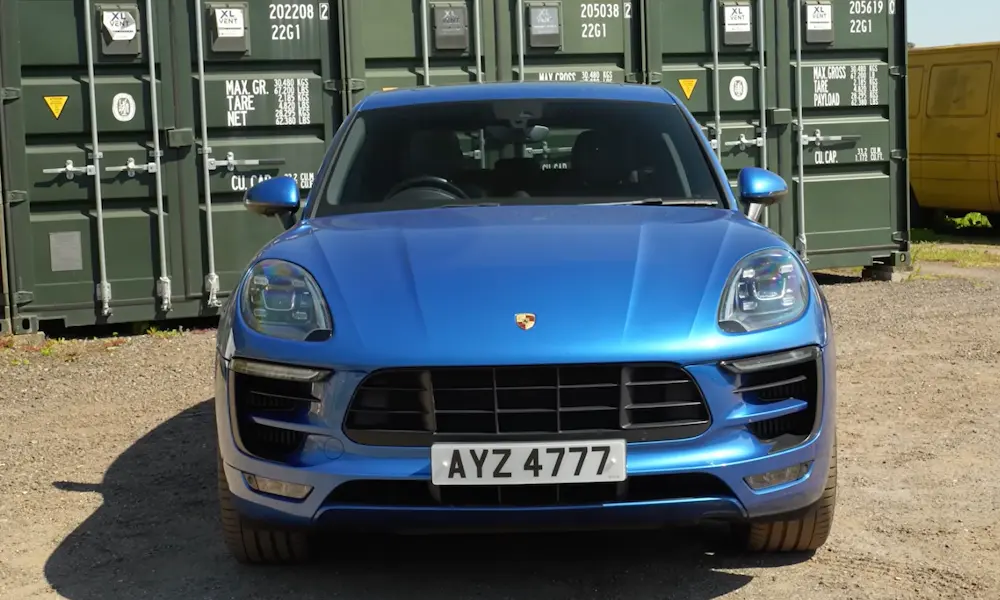
You’ve got a Porsche Macan sitting in your driveway—congrats, it’s an incredible machine. But here’s the thing: keeping it running like the precision instrument it is means understanding what it actually needs, not just what the manual says. Let’s cut through the confusion and get you sorted on the Porsche Macan service schedule that’ll keep your SUV purring for years.
Why Your Macan Isn’t Just Another SUV
Your Macan might look like a regular crossover, but under that sleek body sits sports car DNA. It’s got turbocharged engines working overtime, a sophisticated PDK transmission, and an all-wheel-drive system that’s honestly a bit finicky.
Here’s what that means: the maintenance your Macan needs is way more involved than what you’d do for a regular SUV. Think of it like this—you wouldn’t treat a racehorse like a farm horse, right? Same deal here.
The official Porsche Macan service schedule lists the bare minimum to keep your warranty valid. But if you want this thing to last past 100,000 miles without turning into a money pit? You’ll need to dig deeper.
The 10,000-Mile Rhythm (But Should It Really Be 5,000?)
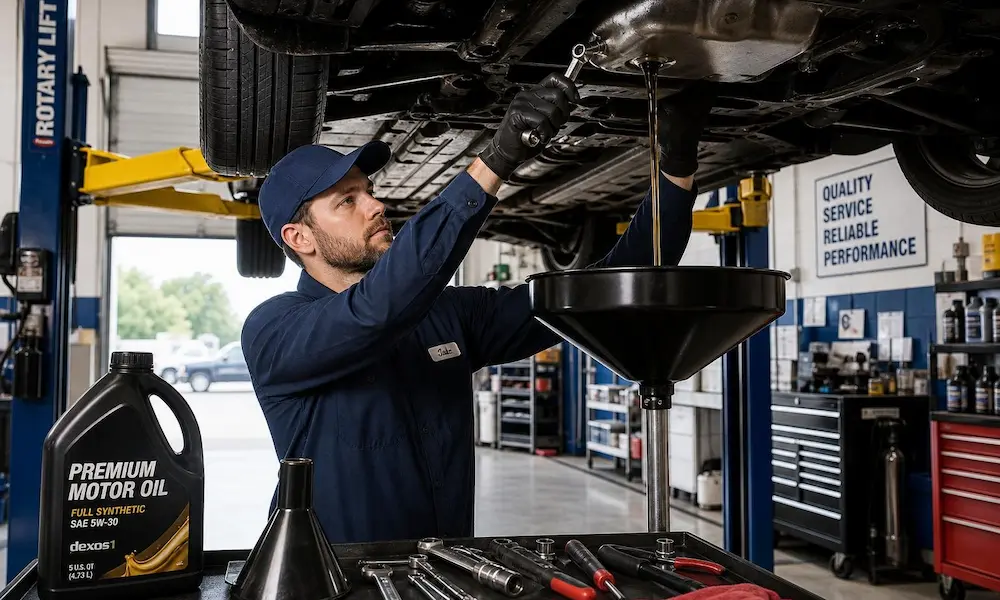
Every 10,000 miles or once a year—whichever comes first—you’re due for what Porsche calls a “minor service.” This isn’t just slapping in some oil and calling it a day.
What Actually Happens
Your tech will swap out the engine oil and filter, hook up the diagnostic computer (PIWIS, if you’re curious), and scan every control module for hidden issues. They’ll crawl under your Macan checking for loose panels, exhaust leaks, and fluid seepage.
Sounds basic, but here’s where it gets interesting: that 10,000-mile interval assumes you’re doing mostly highway driving where your engine gets properly hot. If you’re doing short trips, sitting in traffic, or live somewhere brutally cold or hot, your oil breaks down faster.
The 5,000-Mile Secret
Most Porsche specialists will quietly tell you that 5,000-mile oil changes are way better for longevity. Why? Your Macan’s direct-injection engine is harsh on oil. Fuel sneaks past the piston rings during cold starts, thinning out your oil. The timing chain tensioners—those things that keep your engine from eating itself—rely on clean, thick oil to work right.
Waiting the full 10,000 miles? That’s fine for the warranty period. Want to keep this car for a decade? Cut that interval in half. It’ll cost you an extra $250–$400 annually, but it’s cheap insurance against a $10,000 timing chain disaster.
Spark Plugs: The Confusing 30k vs. 40k Split
Pop quiz: when do you replace your Macan’s spark plugs? If you said “I don’t know,” you’re not alone. Porsche varies this interval based on which engine you’ve got.
If You’ve Got the Base (2.0L) or Turbo Models
Your spark plugs need replacing every 30,000 miles or 4 years. No exceptions.
The 2.0-liter four-cylinder is a workhorse that’s constantly under boost trying to move 4,100 pounds of German engineering. That creates serious heat and pressure, which wears out those iridium electrodes fast.
The Turbo models (whether you’ve got the 3.6L or 2.9L twin-turbo V6) run even higher cylinder pressures. When those plugs wear out, the gap widens. Your ignition coils have to work harder to bridge that gap. Eventually? Misfires, damaged catalytic converters, and a very expensive repair bill.
For the S and GTS Variants
You get a slight break—40,000 miles or 4 years. The V6 engines in these models distribute heat a bit better, so the plugs last longer.
But here’s the kicker: that 4-year limit is non-negotiable. Leave spark plugs in an aluminum cylinder head too long, and they can seize from corrosion. What should be a $600 job becomes a cylinder head extraction nightmare.
The PDK Transmission Service You Can’t Skip
Let’s talk about your PDK transmission—that lightning-fast dual-clutch gearbox that makes your Macan so damn fun to drive. It’s also the most expensive single component to replace.
The Great 40k vs. 60k Debate
Some dealer schedules say 40,000 miles. Others stretch it to 60,000. So which is it?
Here’s the technical reality: your PDK uses fluid for both hydraulics and cooling. Those wet clutch packs inside slip microscopically every time you shift to make things smooth. That friction sheds tiny bits of clutch material into the fluid. Over time, that contamination clogs up the delicate mechatronic unit—the brain of your transmission.
What the Experts Actually Recommend
Independent Porsche specialists are pretty unanimous: stick with 40,000 miles or 4 years. Pushing to 60k increases your risk of rough shifting, hesitation, or complete transmission failure.
A proper PDK service isn’t cheap—you’re looking at $800–$1,200 at an independent shop, maybe double that at the dealer. But replacing a PDK? Try $15,000. Do the math.
The service includes draining the old fluid, replacing the filter, refilling with the correct Porsche-approved DCT fluid, and recalibrating the clutch engagement points with the PIWIS computer. It’s not a DIY job unless you’re seriously mechanized.
The Transfer Case Issue Nobody Warned You About
This is the big one that catches Macan owners off guard. Your all-wheel-drive system uses a transfer case with a multi-plate clutch to send power forward. It’s brilliant when it works. When it doesn’t? You get the dreaded “shudder.”
What’s the Shudder?
Picture this: you’re accelerating normally, and suddenly it feels like you’re driving over rumble strips. The whole car vibrates and jerks. Not great.
This happens when the transfer case fluid breaks down or absorbs moisture. The friction modifiers fail, and those clutch plates start stick-slipping instead of engaging smoothly. Early Macan owners dealt with this so much that Porsche extended the warranty to 7 years/unlimited miles for affected VINs.
The Fix That Actually Works
The official schedule says change the transfer case fluid at 120,000 miles. That’s absurd. Real-world experience shows that changing it every 40,000 miles basically eliminates the shudder problem entirely.
This simple service costs maybe $200–$300. A replacement transfer case? North of $5,000. It’s the single best “off-menu” maintenance you can do.
The Big 40,000-Mile Reset
If there’s one number to burn into your brain about the Porsche Macan service schedule, it’s 40,000 miles. This is when everything meaningful comes due.
Here’s what you’re looking at:
| Service Item | Why It Matters |
|---|---|
| PDK Fluid & Filter | Protects that $15k transmission from contamination |
| Transfer Case Fluid | Prevents the shudder and clutch pack failure |
| Spark Plugs | Depends on your engine—S/GTS only at 40k |
| Front/Rear Differential Fluid | Removes metal shavings, refreshes gear protection |
| Engine Air Filter | Half the factory interval protects your turbo |
| Brake Fluid | Required every 2 years regardless of mileage |
Yeah, this service isn’t cheap. At a dealer, you’re looking at $1,800–$3,500. Independent specialists can usually do it for $1,200–$2,000.
But think of it as a “drivetrain reset.” You’re replacing every critical fluid in the system, neutralizing the most common failure points, and buying yourself another 40,000 miles of worry-free driving.
Air Filters: The Turbo Protection You’re Probably Ignoring
The factory schedule says replace your engine air filter every 80,000 miles. For a turbocharged engine, that’s wildly optimistic.
Why It Actually Matters
A dirty air filter creates a pressure drop at the turbocharger’s inlet. Your engine computer still wants the same boost level, so the turbo spins faster to compensate. That generates extra heat and wears out the turbo bearings prematurely.
Turbos aren’t cheap. We’re talking $2,000–$4,000 for a replacement. An air filter costs maybe $40–$60.
Smart Macan owners replace air filters every 40,000 miles. If you live somewhere dusty (looking at you, Southwest), inspect them at 20,000 and swap if they look dirty.
Your cabin air filter is a different story—that should be changed every 20,000 miles or 2 years to keep your AC working efficiently and prevent funky smells.
Brake Fluid: The Two-Year Non-Negotiable
Doesn’t matter if you’ve driven 2,000 miles or 20,000—brake fluid gets changed every 2 years. Period.
Brake fluid is hygroscopic, which is a fancy way of saying it absorbs water from the air. As the water content goes up, the boiling point drops. In a heavy, high-performance SUV like the Macan, hard braking generates serious heat.
If your fluid boils, you get vapor lock—air bubbles in your brake lines. Air compresses. You press the pedal and… nothing. Not good at highway speeds or going down a mountain.
Plus, water in the system corrodes your expensive ABS unit and brake calipers from the inside. This is a $150–$300 service that prevents catastrophic brake failure. Don’t skip it.
Model-Specific Quirks You Should Know
Not all Macans are created equal. Your maintenance needs shift slightly depending on which generation and trim you’ve got.
2015–2018 (95B.1)
These early birds came with the 3.0L twin-turbo V6 (S/GTS) or 3.6L twin-turbo (Turbo). They’re solid, but watch for timing cover oil leaks—an aluminum bolt issue Porsche had to fix. Check for oil seepage around the front of the engine during every service.
The transfer case shudder is most common in this generation. Don’t wait on that 40k fluid change.
2019–2021 (95B.2)
This generation brought the 2.0L four-cylinder Base model and shifted the S to a “hot-V” single-turbo 3.0L V6. The Turbo got the 2.9L twin-turbo from the Cayenne.
The hot-V design (turbo mounted in the valley between cylinder banks) makes spark plug changes more labor-intensive. Some 2019–2020 2.0L models had an idle vibration issue that required resetting the camshaft control adaptation and an oil change.
2022–Present (95B.3)
The “Turbo” trim disappeared. Now you’ve got the Base, Macan T (basically a sportier Base), S, and GTS—all using either the 2.0L or 2.9L engines.
The 2.9L engine in the current S and GTS keeps the 40,000-mile spark plug interval. The Macan T follows the Base schedule with 30k plugs.
The Hidden Maintenance That Saves You Thousands
Some items on the Porsche Macan service schedule seem minor but prevent major headaches.
Sunroof Drains
Your panoramic sunroof has drain tubes in each corner. They clog with leaves, pine needles, and gunk. When they block, water overflows into your cabin—specifically onto expensive electronic modules hidden in the footwells and cargo area.
Water damage to the Bose amp or body control units creates electrical gremlins that are a nightmare to diagnose. Clean these drains every 20,000 miles or annually. Takes 10 minutes and can save you a $3,000 electrical repair.
PDCC Reservoir
If your Macan has Porsche Dynamic Chassis Control (the active anti-roll bars), there’s a hydraulic reservoir with an internal filter. That filter can’t be serviced separately, so the whole reservoir gets replaced every 60,000 miles or 6 years.
Skip it, and you risk starving the PDCC pump, causing cavitation and pump failure. That’s a multi-thousand-dollar fix for ignoring a $400 part.
Dealer vs. Independent: The Cost Reality
Let’s talk money. Authorized Porsche dealers charge a premium for everything. You’re paying for factory training, specialized tools, and genuine parts. But independent specialists often deliver the same quality at 40–60% less.
Here’s the reality check:
10,000-Mile Service
- Dealer: $400–$800
- Independent: $250–$400
40,000-Mile Major Service
- Dealer: $1,800–$3,500
- Independent: $1,200–$2,000
Brake Job (per axle)
- Dealer: $1,200–$1,800
- Independent: $800–$1,200
If your Macan is still under warranty, sticking with the dealer makes sense. Porsche Cars North America is more likely to offer “goodwill” assistance on major failures if you have a documented dealer service history.
Out of warranty? Find a reputable independent Porsche specialist. They often employ former dealer techs and can source OEM-equivalent parts (same Bosch sensors, same Lemförder suspension parts) without the Porsche markup.
The Maintenance Schedule That Actually Works
Forget what the manual says for a second. Here’s the real-world, expert-consensus Porsche Macan service schedule:
Every 5,000 Miles (or 6 Months)
- Engine oil and filter change
Every 20,000 Miles (or 2 Years)
- Cabin air filter
- Sunroof drain cleaning
- Visual brake inspection
Every 2 Years (Regardless of Mileage)
- Brake fluid flush
Every 30,000 Miles (or 4 Years)
- Spark plugs (Base 2.0L and all Turbo models)
Every 40,000 Miles (or 4 Years)
- PDK fluid and filter service
- Transfer case fluid change
- Front and rear differential fluid
- Engine air filter
- Spark plugs (S and GTS models)
- PDCC reservoir (if equipped—every other cycle at 60k)
Every 60,000 Miles
- Drive belt inspection (replace at 80k or if cracked)
This aggressive schedule will cost you more upfront. Figure an extra $500–$1,000 per year compared to following the bare minimum. But you’re buying longevity, reliability, and resale value.
Your Macan Deserves Better Than “Good Enough”
Look, you didn’t buy a Porsche to treat it like a Honda Accord. The Porsche Macan service schedule isn’t just a list of tasks—it’s a preservation strategy for a machine that’s engineered to ridiculous tolerances.
The 40,000-mile interval is your North Star. That’s when you reset the entire drivetrain with fresh fluids, protecting the PDK, transfer case, and differentials from the failures that turn Macans into money pits.
Shorten your oil changes to 5,000 miles. Don’t gamble with spark plug intervals. Change that transfer case fluid before the shudder starts. Clean your sunroof drains before water fries your electronics.
Do these things, and your Macan will reward you with 150,000+ miles of the driving experience you bought it for. Ignore them, and you’ll learn exactly why “affordable” used Porsches exist.
Your move.