
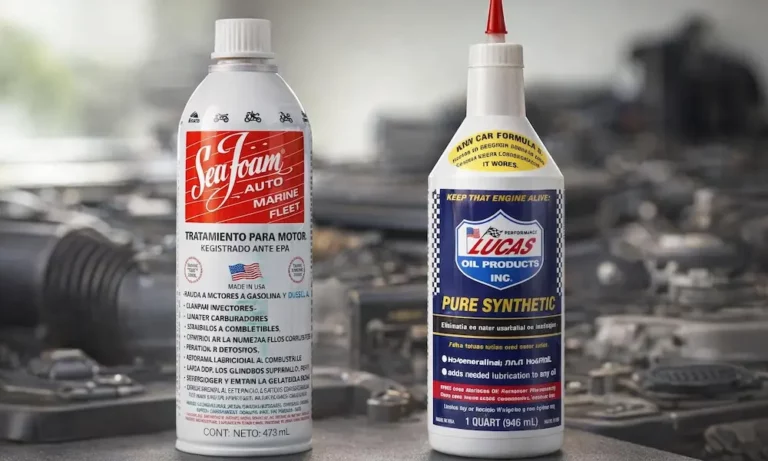
Your engine’s running rough. You’ve heard the names thrown around—Seafoam, Lucas—but which one actually solves the problem? Here’s the thing: they’re not the same. One’s a cleaner, the other’s a lubricant. Pick the wrong one, and you’re wasting money. Stick around and you’ll know exactly which bottle to grab.
What Makes Seafoam and Lucas Different?
Let’s cut through the noise. Seafoam Motor Treatment is a petroleum-based solvent. It’s designed to dissolve carbon, gum, and varnish that’s choking your fuel system. Think of it as a deep clean for neglected engines.
Lucas Upper Cylinder Lubricant takes a different route. It’s a heavy oil blend that adds lubrication to modern low-sulfur fuels. It doesn’t scrub—it protects. The goal is to reduce friction in fuel injectors and upper cylinders.
Here’s the breakdown:
| Feature | Seafoam Motor Treatment | Lucas Upper Cylinder Lubricant |
|---|---|---|
| Primary Function | Solvent-based cleaner | Oil-based lubricant |
| Main Ingredients | Pale oil, naphtha, isopropyl alcohol | Hydrotreated paraffinic distillates |
| Best For | Removing existing carbon deposits | Preventing wear and friction |
| Flash Point | 100°F | 380°F |
Seafoam’s packed with naphtha and isopropyl alcohol—volatile chemicals that evaporate fast and hit hard. Lucas is 90% heavy paraffinic oil, designed to stick around and protect high-pressure fuel systems.
How They Handle Carbon Buildup
Carbon deposits are your engine’s silent killer. They form on intake valves, piston crowns, and injector nozzles. Left unchecked, they cause rough idling, hesitation, and worse.
Seafoam attacks this problem like a battering ram. The naphtha component penetrates hardened carbon and liquefies it during combustion. Pour it through a vacuum line, and you’ll see clouds of white smoke—that’s carbon being expelled. For engines with serious buildup, Seafoam’s the go-to.
Lucas doesn’t dissolve existing carbon. Instead, it prevents new deposits from forming. Its high detergent action creates a slippery film that keeps carbon from adhering to metal surfaces. It’s maintenance, not remediation.
If your engine’s already gummed up, Seafoam wins. If you’re running clean and want to stay that way, Lucas is your choice.
The Lubricity Test Results
Modern fuels lack the natural lubrication older engines enjoyed. Ultra-low sulfur diesel removed the compounds that protected fuel pumps and injectors. Ethanol blends thin out gasoline’s natural film strength. That’s where additives matter.
Tribological testing using the HFRR (High Frequency Reciprocating Rig) protocol measures wear scar diameter. Smaller scars mean better lubrication. Here’s what independent testing found:
| Treatment | Wear Scar Diameter (μm) | Lubricity Improvement |
|---|---|---|
| Base Fuel (E10) | 807 | Baseline |
| Seafoam Added | 803 | 0.5% |
| Lucas UCL Added | 786 | 2.6% |
Seafoam barely moves the needle. Its solvents actually thin the fuel slightly, which can reduce film strength. Lucas adds thick paraffinic chains that reinforce the boundary lubrication layer.
For high-pressure diesel systems—where injectors operate at 30,000 PSI—that 2.6% improvement matters. Lucas is explicitly formulated to neutralize low-sulfur diesel’s harmful effects. Seafoam doesn’t prioritize this.
Which One’s Better for Your Fuel System?
It depends on what you’re fighting.
Choose Seafoam if:
- Your carburetor’s gummed up and won’t idle
- You’re winterizing a boat or lawn mower
- You’ve got water contamination in ethanol fuel
- The engine’s been sitting for months
Seafoam’s isopropyl alcohol emulsifies water trapped in fuel tanks, preventing phase separation. For small engines with narrow carburetor jets, its aggressive solvency can restore function without a teardown.
Choose Lucas if:
- You’re running a diesel with a high-pressure fuel system
- You want continuous protection for daily driving
- Your injectors are clean and you want them to stay that way
- You’re looking for cost-effective maintenance
Lucas treats 100 gallons per quart when used continuously. That’s pennies per tank. Seafoam treats 15-20 gallons per can and costs significantly more per use.
Small Engines and Marine Applications
Two-stroke outboards and lawn mowers face unique challenges. They sit idle, burn mixed fuel, and operate in harsh conditions. Ethanol fuel absorbs moisture over time, leading to corrosion and varnish.
Seafoam’s heritage is in marine applications. It was originally formulated for outboard motors, and it still excels there. The isopropyl alcohol prevents ethanol phase separation during storage, while the solvents keep carburetors from clogging.
For winterization, Seafoam’s the standard. Add it to the tank, run the engine for a few minutes, and you’ve got protection against moisture and varnish formation.
Lucas works too, but it’s not moisture-focused. It’s better suited for equipment that runs regularly. If you’re storing gear for months, Seafoam handles water better.
Crankcase Use: Oil Stabilizer vs Engine Flush
Both products can go in your engine oil, but they do completely different jobs.
Seafoam in the crankcase acts as an engine flush. It dissolves oil sludge, frees stuck piston rings, and cleans lifter varnish. Add it 1-2 ounces per quart, drive for 100-300 miles, then change the oil. The solvents liquefy deposits so they drain out with the old oil.
Warning: if your engine’s leaking, Seafoam might make it worse. Sludge sometimes plugs worn gaskets. Remove the sludge, and the leak gets bigger.
Lucas Heavy Duty Oil Stabilizer doesn’t clean anything. It’s a viscosity modifier. At 112.4 cSt, it’s thick as molasses. Mix it 20-50% with your regular oil, and it dramatically increases film strength.
| Property | Lucas Oil Stabilizer | Standard 5W-30 |
|---|---|---|
| Viscosity @ 40°C | 112.4 cSt | ~10.5 cSt |
| Use Case | Worn engines, oil consumption | Standard operation |
| Effect | Raises oil pressure, reduces noise | N/A |
Lucas masks symptoms of mechanical wear—low oil pressure, burning oil, knocking. It creates a thicker boundary layer that compensates for increased clearances in bearings and rings. It’s not fixing anything; it’s buying time.
Cost Analysis: What You’re Actually Paying
Seafoam costs about $10-12 for a 16-ounce can. That treats 15-20 gallons of fuel. Per tankful, you’re spending $5-7.
Lucas UCL costs $12 for a quart, but treats 100 gallons. Buy the gallon jug for $30, and you’re treating 400 gallons. That’s $0.75 per tankful.
| Product | Container Size | Treatment Capacity | Cost per 10 Gallons |
|---|---|---|---|
| Seafoam | 16 oz | 15-20 gallons | $5.00-$6.67 |
| Lucas UCL | 1 quart | 100 gallons | $1.20 |
| Lucas UCL | 1 gallon | 400 gallons | $0.75 |
For daily drivers and fleet vehicles, Lucas is the economical choice. Use it every tank, and the cost is negligible. Seafoam’s best used strategically—when you’ve got a problem or during seasonal maintenance intervals.
GDI Engines: The Limitation Both Share
Gasoline Direct Injection (GDI) engines spray fuel directly into the combustion chamber. The intake valves never get washed by fuel, so carbon builds up on their backsides. Neither Seafoam nor Lucas can fix this when added to the fuel tank.
Why? The fuel bypasses the valves entirely. No contact means no cleaning.
Seafoam Spray—used through the intake—can help. But neither product contains Polyetheramine (PEA), the most effective chemical for GDI carbon removal. If you’ve got a GDI engine, you’ll need a dedicated PEA-based cleaner for the valves.
Both products still work on fuel injectors and combustion chambers. But don’t expect them to solve GDI-specific valve carbon.
Safety: Sensors, Converters, and Emissions
Modern engines are packed with sensors and emissions equipment. Will these additives damage them?
Good news: both are safe when used correctly.
Seafoam is petroleum-based and burns cleanly. It won’t harm oxygen sensors or catalytic converters. During an intake cleaning, you might see white smoke—that’s carbon burning off, not the additive itself. Some vehicles may temporarily trigger a check engine light due to a rich condition, but it clears after the treatment.
Lucas UCL is a no-solvent oil, so it’s even gentler. It’s safe for oxygen sensors, EVAP systems, and turbos. It also replaces the lead in vintage engines that need valve seat protection on unleaded fuel.
| Component | Seafoam Safe? | Lucas Safe? |
|---|---|---|
| Oxygen Sensors | Yes | Yes |
| Catalytic Converters | Yes | Yes |
| EVAP Systems | Yes | Yes |
| Turbochargers | Yes (avoid excessive liquid) | Yes |
One caution: Seafoam’s flash point is 100°F, so store it away from heat. Lucas’s flash point is 380°F, making it much safer in a hot workshop.
Real-World Performance: What Users Report
Field reports matter. Lab tests don’t always match what happens in your driveway.
Seafoam users consistently report dramatic results on neglected engines. Borescope examinations show carbon reduction on piston crowns after treatment. Rough idling smooths out. Stuck lifters free up. The “smoke show” during intake cleaning is real—and it’s carbon leaving the system.
Lucas users report subtler improvements. Engines run quieter. Diesel injectors last longer. There’s less “tapping” from fuel pumps. Fleet operators using Lucas continuously see extended injector life and fewer failures in high-mileage vehicles.
Neither product consistently delivers huge MPG gains. But if your injectors were partially clogged, cleaning them restores factory efficiency. That “lost” fuel economy comes back.
The Verdict: Match the Product to the Problem
Seafoam and Lucas aren’t competitors—they’re different tools.
Use Seafoam when you need to fix something:
- Dissolve existing carbon and varnish
- Clean gummed carburetors
- Remove moisture from stored fuel
- Flush sludge from a neglected engine
Use Lucas when you want to prevent problems:
- Protect high-pressure diesel injectors
- Add lubrication to low-sulfur fuel
- Maintain clean injectors over time
- Reduce friction in upper cylinders
For high-mileage engines that still run well, Lucas provides continuous protection at minimal cost. For engines with symptoms—rough idle, hesitation, hard starting—Seafoam delivers the aggressive cleaning you need.
Smart operators use both strategically. Lucas goes in every tank. Seafoam comes out when there’s a problem or during seasonal maintenance. That’s how you get maximum value from both products.


