You’ve seen both terms on car listings. You’ve probably used them interchangeably. But are a sunroof and moonroof actually the same thing? Spoiler: not quite. This post breaks down the real differences, the history behind the names, and what each type means for your driving experience. Stick around — it’s worth knowing before your next car purchase.
The Core Difference Between a Sunroof vs Moonroof
Here’s the short answer: it comes down to one thing — glass.
A sunroof is an opaque panel built into the roof. It’s typically metal, matches the car’s exterior color, and blocks all light when closed. You need to physically open it to let in sun or fresh air.
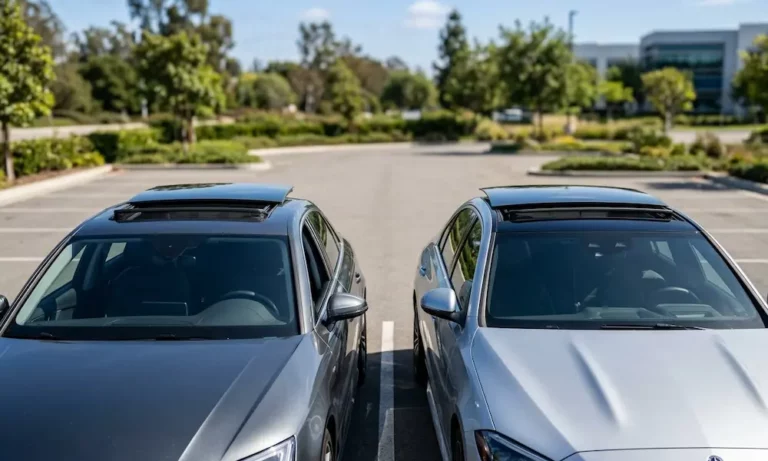
A moonroof is a glass panel. It lets light filter through even when it’s shut. Most moonroofs also include an interior sunshade you can slide across when you want to block that light out.
That’s really it. One’s metal, one’s glass. But the story behind how we ended up with two different names? That’s genuinely interesting.
Where Did These Names Actually Come From?
The Sunroof Came First
The concept of cutting a hole in your car roof goes back further than you’d think. In the early 1900s, car roofs were removable cloth or leather covers — more like a canvas tent than what we’d call a roof today. As cars became everyday vehicles, people wanted permanent shelter with occasional open-air access.
By 1927, the Pytchley Sliding Roof was patented in the UK, featuring a metal panel that slid back at the touch of a finger. The term “sunroof” was officially used by Nash Motors in 1937 for their opaque metal sliding panel. It stuck.
The Moonroof Was a Marketing Move
Fast forward to 1973. Ford executive John Atkinson needed a name for a new glass roof option on the Lincoln Continental Mark IV. He didn’t want it confused with a regular metal sunroof, so he coined the term “moonroof” — and backed it with the tagline: “When open, you see the Moon and it sees you, but when closed only you have the view.”
The campaign worked. Chevrolet quickly followed with their own moonroof marketing, explicitly telling buyers not to mix them up with standard sunroofs. A premium category was born — from one clever marketing pitch.
Sunroof vs Moonroof: Quick Comparison
| Feature | Sunroof | Moonroof |
|---|---|---|
| Material | Metal (opaque) | Glass (transparent/tinted) |
| Light when closed | None | Yes, filters through |
| Includes sunshade | No | Usually yes |
| Common today? | Rare | Standard on most cars |
| Perceived prestige | Standard | Premium |
Today, most “sunroofs” you see on modern cars are technically moonroofs. Manufacturers moved to glass because it adds that open, airy feel even when you can’t open the roof at highway speeds or in bad weather.
The Different Types of Roof Openings
Not all moonroofs and sunroofs work the same way. Here’s a breakdown of the main types:
Inbuilt (Sliding) Systems
This is the most common setup you’ll find on factory-installed moonroofs. The glass panel tilts for ventilation, then slides back and tucks between the metal roof and the headliner. It looks clean and seamless when open.
The catch? That storage cassette reduces headroom by roughly 2.5 to 4 centimeters. Not a dealbreaker for most people, but worth knowing if you’re tall.
Spoiler (Tilt-and-Slide) Systems
These are popular on compact cars with short rooflines. The panel tilts to vent air, then slides over the exterior of the roof rather than inside. This preserves interior headroom — but creates more wind noise and a less streamlined look when fully open.
Pop-Up and Removable Systems
The most basic option. The panel tilts up manually (or via a crank) at the rear edge. Some versions are fully removable and stow in the trunk. Simple and affordable, but they lack the smooth motorized experience of modern systems.
Panoramic Roof Systems
Panoramic roofs span nearly the entire length of the cabin, often with multiple glass panes. They’re everywhere right now — and for good reason. They make any car interior feel dramatically more open.
The trade-off? They add 120 to 200 pounds of weight at the highest point of the car. That raises the center of gravity, which can affect handling. It’s why some sports car track editions offer a “sunroof delete” option.
| Type | Material | Opens How | Best For |
|---|---|---|---|
| Inbuilt | Tinted glass | Slides internally | Clean factory look |
| Spoiler | Tinted glass | Slides over exterior | Compact/sports cars |
| Pop-Up | Metal or glass | Manual tilt | Budget-friendly builds |
| Panoramic | Tinted glass | Multi-pane slide/fixed | Maximum light & space |
| Targa Top | Metal or plastic | Manual removal | Semi-convertible feel |
| T-Top | Glass or opaque | Manual removal | Classic 1970s–80s style |
What Car Brands Actually Call These Things
Here’s where it gets a bit wild. Brands don’t all use the same terminology — and it’s often tied to positioning.
Lexus almost always uses “moonroof” for its sedans and SUVs, including the ES, LS, and RX. For larger glass panels, they go with “Panorama Glass Roof.” Some Lexus EV models like the RZ feature a fixed glass roof that doesn’t open at all.
Honda has standardized “moonroof” across most of its lineup. The 2025 Honda Prologue markets a “Power Panoramic Moonroof” with anti-trapping safety tech and a power sunshade. Glass equals premium in Honda’s world.
Toyota plays both sides. Many 2025 listings use “Sunroof/Moonroof” together — a deliberate move to catch buyers searching either term online.
Land Rover leans into lifestyle appeal. The 2025 Defender’s panoramic moonroof is marketed as enhancing your “visual connection to the outdoors” — whether you’re on the school run or a mountain trail.
The Structural Reality Nobody Tells You
Cutting a large hole in your roof sounds simple. It’s not. Automakers have to reinforce the opening with high-strength steel to maintain the cabin’s rigidity.
The good news: factory-installed sunroofs don’t compromise crash safety. Government testing consistently shows they hold up in rollover and side-impact scenarios. The weight issue is a bigger concern for performance cars and EVs. An extra 200 pounds of glass up top can shave real range off an electric vehicle — which is why Tesla uses fixed panoramic roofs that drop the heavy motors and sliding mechanisms entirely.
Smart Glass Is Replacing the Sunshade
The old fabric sunshade is getting phased out. New smart glass technologies let you dim your roof electronically — no moving parts needed.
Electrochromic (EC) glass uses a small electrical current to switch between clear and opaque. The 2025 Xiaomi YU7 Max features this as standard, blocking heat and infrared radiation without any physical blind.
PDLC (Polymer Dispersed Liquid Crystal) glass works differently. Without power, the crystals scatter light and the glass looks milky. Apply current, and the glass goes clear. Gauzy is currently working with BMW and Mercedes-Benz to roll this out in panoramic sunroofs for better comfort and energy efficiency.
Gentex Corporation — already a leader in auto-dimming mirrors — is pushing film-based electrochromic sunroofs further into the mainstream. Webasto currently holds around 35% of the OEM sunroof market and is integrating solar harvesting directly into panoramic panels.
This technology isn’t just a gimmick. It cuts heat gain inside the cabin, reduces AC demand, and saves weight. For EV buyers especially, that matters.
Common Sunroof and Moonroof Problems to Watch For
Before you get excited about that glass overhead, know the failure modes:
- Seal wear: UV exposure and temperature swings crack the rubber seals over time. Wind noise and leaks follow.
- Clogged drain tubes: Most moonroofs use a “wet track” system where water that sneaks past the seal drains through tubes in the car’s pillars. If those tubes clog with leaves or dirt, water backs up into your headliner or onto the floor.
- Track and motor issues: The sliding mechanism needs lubrication. Dry or dirty tracks burn out motors and trigger anti-pinch sensors, leaving you stuck with a roof that won’t close.
- Thermal stress: Large panoramic panels expand and contract with heat. Modern tempered and laminated glass handles this well, but in extreme climates, spontaneous cracking — while rare — can happen.
The fix for most of these is simple: clean your tracks, flush your drain tubes, and check your seals every year or two. Neglect them and you’re looking at expensive headliner repairs.
So Which One Should You Get?
If you’re buying a car today, you’re almost certainly choosing between a moonroof and a panoramic moonroof — not a true opaque sunroof. Those are rare now.
A standard moonroof is the right call if you want that open-sky feeling without the weight penalty. It’s lighter, cheaper to repair, and less likely to develop leaks over time.
A panoramic roof is worth it if interior ambiance matters to you — especially for rear passengers who otherwise stare at a headliner. Just go in knowing it adds weight, affects handling slightly, and costs more to fix if something goes wrong.
And if you’re looking at an EV? A fixed panoramic glass roof gives you all the visual openness with none of the mechanical risk. Tesla’s approach here makes a lot of sense.
The sunroof vs moonroof debate comes down to what you value: total light control with metal, or an airy interior with glass. Most people today prefer the glass — which is why moonroofs have quietly taken over the market, even if nobody fully agrees on what to call them.