Your car’s been acting strange lately. It hesitates, stalls, or chugs black smoke. Sound familiar? These are classic symptoms of a bad MAF sensor — and catching them early saves you from much bigger repair bills. Read on to find out exactly what to look for, why it happens, and what to do about it.
What Does a MAF Sensor Actually Do?
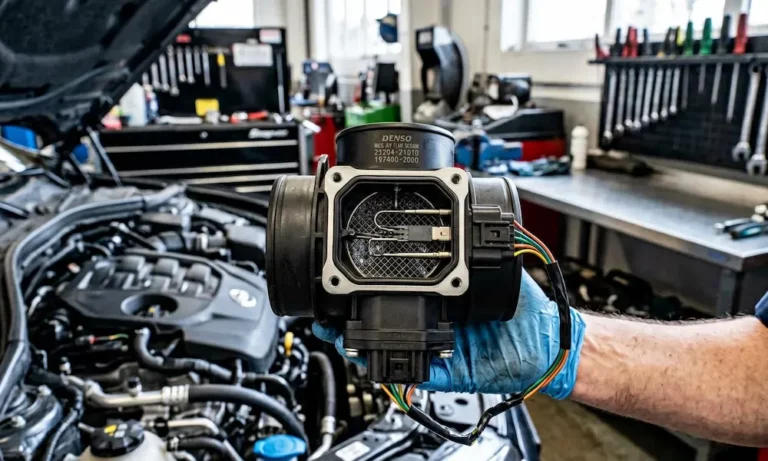
The mass airflow (MAF) sensor sits between your air filter and throttle body. Its job is simple but critical: it measures the exact mass of air entering your engine and sends that data to your engine control module (ECM).
Your ECM then uses that data to inject the right amount of fuel. Get the air reading wrong, and the whole fuel equation falls apart. When this sensor fails, your engine loses its ability to maintain a proper air-to-fuel ratio — and that’s when the trouble starts.
Unlike older volume-based airflow sensors, modern MAF sensors measure actual air mass. That means they stay accurate whether you’re driving at sea level on a cold morning or climbing a mountain pass in summer heat.
The 7 Most Common Symptoms of a Bad MAF Sensor
1. Hesitation or Stumbling When You Accelerate
Press the gas and feel a delay? That’s one of the earliest symptoms of a bad MAF sensor. When you open the throttle, your engine needs a sudden burst of air. If the sensor can’t detect that rush fast enough, the ECM doesn’t inject enough fuel — and your car stumbles before it finally pulls away.
In worse cases, this becomes violent jerking or bucking. The ECM rapidly adds and removes fuel trying to stabilize combustion. It’s not just annoying — it’s genuinely dangerous when you’re trying to merge into highway traffic.
2. Engine Surging at Steady Speed
Sometimes a bad MAF sensor doesn’t starve the engine. It floods it. When the sensor overestimates incoming air, the ECM dumps too much fuel — creating a “rich” condition. The result? Your engine surges unexpectedly, even when you’re not touching the gas.
Del Hatt Automotive describes this perfectly: the car feels like it keeps trying to surge forward, then pulls back again. It’s especially noticeable at cruising speeds in stop-and-go traffic.
3. Rough Idle or Stalling
At idle, the air-to-fuel mixture must be almost perfectly balanced. Even a slightly inaccurate MAF sensor reading throws it off. Signs include:
- Vibrating or shaking while stopped at a red light
- Tachometer needle bouncing up and down
- Engine dying when you come to a stop
Stalling is one of the most frequent complaints linked to MAF sensor failure. The stalls are often intermittent, which makes the problem even more frustrating to pin down.
4. Black Smoke From the Exhaust
Black smoke pouring from your tailpipe is a clear sign your engine is running rich — burning too much fuel and not enough oxygen. The black smoke is actually unburned carbon particles. You might also notice a strong gasoline smell around the back of the car.
Don’t ignore this one. A constant rich condition can overwhelm your catalytic converter — causing it to overheat, melt, or clog. What starts as a cheap sensor fix can turn into a very expensive exhaust repair.
5. Engine Pinging or Knocking Sounds
The flip side of a rich condition is a lean one — where the sensor underestimates airflow and the ECM adds too little fuel. Lean mixtures burn hotter than normal. That extra heat causes the fuel-air mixture to ignite too early or unevenly.
The result is a metallic pinging or knocking sound from the engine. If this continues, you’re looking at serious internal damage — scorched spark plugs, damaged valves, or even seized pistons.
6. Harsh or Delayed Transmission Shifts
This one surprises most people. Your automatic transmission uses engine load data — which comes from the MAF sensor — to decide when to shift and how hard to do it. A bad reading throws the whole calculation off.
A faulty MAF sensor can cause harsh, jerky gear changes or delayed shifts where the engine revs way too high before finally changing gear. In extreme cases, the transmission enters “limp mode” and stops shifting altogether.
Many drivers assume they have a transmission problem and spend thousands on gearbox repairs — when the real culprit is a dirty airflow sensor sending wrong load data to the powertrain computer.
7. Check Engine Light (With Specific Codes)
A bad MAF sensor almost always triggers the check engine light. Your ECM stores diagnostic trouble codes that point to the problem. Here’s what you might find:
| Code | Meaning |
|---|---|
| P0100 | General MAF circuit fault |
| P0101 | Sensor working but data makes no sense |
| P0102 | Signal too low |
| P0103 | Signal too high |
| P0104 | Intermittent signal (often loose wiring) |
| P0171 / P0174 | System running lean (often MAF-related) |
| P0172 / P0175 | System running rich (often MAF-related) |
One important note: a P0171 lean code doesn’t automatically mean the MAF sensor is bad. It could also point to a vacuum leak or a weak fuel pump. Always check the full picture before replacing parts.
Why Do MAF Sensors Fail?
Dust and Dirt Buildup
This is the most common cause. Fine particles slip past a clogged or low-quality air filter and coat the sensor’s heating element. Over time, they bake on and insulate the wire, making it report lower airflow than what’s actually there.
A dirty or improperly installed air filter is usually the root cause. Keeping your filter fresh is the simplest way to protect your MAF sensor.
Oil Contamination
Performance air filters that need an oil coating are a sneaky cause of MAF sensor failure. If you apply too much oil, the airflow pulls droplets straight onto the sensor. The oil forms a sticky film that traps even more dirt — and it’s much harder to clean than dry dust.
Engine blow-by is another culprit. If combustion gases leak past worn piston rings, oil vapors can travel back through the intake tract and condense on the sensor.
Intake Leaks (“False Air”)
Here’s a tricky one: sometimes the MAF sensor is working perfectly, but there’s a crack in the intake boot or a loose hose clamp after the sensor. Air sneaks in without being measured — so the ECM adds too little fuel.
The symptoms look identical to a failing MAF sensor: hesitation, rough idle, and stalling. A thorough visual inspection of the intake system is essential before you blame the sensor itself.
Hot-Wire vs. Hot-Film: Which Type Do You Have?
Most MAF sensors use one of two technologies. Knowing which one you have helps you understand how fragile it is.
| Feature | Hot-Wire Sensor | Hot-Film Sensor |
|---|---|---|
| Sensing Element | Suspended platinum wire | Solid-state film or grid |
| Fragility | Very delicate | More robust |
| Signal Type | Usually analog voltage | Usually digital frequency |
| Oil Sensitivity | Very high | Moderate to high |
| Self-Cleaning | Yes (burn-off cycle) | No |
Hot-wire sensors are more common and more accurate at low airflow, but that thin platinum wire snaps easily. Never touch the internal element with your fingers or a brush — even a light touch can destroy it.
How to Diagnose a Bad MAF Sensor at Home
The Unplug Test
While the engine is idling roughly, disconnect the MAF sensor’s electrical connector. If the idle smooths out, that’s a strong sign the sensor was feeding bad data. The ECM switches to a backup “fail-safe” mode using throttle position and RPM to estimate airflow. CarParts.com notes that this mode isn’t efficient for long drives, but it often runs cleaner than a lying sensor.
Live Data with a Scan Tool
A scan tool showing live engine data is more reliable. Look at the grams-per-second air mass reading at idle. A healthy engine should show a reading roughly equal to its displacement in liters. A 3.0-liter engine? Expect around 3 g/s at idle. A frozen zero reading or a wildly high number points clearly at a bad sensor.
Clean It or Replace It?
Cleaning the Sensor
If contamination is the issue, cleaning can restore the sensor completely — but only use a spray labeled specifically for MAF sensors. Ervine’s Auto Repair strongly cautions against using carb cleaner or brake cleaner, as these destroy the plastic housing and leave residue that makes things worse.
Spray from a few inches away. Never touch the wire or film. Let it air-dry completely before reinstalling.
Replacing the Sensor
If cleaning doesn’t fix it, you need a new sensor. Stick with a quality brand that matches your original equipment specs. CarParts.com recommends replacing the air filter at the same time. Dropping a new sensor behind a dirty filter is a fast way to damage it all over again.
Cheap aftermarket sensors might keep the check engine light off while still feeding slightly wrong data to your ECM — leaving you with subtle power loss and poor fuel economy you can’t quite explain.
Recognizing the symptoms of a bad MAF sensor early is the difference between a $50 cleaning job and a $1,500 catalytic converter replacement. Keep your air filter fresh, avoid over-oiling performance filters, and stay alert to hesitation, rough idling, or weird shifts. Your engine’s telling you something — it’s worth listening.