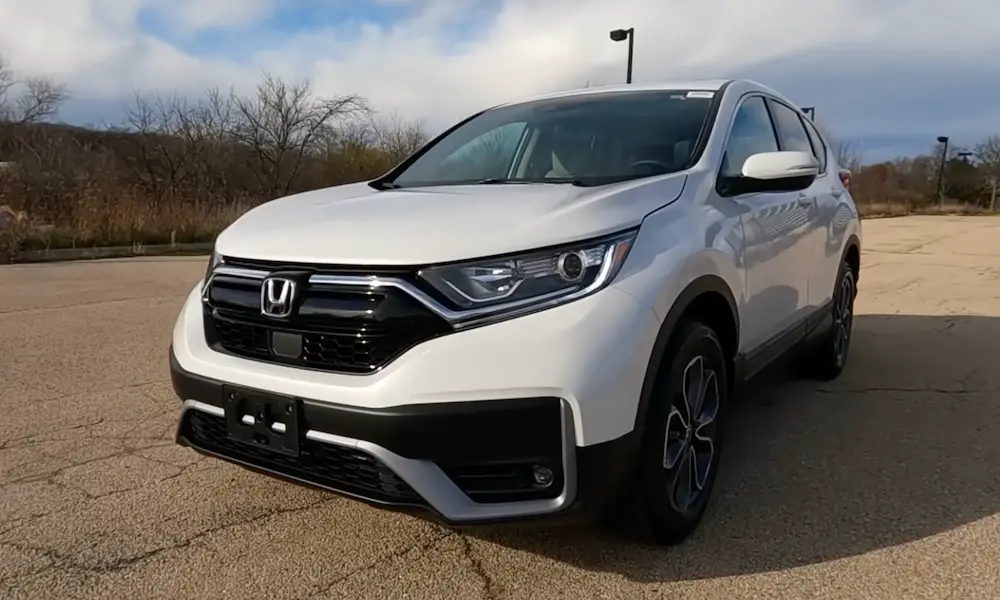
Your Honda drives smoothly one day and shudders like it’s falling apart the next. Sound familiar? Honda CVT transmission problems are real, well-documented, and affect more models than most people realize. This guide breaks down exactly what’s happening inside your transmission, which models are most at risk, and what you can actually do about it.
What Makes Honda’s CVT Different From a Regular Automatic
A traditional automatic uses a set of fixed gears. A CVT uses a steel belt running between two variable-width pulleys. As the pulleys shift width, the transmission slides through an infinite range of ratios without any gear changes at all.
That sounds great in theory. In practice, the whole system depends on precise hydraulic pressure and clean transmission fluid. If either one slips, the belt loses grip on the pulleys — and that’s when things go wrong fast.
Early Honda CVTs used a “start clutch” to get the car moving from a stop. Newer ones use a torque converter with a lock-up clutch. Both designs work well when maintained properly. Both have specific failure points when they’re not.
The Most Common Honda CVT Transmission Problems
Shuddering and Juddering
This is the number-one complaint. You’ll feel it as a violent shaking during low-speed acceleration or a buzzing vibration while cruising at highway speeds, usually between 20 and 60 mph.
CVT warning sign data shows the shaking often starts subtly — like driving over rumble strips — before it gets worse. The root cause is almost always one of two things: a worn torque converter lock-up clutch or the steel belt losing consistent grip on the pulley surfaces.
Honda addressed highway shudder in CR-V models through TSB 19-070, a software calibration update. But the fix only works if the fluid hasn’t already degraded past the point of recovery.
Delayed Engagement
You shift from Park to Drive and… nothing happens for a few seconds. In a healthy Honda CVT, engagement should take one to two seconds maximum. Anything longer than that points to a hydraulic pressure problem or a failing solenoid.
Cold weather makes this worse. Thick, cold fluid hides internal seal leaks that get more obvious once the car warms up. If you’ve noticed your Honda refusing to accelerate normally on cold mornings, that’s a warning. Experts confirm that consistent delayed engagement often precedes total drive loss.
The Rubber Band Effect
Engine RPMs shoot up but the car barely accelerates. That’s CVT slippage — the belt can no longer maintain traction on the pulley faces.
This is different from a standard automatic slipping between gears. In a CVT, it’s a continuous loss of grip. Service data indicates that once consistent slippage appears, the transmission typically has less than 1,000 miles before it stops driving entirely. If you feel this, stop driving the car and get it checked immediately.
Whining or Groaning Noises
A high-pitched whine during acceleration or a groaning sound at low speeds usually means internal bearing wear or fluid aeration. Both mean the fluid has broken down and is no longer protecting the moving parts.
| CVT Symptom | Most Likely Cause | At-Risk Models |
|---|---|---|
| Low-speed judder | Start clutch wear / burnt fluid | 2013–2015 Accord, 2015–2018 CR-V |
| Highway shudder | Torque converter lock-up failure | 2013–2017 Accord |
| Whining / groaning | Bearing wear / fluid aeration | 2014–2018 Civic, 2016–2020 HR-V |
| Delayed engagement | Hydraulic pressure loss / solenoid failure | High-mileage units across all models |
| Rubber band effect | Belt-to-pulley traction loss | 2012–2015 Civic, 2015 Fit |
| Sudden power loss | Belt breakage / software glitch | 2014–2015 Civic, 2015 Fit |
Model-Specific Honda CVT Problems You Should Know About
2014–2015 Civic and 2015 Fit: The Pulley Drive Shaft Recall
This is the most serious Honda CVT failure on record. In 2015, Honda issued NHTSA recall campaign 15V-574 affecting over 143,000 vehicles. Faulty CVT software allowed excessive hydraulic pressure to build up, which weakened and eventually snapped the pulley drive shaft.
When that shaft breaks, the front wheels can lock up suddenly while the car is moving. The fix was a mandatory TCM software update plus a physical inspection of each transmission for existing damage.
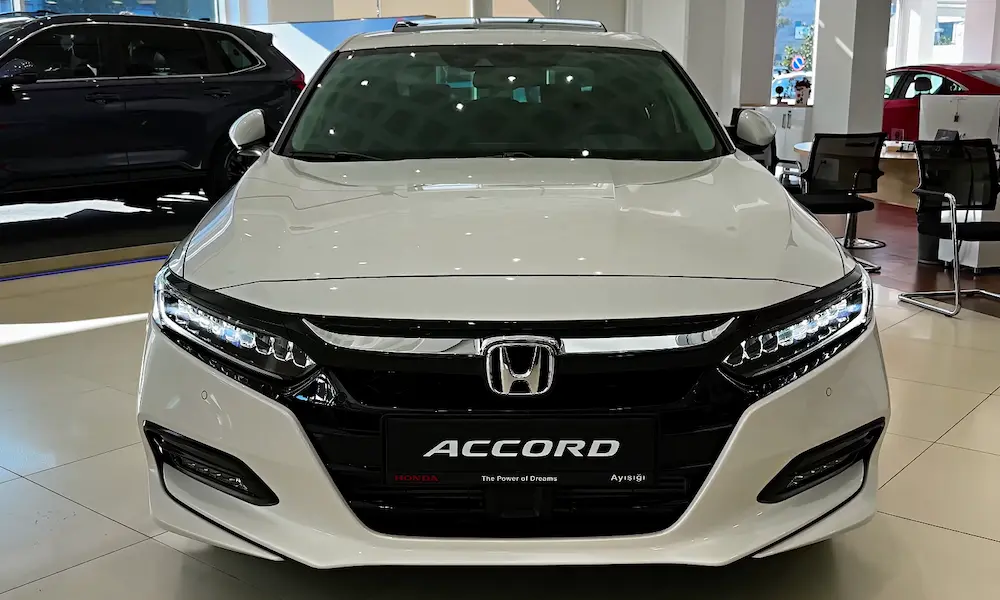
2013–2017 Honda Accord: Judder and Fluid Breakdown
The 9th-gen Accord was the first Honda to pair CVT technology with the 2.4L Earth Dreams engine. Owners reported juddering during light acceleration between 20 and 60 mph, and it became a widespread issue.
Honda’s internal investigation found the real culprit wasn’t a mechanical failure — it was transmission fluid deteriorating under high heat loads. Honda responded with TSB 17-017, which required a software update plus a specialized three-pass fluid flush to clear the burnt fluid. For 2013–2015 models, Honda extended the CVT warranty to 100,000 miles or 10 years.
2015–2018 Honda CR-V: AWD Strain and Start Clutch Failure
Adding all-wheel drive to a CVT platform puts constant extra load on the belt and pulleys. CR-V owners started reporting jerky low-speed acceleration and highway vibration, typically between 40,000 and 80,000 miles.
An NHTSA investigation (PE17023) looked into the 2015–2018 CR-V specifically. Honda issued TSB 17-050, which outlined a start clutch replacement and TCM recalibration. The 1.5L turbo engine introduced in later years added another wrinkle — engine oil dilution issues (TSB 18-089) could alter engine torque curves and indirectly stress the CVT.
2016–2020 Honda HR-V: Belt Durability Problems
The HR-V’s CVT developed a reputation for belt failures traced back to a software logic error. Service Bulletin #21-047 addressed the issue, but by the time it was issued, Honda had already extended the CVT warranty on these models to 7 years or 150,000 miles — a formal acknowledgment that belt failure was a high-severity risk on the HR-V platform.
Why CVT Fluid Is the Most Important Maintenance Item You’re Probably Ignoring
Heat kills Honda CVTs. And it kills them through the fluid.
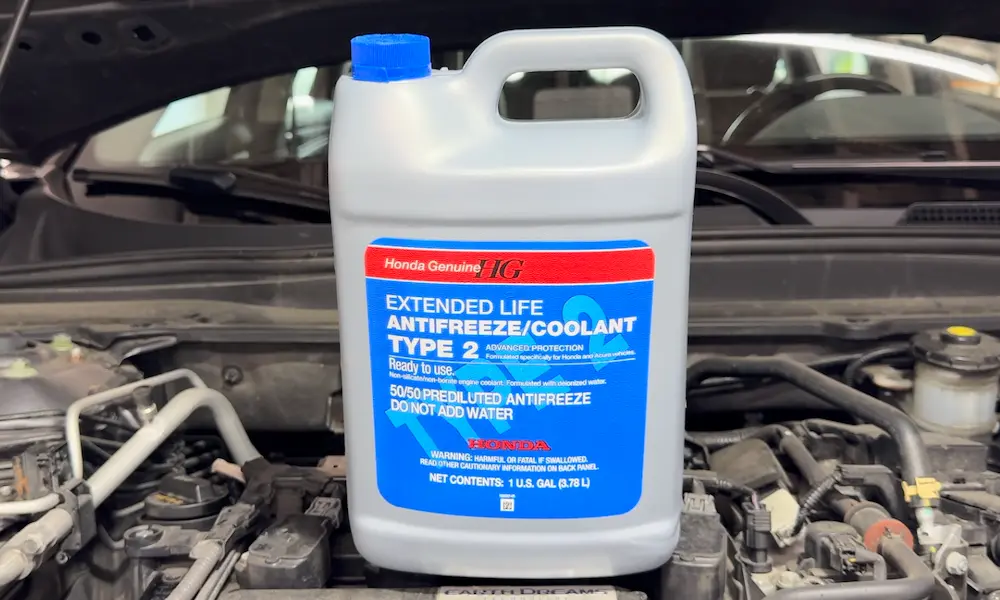
Honda CVTs require Honda HCF-2 fluid — it’s not interchangeable with standard ATF or universal CVT fluid. HCF-2 contains specific friction modifiers that let the steel belt grip the pulleys correctly while keeping the hydraulic actuators cool. Use the wrong fluid and the belt slips, heat spikes, the pulleys glaze, and the transmission dies.
Once the fluid breaks down, it turns dark and smells burnt. At that point, the friction modifiers are gone, and the lock-up clutch starts chattering every time it engages.
The 3x Drain and Fill: Why One Service Isn’t Enough
A single drain only removes about 3.3 to 3.8 quarts of fluid from a system that holds 8 to 9 quarts total. The rest stays trapped in the torque converter, cooler lines, and internal passages.
To actually fix degraded fluid, Honda recommends a three-pass drain-and-fill process: drain, refill, drive to circulate, repeat twice more. This approach dilutes the old fluid until fresh fluid makes up roughly 95% of the total volume. This procedure is mandatory under TSB 17-017 when addressing judder complaints on Accord models.
| Maintenance Task | Severe Use Interval | Normal Use Interval |
|---|---|---|
| CVT fluid drain and fill | Every 25,000–30,000 miles | Every 60,000 miles |
| Multi-point inspection | Every oil change | Every oil change |
| Cooling system service | 100,000 miles | 100,000 miles |
| Filter replacement | Upon repair only | Upon repair only |
| Software/TCM check | When symptoms appear | During major service |
Don’t treat Honda’s Maintenance Minder as the ideal service target. It’s a maximum threshold. In hot climates, hilly terrain, or stop-and-go traffic, service your CVT fluid every 25,000 miles to stay ahead of heat-related breakdown.
How Honda CVTs Compare to Toyota and Nissan
Honda’s CVTs aren’t the worst on the market — but they’re not the best either.
Nissan’s Jatco-built CVTs became the industry’s cautionary tale, with extremely high failure rates often before 100,000 miles due to cooling flaws and fragile belt designs. Consumer Reports and reliability studies routinely rank them at the bottom.
Toyota takes a smarter approach. Their “Direct Shift CVT” uses a physical launch gear to handle the high-stress demands of initial acceleration, so the belt never deals with the most punishing phase of the drive cycle. Their hybrid eCVT skips belts and pulleys entirely, using a planetary gear set to blend engine and motor power — and it’s considered one of the most reliable drivetrains ever built.
| Manufacturer | 2025 Reliability Rank | CVT Approach | Long-Term Durability |
|---|---|---|---|
| Toyota | 1st | Launch gear CVT / Hybrid eCVT | Often exceeds 200,000 miles |
| Subaru | 2nd | Chain-driven Lineartronic CVT | Strong in AWD applications |
| Honda | 4th | In-house CVT with torque converter | Good with proper fluid maintenance |
| Nissan | 6th | Jatco belt-driven CVT | Historically fails before 100,000 miles |
Honda sits 4th in 2025 reliability rankings, with scores slightly affected by the CVT tuning issues tied to its 2016–2020 turbocharged engine lineup. It’s a solid mid-pack position — better than most, behind the best.
What Honda Is Doing Differently in Newer Models
The 11th-generation Civic (2022+) brought two meaningful changes for CVT owners.
First, Honda introduced “G-Design Shift” logic, which makes the CVT simulate gear steps more convincingly. RPMs track acceleration more naturally, which reduces that floaty rubber-band feeling drivers have complained about for years.
Second, Honda’s hybrid models — sold as e:HEV internationally and Sport Hybrid in North America — use an eCVT that eliminates the belt-and-pulley system entirely. One motor charges the battery. A second, larger motor drives the wheels. At highway speeds, a lock-up clutch connects the engine directly to the wheels at a fixed ratio, with no variable belt involved at all. This direct-drive approach removes both major CVT failure points: belt heat and belt wear.
Early data on these eCVT systems looks promising. If Honda’s trajectory continues, the traditional mechanical CVT will likely stay only in entry-level trims while the eCVT takes over everywhere else.
The Bottom Line on Honda CVT Reliability
Honda CVT transmission problems are real, but they’re not a death sentence for your car. The 2014–2015 Civic recall, the Accord judder issues, the CR-V start clutch failures — all of them trace back to the same core vulnerability: the CVT operates in a narrow window of thermal and chemical tolerance, and most owners service it too late.
Change your HCF-2 fluid every 25,000 to 30,000 miles if you drive hard or live somewhere hot. Use the three-pass drain-and-fill method. Check that your TCM software is up to date. Do those three things and your Honda CVT stands a very good chance of hitting six figures without major drama.