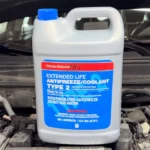
Your Honda’s steering feels off, or you’re staring at a low reservoir wondering what to pour in. The wrong choice here isn’t just a minor inconvenience — it can cost you over $1,000 in rack replacement. This guide breaks down exactly which honda power steering fluid equivalent options are safe, which ones to avoid, and why Honda’s system is so different from everything else on the road.
Why Honda Power Steering Systems Are Different
Honda didn’t design their hydraulic power steering systems like most other manufacturers. While GM, Ford, and others often used Automatic Transmission Fluid (ATF) or low-viscosity mineral oils as their power steering medium, Honda went a completely different route.
The internal tolerances inside Honda’s rotary valve and high-pressure rack seals are exceptionally tight. Those tight tolerances demand a fluid that provides serious hydrodynamic lubrication — without the aggressive detergent packages that live inside transmission fluids.
The Viscosity Gap Is Bigger Than You Think
Honda power steering fluid runs significantly thicker than generic alternatives. That higher viscosity does two things:
- It maintains a strong lubricating film between fast-moving pump components, preventing metal-on-metal contact
- It keeps the rack’s internal seals pressure-tight, stopping internal fluid bypass
Per Champion Brands’ technical spec sheet, Honda-spec fluid is nearly twice as viscous at operating temperatures compared to standard universal PSF. That gap is exactly why you hear that signature whine when someone pours the wrong stuff in.
The Only Genuine Honda Fluid You Need to Know
Honda Genuine Power Steering Fluid (Part No. 08206-9002) is the current service standard. It’s backwards-compatible with all previous Honda hydraulic systems — PSF-2, PSF-S, and PSF-V — meaning it works in a 1990 Accord just as well as a 2006 Pilot.
What’s Actually Inside the Bottle
According to the fluid’s Safety Data Sheet, Honda 08206-9002 contains:
- Hydrotreated neutral oil-based petroleum lubricating oils
- Hydrogenated 1-decene tetramers and trimers (synthetic PAOs)
- Hydrogenated 1-dodecene polymers
- Methacrylate copolymers for viscosity enhancement
- Anti-wear agents, rust inhibitors, and anti-foam additives
Those synthetic polyalphaolefin (PAO) base stocks give the fluid excellent thermal stability across a wide temperature range. Crucially, the additive package contains minimal detergency — this protects the delicate coatings inside your hydraulic rack that ATF would strip right off.
Honda Power Steering Fluid Equivalent Options That Actually Work
Here’s where it gets practical. Honda enthusiasts and professional techs have tested these alternatives extensively, and the results are clear.
Idemitsu Premium PSF — The OEM Connection
The best honda power steering fluid equivalent you can buy is Idemitsu Premium PSF (Part No. 30040106972). Idemitsu has been Honda and Acura’s primary factory-fill supplier for decades. This is widely recognized as the same chemical formulation found in those genuine Honda bottles, just without the Honda badge markup.
It meets all requirements for non-electronic Honda and Acura power steering systems, uses the same anti-wear chemistry, and handles severe environmental conditions without breaking down. You can grab it at NAPA for significantly less than dealer pricing.
Comparison Table: Top Honda PSF Equivalents
| Brand | Product | Type | Key Advantage | Best For |
|---|---|---|---|---|
| Idemitsu | Premium PSF | Full Synthetic / OEM | Chemical match to 08206-9002 | All Honda/Acura hydraulic systems |
| Valvoline | Honda/Acura PSF | Full Synthetic | Correct viscosity + high zinc anti-wear content | High-mileage systems |
| Prestone | Asian Vehicle PSF | Full Synthetic | Formulated for extended fluid life | Budget-conscious owners |
| Champion | Hi-Tech Honda PSF | Full Synthetic | Exceptionally high viscosity index for cold climates | Northern climates, winter use |
| Bardahl | PSF for Honda/Acura | Group II / Synthetic | Seal conditioners restore aging rack elastomers | Older Honda vehicles with leaks |
| Lubegard | Complete Synthetic PSF | Full Synthetic | Engineered specifically for 2007+ tighter tolerances | Newer Honda/Acura models |
The pattern here is clear: any fluid specifically labeled “For Honda/Acura” from a reputable brand will generally hit the viscosity and viscosity index targets Honda requires. Generic “Universal” labels typically fall short.
The ATF Myth — And Why It Destroys Honda Racks
You’ll hear this one constantly online: “Just use ATF, it’s the same thing.” For some vehicles, that’s actually true. Toyota, Nissan, and older Ford systems have used ATF as their specified power steering fluid. But in a Honda? It’s a different story entirely.
Two Ways ATF Damages Your Honda Steering System
1. Detergent damage to the rotary valve
ATF is loaded with detergents designed to keep transmission valve bodies clean of clutch debris. Pour that into your Honda’s steering system and those same detergents attack the rotary valve’s internal components. The result is internal fluid bypass — fluid leaking from one side of the steering piston to the other — and a total loss of power assist.
2. Seal swell from the wrong additive chemistry
ATF contains seal-swell additives designed to slightly expand transmission seals and compensate for wear. Honda’s steering rack seals (typically Nitrile/NBR rubber) are manufactured to specific tolerances. When ATF hits them, they over-expand — causing excessive friction on the rack shaft, jerky steering feel, and eventually complete seal failure. That means a full rack replacement, which routinely exceeds $1,000 including labor.
Even “Universal” fluids that claim compatibility with all vehicles often cause Honda seal issues within months — they lack the precise chemical balance Honda’s NBR seals need to stay in a neutral, non-reactive state.
The 2007 Rule Every Honda Owner Should Know
Honda’s 2007 model year marked a significant shift. Systems on 2007+ Honda and Acura vehicles require full synthetic fluid with higher anti-wear protection and better thermal stability. These newer systems run hotter and at higher pressures — using a non-synthetic creates rapid sludge formation that clogs the steering rack’s intricate valves.
The good news: modern synthetic fluids designed for 2007+ models are backwards-compatible. A full synthetic Honda-spec fluid that works in a 2015 Acura MDX works perfectly in a 1990 Honda Accord.
The bad news: the reverse isn’t true. Don’t put older mineral-based “Universal” fluids into any 2007 or newer Honda.
Diagnosing the Honda Whine Before You Spend Money
That high-pitched whine that rises with engine RPM is a classic Honda power steering symptom. It almost always traces back to pump aeration or cavitation — not a failed pump.
What’s Actually Happening Inside Your Pump
Aeration happens when a failed O-ring on the pump’s inlet nipple allows air into the low-pressure circuit. Air turns the fluid foamy, foam has terrible lubricating properties, and the pump vanes start wearing rapidly — producing that distinctive whine.
Cavitation follows a clogged reservoir screen. Honda power steering reservoirs use a fine mesh screen at the bottom to filter particulates. As fluid ages and internal hoses break down, sludge clogs that screen. The pump starves for fluid, creates a vacuum on the inlet side, and vapor bubbles form and collapse violently inside the pump — micro-blasting the cam ring and rotor surfaces.
The fix is often simpler than you think: flush the system with correct honda power steering fluid equivalent, clean the reservoir screen with brake cleaner, and replace the inlet O-ring. Many “bad pumps” come back to life after this process.
Current Pricing: What You’ll Actually Pay
Here’s what the market looks like right now so you can make an informed decision:
| Product | Size | Approx. Price | Per fl. oz. |
|---|---|---|---|
| Honda Genuine 08206-9002 | 12 oz | ~$13–15 | ~$1.15 |
| Idemitsu Premium PSF | 12 oz | ~$8–10 | ~$0.72 |
| Prestone Asian Synthetic PSF | 12 oz | ~$9–11 | ~$0.80 |
| Valvoline Honda/Acura PSF | 32 oz | ~$12–14 | ~$0.40 |
| Super Tech Universal PSF | 32 oz | ~$5–6 | ~$0.17 |
The Super Tech option looks tempting. But stack that $4 savings against the cost of a new steering rack — and the math falls apart immediately.
Do You Even Have a Hydraulic System?
Before you buy anything, confirm your Honda actually has hydraulic power steering. Many Honda models since 2012 — including most Civics and Accords — have transitioned to Electric Power Steering (EPS). EPS uses an electric motor on the steering column or rack and requires zero hydraulic fluid.
If you can’t find a power steering reservoir under the hood, your car almost certainly has EPS. No fluid is needed, and no fluid reservoir exists to fill. Save yourself the confusion before you start hunting for a cap that isn’t there.
The Quick Decision Guide
- Best overall honda power steering fluid equivalent: Idemitsu Premium PSF — OEM chemistry, fraction of the dealer price
- Best for 2007+ models on a budget: Valvoline Full Synthetic Honda/Acura PSF
- Best for aging racks with minor leaks: Bardahl PSF for Honda/Acura — specialized seal conditioners
- Absolute avoid: Generic Universal PSF, any ATF, stop-leak additives
- Emergency top-off only (then flush ASAP): Honda-spec fluid from any reputable brand
The bottom line is straightforward: Honda engineered a specific fluid requirement for a reason. The seal chemistry, viscosity targets, and additive balance all matter. Using a properly labeled honda power steering fluid equivalent from Idemitsu, Valvoline, Prestone, or Champion protects your system just as well as the genuine article — at a fraction of the dealer cost. Using the wrong fluid protects nothing, and eventually destroys everything.