Shopping for a three-row SUV and wondering if a Honda Pilot will actually hold up? You’ve landed in the right place. The answer isn’t a simple yes or no — it depends heavily on which Pilot you’re looking at. Read to the end, and you’ll know exactly which years to target and which ones to run from.
The Short Answer on Honda Pilot Reliability
Honda Pilots are generally reliable — but they’re not all created equal. RepairPal gives the Pilot a 3.5 out of 5 reliability score, ranking it 13th out of 26 midsize SUVs. Owners visit repair shops about 0.51 times per year for unscheduled work, slightly above the 0.4 class average. The good news? Only 13% of Pilots face a “severe” repair — one that costs more than three times the yearly average. So yes, they’re dependable — with some important asterisks.
First-Generation Honda Pilot (2003–2008): Big Problems, Then Big Improvement
The 2003–2005 Nightmare Years
Let’s not sugarcoat it. The 2003 Honda Pilot is one of the most problematic vehicles Honda ever built. The 5-speed automatic transmission suffered from a nasty heat buildup problem. The second-gear clutch pack didn’t get enough lubrication under heavy loads — towing, mountain driving, anything demanding — and the friction material would overheat and disintegrate. Many transmissions failed before 100,000 miles.
Honda issued a recall and installed an external oil jet to spray fluid directly onto the second-gear set. But plenty of units were already toast by then.
Then came 2005’s headline disaster: the “Strawberry Milkshake” defect. The radiator’s internal barrier — the wall separating engine coolant from transmission fluid — corroded and cracked. The two fluids mixed into a thick, frothy sludge that destroyed the transmission’s friction linings and clogged the valve body. Fixing it meant replacing the radiator, transmission, and all cooling lines simultaneously. That’s a multi-thousand-dollar bill with no warning signs.
The 2006–2008 Turnaround
By 2006, Honda had addressed most of the early failures. Shift logic improved, cooling systems got reinforced, and the ignition switch and torque converter issues from the early years were sorted. The 2008 model earned an 85/100 from J.D. Power — a genuine reliability high point for this generation.
| Model Year | J.D. Power Score | Key Issues |
|---|---|---|
| 2003 | Unrated (Low) | Transmission failure, ignition defects, torque converter noise |
| 2005 | Unrated (Low) | Radiator/ATF contamination, 15 airbag recalls |
| 2008 | 85/100 | Minor oil consumption (FWD), paint peeling |
Bottom line on Gen 1: Avoid 2003–2005. Target 2007–2008 if you want a first-gen Pilot.
Second-Generation Honda Pilot (2009–2015): The VCM Headache Era
What Is VCM and Why Does It Cause Problems?
Honda introduced broader use of Variable Cylinder Management (VCM) in 2009. The idea was smart — deactivate two or three cylinders during highway cruising to save fuel. The execution, however, created real long-term damage.
When cylinders deactivate, they cool down. That temperature drop causes piston rings to lose tension or get stuck with carbon buildup. Oil slips past the rings into the combustion chamber, fouls the spark plugs, causes misfires, and burns off at a rate of up to one quart every 1,000 miles. The problem was widespread enough that Honda faced a class-action lawsuit and extended the warranty on 2009–2013 models. Many repairs required a partial engine rebuild.
The fix that actually works? A VCM Muzzler or VCM Tuner device that tricks the engine computer into keeping all six cylinders firing all the time. It’s a cheap aftermarket part that prevents an expensive engine repair. If you own a 2009–2022 Pilot, this is worth serious consideration.
Which Second-Gen Years Are Actually Worth Buying?
The 2012, 2014, and 2015 model years stand out as the most dependable picks. By 2014, Honda had revised the piston ring materials and pushed software updates that cut VCM-related failures significantly. The 2015 is the most refined second-gen Pilot ever built and holds its value well.
| Model Year | Reliability Profile | Core Issues |
|---|---|---|
| 2009–2011 | Below Average | Stuck piston rings, oil burning, spark plug fouling |
| 2012–2013 | Average | Some VCM software improvements, transitional period |
| 2015 | Above Average | Best second-gen build, high value retention |
Bottom line on Gen 2: Skip 2009–2011. The 2015 is your best bet in this generation.
Third-Generation Honda Pilot (2016–2022): Tech Problems and a Rough Launch
The ZF 9-Speed Transmission Drama
The third-generation Pilot looked sleek and modern. It also launched with one of its worst reliability records in history — the 2016 model has the highest volume of reported problems of any Pilot ever made.
Higher trims — Touring, Elite, Black Edition — got a ZF-sourced 9-speed automatic transmission. Owners quickly noticed harsh engagement, a “hunting” sensation where the gearbox couldn’t pick the right gear during acceleration, and an aggressive auto start-stop system that felt unreliable. The lower trims with the 6-speed automatic? They were significantly more satisfying.
Direct Injection Carbon Buildup
The 2016 Pilot also marked the first time Honda used direct injection exclusively. Unlike port injection — where fuel washes the intake valves clean — direct injection sprays fuel directly into the cylinder. Intake valves get no cleaning action from fuel, so carbon deposits accumulate over time. The fix is a specialized “walnut blasting” service that cleans the valves. It’s not emergency-level expensive, but it’s an extra maintenance item you need to plan for.
Beyond the mechanical concerns, electrical gremlins hit hard. Infotainment screen blackouts, sensor failures, and unintended collision-avoidance braking were common complaints. Honda addressed these gradually through software patches and hardware revisions.
| Transmission | Affected Trims | Complaints |
|---|---|---|
| 6-Speed Automatic | LX, EX, EX-L | Generally solid, slightly coarse gear spacing |
| 9-Speed ZF | Touring, Elite, Black Edition | Harsh shifts, hesitation, start-stop issues |
Bottom line on Gen 3: Avoid 2016–2018. The 2021 and 2022 models are much more polished and represent good used-market value right now.
Fourth-Generation Honda Pilot (2023–Present): Back on Track
New Engine, New Transmission, New Attitude
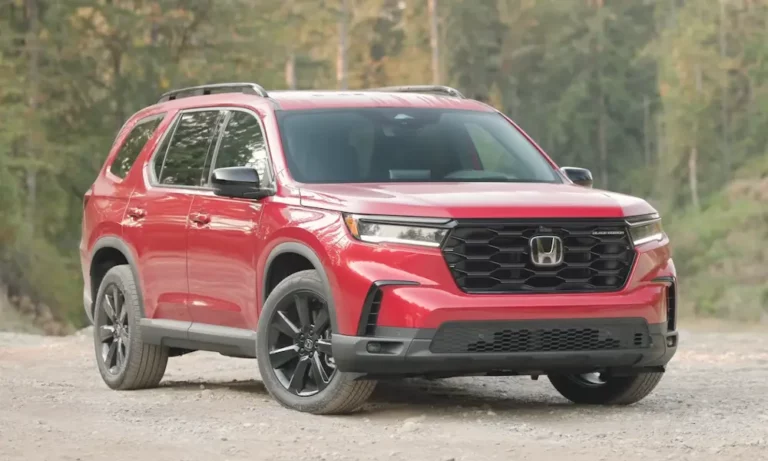
Honda clearly heard the complaints. The 2023 Pilot debuted an all-new 3.5-liter DOHC V6 (J35Y8) that ditches the old SOHC design. The switch to dual overhead cams simplified the valvetrain, eliminated the complex VTEC rocker-arm assembly, and improved long-term thermal management.
More importantly, Honda dropped both the 6-speed and the problematic ZF 9-speed in favor of an in-house 10-speed automatic across all trim levels. Early J.D. Power data shows strong initial quality, with owners praising smooth, confident gear transitions and none of the “hunting” behavior from the previous generation.
Early Recalls to Know About
New generation, new teething issues. The 2023–2025 Pilots have had several recalls worth knowing if you’re shopping new or near-new. Here’s what NHTSA has flagged:
| Recall ID | Issue | Fix |
|---|---|---|
| 25V391000 | Brake pedal shifts out of position | Inspection and replacement of brake pedal assembly |
| 25V031000 | Engine stall from FI-ECU software error | Reprogramming of fuel injection software |
| 24V900000 | Fuel filler neck separation, fire hazard | Inspection and repair of filler tube |
| 25V056000 | 3rd-row seat belt misrouting | Dealer rerouting of seat belt assembly |
Honda also issued TSB 23-NA-029 to address water leaks from the front windshield and rear hatch on 2023 models. Improper factory sealant application allowed water to pool in the front floorboards or trunk area. The fix involves air-pressure leak detection and re-sealing.
These recalls don’t indicate a fundamentally flawed vehicle — they’re standard early-production corrections. All are dealer-fixable at no cost to you.
Bottom line on Gen 4: The 2023+ Pilot looks like a genuine return to form. Watch for recall completion before buying used.
What Does It Actually Cost to Own a Honda Pilot?
RepairPal puts the average annual unscheduled repair cost at $542 — below the $573 midsize SUV average and well below the $652 all-vehicle average. Over 10 years, expect to spend between $8,000 and $11,000 total on service.
| Vehicle | Avg. Annual Cost | 10-Year Estimate |
|---|---|---|
| Honda Pilot | $542 | $11,000 |
| Toyota Highlander | $489 | $7,890 |
| Mazda CX-90 | $431 | $7,524 |
| Honda CR-V | $407 | N/A |
| Midsize SUV Average | $573 | N/A |
The Pilot costs a bit more to maintain than the Highlander, but it holds its value well. Five-year depreciation runs about 50%, competitive for the segment. And 62.6% of Honda Pilots are still on the road past 200,000 miles — compared to 45.3% for similar full-size SUVs. That’s a strong long-term track record.
How to Get 200,000+ Miles from Your Honda Pilot
iSeeCars data shows the Pilot has a 30% chance of reaching 200,000 miles — well above average. Want to push past 250,000? Here’s what actually matters:
- Replace the timing belt on time. Pre-2023 Pilots use a timing belt, not a chain. Miss the 100,000-mile or 7-year replacement interval and you risk catastrophic engine destruction. This is the single biggest mistake high-mileage Pilot owners make.
- Change transmission fluid every 30,000–40,000 miles. Honda’s Maintenance Minder stretches intervals longer than many technicians recommend, especially for AWD models under load.
- Disable VCM on 2009–2022 models. A VCM Muzzler or Tuner device is one of the cheapest, most effective ways to protect your engine from premature wear.
- Replace the radiator proactively on Gen 1 models. Every 10 years or 150,000 miles, swap the radiator in 2003–2008 Pilots to prevent the “Strawberry Milkshake” transmission killer.
Honda Pilot vs. Toyota Highlander vs. Mazda CX-90
| Metric | Honda Pilot | Toyota Highlander | Mazda CX-90 |
|---|---|---|---|
| Reliability Rank (Midsize) | 5th | 3rd | Unranked |
| Seating | 8 | 8 | 6–8 |
| Max Towing | 5,000 lbs | 5,000 lbs | 5,000 lbs |
| Engine | 3.5L V6 | 2.4L Turbo/Hybrid | 3.3L Turbo I-6 |
| Avg. Annual Repair Cost | $542 | $489 | $431 |
The Toyota Highlander edges the Pilot on maintenance costs and offers a hybrid option, but the Pilot’s i-VTM4 AWD system uses true torque vectoring — better for families who actually drive in bad weather or do light off-roading. The Mazda CX-90 is a premium, engaging drive, but it lacks decades of reliability data and has faced its own early transmission and hybrid software issues. If you want proven, the Pilot wins that debate.
Best and Worst Honda Pilot Years at a Glance
Avoid these years:
- 2003 — Transmission failure epidemic
- 2005 — “Strawberry Milkshake” radiator/transmission contamination
- 2016 — Highest reported problem volume in Pilot history
Buy these years:
- 2008 — Best first-gen reliability, 85/100 J.D. Power score
- 2015 — Most refined second-gen build, excellent value
- 2021–2022 — Third-gen at its most sorted, good used-market pricing
- 2023+ — New platform, new transmission, promising early data
Are Honda Pilots reliable? Yes — if you pick the right year, stay on top of maintenance, and know the quirks ahead of time. The Pilot isn’t a hands-off, forget-it vehicle. It rewards attentive owners with a lifespan that regularly stretches 15 to 20 years. Neglect the fluids or ignore the VCM issue and you’ll pay for it. Treat it right, and it’ll haul your family reliably for a very long time.