That little VTM-4 light just popped on your dashboard, and now you’re wondering if you’re about to drop thousands on a new rear differential. Here’s the good news — you probably aren’t. Most of the time, the Honda Pilot VTM-4 light on situation is simpler than it looks. Read through this guide and you’ll know exactly what’s happening and how to fix it.
What Is the VTM-4 System, Anyway?
VTM-4 stands for Variable Torque Management 4-Wheel Drive. It’s Honda’s proactive all-wheel-drive system built for the Pilot and the Acura MDX. Unlike older AWD setups that waited for your tires to slip before reacting, VTM-4 stays active all the time, reading sensor data and distributing torque before you lose traction.
Inside the rear differential, two electro-hydraulic clutch packs work independently to control each rear wheel. A dedicated control module monitors your engine load, throttle position, and wheel speed every second you drive. When Honda updated the system to i-VTM4 in the 2016 Pilot, it gained true torque vectoring — the ability to send up to 70% of engine power to the rear axle and shift all of that power to a single rear wheel if needed.
Here’s a quick look at how the system evolved:
| System | Vehicle | Key Feature |
|---|---|---|
| VTM-4 Gen 1 | 2003–2008 Pilot | Electro-hydraulic, lockable |
| VTM-4 Gen 2 | 2009–2015 Pilot | Enhanced electronics |
| i-VTM4 Gen 3 | 2016+ Pilot | Full torque vectoring |
Two Different Lights, Two Different Meanings
This is where most Pilot owners get confused. There are actually two separate VTM-4 indicators, and they don’t mean the same thing.
The VTM-4 Lock button light — This one lives on your center console button. When you press it, it glows to confirm the system is manually locked for low-speed off-road use. That’s normal and expected.
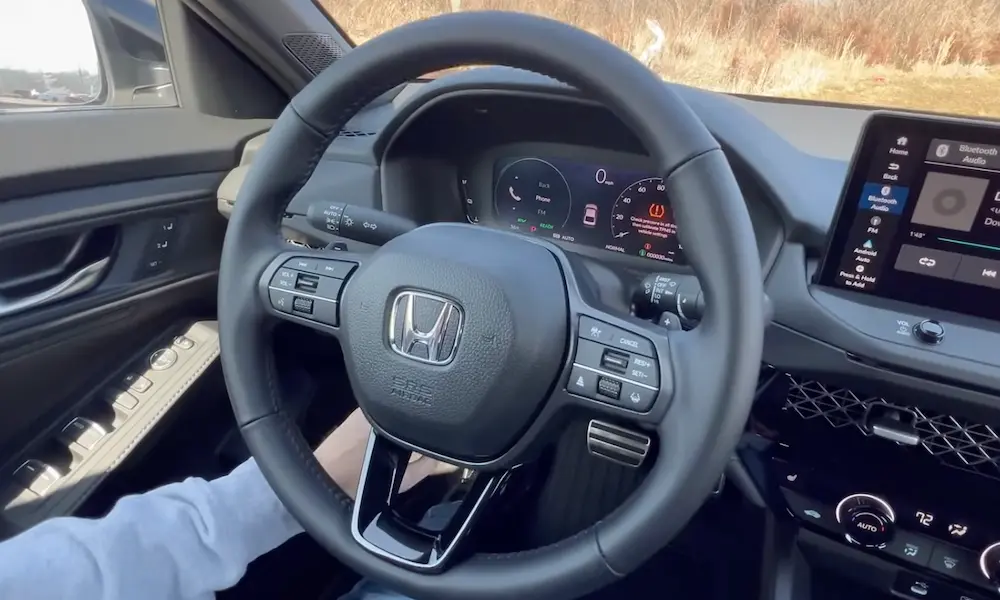
The VTM-4 warning light in your instrument cluster — This one should only flicker briefly when you start the engine as part of a self-check. If the VTM-4 warning light stays on while you’re driving, the system has detected a fault and shut down AWD entirely. Your Pilot is now running on front-wheel drive only.
If the light is flashing: Pull over immediately. A blinking VTM-4 light means the rear differential is overheating. Shift into Park, let the engine idle, and wait for the light to stop flashing. Ignoring this can destroy your rear axle assembly.
The Real Reason Your Honda Pilot VTM-4 Light Is On
Here’s the part that surprises most people. The VTM-4 light is usually triggered by an engine or emissions fault — not a problem with the AWD system itself.
The VTM-4 control module pulls engine data constantly. It needs to know your torque output, throttle position, and air-fuel ratios to calculate the right torque split. When the Powertrain Control Module (PCM) detects any engine fault, it broadcasts an error across the vehicle’s network. The VTM-4 module sees that the engine data is unreliable and shuts itself down to protect the drivetrain.
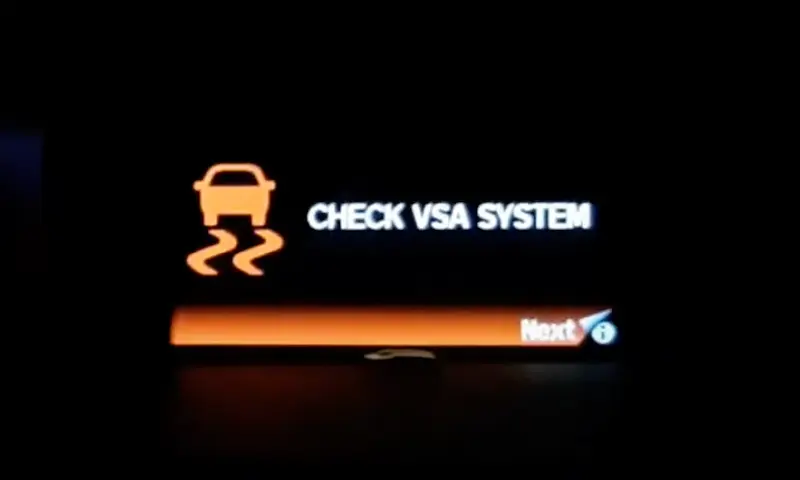
This is why many Pilot owners see three lights come on at once — the Check Engine Light (CEL), the Vehicle Stability Assist (VSA) light, and the VTM-4 light. Owners on Reddit call this the “Christmas Tree” pattern, and it almost always points to an engine or emissions issue, not a dead differential.
Common Engine Faults That Trigger the VTM-4 Light
- Oxygen or air-fuel ratio sensor failure — A bad O2 sensor on Bank 1 (code P0135) is one of the most common triggers. Replacing the sensor often clears the VTM-4 light without touching the rear differential at all.
- EGR valve failure — A clogged or failing EGR valve causes rough idling and misfires. This is especially common on 2006 Pilots with over 140,000 miles.
- Variable Cylinder Management (VCM) misfires — On 2009–2015 models, the VCM system can cause oil to foul spark plugs in cylinders 1–4. The resulting misfires kill engine data reliability and disable AWD.
- Loose or damaged gas cap — A small EVAP leak (code P0442) from a loose cap can flip the VTM-4 light on certain model years. It’s the cheapest possible fix, so check it first.
- Weak battery or bad ground — A failing battery or corroded terminal can cause undervolt conditions during startup, sending false errors to the wheel speed sensors and triggering the VTM-4 light for no mechanical reason.
Diagnostic Trouble Codes to Look For
Grab an OBD-II scanner — ideally one that reads chassis (C-codes) and manufacturer-specific codes, not just generic P-codes. Basic scanners miss the codes that live inside the VTM-4 and VSA modules.
| Code | Meaning | Likely Cause |
|---|---|---|
| P0135 | O2 Sensor Heater Circuit (Bank 1) | Faulty sensor or wiring |
| P0300–P0306 | Cylinder Misfire | Fouled plugs, bad coils, VCM issues |
| P0420 | Catalyst System Below Threshold | Failing converter or rear O2 sensor |
| P0442 | EVAP Small Leak | Loose gas cap or cracked canister |
| C003A | Right Rear Wheel Speed Sensor Fault | Bad sensor, debris, or damaged wiring |
| P1009 | VTC System Performance | Low oil or faulty VTC actuator |
If your codes fall in the P0xxx engine and emissions range, fix those first. You might save yourself thousands by skipping straight to the rear differential.
What Actually Causes the VTM-4 System to Fail Mechanically
When the fault genuinely lives inside the AWD hardware, the two most common culprits are dirty differential fluid and mismatched tires.
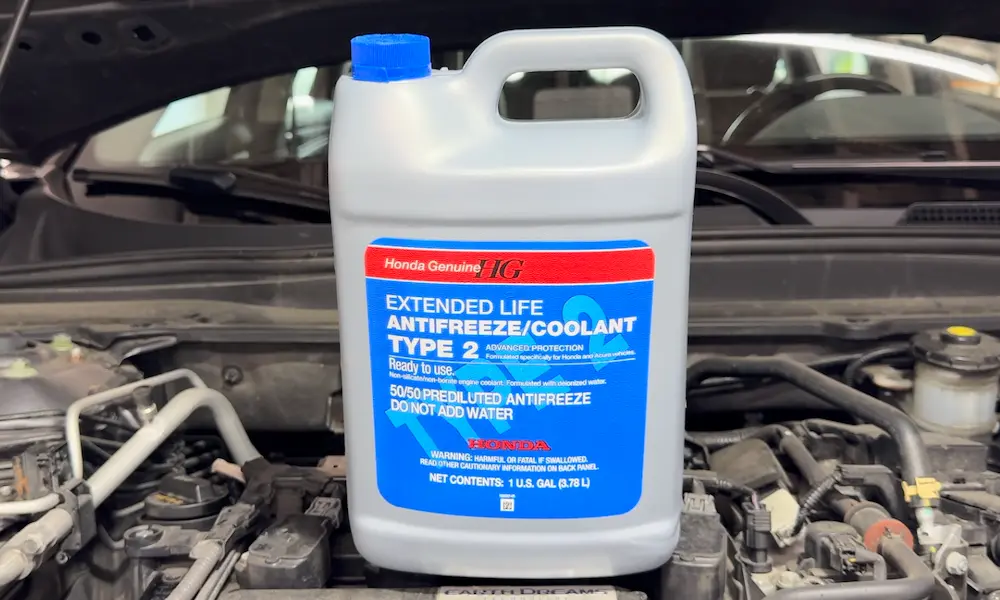
Differential fluid breakdown — The VTM-4 rear differential uses a specially formulated fluid that cools the clutch packs and provides the right friction properties. Using anything other than Genuine Honda VTM-4 fluid causes judder, overheating, and eventually a flashing warning light. Dark, burnt-smelling fluid during a drain is a sign the clutches have already taken heat damage.
Mismatched tires — The VTM-4 system reads all four wheel speed sensors simultaneously. If your tires are different sizes, have uneven tread depth, or run at different pressures, the sensors report different speeds even on a straight road. The system interprets this as slippage, keeps engaging the rear clutches, and eventually overheats the differential. All four tires must match in make, model, size, and wear.
How to Change the VTM-4 Differential Fluid
This is one of the most effective and affordable ways to prevent VTM-4 problems. Honda recommends a fluid change every 30,000 miles under normal conditions, and every 15,000 miles if you tow frequently or drive in the mountains.
The basic process:
- Warm up the differential to operating temperature and park on level ground
- Remove the filler bolt first so you know the system can actually be refilled
- Pull the drain bolt and inspect the old fluid — dark or burnt fluid signals previous overheating
- Reinstall the drain bolt with a new crush washer
- Pump in Genuine Honda VTM-4 fluid until it reaches the filler hole edge
- The system holds approximately 3 quarts
A full differential fluid flush runs between $80 and $120 at a shop — a small price compared to what’s next on this list.
What Does Repairs Actually Cost?
Here’s the honest breakdown of what you might spend depending on the root cause:
| Repair | Parts | Labor | Total Estimate |
|---|---|---|---|
| VTM-4 Fluid Flush | $30–$45 | $50–$75 | $80–$120 |
| O2 Sensor Replacement | $70–$150 | $100–$200 | $170–$350 |
| EGR Valve Replacement | $160 | $72 | $232 |
| Oil Temp Sensor | $16–$27 | $100–$150 | $116–$177 |
| VTC Solenoid (2009–2015) | $257–$338 | $366–$537 | $623–$875 |
| PCM Replacement | $670 | $134–$197 | $804–$867 |
| Rear Differential (New) | $3,700–$3,800 | $1,300–$2,500 | $5,000–$6,300 |
That rear differential number is the one everyone dreads, and rightly so. For a first-generation Pilot, $5,000–$6,300 in repairs may exceed the car’s market value. This is exactly why you want to rule out engine and emissions faults before assuming the worst.
What to Do Based on Your Pilot’s Generation
2003–2008 (Gen 1): Focus on O2 sensors, EGR valves, and catalytic converters first. High-mileage units often develop clutch judder during low-speed turns — a sign of fluid degradation rather than mechanical failure.
2009–2015 (Gen 2): VCM-related oil consumption and spark plug fouling is the primary suspect for “Christmas Tree” warning lights. Honda has issued warranty extensions for certain VCM-related misfire problems — check your VIN at a dealership before paying out of pocket.
2016+ (Gen 3 i-VTM4): The system integrates with Honda Sensing cameras and radar. A sensor fault in the driver-assist system can sometimes trigger the VTM-4 light. Fluid chemistry matters even more here — the torque-vectoring clutches are extremely sensitive to non-genuine fluid.
Can You Reset the VTM-4 Light Yourself?
Sometimes a warning light sticks around even after you’ve fixed the underlying problem. If you’ve repaired the fault and the VSA or VTM-4 light won’t clear with a standard OBD-II reset, a known workshop reset involves grounding Pin 9 of the OBD-II port:
- Connect a jumper wire from Pin 9 to a solid metal ground point on the chassis
- Turn the ignition on and watch the ABS light go off
- Press the VSA OFF button — the ABS light should come back on
- Press VSA OFF again to complete the reset
This clears the “neutral position” calibration the VSA system sometimes loses after a repair. It won’t mask an active fault — it just clears the memory once the problem is actually fixed.
The Short Version: Don’t Panic
The Honda Pilot VTM-4 light on situation is almost always more manageable than it first appears. Start with a proper multi-system scan, check for engine and emissions codes first, and keep your differential fluid fresh. The expensive rear differential replacement is usually a last resort — not a first step. Stay on top of your tires, your fluid intervals, and your battery health, and the VTM-4 system will give you years of reliable all-weather performance.