That amber triangle with an exclamation point just lit up your Honda’s dashboard — and now you’re wondering if you should pull over or just keep driving. Good news: it’s not always an emergency. Bad news: it’s not always nothing, either. Read this to the end and you’ll know exactly what to do.
What Is the Honda Triangle Exclamation Point?
The Honda triangle exclamation point is one of the most misunderstood lights on the dashboard. It looks alarming, but it’s actually doing you a favor — it’s Honda’s way of flagging something that needs your attention before it becomes a real problem.
This amber or yellow symbol serves two main jobs:
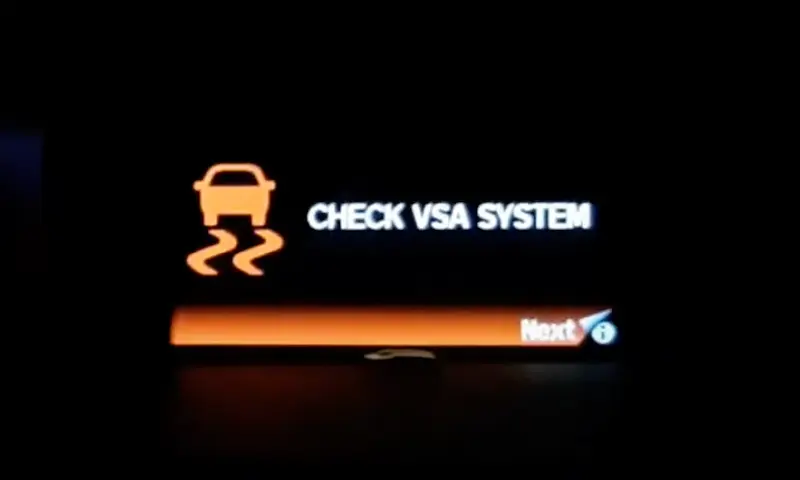
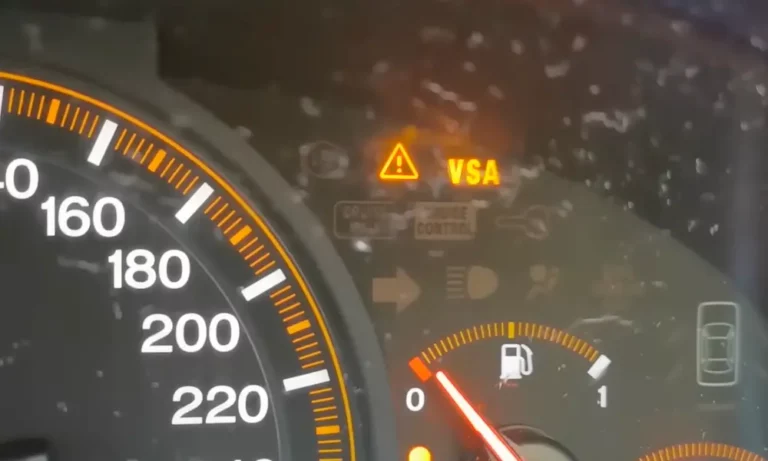
- It’s the Vehicle Stability Assist (VSA) indicator — Honda’s active safety system that keeps your car from sliding or spinning out
- It’s the master warning light — a catch-all alert that tells you to check your dashboard screen for a specific message
Understanding which role it’s playing right now is the key to figuring out your next move.
The Main Reason It Lights Up: Vehicle Stability Assist
For most Honda models, the triangle exclamation point is directly tied to the VSA system. VSA is Honda’s stability control technology. It monitors your steering angle, wheel speed, lateral acceleration, and yaw rate — basically, it tracks whether your car is going where you’re pointing it.
When it detects that your car is sliding, understeering, or losing grip, it steps in automatically.
What VSA Actually Does When It Activates
The system uses two tools to keep you on track:
- Selective braking: It applies hydraulic brake pressure to individual wheels. During understeer — where the front end pushes wide through a corner — it brakes the inner rear wheel to swing the car back into line
- Throttle reduction: It cuts engine torque to stop the driven wheels from spinning on slippery surfaces like wet roads, ice, or loose gravel
It’s fast, and it works quietly in the background every single drive.
Flashing vs. Solid: The Light Tells Two Different Stories
This is the part most drivers miss. The behavior of the triangle exclamation point changes depending on the situation:
| Light Behavior | What It Means | Action Required |
|---|---|---|
| Flashing | VSA is actively working — your car is sliding and the system is correcting it | Slow down, ease off the gas, and let it do its job |
| Solid (steady) | VSA is off or has a fault — stability control is disabled | Investigate the cause; drive cautiously |
A flashing triangle means everything’s working fine — the system is just earning its keep. A solid triangle means you’ve lost that safety net.
The Master Warning Role: When It’s About Something Else Entirely
Honda’s dashboard warning architecture splits alerts into two categories: localized warnings (like a dedicated tire pressure icon) and a central master warning light. The triangle exclamation point plays both roles depending on the situation.
How It Works With the “i” Symbol
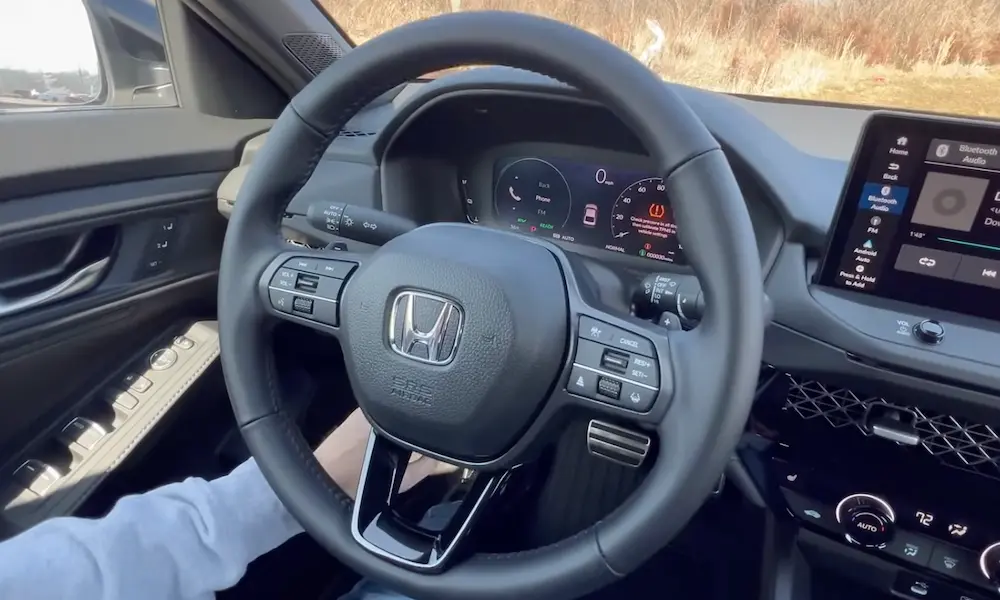
On Honda models with a Driver Information Interface or Multi-Information Display, the triangle often lights up alongside a lowercase “i” in a yellow circle — the System Message Indicator. These two lights work as a team.
The triangle grabs your attention. The “i” tells you there’s a text message on your instrument cluster screen explaining exactly what’s wrong. Use your steering wheel controls — typically the right scroll wheel or the Home button — to navigate to that message.
This message could say anything from a routine reminder to a serious warning, so always read it.
Serious Messages You Can’t Ignore
Some master warning messages demand immediate action:
| Dashboard Message | Urgency | What to Do |
|---|---|---|
| “Critical system failure detected. Stop driving when safe.” | 🔴 High | Pull over, shut engine off, call for a flatbed tow |
| “Brake fluid low. Do not drive.” | 🔴 High | Stop immediately — hydraulic brake failure risk |
| “Engine oil pressure low. Stop engine.” | 🔴 High | Turn off the engine right now to prevent engine destruction |
| “12 volt battery charging system problem.” | 🔴 High | Turn off accessories, drive directly to a shop |
| “Emissions system problem. Power may be reduced.” | 🟡 Medium | Avoid hard acceleration; schedule a diagnostic scan |
| “Outside temperature low. Road surface may be frozen.” | 🟢 Low | Drive carefully — black ice is possible |
A red warning light alongside the triangle? Stop the car. A yellow-only triangle? You likely have time to investigate properly, but don’t ignore it.
Why the Honda Triangle Exclamation Point Turns On: Common Triggers
A steady amber triangle can come from several different sources. Here’s how to work through them logically.
Mismatched Tires or a Spare Tire
The VSA system calculates slip by comparing wheel speeds. If your tires have different tread wear levels, different brands, or different sizes, the system reads the rotational difference as a fault. It disables traction control and turns on the warning light. The compact spare tire is a very common culprit — it’s smaller than your regular tires, and that size difference confuses the system immediately.
Cold Weather and Tire Pressure Drops
When temperatures drop, tire pressure drops with them — roughly 1 PSI for every 10°F of temperature change. In a cold US winter, your tires can lose 4 PSI or more overnight. On Honda models where the master warning links to the Tire Pressure Monitoring System (TPMS), this pressure drop triggers both the dedicated tire pressure icon and the master warning triangle at the same time.
Check your tire pressures first thing in cold weather — it’s the easiest fix on this list.
Dirty or Blocked Safety Sensors
Modern Hondas with Honda Sensing packages — Collision Mitigation Braking, Lane Keeping Assist, Road Departure Mitigation — use a front-facing camera and radar array. Mud, road salt, heavy rain, snow, or ice can block these sensors and trigger the master warning triangle along with a sensor blockage message. Overloading your cargo can also tilt the vehicle enough to throw off sensor angles.
Clean the front grille and camera area — sometimes it’s that simple.
Battery Replacement or Disconnection
When you disconnect and reconnect the 12V battery, the VSA controller loses its calibration data for the steering angle sensor and yaw rate sensor. Both the VSA light and the VSA OFF indicator come on solid after a battery swap — this is completely normal. You don’t need a trip to the dealer.
Drive in a straight line at 12 mph or faster for a short distance. The sensors recalibrate automatically, and both lights go out on their own.
You (or Someone) Hit the VSA OFF Button
Honda’s VSA OFF button sits on the lower-left driver-side control panel. If you hold it down until you hear a beep, stability control turns off and the triangle lights up solid. It’s an easy button to hit by accident.
To turn VSA back on: press and hold the same button until you hear a confirmation beep. The triangle should go out.
The Maintenance Minder Connection
The Honda triangle exclamation point also ties into Honda’s Maintenance Minder system, which tracks oil degradation, engine run time, and operating temperatures to calculate when your car actually needs service — not just when a mileage number ticks over.
When your calculated oil life drops to 15%, the system triggers the amber wrench icon, the master warning triangle, and the “i” system message indicator together. Your dashboard screen then shows an alphanumeric code that tells you exactly what service is due.
Decoding Your Maintenance Minder Code
The code has two parts: a letter (main service item) and one or more numbers (additional items needed).
| Code | Type | System | Service Required |
|---|---|---|---|
| A | Main | Engine Oil | Oil change only |
| B | Main | Oil + Inspections | Oil change, oil filter, brake and fluid inspections |
| 1 | Sub | Tires | Tire rotation and pressure check |
| 2 | Sub | Filters | Cabin filter and engine air filter replacement |
| 3 | Sub | Transmission | Transmission fluid replacement |
| 4 | Sub | Ignition/Valves | Spark plugs and valve clearance inspection |
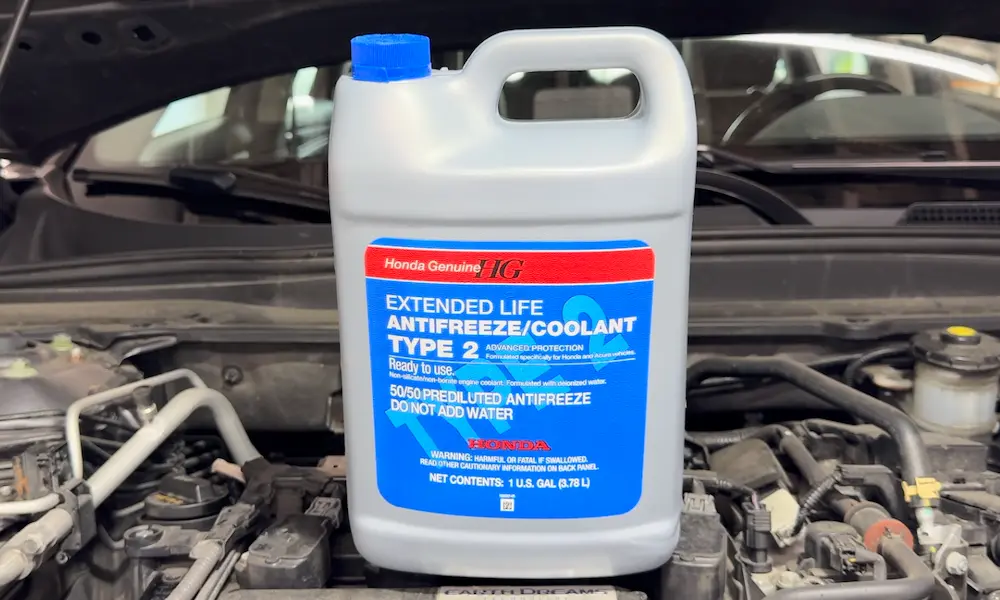
| 5 | Sub | Cooling | Coolant flush and refill |
| 8 | Sub | Brake Fluid | Full hydraulic brake fluid flush (every 3 years) |
| 9 | Sub | Brakes/Suspension | Brake service, suspension, tie rods, driveshaft boots |
After completing the required service, reset the system through the Driver Information Interface. Turn the ignition on, navigate to the Maintenance Minder screen using your steering wheel controls, and hold the Enter button for 10 seconds to enter reset mode. Select the completed service items or choose “All Due Items” — this resets oil life back to 100% and clears the warning lights.
How to Diagnose the Honda Triangle Exclamation Point Step by Step
Don’t guess — work through this in order:
Step 1: Check for concurrent warning lights. If a yellow tire pressure icon is also showing, check all four tires immediately against the pressure spec on your driver’s door jamb.
Step 2: Read the dashboard message. Use your steering wheel controls to navigate to the system message screen. The text description points you directly to the source.
Step 3: Power cycle the system. Drive to a safe spot, shut the engine off, wait 60 seconds, restart. If the triangle doesn’t come back, it was likely a temporary sensor glitch on the vehicle’s controller area network.
Step 4: Test the VSA OFF button. Press and hold it until you hear a beep. If the system re-engages and the light turns off, the stability system was simply deactivated.
Step 5: Connect a scan tool. If the light stays solid, connect a professional OBD-II scanner to the diagnostic port and pull the specific fault codes from the VSA module, ABS module, or engine control module. The triangle covers multiple sub-systems, and you need the exact code to find the faulty sensor or component.
You can drive short distances with a solid yellow triangle — your base mechanical brakes still work. But don’t push your luck in wet or icy conditions, and get it scanned within the week. If any red warning light appears alongside the triangle, stop the car immediately. Red means the engine, brakes, or charging system is in active danger of failure.