Got a Honda Civic and not sure what oil it takes, how much to use, or how to reset that maintenance light? This guide covers everything — from the right viscosity for your year to a step-by-step oil change walkthrough and Maintenance Minder reset instructions. Bookmark it. You’ll want to come back.
What Oil Does a Honda Civic Take?
The short answer depends on your model year.
Civics from 1996–2000 (6th gen) use SAE 5W-30. Models from 2001–2011 (7th and 8th gen) use SAE 5W-20. From 2012 onward, Honda standardized on SAE 0W-20 full synthetic across nearly the entire lineup — and that spec holds through 2026.
That “0W” rating matters. It tells you the oil flows easily in cold weather, which means your engine gets lubricated fast on a cold start. The “20” rating keeps oil thin enough to reduce friction in modern engines built with tighter tolerances.
For 2016 and newer turbocharged models, you’ll want an oil that meets API SP or SN and ILSAC GF-6 standards. These specs are designed to prevent low-speed pre-ignition, a nasty combustion problem that can damage turbocharged engines.
Honda Civic Oil Capacity by Generation
Getting the oil volume right matters just as much as picking the right viscosity. Too little oil starves the engine. Too much can whip air into the oil and cause foaming, which destroys oil pressure.
Here’s a breakdown of Honda Civic oil capacities by generation:
| Generation | Model Years | Engine | Viscosity | Capacity (with filter) |
|---|---|---|---|---|
| 6th Gen | 1996–2000 | 1.6L | SAE 5W-30 | 3.7 qts |
| 7th Gen | 2001–2005 | 1.7L DX/LX/EX | SAE 5W-20 | 3.8 qts |
| 7th Gen | 2001–2005 | 2.0L Si | SAE 5W-20 | 4.2 qts |
| 8th Gen | 2006–2011 | 1.8L | SAE 5W-20 | 3.9 qts |
| 8th Gen | 2006–2011 | 2.0L Si | SAE 5W-20 | 4.4 qts |
| 9th Gen | 2012–2015 | 1.8L | SAE 0W-20 | 3.9 qts |
| 9th Gen | 2012–2015 | 2.4L Si | SAE 0W-20 | 4.4 qts |
| 10th Gen | 2016–2021 | 1.5L Turbo | SAE 0W-20 | 3.7 qts |
| 10th Gen | 2016–2021 | 2.0L Type R | SAE 0W-20 | 5.4 qts |
| 11th Gen | 2022–2026 | 1.5L Turbo | SAE 0W-20 | 3.7 qts |
| 11th Gen | 2022–2026 | 2.0L Type R | SAE 0W-20 | 5.4 qts |
| 11th Gen | 2025+ | 2.0L Hybrid | SAE 0W-20 | 4.2 qts |
Watch Out for Conflicting Capacity Numbers
You’ll find different capacity figures depending on where you look. The 2025 Civic Hybrid is a good example — some retail catalogs list 5.4 quarts, but Honda’s official documentation specifies 4.2 quarts with a filter change. That’s a 1.2-quart gap, and overfilling a hybrid engine is a real problem.
When in doubt, do a mid-fill dipstick check before you add the last quart. Add oil slowly, check the stick, and repeat. Your dipstick is the final authority here.
Step-by-Step Honda Civic Oil Change
This process covers 10th and 11th gen models, but the core steps apply to older generations too.
What You’ll Need
- SAE 0W-20 full synthetic oil (3.7–5.7 qts depending on your engine)
- Replacement oil filter (part number 15400-PLM-A02, M20x1.5 thread)
- New aluminum drain plug crush washer (part number 94109-14000)
- 17mm socket wrench
- Oil drain pan
- Jack and jack stands
- Wheel chocks
The Oil Change Process
1. Warm up the engine. Run it for five minutes. Warm oil drains faster and carries more contaminants out with it.
2. Raise the vehicle safely. Use jack stands — never rely on just a floor jack. Place wheel chocks behind the rear tires.
3. Remove the oil fill cap. Here’s a useful trick: set the fill cap on the hood latch. It physically blocks the hood from closing, reminding you to replace the cap before you drive off.
4. Pull the underbody cover. 10th and 11th gen Civics have an aerodynamic skid plate underneath. It’s held by 2 Phillips screws and 6 quarter-turn flathead screws. Remove it to access the drain plug and filter.
Heads-up for rust-belt drivers: Steel fasteners on aluminum frames can seize from galvanic corrosion. Push firmly upward while turning counter-clockwise. If a fastener is stuck, a low-torque impact driver breaks the rust bond without stripping the head. Once you’re done, dab anti-seize compound on the screw threads before reinstalling.
5. Drain the oil. Use a 17mm socket to remove the drain plug. Let the oil drain fully into your collection pan.
6. Replace the crush washer. Never reuse the old aluminum washer. A compressed washer causes leaks. Install a fresh genuine washer every time.
7. Torque the drain plug. The spec varies by generation:
- 9th gen (1.8L): 29 ft-lbs
- 10th and 11th gen: 30 ft-lbs
8. Replace the oil filter. Remove the old spin-on canister filter. Before you do anything else, check that the old rubber gasket didn’t stick to the engine block. A double gasket causes a high-pressure oil blowout when you start the engine — that’s catastrophic engine failure, full stop.
Lightly coat the new filter’s rubber gasket with clean engine oil. Thread it on by hand until the gasket seats, then turn it three-quarters to one full turn more. Don’t use a wrench to tighten.
9. Fill with fresh oil. Pour in your specified amount of SAE 0W-20 synthetic. Reinstall the fill cap. Start the engine and check for leaks around the drain plug and filter. Shut it off, wait two minutes, then verify the level on the dipstick.
Understanding the Honda Maintenance Minder
Modern Civics don’t use a simple mileage-based oil change schedule. Instead, Honda’s Maintenance Minder system tracks real driving conditions — engine temperature, RPM, trip length, speed, and total miles — to calculate when your oil actually needs changing.
Short winter trips? The system accelerates the oil depletion clock. Long highway drives in mild weather? It extends it. The result is a more accurate service reminder than a fixed 5,000-mile sticker.
What the Oil Life Percentages Mean
| Oil Life % | Dashboard Message |
|---|---|
| 100%–40% | No alert displayed |
| 30%–15% | Maintenance Due Soon |
| 15% | Service Due Soon + yellow wrench icon |
| 5% | Service Due Now |
| 0% | Service Past Due (flashing warning) |
Maintenance Minder Codes Decoded
The system pairs a letter code with number sub-codes to tell you exactly what’s due.
Primary codes:
- Code A — Oil change only, no filter replacement
- Code B — Full oil and filter change plus brake, steering, suspension, exhaust, and fuel line inspections
Sub-codes:
- 1 — Tire rotation
- 2 — Air filter, cabin filter, drive belt inspection
- 3 — Transmission fluid
- 4 — Spark plugs and valve clearance check
- 5 — Engine coolant
- 7 — Brake fluid flush
So if your dash shows B1, that’s a full oil and filter change plus a tire rotation. A alone means a quick oil change with no filter swap needed.
How to Reset the Oil Life After a Honda Civic Oil Change
Skip this step and your Civic keeps nagging you — and can’t track the next interval. Here’s how to reset the oil life on each generation.
9th Gen (2012–2015) with Digital Display
- Turn the ignition to the run position (don’t start the engine).
- Press the Menu button on the steering wheel.
- Scroll to Vehicle Information, then select it.
- Navigate to Maintenance Info to see the oil life percentage.
- Confirm the reset when prompted and press Source to complete it.
- Cycle the ignition off, then start the engine to confirm 100%.
9th Gen (2012–2015) with Analog Cluster
- Turn the ignition to run.
- Press the physical Select/Reset knob repeatedly until the oil life screen appears.
- Hold the button down for 10 seconds until the display blinks.
- Release, then immediately hold it again for 5 seconds. Done.
10th Gen (2016–2021) via Steering Wheel Controls
- Press the Start button twice without touching the brake.
- Press the “i” (information) button on the steering wheel.
- Cycle through screens until the wrench icon appears.
- Hold Enter for 10 seconds until the reset menu appears.
- Use the arrow buttons to select your reset option, then press Enter.
11th Gen (2022–2026)
- Press Start twice without the brake pedal.
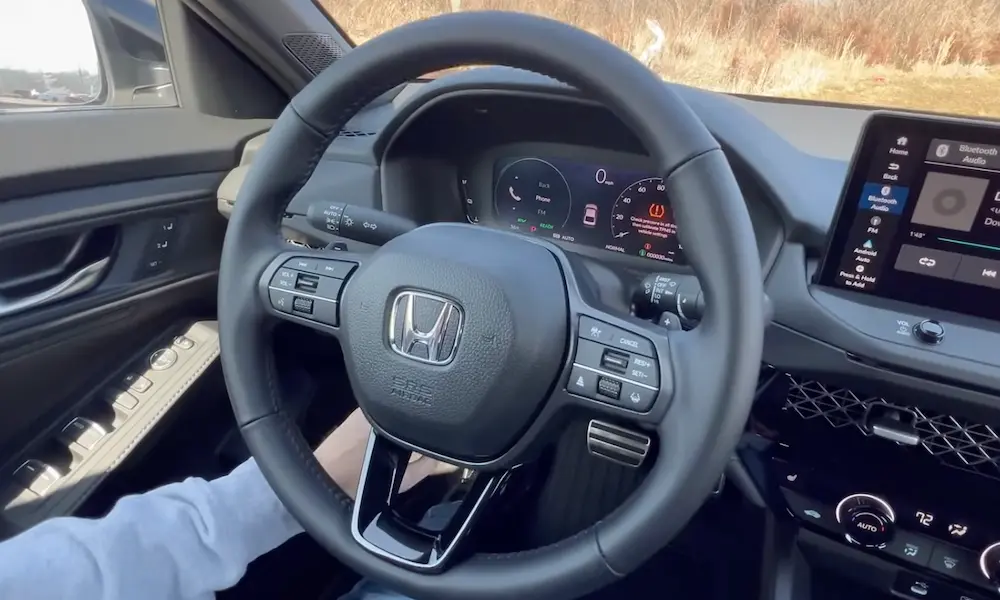
- Press the Home button on the left side of the steering wheel.
- Scroll with the left selector wheel to the wrench icon (Maintenance menu).
- Hold the selector wheel inward for 10 seconds.
- Roll to All Due Items, then press inward to reset.
If the oil life screen doesn’t appear, you’re probably on a Trip A/B or range screen. Use the steering wheel controls to navigate back to the main vehicle info display, then try again.
Should You Use High-Mileage Oil in Your Civic?
Once your Civic hits 75,000 miles, it’s worth switching to a high-mileage synthetic formula. Here’s why it helps:
- Seal conditioners (specific esters) absorb into hardened rubber seals, causing them to swell slightly and stop minor leaks.
- Higher zinc and phosphorus levels create a protective layer on worn camshaft lobes and lifters — parts that show the most wear in high-mileage engines.
- Enhanced detergent packages with calcium and magnesium compounds fight sludge buildup in piston ring grooves, keeping compression healthy.
Brands like Mobil 1, Red Line, Kendall, and Chevron all offer high-mileage synthetic 0W-20 options engineered to these standards. Your older Civic will thank you.