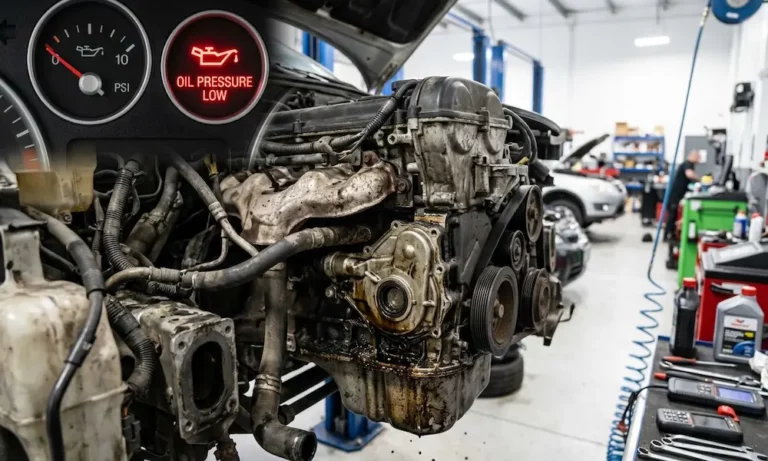
Your engine’s oil pump is a small part doing a massive job. When it starts failing, your engine sends some pretty clear distress signals. Catch them early, and you might save thousands in repairs. Miss them, and you could end up with a seized engine. Here’s everything you need to know about the symptoms of bad engine oil pump behavior — before things get ugly.
What Does an Oil Pump Actually Do?
The oil pump pressurizes oil and pushes it through every moving part in your engine. It reduces friction, fights heat, and keeps metal from grinding against metal. Without it working properly, your engine starts destroying itself — fast.
Most cars use one of two pump designs:
- Gear pumps — common in older engines; use meshing gears to move oil
- Vane pumps — found in newer engines; use a spinning rotor with sliding vanes
Both designs connect directly to the crankshaft or camshaft. That means pump output rises and falls with your engine speed. It also means a worn pump struggles most when your engine idles — and that’s often the first place you’ll notice something’s wrong.
Dashboard Warning Signs You Shouldn’t Ignore
Your car’s instruments pick up oil pressure problems before your ears do. Pay attention to these.
The Oil Pressure Warning Light
The oil pressure warning light looks like a little red oil can. It turns on when system pressure drops below a safe threshold. Don’t confuse it with the yellow oil-change reminder light — that one just tracks mileage.
Here’s what different light behaviors mean:
| Light Condition | What It Likely Means | What You Should Do |
|---|---|---|
| Steady red light | Critical pressure loss | Shut the engine off immediately |
| Flickering at idle | Worn pump losing pressure at low RPM | Get a professional diagnostic check |
| Intermittent on/off | Early pump wear or air in the system | Check oil level, test with a mechanical gauge |
| Flashing red light | Urgent lubrication failure | Pull over within 30 seconds |
A flashing red oil light is especially serious. Some vehicles will automatically cut the engine to prevent damage. Don’t wait around to see if it stops flashing.
Oil Pressure Gauge Readings That Look Off
If your car has a pressure gauge rather than just a warning light, you get more detail. A healthy engine runs between 25 and 65 PSI. Anything outside that range deserves attention.
A gauge stuck at zero while the engine runs? That’s either total pump failure, a major leak, or a broken sensor. A gauge reading 80 PSI or higher? That could mean a stuck pressure relief valve inside the pump — which can blow out seals and cause a sudden total oil loss.
OBD-II Trouble Codes
Your engine control unit monitors oil pressure through sensors. A failing pump can trigger the check engine light and store specific diagnostic trouble codes. Plug in an OBD-II scanner and look for:
| DTC Code | What It Means |
|---|---|
| P0520 | Oil pressure sensor circuit malfunction |
| P0521 | Sensor reads pressure that doesn’t match engine load |
| VVT-related codes | Low pressure stops timing phasers from working |
Engine Noises That Point to a Failing Oil Pump
Sound is one of the most reliable ways to diagnose a bad oil pump. Different parts of the engine starve at different rates, and the noises follow a predictable pattern.
Ticking and Tapping from the Top of the Engine
The valvetrain sits at the very top of your engine. It’s also the first area to suffer when oil pressure drops. Lifters, pushrods, and valve guides need constant lubrication. Without it, they start tapping against each other.
You’ll first notice this as a light tick when the engine is warm and oil is thinnest. As the pump wears further, it becomes a constant, rapid clatter that speeds up with the engine.
Deep Knocking from the Bottom of the Engine
If the pressure keeps dropping, the damage moves downward to the crankshaft and connecting rod bearings. These bearings depend on a thin film of pressurized oil to avoid direct metal contact.
When that film disappears, you hear a deep, heavy knock from the lower engine block. This is a serious sign. A bearing knock means severe damage is already happening. Keep running the engine, and a connecting rod can break through the engine block entirely.
Whining, Rattling, and Grinding
The pump itself makes noise when it’s failing. Here’s a quick reference:
| Sound | What It Sounds Like | Likely Cause |
|---|---|---|
| Ticking / Tapping | High-pitched rhythmic clicking | Oil starvation at the valvetrain |
| Heavy Knocking | Deep thud from the block | Main or rod bearing failure |
| Whining | High-pitched turbine sound | Worn pump gears or bearings |
| Rattling / Crackling | Marbles in a tin can | Pump cavitation or air ingestion |
| Grinding | Metallic scraping | Total pump internal breakdown |
A whining sound that rises in pitch as you accelerate — especially from the front or bottom of the engine — strongly suggests worn pump internals.
Overheating as a Symptom of Bad Engine Oil Pump
People often link overheating to a coolant problem. But engine oil also cools internal parts that coolant never touches — the crankshaft, pistons, and bearings.
When the pump fails, friction increases immediately. That friction generates heat the cooling system can’t handle alone. The temperature gauge climbs. Sometimes the whole engine overheats. Other times, the damage stays localized.
One early clue is a burning oil smell. When oil stops circulating, it sits on hot surfaces and scorches. Scorched oil turns to sludge, which then blocks the pump’s intake screen — making everything worse in a hurry.
Cavitation: The Sneaky Failure Mode
Cavitation happens when the pump can’t pull in oil fast enough. A clogged intake screen, an air leak in the suction line, or oil that’s too thick in cold weather can all cause it.
When inlet pressure drops below the oil’s vapor pressure, tiny bubbles form inside the pump. They then collapse violently on the high-pressure side. The result is that distinctive crackling or rattling noise — like gravel in a tin can. Those implosions pit the metal surfaces of the pump gears and housing, and the pump dies quickly afterward.
Aeration is the related problem: air mixes into the oil. You’ll see foam or bubbles on the dipstick. Aerated oil is compressible, meaning it can’t support bearings or valvetrain components hydraulically. Pressure across the whole system drops fast.
Drivability Problems Linked to a Bad Oil Pump
The effects of a failing pump show up behind the wheel too.
Loss of power — Increased friction acts as a drag on the engine. The car feels sluggish. Acceleration is slow, and hills become a struggle. Some vehicles enter limp mode when the computer detects low pressure, capping RPMs to limit further damage.
Stalling and rough idling — Because oil pressure is lowest at idle, a weak pump struggles most when you’re sitting at a red light. Expect rough idling, engine jitter, and frequent stalls when stopping.
Hard starting — If the pump can’t build pressure fast during cranking, the engine management system may delay ignition to protect things. In severe cases, internal binding makes it hard for the starter to turn the engine at all.
Don’t Mistake It for These Other Problems
Many symptoms of a bad oil pump look like other failures. Here’s how to tell them apart.
Oil Pump vs. Fuel Pump
| Feature | Bad Engine Oil Pump | Bad Fuel Pump |
|---|---|---|
| Dashboard light | Red oil can warning light | Check engine or fuel light |
| Sound | Ticking, knocking, or whining from engine | Soft whine from rear near the tank |
| Temperature | Engine overheats | No direct effect on temperature |
| Starting issues | Hard start regardless of fuel level | Hard start after sitting; improves when cool |
| Under load | Power loss with metallic noise | Engine surges or falls flat at high RPM |
Oil Pump vs. VVT Solenoid
Modern engines use oil pressure to operate the variable valve timing system. A weak pump can’t supply enough hydraulic force to the VVT solenoid, causing misfires, rough idle, and poor fuel economy. Technicians sometimes replace VVT solenoids or camshaft phasers when the real culprit is the oil pump.
Oil Pump Whine vs. Power Steering Whine
Both pumps whine when they’re failing. The difference: power steering noise gets louder when you turn the wheel, especially near full lock. Oil pump noise stays constant and only changes pitch with engine RPM.
How Mechanics Confirm a Bad Oil Pump
Mechanical Pressure Test
The most reliable test uses a mechanical pressure gauge screwed into the sending unit port. It bypasses the electronic sensor entirely and reads the pump’s actual output.
| Test Condition | Healthy Reading | Failing Reading |
|---|---|---|
| Cold start | High pressure builds quickly | Gauge slow to respond |
| Hot idle | Stable 20+ PSI | Drops near zero |
| 2,500 RPM | 40–60 PSI | Fails to rise with RPM |
Visual Inspection
Removing the oil pan and inspecting the pickup screen can reveal blockages from sludge or debris. Metallic shavings or “glitter” in the drained oil tell you the engine is already wearing itself out. Large metal particles suggest the pump itself may be breaking apart.
Foamy or sludgy oil on the dipstick is also a major red flag. That contaminated oil can clog the pump’s internals and accelerate the failure cycle.
What Happens If You Keep Driving
Ignoring the symptoms of bad engine oil pump behavior leads to a fast and expensive sequence of events:
- Valvetrain wear — Lifters, camshafts, and valve guides wear out permanently
- Engine seizing — Metal parts overheat, expand, and weld together
- Catastrophic failure — A connecting rod can snap and punch through the engine block, requiring a full replacement
Catching a slight whine at idle or a flickering oil light at a stoplight can genuinely save your engine. Regular oil changes with quality oil and filters remain the best defense against pump wear — keeping the internals clean and the pickup screen clear so the pump can do its job.