Got a Ford P1464 code and not sure what to do? You might be closer to a fix than you think. This code trips up even experienced mechanics because it’s not always about a broken part. Read to the end — the answer might surprise you.
What Is the Ford P1464 Code?
Ford P1464 means “A/C Demand Out of Self-Test Range.” It’s a manufacturer-specific code that only appears on Ford vehicles.
Here’s the simple version: your Ford’s Powertrain Control Module (PCM) runs a self-test to check that everything works correctly. During that test, it needs the A/C system to be completely off. If the PCM detects an active A/C demand signal while running its diagnostic sweep, it flags P1464 and often aborts the test.
Think of it as the PCM saying: “Hey, something’s interfering with my test — I’m calling it off.”
This makes P1464 different from most trouble codes. It’s not always a broken component. It’s often a logic conflict between what the PCM expects and what it’s actually receiving.
Why the PCM Hates Active A/C During Self-Tests
The PCM runs two key diagnostic routines:
- Key On Engine Off (KOEO)
- Key On Engine Running (KOER)
During these tests, the PCM sweeps electrical circuits and checks that all inputs and outputs respond correctly. An active A/C system throws off that data because:
- The compressor adds a mechanical load to the engine
- The clutch relay and cooling fans draw significant electrical current
- These loads can mask real faults or create phantom codes in other systems
So the PCM monitors the A/C Demand signal throughout the test. The moment it sees that signal go active, it throws P1464.
The #1 Reason You’re Getting Ford P1464
Before you touch a single wire, check this first: is your defrost on?
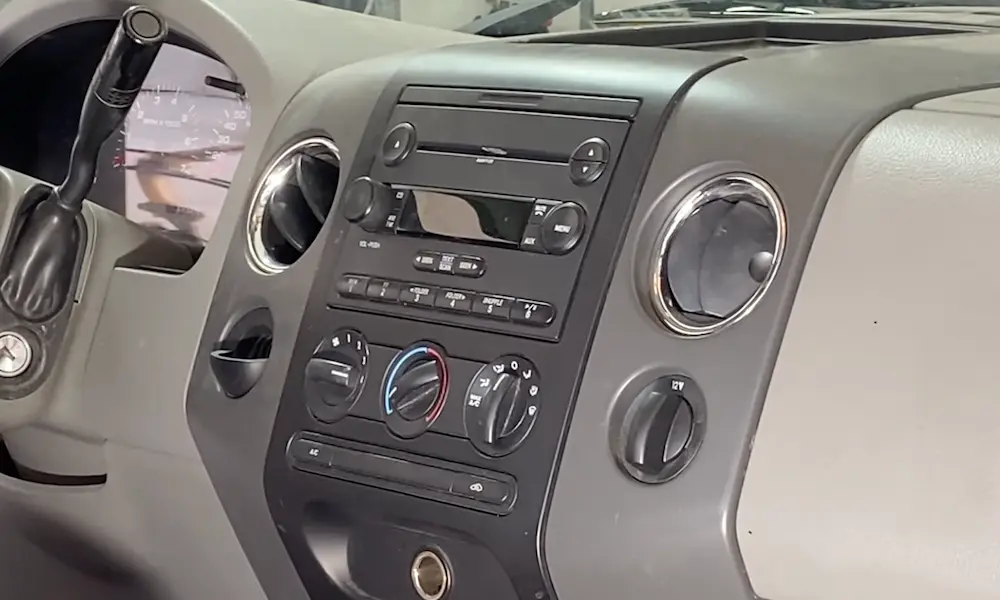
Most Ford drivers don’t realize that selecting Defrost or Defrost/Floor mix automatically engages the A/C compressor. Ford does this to pull moisture out of the air and clear the windshield faster. It’s by design — but it trips P1464 every single time during a self-test.
Other common procedural mistakes that trigger P1464:
- Leaving the A/C switch in the “ON” position before running diagnostics
- Fan still blowing with the mode selector on a defrost setting
- Climate control set to “Auto” and cycling the compressor on its own
Fix it first: Turn everything off. Fan, A/C, defrost — all of it. Clear the code and run the self-test again. Many P1464 cases end right here.
When It’s Not Operator Error: Hardware Causes
If you’ve confirmed everything is off and P1464 keeps coming back, you’re looking at a hardware problem. The A/C demand signal is stuck in the “active” state even though you’re not requesting cooling.
Here are the main culprits:
Short to Voltage in the Demand Circuit
A chafed or heat-damaged wire making contact with a power source sends a constant high-voltage signal to the PCM. The computer thinks A/C is always requested. Common causes include:
- Harness routing too close to hot engine components
- Rodent damage to wire insulation
- Melted sheathing near the exhaust
Failed A/C Demand Switch
Manual switches can fail internally and stay in the “closed” (active) position even when you haven’t pressed them. The PCM keeps seeing an A/C request that was never made.
Failed EATC Module
Vehicles with Electronic Automatic Temperature Control (EATC) use a dedicated climate computer to manage cabin temperature. If a transistor or output driver inside that module fails, it can send a continuous demand signal to the PCM — even when the display reads “OFF.”
Failing A/C Cycling Switch
The A/C Cycling Switch monitors refrigerant pressure on the low-pressure side, typically mounted on the accumulator. If this switch fails in the “closed” position, the PCM may misread the system state during diagnostics. A faulty cycling switch is a sneaky contributor to P1464 that often gets overlooked.
Key Components in the P1464 Circuit
Understanding what’s in the circuit helps you know where to look.
| Component | What It Does | How It Relates to P1464 |
|---|---|---|
| A/C Demand Switch | Sends user cooling request | Source of the “ON” signal during self-test |
| EATC Module | Manages automated climate control | Can send persistent demand signal if failed |
| A/C Clutch Relay | Switches power to the compressor clutch | Internal short can mimic an active demand |
| PCM | Engine/transmission brain | Detects “Out of Range” demand state |
| A/C Cycling Switch | Monitors low-side refrigerant pressure | Failed switch disrupts PCM’s system reading |
How to Diagnose Ford P1464 Step by Step
Don’t skip steps here. Jumping ahead often leads to replacing expensive parts unnecessarily — like the PCM or climate control head.
Step 1: Confirm Test Conditions
Turn everything off. Fan speed to zero, mode selector away from any defrost position, A/C button off. Clear the code and re-run the KOEO/KOER self-test. If P1464 doesn’t return, you’re done.
Step 2: Monitor the ACCS PID
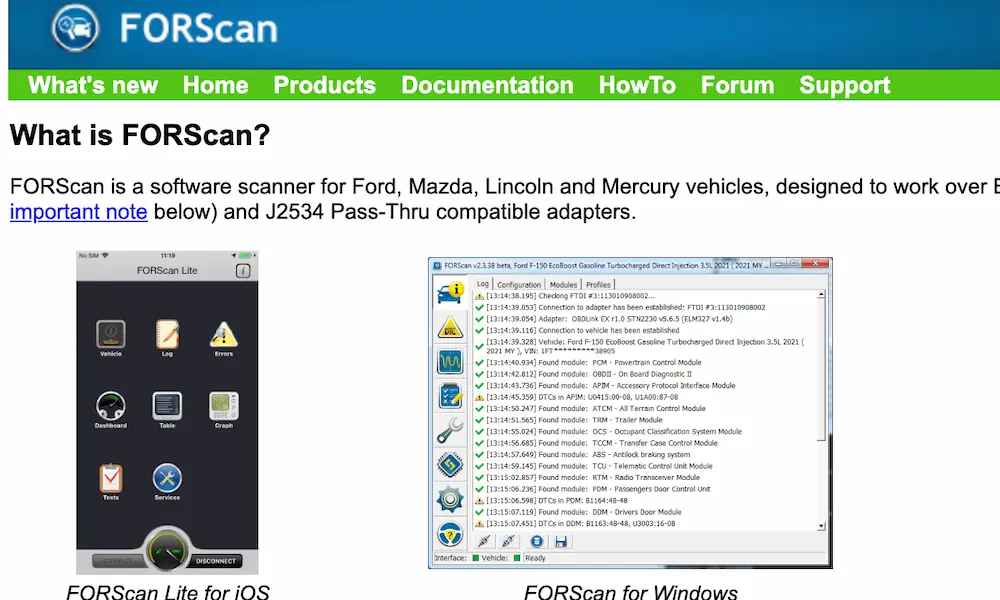
Connect a scan tool and pull up live data from the PCM. Look for the ACCS (A/C Cycling Switch) PID while the engine runs and the A/C is off.
- PID shows “ON”? The PCM is receiving an active demand signal. The problem is electrical.
- PID shows “OFF” but code returns? You’re likely dealing with an intermittent fault that only appears during the PCM’s internal diagnostic sweep.
Step 3: Test the A/C Clutch Relay
Pull the A/C Clutch Relay from the power distribution box and test it with a digital multimeter:
- Coil resistance (pins 1 and 85): Should read 40–120 ohms. Lower = shorted coil. Higher/infinite = open coil.
- Coil-to-load pin leakage: Resistance between coil pins and load pins must be greater than 10,000 ohms. Anything lower means internal leakage.
Step 4: Check the Harness for Shorts
With the relay removed and ignition on, measure voltage at the harness connector. You should find system voltage on the coil power feed — but no voltage on the PCM control circuit unless the PCM is actively commanding the relay.
Voltage on the control circuit when it shouldn’t be there = short to power in the harness.
Also check circuit resistance from the relay connector to the PCM harness pin. You want less than 5 ohms. Higher readings point to wire damage or terminal corrosion.
Step 5: The Wiggle Test
This one catches problems that hide from multimeters. While watching the ACCS PID on your scan tool, physically shake, bend, and manipulate the wiring harness from the relay box toward the PCM. Tap the relay and PCM lightly too.
If the PID flickers or changes state, you’ve found a broken wire or loose terminal that only fails under movement — exactly what happens on rough roads.
Run the EATC Self-Test on Equipped Vehicles
If your Ford has the EATC system, you can put the climate control module through its own diagnostic routine. Press “OFF” and “FLOOR” simultaneously, then immediately press “AUTO.” The module will cycle the blend, mode, and recirculation doors and check its sensors.
Watch the temperature display for error codes:
| EATC Code | What It Means | P1464 Connection |
|---|---|---|
| 888 | All systems passed | Fault is in external wiring or PCM |
| 030 / 031 | Inside temp sensor fault | May trigger constant cooling requests |
| 040 / 041 | Ambient temp sensor fault | May trigger constant cooling requests |
| 050 / 052 | Sunlight sensor fault | Affects solar load A/C calculations |
| 125 | Vehicle speed signal fault | PCM uses speed data for A/C management |
A failed inside or ambient temperature sensor can convince the EATC module the cabin is extremely hot — causing it to send a non-stop cooling request straight to the PCM, and that’s your P1464 right there.
How P1464 Affects More Than Just the A/C
P1464 isn’t just a comfort issue. The A/C system ties into your Ford’s drivability in ways you might not expect.
Idle quality: The PCM uses the demand signal to pre-open the Idle Air Control valve before the compressor engages — to prevent a stall. If the demand signal is stuck “ON,” the PCM keeps adding extra air for a compressor load that isn’t there. Result: high or erratic idle.
Torque converter behavior: Compressor engagement puts a sudden torque load on the engine. The PCM unlocks the torque converter clutch just before the compressor kicks in to absorb that shock. A stuck demand signal can keep the torque converter unlocked unnecessarily — hurting fuel economy and raising transmission temps.
Codes That Look Like P1464 But Aren’t
Don’t confuse P1464 with these related codes:
| Code | Definition | Key Difference from P1464 |
|---|---|---|
| P1460 | WAC Circuit Malfunction | Open or short in the relay control circuit |
| P0645 | A/C Clutch Relay Control Circuit | PCM’s internal relay driver has failed |
| P1469 | Rapid A/C Cycling | Pressure issues causing fast compressor cycling |
| P0534 | A/C Refrigerant Charge Loss | System pressure too low for safe operation |
P1464 is a logical state conflict — the signal is active when it should be inactive. The others are electrical integrity or mechanical performance failures. Getting this wrong means chasing the wrong fix.
Model-Specific Notes Worth Knowing
Ford Focus and Fiesta: P1464 here often traces to moisture ingress in the engine bay power distribution box. Corrosion creates a bridge between battery power and the A/C demand circuit.
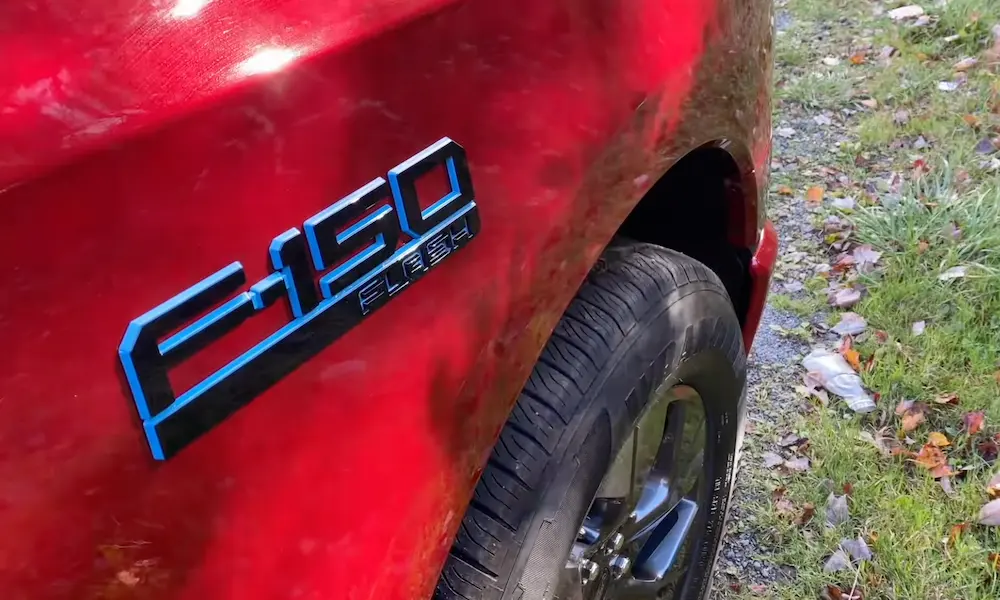
Ford F-150 and full-size trucks: Harness routing across the top of the engine exposes wiring to heat and vibration. The wiggle test is especially effective on these trucks — heavy connectors develop loose pins that create intermittent demand signals on rough terrain.
Crown Victoria and Police Interceptors: Fleet vehicles often have aftermarket equipment spliced into existing circuits. Lights, sirens, or radios tapped into the A/C demand circuit are a common and often overlooked source of P1464 in these vehicles.
The Bottom Line on Ford P1464
Ford P1464 has two possible lives: a simple fix you handle in 60 seconds, or a methodical electrical hunt through relays, wiring, and climate control modules. Start with the easy stuff — confirm the A/C and defrost are truly off, clear the code, and retest. If it comes back, work through the steps: check the ACCS PID, test the relay, inspect the harness, and run the EATC self-test if your vehicle has it. Most P1464 faults resolve without touching the PCM at all.