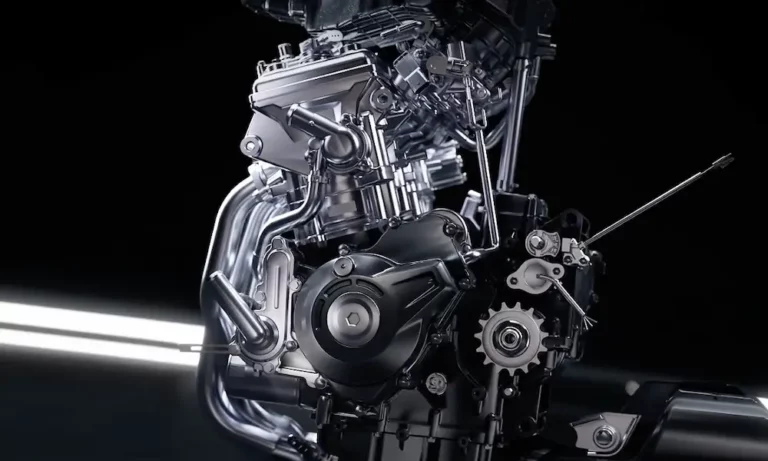
Curious about who actually makes CFMOTO engines? You’re probably surprised by what you’ll find. These aren’t bargain-bin motors slapped together overnight. There’s a serious industrial story here — one that involves KTM, Yamaha, and a factory that puts out 800,000 engines a year. Read to the end and you’ll know exactly what’s powering that CFMOTO in your garage.
CFMOTO Makes Its Own Engines — In a Big Way
The short answer: Zhejiang CFMOTO Power Co., Ltd. makes CFMOTO engines. They design them, cast them, machine them, and assemble them — all under one roof in Hangzhou, China.
This isn’t a company that buys engines from someone else and slaps a badge on them. CFMOTO is a vertically integrated manufacturer. That means they control every step, from the raw metal to the finished motor.
They also supply engines to other brands — including some of the most respected names in Europe. More on that in a minute.
Where It All Started: Wenzhou, 1989
CFMOTO’s founder, Lai Guoqiang, started a motorcycle spare parts business in Wenzhou, China, in 1989. He used secondhand machinery and focused on the hardest parts to get right — cylinder heads.
By 1992, the company had developed its first 125cc cylinder head and quickly dominated that niche across China. That cash funded the next step: building complete engines.
In 1997, they cracked liquid cooling with the 152MI engine — a big deal at the time. Liquid cooling means tighter tolerances, better heat management, and higher power density. It’s not beginner territory.
Key Milestones You Should Know
| Year | What Happened | Why It Matters |
|---|---|---|
| 1989 | Founded in Wenzhou | Started with motorcycle parts |
| 1992 | First 125cc cylinder head | Dominated a specialist segment |
| 1997 | First liquid-cooled engine | Signaled serious engineering intent |
| 2002 | Entered the U.S. market | ATVs and side-by-sides for Americans |
| 2007 | U.S. headquarters opened in Minnesota | Planted roots in North America |
| 2011 | KTM partnership begins | Changed everything for engine quality |
| 2017 | Listed on Shanghai Stock Exchange | Capital for global expansion |
| 2023 | Yamaha joint venture launched | Next-level credibility established |
The KTM Connection: This Is the Big One
Here’s where things get genuinely interesting. In 2011, CFMOTO partnered with KTM — the Austrian motorcycle brand known for winning championships. By 2017, that partnership became a formal joint venture called CFMOTO-KTMR2R, with CFMOTO holding 51% and KTM holding 49%.
What does that actually mean? CFMOTO’s Hangzhou factory became the primary global manufacturing site for KTM’s middleweight parallel-twin engines.
That’s not a licensing deal on paper. That’s KTM trusting CFMOTO to build motors that end up in bikes sold across Europe, America, and Australia.
The Engines CFMOTO Builds Under This Partnership
- KTM LC8c (799cc parallel-twin): Built entirely in Hangzhou for global KTM models like the 790 Duke and 790 Adventure
- CFMOTO 800 Series: The Ibex 800 and 800NK use this same engine platform, tuned for their own lineup — roughly 95 horsepower with Bosch fuel injection
- 1278cc V-twin: A re-engineered KTM LC8 V-twin used in the 1250TR-G touring bike, producing around 140 horsepower — currently the most powerful motorcycle engine made by a Chinese manufacturer
- 990 Legacy Platform: CFMOTO purchased rights to the original KTM LC8 990 engine and has since developed it into an approximately 1080cc unit for future premium models
To produce KTM-spec engines, CFMOTO had to upgrade their facility with clean-room assembly areas, torque-logging tools, and European quality audit processes. KTM doesn’t hand out that kind of access easily.
The Yamaha Joint Venture: More Credibility Stacked On Top
If KTM wasn’t enough, CFMOTO also launched a joint venture with Yamaha Motor Company in September 2023. The partnership — named Zhuzhou CF Yamaha Motor Co., Ltd. — focuses on small-capacity motorcycles for the Chinese market right now.
But the long-term play is bigger. This collaboration shares:
- Combustion research: Yamaha’s cylinder head expertise feeding into CFMOTO engine design
- Manufacturing systems: Yamaha’s production management improving quality control
- Supply chain access: Japanese and international component suppliers now in the mix
Yamaha is famously selective about who they partner with. The fact that they chose CFMOTO says a lot.
How CFMOTO Builds Its Own Engines: Vertical Integration Explained
Most powersports brands are assemblers. They buy an engine here, a frame there, bolt it together, and ship it. CFMOTO does it differently.
Their Hangzhou facility spans over 280,000 square meters. Here’s what happens inside:
- Design: Engineers in China, Europe, and the U.S. create engine blueprints in-house
- Casting: CFMOTO pours and forms their own engine blocks and cylinder heads, controlling the metallurgy
- Machining: Automated precision centers handle crankshafts, pistons, and valvetrain components
- Assembly: Robotic Automated Guided Vehicles (AGVs) move components between stations with no human error
- Testing: Every engine runs on a computerized dynamometer before it leaves the building
Every critical fastener gets tightened by a computerized tool that logs the exact torque. That data ties to the engine’s serial number — so if something fails in the field, engineers know exactly what happened during assembly.
Production Scale That Rivals the Giants
| Location | Annual Engine Output | Annual Vehicle Output |
|---|---|---|
| Hangzhou, China | 800,000 units | 600,000 units |
| Apodaca, Mexico | Integrated | 100,000 units |
| Thailand | Integrated | 40,000 units |
Notice that engine production exceeds vehicle production. That gap exists because CFMOTO supplies engines to other brands and sells them as spare parts. They’re not just a bike company — they’re an engine company that also makes bikes.
The Engine Lineup: What’s Actually Under the Hood
CFMOTO makes several distinct engine families, each built for a specific job.
Small Displacement: 125cc–300cc Singles
These high-volume engines target urban riders and beginners. The 300cc liquid-cooled DOHC unit uses a balance shaft to kill vibration — smart engineering for a single-cylinder that people ride every day.
The 450cc Parallel-Twin: Genuinely Clever Design
The 449cc parallel-twin in the 450SS and Ibex 450 is CFMOTO’s own work, and it’s smarter than it looks.
| Spec | Detail |
|---|---|
| Bore and Stroke | 72mm x 55.2mm |
| Crank Configuration | 270-degree firing interval |
| Valvetrain | DOHC, 4 valves per cylinder |
| Power Output | 50–55 horsepower |
| Applications | 450SS, 450NK, Ibex 450 |
The 270-degree crank is the key detail. It mimics the firing feel of a 90-degree V-twin — more character, better traction feel, more satisfying exhaust note. That’s not a random choice. That’s engineering tuned for rider experience.
This engine is so good that KTM plans to use a version of it in their own upcoming RC450 sportbike. A European brand adopting a Chinese-designed engine — that’s a first.
The 650cc and 700cc Twins: Proven Reliability
The 650cc parallel-twin has been around for over a decade. Early versions shared architecture with the Kawasaki Ninja 650, but years of development have made it CFMOTO’s own. The 693cc variant in the CL-X Heritage has a longer stroke for more low-end torque. Both engines meet Euro 5 and U.S. EPA emissions standards through Bosch fuel injection.
The Off-Road V-Twin: 963cc Working Engine
CFMOTO’s ATV and side-by-side lineup runs a different kind of engine — built for torque, not revs.
| Spec | Detail |
|---|---|
| Configuration | V-Twin, 4-stroke, Liquid-cooled |
| Fuel System | Bosch Electronic Fuel Injection |
| Power | 90 horsepower at 7,500 rpm |
| Torque | 63 lb-ft at 5,500 rpm |
| Transmission | OmniDrive CVT with Engine Braking |
The cooling system on these engines runs larger than most competitors’. That’s intentional — slow-speed trail riding in hot weather is where engines cook themselves, and CFMOTO built in the margin.
The U.S. Story: Minnesota, Mexico, and Emissions History
The EPA Settlement You Should Know About
CFMOTO’s American history isn’t spotless. Between 2007 and 2013, the company imported over 12,000 vehicles that didn’t meet Clean Air Act certification standards. The violations covered uncertified fuel tanks and incorrect emissions labeling.
They paid a $725,000 civil penalty and ran a full recall and fuel tank replacement program. Since then, modern CFMOTO engines run Bosch engine management systems and proper catalytic converters to meet federal standards.
Minnesota: The American Home Base
CFMOTO’s U.S. headquarters in Plymouth, Minnesota — open since 2007 and upgraded in 2024 — houses engineers who specifically tune engines for the American market. That means:
- Fuel mapping adjusted for U.S. unleaded gasoline
- Serviceability reviews so dealership techs can work on them efficiently
- Long-term durability testing in North American conditions
The Mexico Factory
In 2024, CFMOTO opened a $46 million factory in Apodaca, Nuevo León, Mexico. It has a planned capacity of 100,000 vehicles per year. Shipping from Mexico to the U.S. is faster and cheaper than shipping from China — and it insulates the company from international tariff swings.
What Owners Actually Report About Reliability
Real-world data from owners and industry observers paints a more positive picture than the brand’s reputation might suggest:
- Riding past 10,000 miles without major mechanical failure is increasingly common with proper maintenance
- Some engines hit 20,000 to 50,000+ miles with regular care
- Premium components from Bosch, Brembo, and J.Juan reduce the small failures that used to define Chinese products
There’s still a gap compared to Honda or Yamaha — mainly in electrical quirks and occasional sensor issues. But the mechanical cores? Cylinders, pistons, crankshafts? Those are earning respect, largely thanks to the KTM influence on manufacturing standards.
What’s Coming Next: V4 Engines and Electric Powertrains
CFMOTO isn’t standing still. Their V.04 high-performance V4 project targets superbike territory with:
- A counter-rotating crankshaft borrowed from MotoGP technology
- Titanium connecting rods and valves to cut reciprocating mass
- Finger follower valvetrain for precise control at high RPMs
On the electric side, their ZEEHO sub-brand has already delivered over 100,000 electric scooters and is developing liquid-cooled motors and battery packs for performance applications.
The brand that started with secondhand machines in Wenzhou is now building MotoGP-inspired V4s and electric powertrains. That’s not a company copying — that’s a company competing.