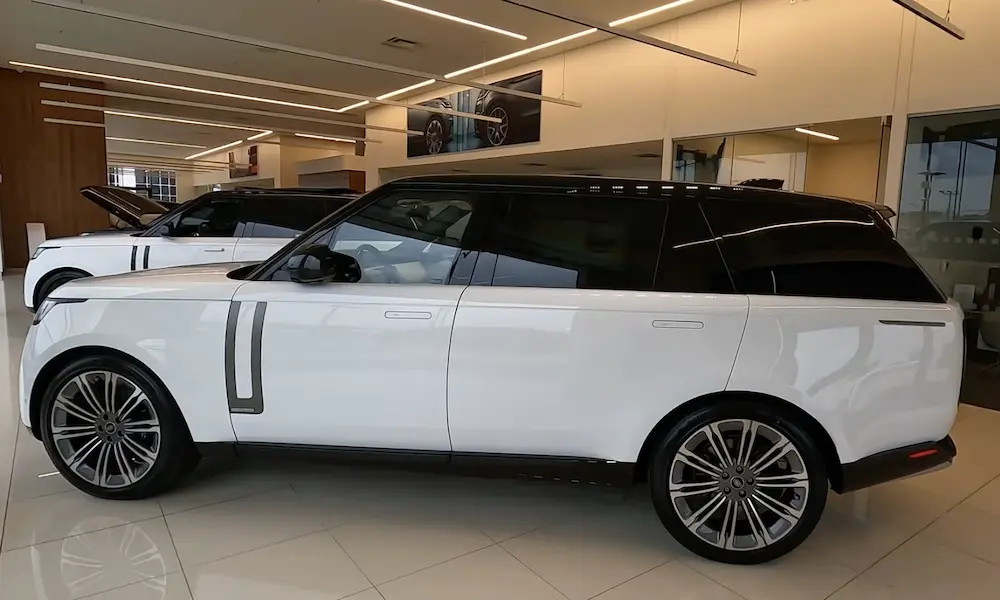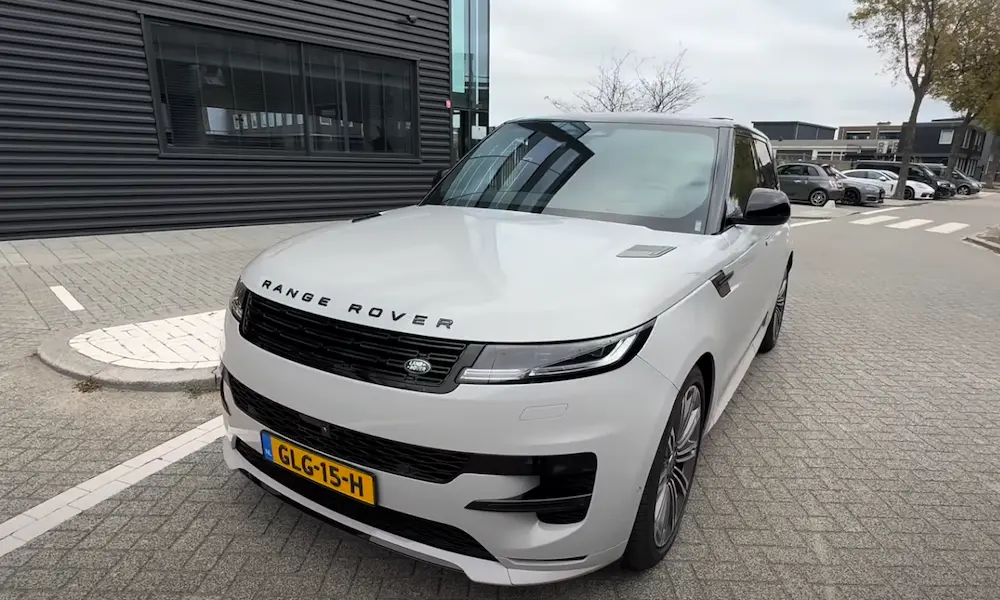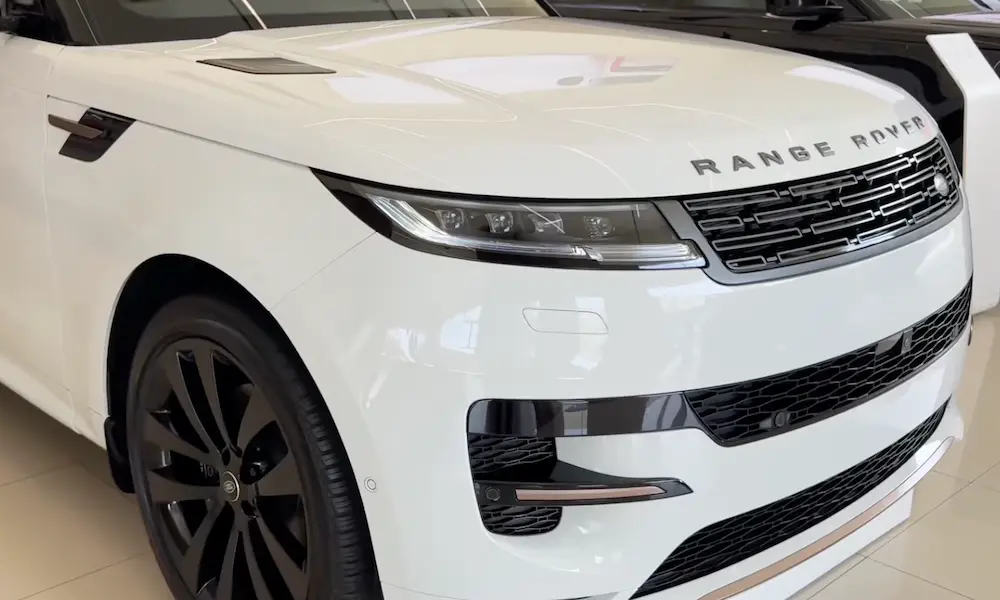
You’ve probably seen a Range Rover glide past and wondered — who actually builds this thing? The badge says “Range Rover,” but that doesn’t tell the whole story. The answer involves a British icon, an Indian conglomerate, and factories on four continents. Stick around, and you’ll know exactly who makes Range Rover vehicles — and why it matters more than you’d think.
The Short Answer: JLR Makes Range Rover
Jaguar Land Rover — known as JLR — is the company that manufactures Range Rover vehicles. JLR is a British multinational automaker based in Coventry, UK. It’s the largest automotive employer in the UK, with roughly 33,000 employees.
But here’s the twist: JLR itself is owned by Tata Motors, an Indian company headquartered in Mumbai. Tata Motors bought JLR from Ford in 2008 for about £1.8 billion.
So when you ask who makes Range Rover vehicles, the honest answer is a British manufacturer backed by Indian capital. The vehicles are still designed and primarily built in England, but the money and strategic direction come from India.
Here’s how the corporate ladder looks:
| Level | Company | Location | Role |
|---|---|---|---|
| Ultimate Parent | Tata Group | Mumbai, India | Capital and investment |
| Intermediate Parent | Tata Motors | Mumbai, India | Financial oversight |
| Principal Subsidiary | Jaguar Land Rover | Coventry, UK | Design, engineering, manufacturing |
| Product Division | Land Rover | Gaydon, UK | SUV platform development |
| Luxury Sub-Brand | Range Rover | Solihull, UK | Luxury specification and identity |
Range Rover Is a Brand, Not a Standalone Company
This trips up a lot of people. Range Rover isn’t its own company — it’s a luxury sub-brand within the Land Rover family, which sits inside JLR. Think of it like this:
- Tata Motors owns everything
- JLR runs the show
- Land Rover builds the SUVs
- Range Rover is the premium tier within Land Rover
Every Range Rover is technically a Land Rover. But not every Land Rover is a Range Rover. The Defender, for example, is built for serious off-road work. The Range Rover is built for serious luxury.
A Quick History of Who’s Owned Range Rover
The Range Rover name has been through quite a few owners. Here’s the condensed version:
The story starts with the Rover Company, founded in 1885 in Warwickshire, England. After World War II, designer Maurice Wilks sketched out the first Land Rover in 1947 — a rugged, Jeep-inspired 4×4 for farms and worksites. It launched in 1948 and became an instant hit.
By 1970, Land Rover launched the first Range Rover — a more refined, comfortable version of that original concept. At the time, the Rover Company had been swallowed up by British Leyland, the massive state-backed conglomerate holding much of UK automotive production.
Then things got interesting:
| Period | Owner | Key Moment |
|---|---|---|
| 1948–1978 | Rover Company / British Leyland | First Land Rover and Range Rover launched |
| 1978–1988 | Land Rover Limited (British Leyland) | Becomes a separate subsidiary |
| 1988–1994 | British Aerospace | Privatization, US market launch |
| 1994–2000 | BMW | Third-gen Range Rover (L322) developed |
| 2000–2008 | Ford Motor Company | Range Rover Sport launched (2005) |
| 2008–Present | Tata Motors (via JLR) | Modern JLR structure formed |
BMW’s era was especially significant. The Germans introduced the monocoque (unibody) structure and independent suspension to the Range Rover — a massive leap in on-road refinement. But BMW couldn’t make the wider Rover Group profitable, so they sold Land Rover to Ford in 2000.
Ford expanded the lineup, added the Range Rover Sport, and deepened the mechanical link between Jaguar and Land Rover by swapping in Jaguar-designed V8 engines. When the 2008 financial crisis hit and Ford was bleeding money, they sold both Jaguar and Land Rover to Tata Motors to stay afloat.
What Is the “House of Brands” Strategy?
In the mid-2020s, JLR made a bold move. They rebranded their whole business structure into what they call the “House of Brands.” Instead of pushing “Land Rover” as the main consumer-facing name, JLR elevated four nameplates to full brand status:
- Range Rover — Modern Luxury
- Defender — Adventurous and capable
- Discovery — Family-focused versatility
- Jaguar — Performance and style
“Land Rover” didn’t disappear. It became a trust mark — a quiet guarantee of off-road DNA and safety that sits in the background. The flashy logo on the vehicle? That’s all Range Rover now.
JLR even introduced a new secondary “RR” logo in 2025 — a stylized, mirrored double-R monogram. It’s not replacing the classic script on the hood and tailgate, but it shows up on interior patterns, labels, and brand events. JLR wants Range Rover to feel like a luxury fashion house, not just an automaker.
The Range Rover Model Lineup
| Model | Appeal | Positioning |
|---|---|---|
| Range Rover (Flagship) | Ultimate prestige | Full-size, ultra-refined |
| Range Rover Sport | Driver engagement | Dynamic, performance-tuned |
| Range Rover Velar | Design-forward | Mid-size, minimalist styling |
| Range Rover Evoque | Urban luxury | Compact, city-friendly |
Where Are Range Rovers Actually Built?
The UK is still the heartbeat of Range Rover production. But JLR runs a global network of plants to meet demand worldwide.
United Kingdom — The Core
The Solihull Plant in the West Midlands is the mothership. It’s been building Land Rover vehicles since 1948 and covers 300 acres. Today it assembles the flagship Range Rover, Range Rover Sport, and Range Rover Velar. It’s also being upgraded to produce the first all-electric Range Rover models, complete with advanced robotics and a solar wall.
The Halewood Plant near Liverpool handles the Range Rover Evoque and Land Rover Discovery Sport. And the Engine Manufacturing Centre in Wolverhampton builds the “Ingenium” petrol and diesel engines, plus electric drive units for hybrid models.
International Plants
| Country | Plant | Models Built |
|---|---|---|
| Slovakia | Nitra | Defender, Discovery |
| India | Pune | Range Rover, Sport, Evoque (CKD) |
| India | Ranipet, Tamil Nadu | Range Rover Evoque |
| China | Changshu | Range Rover Evoque |
| Brazil | Itatiaia | Range Rover Evoque |
The Ranipet facility in Tamil Nadu is a new greenfield plant — a joint venture between Tata Motors and JLR, with capacity for up to 300,000 vehicles annually. It assembles the Evoque using CKD kits, where parts are manufactured in the UK and shipped to India for final assembly.
How Range Rovers Get to You in the US
JLR’s US operations run through Jaguar Land Rover North America, LLC, headquartered in Mahwah, New Jersey. That 100,000-square-foot facility holds admin offices, a technical training center for dealership technicians, and a mock showroom.
JLR also runs a Global Digital Development hub in Portland, Oregon — staffed with engineers building the infotainment systems, connected car tech, and electrical architecture for modern Range Rovers. Portland gives JLR access to Silicon Forest talent.
Since every US-spec Range Rover is imported, the port arrival process is critical. Vehicles come through three main entry points:
- Brunswick, Georgia
- Baltimore, Maryland
- Port Hueneme, California
Here’s the cool part: JLR became the first automaker in the US to fully automate vehicle inspections at ports using AI-powered technology. In partnership with a company called UVeye, they’ve deployed scanning systems that work like an MRI for vehicles. As each car rolls off the ship, cameras and sensors detect damage as small as 20 millimeters — dents, scratches, underbody issues. Results are instantly time-stamped and shared across the logistics network so dealers and customers get vehicles that meet JLR’s exact standards.
Range Rover’s Electric Future
JLR’s “Reimagine” strategy commits the company to offering a pure electric version of every Range Rover model by 2030. The goal is carbon neutrality across the whole business by 2039.
The Solihull plant is already being converted to house a dedicated electric Range Rover production line. The Nitra plant in Slovakia runs on 100% renewable electricity and has hit zero-waste-to-landfill status. And in Brazil, JLR has planted over 1,200 indigenous trees around the Itatiaia factory.
The flagship electric Range Rover will carry the same DNA as today’s models — just without the tailpipe. JLR is betting that luxury buyers in the US and beyond will expect sustainability as a standard feature, not an optional extra.
Land Rover vs. Range Rover — Clearing Up the Confusion
People mix these two up constantly. Here’s the clean breakdown:
| Feature | Land Rover (Defender/Discovery) | Range Rover Family |
|---|---|---|
| Primary Focus | Utility and ruggedness | Luxury and refinement |
| Interior | Durable, practical materials | Premium leather and wood |
| Technology | Off-road capability systems | Comfort and infotainment |
| Chassis Tuning | Built for terrain durability | Tuned for smooth, quiet ride |
| Price Range | Mid-to-high luxury | High-to-ultra luxury |
Every Range Rover carries Land Rover’s off-road engineering underneath, but the Range Rover layers serious luxury on top. Think of Land Rover as the foundation and Range Rover as the penthouse.
So, who makes Range Rover vehicles? JLR does — a proudly British manufacturer with Indian backing, American digital innovation, and factories on four continents. It’s a genuinely global operation, but the soul of the thing was built in Solihull, and that part hasn’t changed.