Wondering what kind of gas mileage the 6.4 Hemi actually gets? The official EPA numbers tell part of the story — but real-world driving tells a very different one. Whether you’re eyeing a Scat Pack, a RAM 2500, or a Wrangler 392, this guide breaks down exactly what to expect at the pump, and how to squeeze every mile out of that big V8.
What Is the 6.4 Hemi, Exactly?
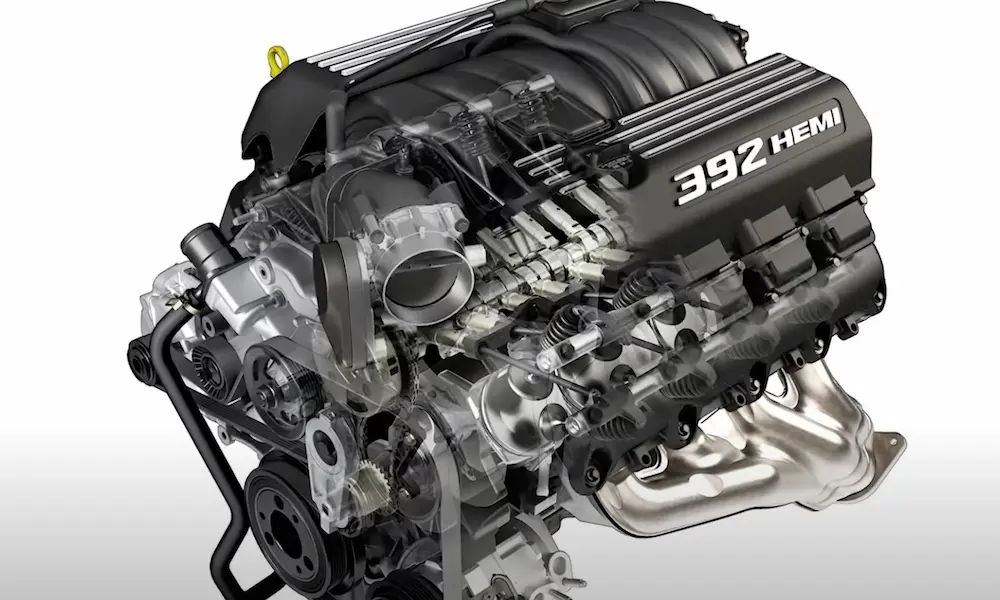
The 6.4 Hemi (392 cubic inches) is Chrysler’s flagship naturally aspirated V8. It powers everything from the Dodge Challenger Scat Pack to the RAM 2500 Heavy Duty. Introduced in 2011, it replaced the 6.1 Hemi and came in two distinct flavors:
- Apache (SRT) — tuned for performance cars and SUVs, 485 hp, 10.9:1 compression, runs best on 91–93 octane premium
- Big Gas Engine (BGE) — built for RAM HD trucks, 410 hp, 10.0:1 compression, runs fine on 89 octane
These aren’t just trim differences. They’re two separate engines with different internals, fueling needs, and real-world MPG profiles. According to the Gen III Hemi Engine Quick Reference Guide, the SRT version’s higher compression ratio delivers more power per combustion cycle but demands premium fuel to prevent engine knock.
| Engineering Spec | Apache (SRT) | Big Gas Engine (HD) |
|---|---|---|
| Compression Ratio | 10.9:1 | 10.0:1 |
| Peak Horsepower | 485 hp @ 6,100 rpm | 410 hp @ 5,600 rpm |
| Peak Torque | 475 lb-ft @ 4,200 rpm | 429 lb-ft @ 4,000 rpm |
| Recommended Fuel | 91–93 Octane | 89 Octane |
| Intake Manifold | Active Variable Length | Performance Optimized |
How the Multi-Displacement System (MDS) Saves Fuel
The biggest fuel-saving trick in the 6.4 Hemi’s arsenal is the Multi-Displacement System (MDS) — a cylinder deactivation system that shuts off four of the eight cylinders during light-load cruising.
Here’s how it works in plain English:
- You’re cruising at 65 mph on a flat highway
- The Powertrain Control Module (PCM) detects low engine load
- Oil pressure redirects to solenoids on cylinders 1, 4, 6, and 7
- Collapsible lifters prevent the valves from opening on those cylinders
- The engine quietly runs on four cylinders, sipping fuel instead of gulping it
Inside the sleeping cylinders, trapped gases act like a spring — expanding and compressing with the pistons in a nearly energy-neutral cycle. The active four cylinders open their throttle plates wider to compensate, which actually reduces the vacuum pumping losses that waste fuel in normal operation.
Chrysler engineers claim MDS delivers up to 20% better fuel economy in ideal steady-state conditions, with roughly a 10% improvement across mixed driving cycles. You’ll only get MDS on automatic transmission models — the Tremec six-speed manual doesn’t support it.
Quick tip: If you drive a manual Scat Pack, you’re leaving 1 MPG on the table compared to the automatic. That gap was actually big enough that the federal Gas Guzzler Tax historically applied to manual Scat Packs but not automatics.
6.4 Hemi Gas Mileage in Performance Cars (Challenger & Charger)
The Dodge Challenger and Charger Scat Pack are where most people first meet the 6.4 Hemi. Both use the ZF-sourced 8-speed automatic with a very tall 0.67:1 eighth gear. That means the engine is often loafing below 2,000 rpm on the highway — which is exactly where MDS loves to kick in.
EPA Ratings: 2023–2024 Model Year
| Vehicle | Transmission | City MPG | Highway MPG | Combined MPG |
|---|---|---|---|---|
| Dodge Challenger Scat Pack | 6-Speed Manual | 14 | 23 | 17 |
| Dodge Challenger Scat Pack | 8-Speed Automatic | 15 | 24 | 18 |
| Dodge Charger Scat Pack | 8-Speed Automatic | 15 | 24 | 18 |
| Challenger Scat Pack Widebody | 8-Speed Automatic | 15 | 24 | 18 |
| Chrysler 300C Final Edition | 8-Speed Automatic | 15 | 24 | 18 |
What Owners Actually See
EPA numbers are a starting point, not a guarantee. Real-world data from Scat Pack owners tells a more honest story:
- Highway cruising at 65 mph in Eco mode: 25–28 MPG is genuinely achievable on long road trips
- Mixed suburban driving: 16–19 MPG depending on how you drive
- City driving with spirited acceleration: 8–11 MPG — and that’s being generous
The engine’s personality splits cleanly in two. In Eco mode on the highway, it’s a 24 MPG cruiser that hums along quietly on four cylinders. Tap the throttle hard in Sport or Track mode, and MDS disables, the transmission drops gears, and fuel consumption spikes. That’s not a flaw — that’s the point.
Widebody Models Cost You MPG
The Widebody Challenger and Charger swap 245mm tires for 305mm Pirelli rubber. More contact patch means more grip, but also more rolling resistance. Real-world observations show Widebody models consistently run 0.5–1.0 MPG lower than standard-body Scat Packs in mixed driving.
6.4 Hemi Gas Mileage in Performance SUVs
Drop that same engine into a 5,100–5,500 pound SUV with a larger frontal area, a higher drag coefficient, and a full-time four-wheel-drive system, and the 6.4 Hemi gas mileage story changes dramatically.
EPA Ratings: Performance SUVs
| Vehicle | Drivetrain | City MPG | Highway MPG | Combined MPG |
|---|---|---|---|---|
| Jeep Grand Cherokee SRT | 4WD | 13 | 19 | 15 |
| Dodge Durango SRT 392 | AWD | 13 | 19 | 15 |
| Jeep Wrangler Rubicon 392 | 4WD | 13 | 17 | 14 |
The Dodge Durango SRT 392 and Jeep Grand Cherokee SRT are real-world penalties for mass and aerodynamic drag. The physics aren’t kind here — aerodynamic drag increases with the cube of velocity. Pushing a 5,400-pound SUV through the air at 75 mph demands significantly more power than pushing a Charger at the same speed, which keeps MDS from engaging on even mild inclines.
The Wrangler 392: A Special Case
The Jeep Wrangler Rubicon 392 is, aerodynamically speaking, a 470-horsepower brick. Its boxy shape, high ground clearance, and 33-to-35 inch off-road tires create punishment that no engine can fully overcome.
- At 70 mph: approximately 18.8 MPG in real-world testing
- At speeds above 75 mph: that figure drops sharply
- MDS rarely engages thanks to short final drive ratios and constant drivetrain load
If you’re buying a Wrangler 392, you already know fuel economy isn’t the priority. But it’s worth knowing that your cruising speed matters far more here than in any other 392-powered vehicle.
6.4 Hemi Gas Mileage in RAM 2500 and RAM 3500
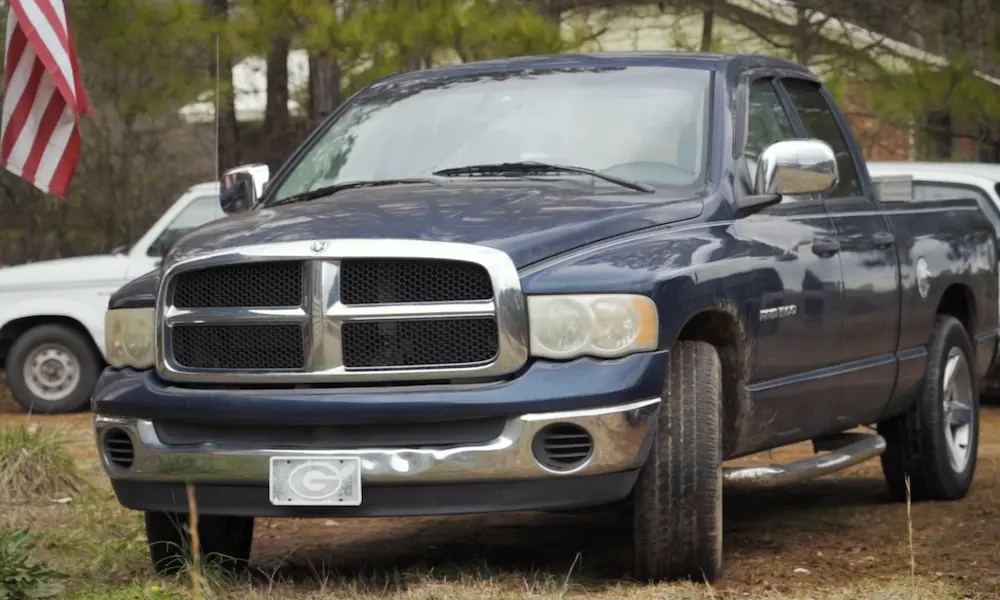
In heavy-duty trucks, the 6.4 Hemi becomes the Big Gas Engine variant — a slightly detuned but more durable version built to haul, not sprint. RAM 2500 and 3500 trucks exceed 8,500 lbs GVWR, so the EPA doesn’t require fuel economy labels on their window stickers. All mileage data here comes from real-world fleet testing and owner reports.
RAM HD Real-World Fuel Economy
| Operating Condition | RAM 2500 (3.73 Axle) | RAM 2500 (4.10 Axle) | RAM 3500 (4.10 Axle) |
|---|---|---|---|
| Unloaded Highway | 15–18 MPG | 14–16 MPG | 13–15 MPG |
| Unloaded City | 11–13 MPG | 10–12 MPG | 9–11 MPG |
| Towing 10,000+ lbs | 8–10 MPG | 7–9 MPG | 6–8 MPG |
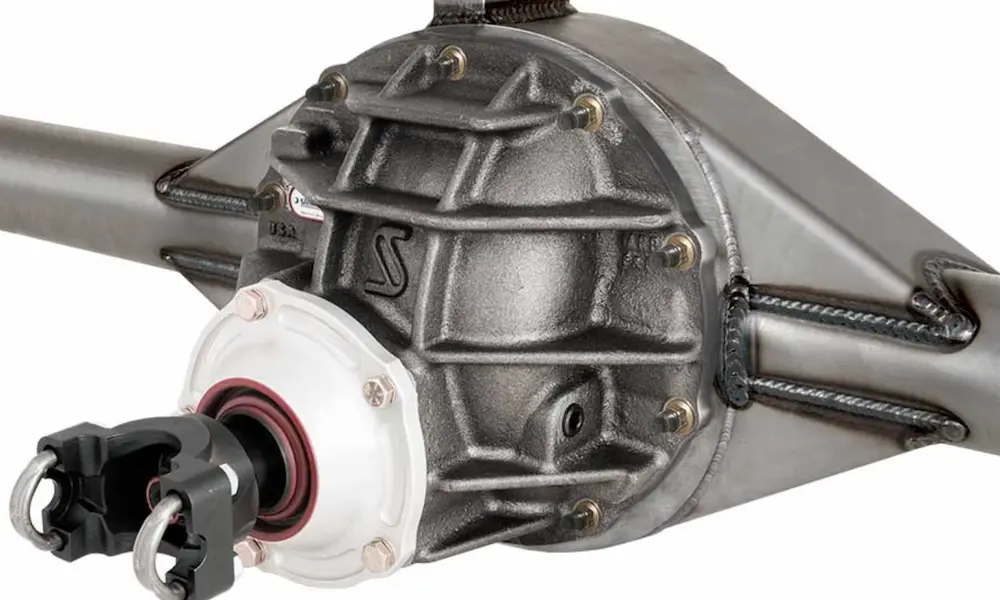
Axle ratio makes a real difference. The 4.10 ratio gives you better off-the-line towing torque, but it forces the engine to spin faster at any given speed, costing you fuel. The 3.73 ratio runs more efficiently on the highway but may hunt between gears more aggressively on hilly terrain with a heavy load.
When towing near maximum capacity, MDS is completely off the table. The engine runs all eight cylinders constantly under heavy load — and testing shows a RAM 2500 pulling 10,000 lbs can average as little as 8.5 MPG.
Drive Mode Makes a Bigger Difference Than You Think
The 6.4 Hemi’s drive mode system genuinely changes how the engine and transmission behave — it’s not just a label switch.
Eco Mode:
- Transmission shifts to the highest gear as fast as possible
- In some applications, it skips first gear entirely, using the 392’s torque to pull away in second
- MDS activates more aggressively and stays engaged longer
- Best choice for highway road trips
Sport and Track Modes:
- MDS is disabled or heavily restricted
- Transmission holds lower gears to keep the engine in its power band
- Fuel consumption rises significantly — but throttle response is instant
- Reddit Scat Pack owners confirm the difference is real and noticeable
Tow/Haul Mode (RAM trucks):
- Optimizes shift points for heavy loads
- Prevents gear hunting on grades
- Keeps engine in a stable power band — but fuel economy reflects the load, not the mode
How Does the 6.4 Hemi Compare to Its Heavy-Duty Rivals?
In the 3/4-ton truck segment, the 6.4 Hemi competes directly with Ford’s 7.3L Godzilla and GM’s 6.6L L8T. Here’s how they stack up on fuel economy and capability.
| Engine | Displacement | Peak Torque | Transmission | Unloaded MPG |
|---|---|---|---|---|
| RAM 6.4L Hemi | 6.4L | 429 lb-ft @ 4,000 rpm | 8-Speed Auto | 14–17 |
| Ford 7.3L Godzilla | 7.3L | 475 lb-ft @ 3,900 rpm | 10-Speed Auto | 13–16 |
| GM 6.6L L8T | 6.6L | 464 lb-ft @ 4,000 rpm | 10-Speed Auto | 14–17 |
The Godzilla has a slight torque advantage, but the 6.4 Hemi’s 8-speed automatic keeps it in a more efficient operating range during highway transit. When towing, the Godzilla’s massive low-end grunt lets it hold higher gears on grades — giving it roughly 0.5–1.0 MPG better hauling efficiency than the Hemi when both are loaded up.
Fuel Quality Affects MPG More Than You’d Expect
Put the wrong fuel in a 6.4 Hemi and you don’t just lose power — you also lose fuel economy.
Apache (SRT) variants: Run 91–93 octane. Use lower octane and the knock sensors detect pre-ignition, pulling ignition timing. This reduces combustion pressure, so you need more throttle to maintain speed, which burns more fuel. You end up paying less per gallon but using more gallons.
BGE (RAM HD) variants: Designed for 89 octane, accept 87 in a pinch. The same timing-retard penalty applies under heavy load like towing, making cheap fuel a false economy when you’re hauling serious weight.
Don’t Ignore the “Hemi Tick” — It Costs You MPG Too
The Hemi tick is a real concern for long-term 6.4 Hemi ownership. It refers to MDS lifter failures or camshaft lobe wear, often caused by low-RPM oiling issues or incorrect oil viscosity. When an MDS lifter fails, it can cause misfires and poor valve sealing — both of which tank fuel economy and spike emissions.
The fix is simple prevention:
- Use 0W-40 full synthetic oil meeting Chrysler MS-12633 specifications
- Don’t skip oil changes
- Watch for a ticking sound that gets worse at idle — that’s your early warning
Keeping the MDS system healthy is directly tied to maintaining the long-term 6.4 Hemi gas mileage you expect from a well-maintained engine.
The Bottom Line on 6.4 Hemi Gas Mileage
The 6.4 Hemi was never designed to win an efficiency contest. It was built to move heavy things quickly and reliably, with enough electronic intelligence to avoid being a complete gas hog when you’re not asking much of it.
Here’s the honest summary:
- Scat Pack Challenger/Charger: 15 city / 24 highway EPA, 25–28 MPG real highway in Eco, 8–11 MPG when you’re having fun
- Performance SUVs (Durango/Grand Cherokee SRT): 13 city / 19 highway EPA, real-world averages closer to 14–17 MPG
- Wrangler 392: 13 city / 17 highway EPA, highly speed-sensitive in practice
- RAM 2500/3500: 11–18 MPG unloaded depending on axle ratio, 6–10 MPG towing heavy
Drive it gently in Eco mode on the highway and it surprises you. Drive it the way it was built to be driven and it’ll remind you exactly what 392 cubic inches feels like. Both outcomes are perfectly valid — you just need to know which one to expect before you pull up to the pump.