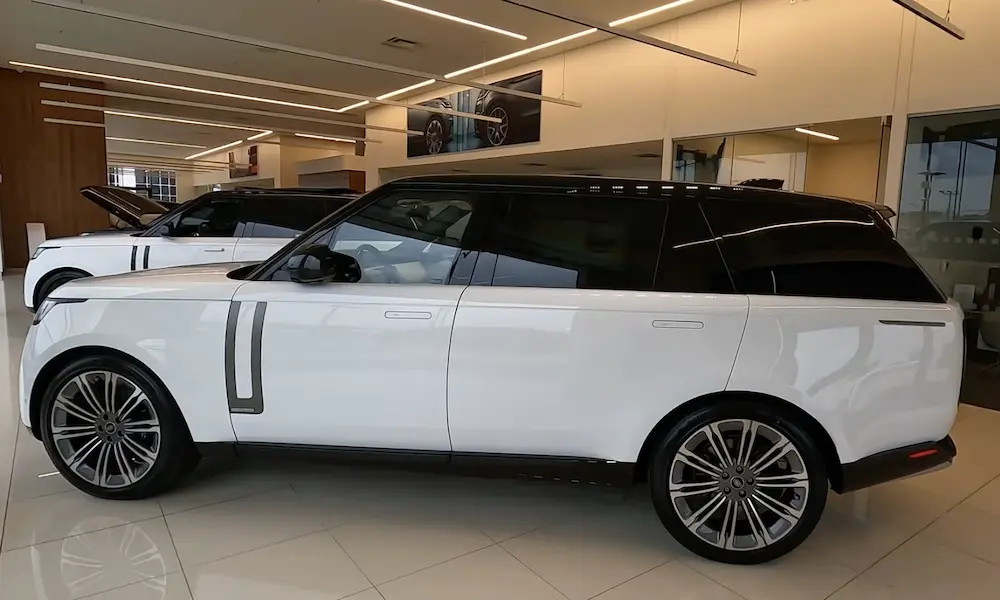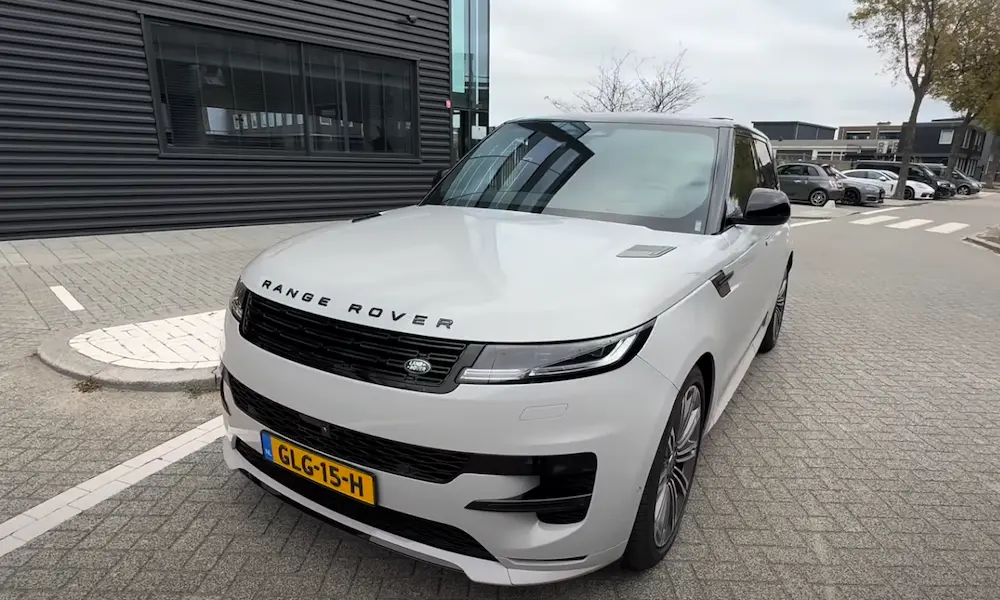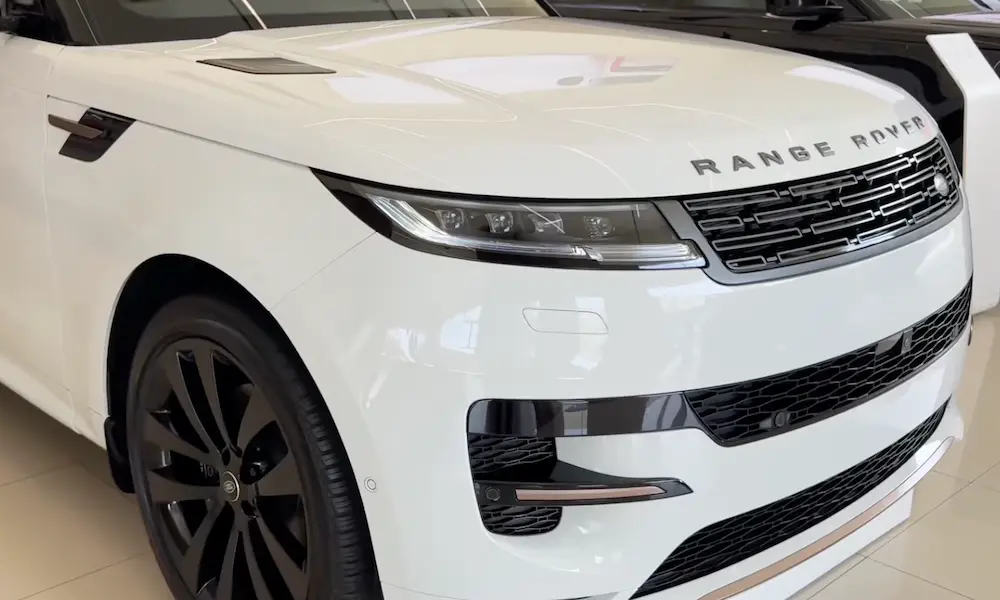
Ever wondered what’s actually under the hood of a Range Rover? The answer is surprisingly complicated — and pretty fascinating. This post breaks down every engine manufacturer behind the badge, from a scrapped GM design to today’s BMW partnership. Stick around to the end — the 2026 electric twist changes everything.
It Started With a Buick
Believe it or not, the original Range Rover engine wasn’t British. When Land Rover launched the Range Rover in 1970, it needed a lightweight, powerful engine fast. The Rover Company found the answer in America.
General Motors had developed an all-aluminum 3.5-liter V8 for the Buick Special — then quietly killed it because American buyers preferred heavier cast-iron engines. Rover bought the tooling and manufacturing rights and turned that discarded design into something iconic.
That aluminum V8 was perfect for the Range Rover. It was light, powerful, and kept the vehicle balanced for serious off-road work. At launch, it made 127 horsepower running on carburetors. Not breathtaking by today’s standards, but more than enough to carve out a completely new segment: the luxury 4×4.
How the Rover V8 Grew Up
Rover didn’t just sit on that engine. They spent two decades refining it.
| Engine Variant | Manufacturer | Horsepower | Era |
|---|---|---|---|
| 3.5L V8 (Carbureted) | Rover (Buick Design) | 127 hp | 1970–1983 |
| 3.5L V8 (Fuel Injected) | Rover (Buick Design) | 155 hp | 1984–1989 |
| 3.9L V8 | Rover | 182 hp | 1990–1994 |
| 4.2L V8 | Rover | 200 hp | 1992–1994 LWB |
By 1984, Lucas electronic fuel injection bumped output to 155 horsepower and made the engine far more reliable across the extreme temperatures found in North America. When official US sales launched in 1987, that reliability mattered.
The Diesel Chapter (Mostly Outside the US)
While American buyers got V8 petrol power, the rest of the world pushed Land Rover toward diesel options. In 1988, Land Rover turned to Italian manufacturer VM Motori for a 2.4-liter turbodiesel — a stopgap while they built their own diesel capability.
By 1992, Land Rover introduced the 200TDi, its first in-house diesel engine. The 300TDi followed in 1994. These engines were workhorses — famous for torque and durability in demanding conditions. They were critical to Range Rover’s reputation as a genuine expedition vehicle before it went full luxury-flagship.
BMW Bought Rover — Then Changed Everything
In 1994, BMW acquired the Rover Group. That same year, the second-generation Range Rover (called the P38A) arrived. The timing wasn’t a coincidence.
The P38A kept the Rover-designed V8 — now in 4.0-liter and 4.6-liter form — but BMW replaced the Land Rover diesel with its own 2.5-liter M51 turbodiesel inline-six. This was a big deal. That BMW diesel brought electronic controls and a level of refinement that made diesel SUVs feel genuinely premium for the first time.
BMW’s influence signaled something important: Range Rover wasn’t just a rugged workhorse anymore. It was chasing German luxury sedans on their own turf.
The Ford Ownership Years: Jaguar Engines Enter the Picture
BMW sold Land Rover to Ford Motor Company in 2000, right as the third-generation Range Rover (L322) was heading to production. The L322 had actually been engineered under BMW ownership, but Ford inherited the keys.
Early L322 models (2001–2005) still used BMW engines — specifically the 4.4-liter M62 V8 petrol (282 hp) and the 3.0-liter M57 turbodiesel. Ford then pushed to replace those with engines from its own stable, pulling from the Jaguar AJ-V8 family to cut licensing costs and improve cross-brand synergy.
Ford-Era Engine Sourcing (2005–2012)
| Engine | Manufacturer | Power Output |
|---|---|---|
| 4.4L AJ-V8 | Jaguar | 305 hp |
| 4.2L Supercharged V8 | Jaguar | 400 hp |
| 3.6L Lion V8 Diesel | Ford/PSA Peugeot Citroen | 272 hp |
| 5.0L AJ-V8 (Supercharged) | Jaguar | Up to 510 hp |
| 4.4L TDV8 Diesel | Ford/PSA Peugeot Citroen | 313 hp |
The diesel units during this period came from a joint venture between Ford and PSA Peugeot Citroen — though those never made it to the US market. American buyers got the Jaguar-sourced V8s, with the supercharged 5.0-liter becoming the performance benchmark for the brand.
Tata Motors Changes the Game: JLR Builds Its Own Engines
Ford sold Jaguar and Land Rover to Tata Motors in 2008. Under Tata’s ownership, the newly branded Jaguar Land Rover (JLR) launched a major investment program with a clear goal: stop relying on other companies for engines.
The result was the Ingenium engine family — designed entirely in-house and manufactured at JLR’s Engine Manufacturing Centre in Wolverhampton, UK, launched in 2015.
The Ingenium architecture is built on a clever modular principle: each cylinder displaces exactly 500cc. That means JLR can build three-cylinder, four-cylinder, and six-cylinder engines on the same production line, sharing a high proportion of parts. It’s smart engineering that keeps costs down and quality consistent.
These engines feature:
- All-aluminum construction for low weight
- Variable valve timing
- Direct fuel injection
- Turbocharging from specialists like BorgWarner and Mitsubishi
- 48-volt mild-hybrid systems on newer variants
For US buyers, the most important Ingenium engine is the 3.0-liter turbocharged inline-six, which powers the full-size Range Rover and Range Rover Sport in the P360 and P400 configurations.
Who Makes Range Rover Engines Today? Two Key Players
Here’s the direct answer for 2024–2025 US-market Range Rovers:
JLR makes the inline-six engines. BMW makes the V8s.
Current US Market Engine Lineup
| Model | Engine | Horsepower | Manufacturer |
|---|---|---|---|
| P360 | 3.0L Turbo Inline-6 | 355 hp | JLR (Ingenium) |
| P400 | 3.0L Turbo Inline-6 | 395 hp | JLR (Ingenium) |
| P530 | 4.4L Twin-Turbo V8 | 523 hp | BMW |
| P550e | 3.0L Turbo I-6 + Electric | 542 hp | JLR (Ingenium) |
| P615 | 4.4L Twin-Turbo V8 | 606 hp | BMW |
| P635 | 4.4L Twin-Turbo V8 | 626 hp | BMW |
Why Is BMW Back in a Range Rover?
JLR’s 2019 partnership with BMW for V8 power was a calculated business decision. The existing 5.0-liter supercharged V8 was brilliant but aging, and adapting it to meet modern emissions regulations would have cost a fortune. Building an entirely new in-house V8 for low-volume flagship models didn’t make financial sense either.
So JLR licenses BMW’s twin-turbocharged 4.4-liter V8 — specifically the N63 and the newer S68 variant with integrated 48-volt mild-hybrid technology.
But Land Rover doesn’t just drop these engines in and call it a day. JLR engineers modify them significantly for Range Rover duty:
- Custom oil sump — redesigned to maintain lubrication at up to 45-degree tilt angles for off-road use
- Wading protection — intake system rebuilt to handle up to 35.4 inches of water submersion
- Cold-weather package — heavier-duty starter motor and heated sump for extreme cold climates common across North America
- Heavy-duty cooling — thermal management upgraded to support up to 8,200 pounds of towing capacity
The BMW block gets a Land Rover brain. That’s the right way to think about it.
The Supporting Cast: Who Else Makes Parts for These Engines?
The engine block is just the start. A Range Rover powertrain pulls from a global network of specialists:
- BorgWarner & Mitsubishi — turbochargers, often with ceramic ball bearings for faster spool
- ZF Friedrichshafen — eight-speed automatic transmissions on virtually every US-market Range Rover
- Bosch & Delphi — high-pressure direct injection systems operating at up to 200 bar
- Schaeffler Group — electrohydraulic variable valve lift technology licensed to JLR
- BorgWarner or Valeo — 48-volt electric superchargers for the Ingenium inline-six
- Samsung SDI — lithium-ion battery cells for hybrid models, named JLR’s top battery partner
The PHEV models like the P550e add another layer. They combine the Ingenium inline-six with a 160-kilowatt electric motor integrated directly into the ZF transmission. Battery packs get assembled at JLR’s Battery Assembly Centre at Hams Hall near Birmingham — though the individual cells come from Samsung SDI.
Where Range Rover Engines Are Actually Built
The Wolverhampton Engine Manufacturing Centre is the physical heart of JLR’s powertrain operation. It’s a purpose-built facility covering 50 acres, powered in part by over 21,000 rooftop solar panels generating 5.8 megawatts of energy. It holds BREEAM ‘Excellent’ sustainability certification and sends zero waste to landfill.
Every Ingenium engine goes through rigorous testing before leaving the plant — including cold testing (spun without fuel to check for friction) and hot testing (run under its own power to verify output). JLR confirms this plant has produced over 1.5 million clean engines since opening.
In 2024, JLR announced a £356 million investment to transform Wolverhampton into the Electric Propulsion Manufacturing Centre (EPMC) — where the electric drive units for future Range Rovers will be built. The workforce is expanding from 700 to over 1,400 skilled technicians.
What Comes Next: Electric Range Rover by 2026
JLR has committed to launching a fully electric Range Rover in 2026. These vehicles won’t have an engine in any traditional sense. Instead, electric drive units — combining motor, power electronics, and transmission in a single housing — will be manufactured in Wolverhampton.
JLR is also exploring hydrogen fuel cell technology through “Project Zeus,” which could eventually mean the “engine” of a Range Rover is a fuel cell stack built in partnership with energy specialists.
The MLA-Flex platform underpins the current generation and was designed from the start to support both combustion and battery-electric power. That foresight means the electric transition won’t require a ground-up redesign — it’s already baked in.
The answer to who makes Range Rover engines is shifting year by year. Right now it’s a British-Indian company called JLR for the inline-sixes, a German giant called BMW for the V8s, and a growing network of global tech suppliers for everything electric. By the end of the decade, it might just be JLR’s own electric propulsion team in Wolverhampton — full stop.