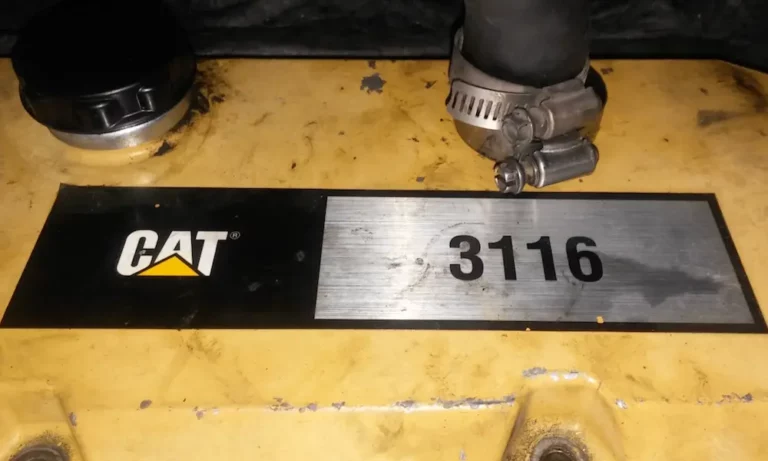
Are you looking for reliable information about the Cat 3116 diesel engine? Whether you’re maintaining one, considering a purchase, or just curious about this workhorse power plant, understanding its specifications is crucial. This guide breaks down everything from horsepower ratings to maintenance requirements for this versatile mid-range diesel engine that powered everything from marine vessels to military trucks.
The Cat 3116 Engine: An Overview
The Caterpillar 3116 diesel engine, introduced in 1988, quickly established itself as one of Caterpillar’s most versatile mid-range engines. This inline-6 turbocharged diesel served in applications ranging from marine propulsion to construction equipment and medium-duty trucks until production ended in 1998.
What made the 3116 stand out was its balance of power, reliability, and adaptability. With power outputs spanning from 170 to 350 horsepower depending on configuration, it bridged the gap between lighter-duty and heavy-duty diesel applications.
Core Engine Design Specifications
The 3116 Cat engine follows a traditional inline 6-cylinder design with several key specifications that defined its performance:
- Engine Type: 4-stroke cycle diesel
- Cylinder Configuration: Inline 6-cylinder
- Displacement: 6.6 liters (402 cubic inches)
- Bore × Stroke: 105mm × 127mm
- Compression Ratio: 16:1 (up to 18.5:1 in some variants)
- Rotation: Counterclockwise (viewed from flywheel end)
- Valve Configuration: Overhead valve (OHV) with 2 valves per cylinder
- Firing Order: 1-5-3-6-2-4
The engine’s relatively long stroke design (127mm vs 105mm bore) optimizes it for torque production at lower RPMs, making it ideal for applications requiring substantial pulling power.
Performance Ratings Across Applications
The 3116 Cat engine specs vary significantly based on application and tuning. Here’s how the performance breaks down across different uses:
Marine Applications
Marine versions of the 3116 featured the highest power configurations, categorized by rating levels:
| Rating Category | Horsepower | RPM | Torque | Common Applications |
|---|---|---|---|---|
| E-Rating | 350 HP | 2,800 | 656 lb-ft | High-performance pleasure craft |
| D-Rating | 275-310 HP | 2,600 | ~600 lb-ft | Medium-duty commercial vessels |
| C-Rating | 255-280 HP | 2,500 | ~580 lb-ft | Light commercial fishing boats |
| A/B-Rating | 205-230 HP | 2,400 | ~520 lb-ft | Continuous duty vessels |
On-Highway Truck Applications
The 3116 powered numerous medium-duty trucks and buses with these typical specifications:
- Base Rating: 170 HP at 2,600 RPM with 420 lb-ft at 1,560 RPM
- Mid-Range: 215-250 HP with 550-650 lb-ft of torque
- High Output: 300 HP with 732 lb-ft of torque
These engines were common in Ford F600-F750 trucks, Chevrolet Kodiak/GMC TopKick models, and various Peterbilt, Kenworth, and Freightliner medium-duty chassis.
Industrial and Military Applications
- Industrial: 170-250 HP range, typically producing 420-650 lb-ft of torque
- Military LMTV/FMTV: 290 HP at 2,600 RPM with 732 lb-ft at 1,560 RPM
The military variants featured enhanced filtration and protection systems for battlefield conditions.
Fuel System Technology
The 3116 Cat engine primarily used Mechanical Unit Injection (MUI) technology—a system where each cylinder has its own mechanically-operated injector. Here’s how it works:
- Each injector contains a cam-actuated plunger that creates high pressure
- A governor-controlled fuel rack adjusts fuel delivery based on engine load
- Injection timing is mechanically controlled, varying slightly with engine speed
- Fuel delivery occurs through direct injection into the combustion chamber
Later production models (particularly in the final years) occasionally featured Hydraulic Electronic Unit Injection (HEUI) systems, providing electronic control over fuel delivery and timing.
The fuel system requires proper filtration through dual-stage filters to protect the precision components of the injection system.
Physical Dimensions and Weight
For planning installations or replacements, these physical specifications are essential:
- Length: 1,663mm (65.5 inches) to flywheel housing
- Width: 816mm (32.1 inches)
- Height: 860mm (33.8 inches)
- Dry Weight: 681-750kg (1,500-1,650 pounds) depending on configuration
The engine uses a SAE No. 3 flywheel housing, providing compatibility with various transmission systems.
Cooling and Lubrication Requirements
Cooling System
The cooling system specifications include:
- Cooling System Capacity: 28.0 liters (7.4 gallons) including expansion tank
- Components: Heat exchangers, engine oil coolers, and transmission oil coolers in marine applications
- Marine Applications: Auxiliary seawater pumps provide raw water circulation
Lubrication System
Proper lubrication is critical for the 3116 Cat engine:
- Oil Capacity: 25.0 liters (6.6 gallons) including filter changes
- Oil Change Intervals:
- Marine engines: Every 250 hours
- Truck applications: Every 15,000 miles under normal conditions
Marine 3116 engines equipped with closed crankcase ventilation systems require Special Application Engine Oil (SAEO) to prevent harmful deposits in turbochargers and aftercoolers.
Aspiration and Air Intake Systems
Most 3116 Cat engines feature turbocharged aspiration, with some variants including turbocharging with aftercooling (TA) for enhanced performance. The turbocharger increases air density entering the combustion chambers, enabling higher power output from the same displacement.
Marine applications utilize specialized turbocharger configurations optimized for continuous duty cycles and saltwater environments, paired with dry-type, single-stage air cleaners with service indicators.
Valve Train and Maintenance Requirements
The valve train requires precise adjustment for optimal performance:
- Intake Valve Clearance: 0.38mm (0.015 inches)
- Exhaust Valve Clearance: 0.64mm (0.025 inches)
These clearances must be checked and adjusted periodically:
- Every 100,000 miles in truck applications
- Every 2,000 hours in marine applications
The valve adjustment procedure follows a specific sequence based on the engine’s firing order:
- With cylinder #1 at top dead center on compression stroke
- Adjust intake and exhaust valves on cylinders #3, #5, and #6
- Rotate engine 360 degrees
- Adjust valves on cylinders #1, #2, and #4
Common Applications and Usage History
The 3116 Cat engine found extensive use across multiple sectors:
Marine Propulsion
- Commercial fishing boats
- Tugboats
- Patrol vessels
- Pleasure craft
Medium-Duty Trucks
- School buses
- Delivery trucks
- Vocational vehicles
- Municipal service vehicles
Industrial Equipment
- Skid steers
- Backhoe loaders
- Wheel loaders
- Compactors
- Agricultural equipment
Military Vehicles
- Light Medium Tactical Vehicle (LMTV)
- Family of Medium Tactical Vehicles (FMTV)
Service Challenges and Considerations
The 3116 Cat engine presents several service considerations owners should be aware of:
Injector Service
The use of copper injector cups rather than steel creates unique challenges during service. These cups can become damaged during injector removal, requiring special reaming tools and seating procedures during replacement.
Fuel System Bleeding
Following any fuel system service, proper bleeding procedures are critical. The system must be bled in sequence, starting with low-pressure circuits and progressing to high-pressure injection lines to prevent damage to injection components.
Valve Adjustments
Unlike engines with hydraulic lifters, the 3116’s mechanical valve train demands manual adjustment at specified intervals using feeler gauges and precise torque settings for the adjustment lock nuts.
The 3116’s Legacy and Successor Models
Caterpillar discontinued the 3116 in 1998, replacing it with the 3126 engine, which featured electronic controls and improved emissions compliance. The 3126 later evolved into the C7 engine, continuing the basic architecture while incorporating more sophisticated electronic management systems.
Despite its discontinuation over two decades ago, the 3116 remains popular in the aftermarket due to its mechanical simplicity and robust construction. Many operators prefer the 3116’s mechanical systems over electronic alternatives for applications in remote areas or where electronic complexity might prove problematic.
Parts availability remains strong, with numerous aftermarket suppliers providing components for ongoing maintenance and rebuilds.
Making the Most of Your 3116 Cat Engine
The 3116 Cat engine represented a significant chapter in Caterpillar’s engine development history, bridging traditional mechanical diesel technology with modern performance demands. Its combination of proven reliability, serviceable design, and broad application range established it as a benchmark for mid-range diesel engines.
If you’re operating a vehicle or vessel powered by a 3116, regular maintenance according to Caterpillar’s specifications will help ensure continued reliable service from this versatile powerplant. Pay special attention to valve adjustments, fuel system integrity, and using the correct lubricants for your specific application.
For rebuilds or major service, consider consulting with Caterpillar specialists who understand the unique characteristics and common issues with these engines, particularly regarding the fuel injection system and copper injector cups.