You’re staring at a brake job quote, and the price is making your wallet hurt. Someone mentioned Duralast rotors from AutoZone—they’re cheaper than OEM, but you’re wondering if they’ll actually stop your car without shaking like a paint mixer. Let’s dig into whether Duralast rotors are a smart buy or just cheap metal waiting to warp.
What Makes Duralast Rotors Different
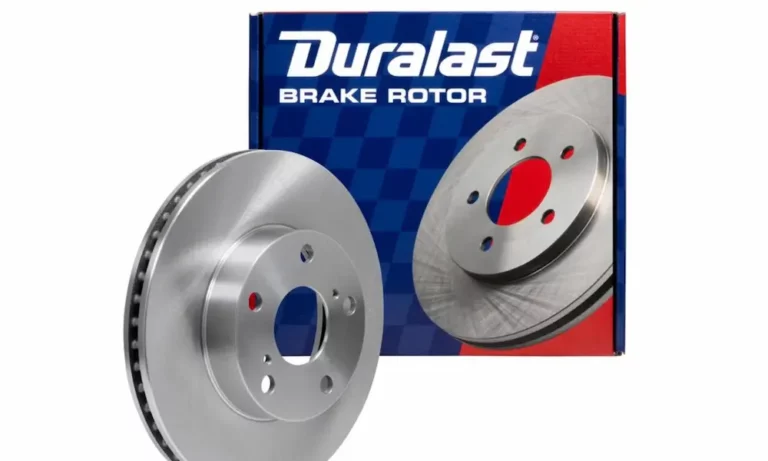
Here’s the thing: not all Duralast rotors are created equal. AutoZone sells three different tiers, and lumping them together is like comparing a Civic to a Corvette just because they’re both Hondas.
Standard Duralast Rotors: The Budget Option
The base-level Duralast rotor is what mechanics call a “white box” special. It’ll fit your car and meet basic safety requirements, but don’t expect miracles.
These rotors use standard G3000 grey iron—the metallurgical equivalent of “good enough.” They lack the fancy alloys that help dissipate heat, which means they’re more prone to developing hot spots during hard braking. That’s the real culprit behind warped rotors—not actual bending, but uneven material buildup that makes your brake pedal pulse.
You get a two-year warranty, and they ship coated in oil to prevent rust. That means you’ll need to clean them thoroughly with brake cleaner before installation, or you’ll contaminate your new pads.
Bottom line: Reserve these for beater cars or situations where you’re legitimately broke. They’ll work, but you’ll likely be back sooner than you’d like.
Duralast Gold Rotors: The Sweet Spot
This is where things get interesting. Duralast Gold rotors pack some legitimate engineering upgrades that address the problems plaguing cheaper rotors.
The standout feature is high-carbon iron—about 11% more carbon than standard aftermarket rotors. Why does this matter? Carbon improves thermal conductivity, meaning heat moves away from the friction surface faster. When your rotors can’t shed heat quickly enough, that’s when you get brake fade and those annoying hot spots that cause pulsation.
Gold rotors also come with Z-Clad coating—a zinc-based protection that covers the entire rotor, not just the friction surface. This fights rust on the cooling vanes and mounting hat, which is critical if you live anywhere that sees road salt. Unlike oil-coated rotors, you can install these straight out of the box without cleaning.
The other smart move: these rotors match OEM specifications for mass and vane configuration. Some budget rotors shave off material to save costs, which reduces the rotor’s ability to absorb heat. Duralast Gold maintains the original thermal capacity, so your brakes perform like the engineers intended.
You get a three-year warranty, and AutoZone’s pretty lenient about exchanges if you develop issues.
Duralast Severe Duty: For Towing and Heavy Loads
If you tow trailers or drive a loaded work truck, Severe Duty rotors are built for the exponentially higher heat loads you’re generating. They use application-specific metallurgy designed to handle extreme temperature spikes without fade.
These aren’t about luxury—they’re about safety. A 6,000-pound SUV pulling a 5,000-pound trailer down a mountain grade generates serious thermal energy. Standard rotors will overheat and fail. Severe Duty rotors won’t.
How Duralast Gold Stacks Up Against Competitors
Duralast Gold vs. OEM Rotors
Original equipment rotors are tuned to your specific vehicle’s suspension frequency to minimize noise and vibration. Duralast Gold claims to meet or exceed OEM specs, and for daily driving, most people can’t tell the difference.
The gap shows up in niche applications. Some sensitive vehicles respond better to OEM parts, particularly performance cars or heavy-duty trucks with specialized metallurgy treatments. But OEM rotors typically cost twice as much, and for most drivers, that premium isn’t justified.
Duralast Gold vs. NAPA
NAPA’s Ultra Premium line has a strong following among professional mechanics who cite more consistent quality control. The general sentiment: NAPA has slightly better casting consistency, while Duralast wins on warranty accessibility and retail hours.
If you’re a shop doing 20 brake jobs a week, NAPA might save you comebacks. If you’re a DIYer doing one job, Duralast Gold’s easier warranty process matters more.
Duralast Gold vs. Centric and Raybestos
Here’s where it gets spicy. Brands like Centric Premium and Raybestos Element3 are online favorites, often available for $20-30 less per rotor than Duralast Gold on sites like RockAuto.
Chemically, Duralast Gold and Centric High Carbon are very similar—both use high-carbon formulations and protective coatings. The difference isn’t the metal; it’s the distribution model.
Online competitors beat Duralast on price. Duralast beats them on availability. If you can wait 3-5 days for shipping and don’t mind paying freight on heavy iron parts, online shopping saves money. If your car is sitting on jack stands and you need it running tomorrow, AutoZone’s instant availability is worth the premium.
| Brand | Price | Availability | Warranty Process | Best For |
|---|---|---|---|---|
| Duralast Gold | $$$ | Immediate | In-store exchange | Emergency repairs, high-mileage drivers |
| Centric/Raybestos | $$ | 3-7 days | Ship defective parts back | Planned maintenance, budget builds |
| OEM | $$$$ | 1-2 days | Strict inspection | Lease vehicles, perfectionists |
The Real Story Behind “Warped” Rotors
Let’s bust a myth: rotors don’t actually warp under normal use. Modern metallurgy makes the iron strong enough to resist physical deformation. What you’re feeling is pad material deposited unevenly on the rotor surface.
Here’s how it happens: you make a hard stop, heating the rotor to extreme temperatures. Then you sit at a light with your foot on the brake, holding the hot pad against one spot on the rotor. Friction material transfers to that hot spot, creating a high point. That variation in thickness is what causes the pulsation everyone calls “warping.”
Standard Duralast rotors are more susceptible because they have lower thermal capacity. The Gold line’s high-carbon formula manages heat better, reducing the temperature spikes that cause material transfer.
The other common culprit: improper installation. If you don’t clean the hub thoroughly before mounting the rotor, even microscopic rust can cause runout (wobble). A deviation of 0.002 inches at the hub amplifies to massive vibration at the rotor edge. Because Duralast is DIY-focused, installation errors inflate its failure rate compared to professional-only brands.
What the Warranty Actually Covers
There’s confusion about Duralast warranties, so let’s clarify: brake pads carry a lifetime warranty. Rotors don’t.
Standard rotors get two years, Gold gets three years. But here’s the kicker—AutoZone’s exchange policy is famously lenient. If your Gold rotors develop pulsation or excessive rust within three years, you can usually swap them at the counter without forensic investigation.
This creates an interesting value proposition. Let’s say Gold rotors cost $70 per rotor versus $35 for an online competitor. If you use the warranty once during those three years, you’ve effectively gotten two sets of rotors for $70—cheaper than buying the online competitor twice.
The catch: you’re paying a “convenience tax” upfront. That premium buys you immediate availability and hassle-free warranty execution. Online competitors require you to ship heavy defective parts back at your expense, often making warranty claims impractical.
Where Duralast Rotors Come From
AutoZone doesn’t manufacture rotors—they contract production to global suppliers. Like most aftermarket brake components, Duralast rotors are primarily cast in Chinese foundries.
Before you panic, understand this: so are most competitors’ rotors. The “Made in China” stamp isn’t the quality differentiator. What matters is the metallurgical recipe and quality assurance protocol the buyer enforces.
AutoZone’s scale lets them dictate specific formulations—like that high-carbon requirement for Gold rotors—to manufacturers. The real value proposition isn’t superior origin; it’s superior logistics. AutoZone’s distribution network ensures parts are in stock at thousands of locations, which matters more to a stranded driver than where the iron was smelted.
Common Installation Mistakes That Ruin Good Rotors
Even quality rotors fail when installed incorrectly. Here’s what trips people up:
Skipping hub cleaning: Rust on the wheel hub prevents the rotor from sitting flush. Use a wire brush or sandpaper to get down to bare metal. This one step prevents more comebacks than any other.
Forgetting to bed in the brakes: New rotors need a proper break-in procedure to transfer an even layer of pad material to the surface. Make 6-10 moderate stops from 40 mph to 10 mph without coming to a complete stop, then let the brakes cool. Skip this, and you’ll get noise and reduced stopping power.
Over-torquing lug nuts: Use a torque wrench. Gorilla-tight lug nuts can distort the rotor, creating runout even if the rotor was perfectly straight.
Mixing old pads with new rotors: Always replace pads and rotors together. Old pads are worn to match the old rotor’s surface. Mating them with a fresh rotor guarantees noise and uneven wear.
The Coating Controversy
Duralast Gold’s Z-Clad coating sparks debate. Some DIYers worry about the coating causing problems, but the science is solid.
The coating is a zinc-rich barrier applied to the entire rotor. During the first few brake applications, pads scrub it off the friction surface—that’s normal and expected. The coating remains on the vanes and hat, where it prevents rust.
Compare this to uncoated rotors that develop the dreaded “rust lip” on the outer edge within weeks. That lip catches dirt, causes squealing, and looks terrible. Z-Clad prevents this.
The technology is similar to Geomet coating used by premium competitors—a water-based zinc and aluminum dispersion that replaced environmentally nasty hexavalent chromium coatings.
When Standard Duralast Makes Sense
I’ve been hard on Standard Duralast rotors, but there are legitimate use cases:
- End-of-life vehicles: If your car has 200,000 miles and you’re driving it into the ground, spending extra on Gold rotors doesn’t make financial sense.
- Flip projects: Buying cars to fix and sell? Standard rotors get you roadworthy cheaply.
- Genuine emergency: You’re broke, your car is your lifeline to work, and payday is Friday. Standard rotors plus careful driving will get you through.
Just understand what you’re buying: a functional component that meets minimum standards but lacks the engineering refinements that prevent common failure modes.
Are Duralast Rotors Good? The Verdict
Here’s my take after reviewing thousands of user experiences and technical specs:
Standard Duralast rotors: Not good. They’re adequate for emergency use only. The lower thermal capacity and lack of corrosion protection mean you’ll be back sooner rather than later. Only buy these if you’re genuinely desperate.
Duralast Gold rotors: Yes, these are good. The high-carbon metallurgy and Z-Clad coating solve the primary problems that plague cheaper rotors. They compete directly with premium aftermarket brands and deliver OEM-level performance for daily driving. The price premium over online competitors is justified by instant availability and hassle-free warranty execution.
Duralast Severe Duty rotors: Essential if you tow or haul heavy loads. The specialized metallurgy handles extreme heat that would destroy standard rotors. This isn’t about luxury—it’s about keeping your brakes functional when managing serious kinetic energy.
The smart play for most people: Duralast Gold rotors represent the “safe bet” in the aftermarket world. You’re paying a premium versus online shopping, but you’re buying time, convenience, and warranty accessibility. If you can plan ahead and wait for shipping, brands like Centric offer better value. If you need your car running today, Duralast Gold delivers quality that justifies the retail markup.