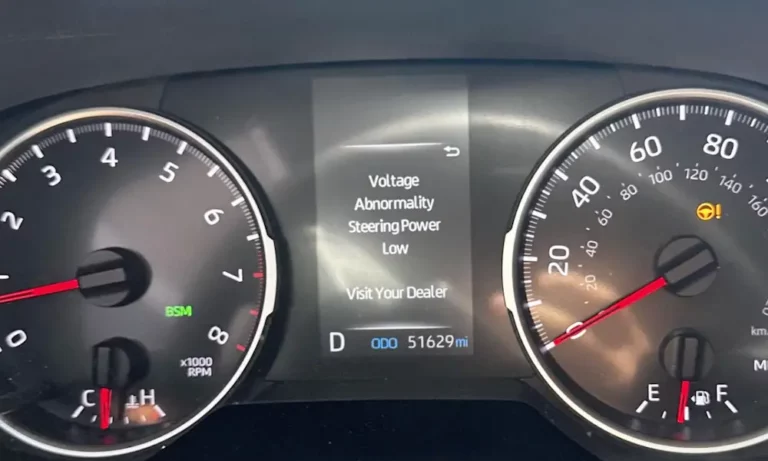
Seeing “Voltage Abnormality Steering Power Low” flash on your Toyota’s dashboard isn’t fun. Your steering might feel heavy, and you’re probably wondering if you’re looking at a massive repair bill. Here’s the good news: this warning usually points to fixable electrical issues, and we’ll walk you through what’s happening and what you can do about it.
What Does This Warning Actually Mean?
Your Toyota’s Electric Power Steering (EPS) system runs on electricity—no hydraulic fluid required. It needs a steady 12 volts or higher to work properly. When voltage drops below 11.5 volts, the system throws up this warning and cuts back on steering assistance to protect itself from damage.
Think of it like your phone going into power-saving mode when the battery gets low. Your EPS is doing the same thing, except it’s protecting expensive electronic components instead of preserving battery life.
The system monitors voltage constantly. If it detects abnormal readings, it’ll trigger the warning light and often reduce steering assist. You’ll notice this immediately—your steering wheel suddenly feels heavier, especially at low speeds or when parking.
Why Electric Power Steering Systems Are Picky About Voltage
Modern Toyota vehicles ditched old-school hydraulic power steering for EPS systems because they’re more efficient and reliable. But here’s the catch: they’re completely dependent on electrical power.
Your EPS system includes an electric motor, an Electronic Control Unit (ECU), and various sensors working together. Unlike hydraulic systems that could limp along with leaks or low fluid, EPS systems won’t compromise. Low voltage means reduced performance—period.
Different Toyota models have different voltage requirements. Non-hybrid models need 13.8 to 14.4 volts when the engine’s running. Hybrid models require 14.0 to 14.8 volts. Key-on voltage (engine off, key in “on” position) should be at least 12.4 volts across the board.
When voltage drops below these thresholds, the system enters fail-safe mode. It’s not broken—it’s protecting itself.
The Real Culprits Behind Low Voltage Warnings
Your 12V Battery Is Probably the Problem
Here’s what causes 45% of these warnings: a dying 12V battery. This is especially common in Toyota hybrids because of their unique charging cycles and AGM (Absorbed Glass Mat) batteries.
AGM batteries are tricky. They can show 12.4-12.5 volts on a multimeter and still be failing. A simple voltage check won’t cut it—you need a proper load test.
During a load test, a healthy battery should maintain voltage above 9.6 volts under load. Most auto parts stores like AutoZone offer free battery load testing with professional equipment designed for modern battery tech.
If your Toyota is three years old or older, start here. Batteries don’t last forever, and replacing one is way cheaper than chasing phantom electrical gremlins.
Hybrid-Specific DC-DC Converter Issues
Own a RAV4 Hybrid, Corolla Hybrid, or another hybrid Toyota? There’s a 30% chance your DC-DC converter is the culprit.
The DC-DC converter transforms high-voltage power from your hybrid battery into the 12-volt electricity that runs your accessories and EPS. When it fails, you get intermittent voltage drops that trigger the steering warning.
This component only exists in hybrid vehicles, so if you’re driving a standard gas-powered Toyota, you can skip this section.
Alternator Problems in Non-Hybrid Models
Non-hybrid Toyotas rely on alternators to keep the electrical system charged. While Toyota alternators are generally bulletproof, they do wear out over time. This accounts for about 15% of voltage abnormality cases.
Signs your alternator might be failing include dimming headlights, flickering dashboard lights, or the battery warning light coming on. If your alternator needs replacement, you’re looking at $350 to $900 depending on your model and whether you use OEM or aftermarket parts.
Corroded Connections and Wiring Issues
Don’t overlook the simple stuff. About 10% of voltage abnormality warnings come from corroded battery terminals, loose ground connections, or damaged wiring harness connectors.
These are the cheapest fixes. Sometimes a wire brush and 20 minutes of cleaning battery terminals solves everything. Check your positive and negative terminals for white or greenish corrosion buildup. Also inspect ground connections—they’re easy to overlook but critical for proper electrical flow.
How to Diagnose the Problem Yourself
Start With Basic Voltage Testing
Grab a digital multimeter (you can pick one up for under $20). Here’s your testing sequence:
Key-On Test: Turn your key to “on” without starting the engine. Voltage should read at least 12.4 volts. Anything lower suggests battery problems.
Engine-Running Test: Start the engine and check voltage again. Non-hybrids should show 13.8-14.4 volts. Hybrids need 14.0-14.8 volts. Lower readings point to charging system issues.
If your voltage checks out fine but you’re still getting warnings, the problem’s likely intermittent or related to specific conditions (like cold weather or high electrical load).
Get a Professional Battery Load Test
Don’t trust voltage readings alone, especially with AGM batteries. Head to an auto parts store for a proper load test. It’s free, takes five minutes, and gives you definitive answers about battery health.
The load test puts significant demand on the battery and measures how well it maintains voltage. This reveals weak batteries that still show acceptable voltage when tested without load.
Check for Diagnostic Trouble Codes
If you’ve got an OBD-II scanner, check for EPS-related codes:
- C1551: IG Power Supply Voltage Malfunction
- C1552: PIG Power Supply Voltage Malfunction
- C1554: Power Supply Relay Failure
These codes help pinpoint whether you’re dealing with power supply issues, relay problems, or ECU component failures. Dealerships use Toyota TechStream software for deeper diagnostics, which monitors real-time voltage data during operation.
What Repairs Cost (The Real Numbers)
Battery Replacement
Most common fix: replacing your AGM battery. You’ll spend $200-400 including labor. Toyota RAV4 battery replacement specifically runs $199-1,077 depending on battery type and where you go.
Standard 12V automotive batteries for Toyota vehicles range from $80-450, with AGM batteries commanding premium prices due to their advanced technology. But considering how critical proper voltage is for EPS operation, this is money well spent.
DC-DC Converter Replacement (Hybrids Only)
If your hybrid’s DC-DC converter fails, expect to pay $800-1,500. This isn’t a DIY job—hybrid electrical systems require specialized knowledge and safety procedures. Dealerships typically handle these repairs because of the high-voltage components involved.
EPS Module or Control Unit Replacement
Need a new EPS control module? That’s $1,060-1,132 for the module alone. Complete steering rack replacement for electric systems runs $1,400-1,700.
Before you panic, know that some specialized shops offer module rebuilding for around $270—significant savings over new parts.
Alternator Replacement
Alternator costs typically hit $350-900, with most repairs averaging $400-500. The price varies based on your specific Toyota model, whether you choose OEM or aftermarket parts, and your local labor rates.
What to Do When the Warning Appears
Immediate Steps
When you see the voltage abnormality warning, reduce electrical load immediately. Turn off the radio, climate control, heated seats—anything that draws power. This helps stabilize voltage and may restore normal EPS function.
Avoid continuous low-speed steering maneuvers that place additional load on the EPS system. If the warning appears during engine start-stop operation (like in traffic), turn off accessories and let the system rest before restarting.
Try a System Reset
Sometimes disconnecting your battery for several minutes resets the EPS system and clears temporary error codes. This isn’t a permanent fix for underlying problems, but it can help you determine if the issue’s intermittent.
Important: Battery disconnection resets various vehicle systems. You might need to reset your radio presets, power windows, and other convenience features afterward.
When to Head to the Shop
If voltage warnings persist after basic troubleshooting, don’t delay professional diagnosis. Continued EPS problems can lead to complete system failure, leaving you with unexpectedly heavy steering—a real safety concern.
Modern EPS systems require specialized diagnostic equipment and expertise. Not all repair shops have the tools or knowledge to properly diagnose Toyota EPS issues, so consider dealership service for complex problems.
Hybrid vs. Non-Hybrid Differences
Why Hybrids See This More Often
Hybrid Toyotas experience voltage abnormality warnings more frequently than gas-only models. The 12V battery in hybrids serves a different purpose—it powers accessories and systems while the high-voltage battery handles propulsion.
Hybrid batteries experience different charging patterns. They’re charged by the DC-DC converter rather than an alternator, and they undergo more frequent shallow charge-discharge cycles. This unique usage pattern affects battery lifespan and performance.
Diagnostic Approach Differences
Non-hybrid diagnosis focuses on the battery and alternator. Hybrid diagnosis adds DC-DC converter testing to the mix. This is why hybrid electrical problems sometimes cost more to diagnose—there are more components to test.
Real-World Cost Comparison Table
| Repair Type | Cost Range | Typical Timeframe | DIY Possible? |
|---|---|---|---|
| Battery Replacement | $200-$400 | 30-60 minutes | Yes (basic tools) |
| Alternator Replacement | $350-$900 | 1-2 hours | Moderate (some mechanical skill needed) |
| DC-DC Converter (Hybrid) | $800-$1,500 | 2-4 hours | No (high-voltage safety concerns) |
| EPS Control Module | $1,060-$1,132 | 2-3 hours | No (requires calibration) |
| Terminal Cleaning | $0-$50 | 15-30 minutes | Yes (very simple) |
Common Myths and Misconceptions
“The Warning Means My Steering Will Fail Completely”
Not true. The EPS system enters fail-safe mode, reducing assistance but not eliminating steering capability. You’ll still be able to steer—it’ll just require more effort.
“I Can Just Ignore It If Steering Feels Normal”
Bad idea. The warning indicates a legitimate electrical problem that could worsen. What starts as intermittent low voltage can progress to complete battery failure or alternator breakdown.
“Only Dealerships Can Fix This”
For basic issues like battery replacement or terminal cleaning, any competent mechanic can handle it. Complex problems involving the EPS module or hybrid DC-DC converter may require dealership-level diagnostics, but start with simpler solutions first.
Making the Repair Decision
When to DIY
Battery replacement and terminal cleaning are straightforward DIY projects if you’re comfortable with basic tools. You’ll need wrenches, a wire brush, and maybe some dielectric grease.
Alternator replacement is doable for shade-tree mechanics but requires more mechanical knowledge and the right tools.
When to Go Professional
Hybrid component repairs, EPS module replacement, and anything requiring specialized diagnostic equipment should go to professionals. The cost of mistakes with high-voltage hybrid systems or critical safety components like steering isn’t worth the DIY savings.
If you’ve done basic troubleshooting and the problem persists, professional diagnosis with proper equipment saves time and money in the long run.
The Bottom Line on Voltage Warnings
“Voltage Abnormality Steering Power Low” sounds scary, but it’s usually straightforward to fix. In most cases, you’re looking at battery replacement—annoying but not catastrophic.
Start with the simple stuff: test your battery, clean your connections, check for obvious wiring damage. If that doesn’t solve it, move on to professional diagnosis. The $100-200 you might spend on diagnosis is worth it to avoid replacing parts you don’t need.
Modern Toyotas are reliable, but they’re also complex. The electrical demands of systems like EPS mean maintaining your battery and charging system isn’t optional—it’s essential for safe operation. Regular maintenance and prompt attention to warnings keep your steering working smoothly and save you from expensive emergency repairs down the road.