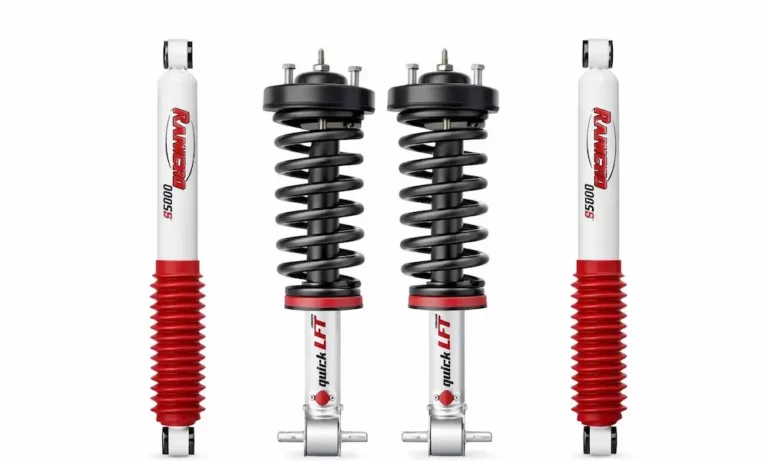
Thinking about Rancho shocks but not sure if they’re worth your money? You’ve landed in the right place. This breakdown covers real performance data, honest comparisons, and the stuff nobody tells you before you buy. Stick around — it gets specific.
What Makes Rancho Shocks Stand Out
Rancho has been building shocks since 1955. That’s nearly seven decades of suspension engineering, and they’re now part of Tenneco’s DRiV performance group. They don’t make one shock for everything. Instead, they build specific tools for specific jobs.
Their main lineup includes three series:
- RS5000X — Twin-tube design for daily drivers who occasionally hit the trails
- RS7MT — Monotube design for serious off-road performance
- RS9000XL — Nine-position adjustable tri-tube for trucks that do everything
Each one solves a different problem. Picking the wrong one is where most buyers go wrong.
How Rancho’s Valving Technology Actually Works
Here’s the short version: shocks convert wheel movement into heat. Do that poorly, and your ride turns to mush when the fluid gets too hot — that’s called shock fade.
Rancho fights this with Cross-Tuned technology and Progressive Engagement Valving (PEV). PEV uses a custom disc stack that stiffens up as impacts get bigger and faster. Hit a small pothole at low speed? The valving stays soft and compliant. Slam through a series of whoops at 40 mph? The shock firms up automatically to keep the truck planted.
This is different from standard velocity-sensitive damping, which can feel jarring when it transitions between soft and stiff. Rancho’s approach feels more gradual and natural — especially on mixed terrain.
| Technical Feature | RS5000X | RS7MT | RS9000XL |
|---|---|---|---|
| Piston Diameter | 35mm Sintered Iron | 46mm Fluon-Banded | 1.25-in Sintered Iron |
| Piston Rod | 16mm Nitro-Carburized | 14mm Hardened Chrome | 18mm Nitro-Carburized |
| Body Diameter | 2.25-in | 2.0-in | Up to 2.75-in |
| Primary Valving | Progressive Engagement | Deflective Disc | 9-Position Adjustable |
| Nitrogen Pressure | 150 PSI | High-Pressure | 45–60 PSI |
RS5000X: Best Bang for the Weekend Warrior
The RS5000X launched in 2015 as a massive upgrade over the original RS5000. The biggest change? A 2.25-inch body that nearly doubled the fluid capacity. More fluid means more heat absorption before fade sets in.
What Makes It Durable
The RS5000X uses double-welded loops at high-stress mounting points. That matters on trails where lateral forces try to tear the mount apart. The 16mm nitro-carburized piston rod is also worth mentioning — nitro-carburizing creates a harder, corrosion-resistant surface layer that outlasts standard chrome plating, especially in dirty, abrasive conditions.
Who Should Buy It
The RS5000X hits its sweet spot for drivers who spend about 70% of their time on pavement and the rest on light trails. It handles washboard roads and small rocks well. On street, it settles fast after bumps without the bouncy rebound that worn shocks produce. It’s not a desert race shock — but that’s not what it claims to be.
RS7MT: The Serious Off-Road Pick
The RS7MT is Rancho’s monotube option, and the design difference matters. In a monotube shock, oil sits in direct contact with the outer body. Heat escapes directly to the air instead of getting trapped inside a reserve tube. The result? Far better performance during sustained, aggressive suspension cycling.
Why the 46mm Piston Changes Things
That 46mm Fluon-banded piston gives the RS7MT more surface area for precise oil control at low speeds. That’s exactly where most shocks feel vague or mushy. The RS7MT feels more “planted” in those conditions — tighter, more responsive, and more predictable.
The shock also comes equipped with an integrated dirt wiper seal to block moisture, dust, and grit before they reach the internal seals. Internal rebound bumpers reduce harshness when the suspension hits full extension mid-air.
Who Should Buy It
Dedicated trail rigs, frequent off-road drivers, and anyone doing high-speed desert running. It’s a credible, budget-friendly alternative to the Fox 2.0 — especially for drivers who prefer a more compliant, progressive damping feel over the stiffer Bilstein style.
RS9000XL: The Best Adjustable Shock for Trucks That Do Everything
The RS9000XL is genuinely unique. It’s the first nine-position manually adjustable shock on the market, built on a tri-tube body up to 2.75 inches wide. That’s the largest fluid capacity in the Rancho lineup.
The nine adjustment levels deliver up to a 400% change in damping force. You turn a knob. That’s it.
| Adjustment Level | Best For | Result |
|---|---|---|
| Levels 1–3 | Empty bed, smooth highway | Maximum compliance, soft ride |
| Levels 4–6 | Daily commute, light trails | Balanced handling, reduced body roll |
| Levels 7–9 | Towing, heavy loads, off-road | Maximum firmness, control under load |
Trucks running 35-inch or 37-inch tires benefit massively from this. Larger tires add unsprung mass. That extra momentum makes factory shocks skip and wallow. Cranking the RS9000XL up to levels 7–9 counteracts that mass without buying a whole new suspension system.
Real-World Validation
Overland Journal ran a three-state head-to-head shootout against Bilstein, Fox, Old Man Emu, and Icon. The RS9000XL won the Editor’s Choice award. Testers reported the best balance and handling, with excellent yaw control during desert loops at higher speeds.
Rancho vs. the Competition: Where They Win and Where They Don’t
Rancho vs. Bilstein
Bilstein uses digressive valving — firm at low speed to reduce body roll, softer at high speed to absorb impacts. Many drivers find that feels harsh over small, frequent road imperfections.
Rancho’s progressive valving is more subdued on pavement. It gives up a little body roll control, but gains ride comfort. If you’re not autocrossing your pickup truck, that tradeoff usually makes sense.
| Metric | Rancho (RS7MT/RS9000XL) | Bilstein (5100 Series) |
|---|---|---|
| Ride Quality (Unloaded) | Soft, Compliant | Firm, Controlled |
| Body Roll Control | Moderate to Good | Excellent |
| Towing Performance | High (Adjustable) | Very High |
| Adjustability | 9-Position (RS9000XL) | None |
| Body Material | Painted Steel | Zinc-Plated Steel |
Rancho vs. Fox
Fox 2.0 shocks use aluminum bodies — better heat dissipation and corrosion resistance. Fox shocks are also fully rebuildable, which matters if you keep a vehicle for ten-plus years. The downside is price. The RS9000XL delivers adjustable damping for roughly half the cost of a comparable adjustable Fox reservoir setup.
Rancho vs. KYB
The KYB MonoMax is a beast for constant heavy loads, but it’s uncomfortably stiff when the truck runs empty. The RS9000XL solves that exact problem. Dial it down when you’re solo, crank it up when you’re hauling. KYB doesn’t give you that flexibility.
Things That Can Go Wrong (And How to Avoid Them)
Installing Them Upside Down
This one trips people up. The RS5000X and RS9000XL must be installed rod-up, body-down. The compression valve sits at the base of the damper. Flip it upside down and the oil settles away from the valve, killing damping completely. Drivers who’ve made this mistake report a “funky,” floaty feeling that disappears immediately after correcting the orientation.
Rust and Corrosion
Painted steel bodies are the RS5000X and RS9000XL’s biggest vulnerability. In salt-heavy climates, surface rust can show up within a single winter. That rust can creep into the RS9000XL adjustment knob, causing it to seize or snap when you try to turn it.
Here’s how to stay ahead of it:
- Before installation: Pack the adjustment knob with silicone-based or marine-grade waterproof grease
- Every three months: Cycle the adjustment knob from 1 to 9 and back to keep the mechanism free
- At installation: Apply anti-seize to the adjustment plate screws and plunger bore
Clunking After Installation
Some users report clunking or wallowing after fitting new Rancho shocks. In most cases, the culprit isn’t the shock — it’s worn factory bushings that weren’t replaced at the same time, or mounting bolts that weren’t torqued properly. Replace bushings when you install new shocks and torque everything to spec.
Rancho’s Warranty: Better Than Most
Rancho backs qualifying products with a Limited Lifetime Warranty against defects in materials and workmanship for as long as the original purchaser owns the vehicle.
They also run a 90-Day Risk-Free Ride Offer on the RS5000X, RS7MT, and RS9000XL. Buy four shocks, run them for 90 days, and if you’re not happy, return them for a full refund. That’s a genuinely rare offer in the aftermarket suspension space.
| Product | Warranty | Notes |
|---|---|---|
| RS5000X / RS7MT / RS9000XL | Limited Lifetime | Defects in materials and workmanship |
| quickLIFT Assemblies | Limited Lifetime | Strut, spring, and internal components |
| RockGear Components | 1-Year Limited | Manufacturing defects |
| RS9000XL (Extended Length) | 90-Day Limited | High-articulation applications |
Finish and normal wear items like bushings are excluded. Original dated receipt required for claims.
So, Are Rancho Shocks Good?
Yes — for the right application. Here’s the quick version:
- Daily driver with occasional trail use? The RS5000X gives you a comfortable street ride with a meaningful off-road upgrade over stock.
- Tow rig or heavy hauler? The RS9000XL’s adjustability gives you control that fixed shocks simply can’t match. Overland Journal’s testing confirms it holds its own against shocks that cost twice as much.
- Dedicated trail rig? The RS7MT’s monotube architecture and 46mm piston handle heat and high-speed abuse better than the twin-tube options.
The two genuine downsides are corrosion risk in salt states and installation sensitivity. Both are manageable with the right prep. If you’re in the Rust Belt, budget a few extra minutes for grease and anti-seize before your first install.