Trying to figure out how much an oil change at Firestone actually costs — not just the advertised price — can feel like solving a puzzle. The headline number rarely matches your final invoice. This guide breaks down every tier, fee, and savings trick so you know exactly what to expect before you walk through the door. Read to the end — the hidden fees section alone could save you $50.
The Short Answer: Firestone Oil Change Prices by Type
Firestone offers four main oil change tiers. Each one uses a different oil formulation, and the price difference between them is significant.
Here’s what you’re looking at before coupons:
| Service Tier | Promotional Price | Standard Retail |
|---|---|---|
| Conventional | $29.99 | ~$45–$55 |
| Synthetic Blend | $50–$65 | ~$70–$85 |
| High Mileage | $50–$65 | ~$70–$85 |
| Full Synthetic | $70–$95 | ~$95–$120 |
| Diesel (Rotella T6) | Varies | Varies |
These prices cover up to five quarts of oil, a new filter, and a 19-point courtesy inspection. More on that inspection in a moment.
What’s the Difference Between the Oil Types?
Conventional Oil
This is the entry-level option. It works well for older vehicles driven under normal conditions. Firestone uses Pennzoil products here, which include engine-cleaning additives to fight sludge buildup. If your car has low mileage and you drive mostly highway miles, this gets the job done.
Synthetic Blend
A hybrid formula — part conventional, part full synthetic. It handles higher temperatures better than straight conventional oil and costs less than a full synthetic service. It’s a solid middle ground for most commuter vehicles.
High Mileage Oil
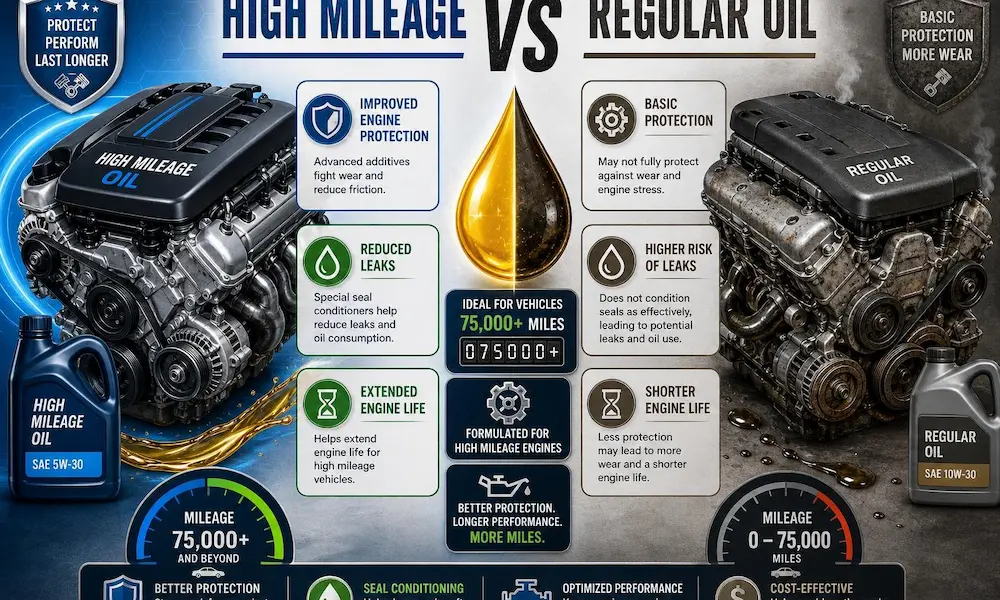
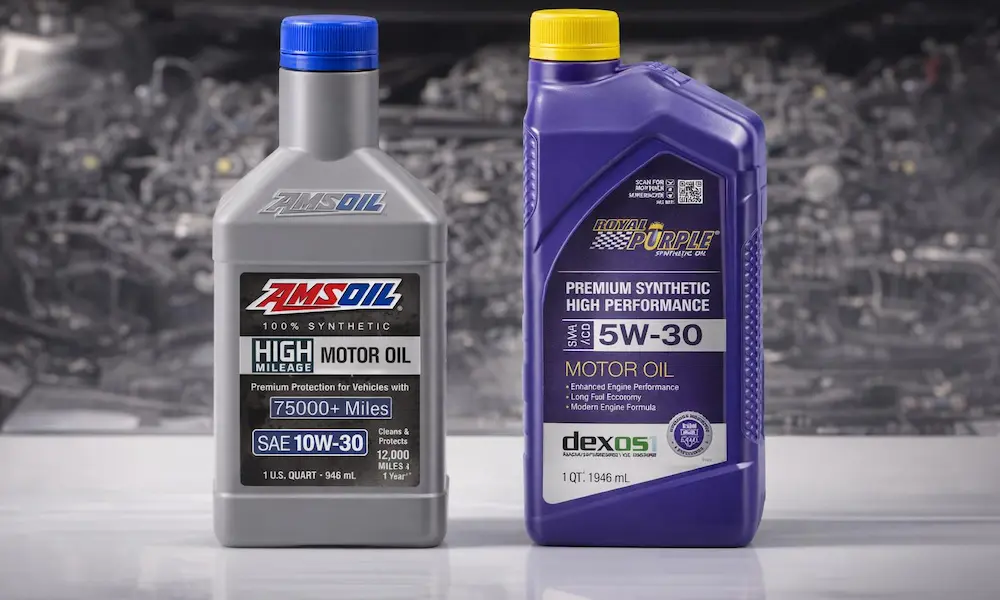
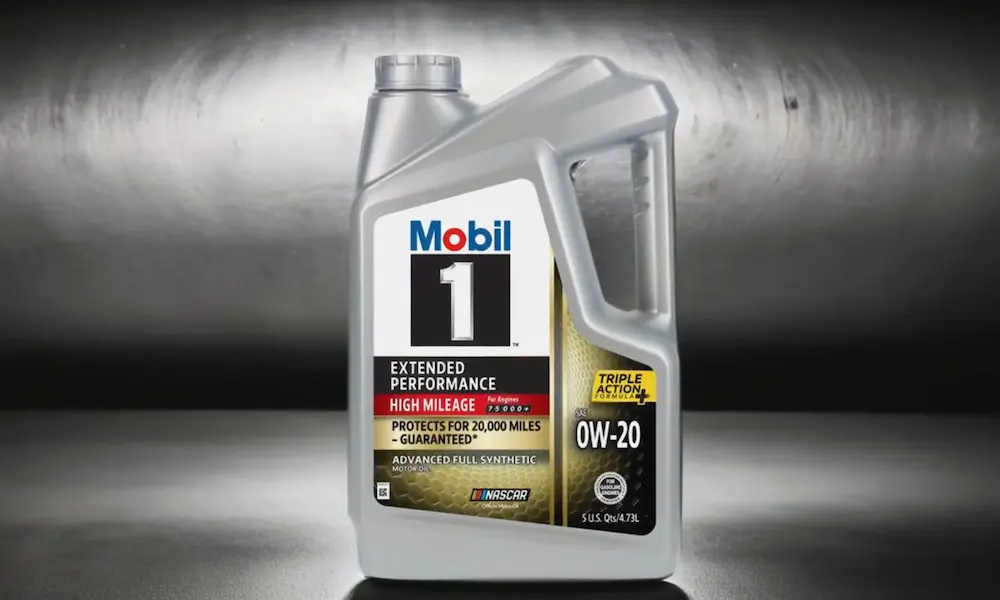
Built specifically for engines with 75,000+ miles on the odometer. It contains seal conditioners that keep aging gaskets pliable and reduce oil leaks. It also runs a higher concentration of detergents to manage the carbon buildup that older engines accumulate. If your car has crossed that mileage threshold, this is worth the extra spend.
Full Synthetic Oil
This is the premium tier. Full synthetic oil is engineered at a molecular level, which means it flows better in cold weather and holds up longer in high heat. Many newer turbocharged engines require it — not as a luxury, but as a manufacturer mandate. Check your owner’s manual before downgrading to a cheaper tier on a newer vehicle.
The Hidden Fees Nobody Warns You About
This is where most people get surprised at the register. Your base price is just the starting point.
The 5-Quart Limit
Every promotional price covers up to five quarts of oil. That’s fine for a small sedan. It’s not fine for a truck or large SUV.
Many pickups and larger vehicles need six to eight quarts. At Firestone, extra quarts for full synthetic oil can run up to $16.60 per additional quart. If your vehicle takes eight quarts, that’s roughly $50 in overage charges on top of your base price. Always ask upfront how many quarts your vehicle needs.
Shop Supply Fee
Firestone adds a shop supply fee calculated at 8% to 10% of your labor cost on any service over $35. It covers the small stuff — rags, cleaning solvents, gloves, floor dry. The fee caps at $40, so it won’t spiral out of control on big jobs, but you’ll see it on nearly every invoice.
Oil Filter Recycling Fee
Expect up to $3.99 added for oil filter recycling. Used filters contain residual oil that qualifies as hazardous waste, so proper disposal costs money. This one’s non-negotiable.
State Taxes and Environmental Fees
Depending on where you live, you may also see state-specific environmental or disposal fees. California, for example, has stricter regulatory requirements that add administrative overhead to service centers. These fees vary by location and are usually a few dollars.
A Real-World Example
A customer in the Pacific Northwest had a full synthetic oil change on a Ford Escape. Here’s what the invoice looked like:
- Full synthetic oil (up to 5 qts): $88.99
- Additional quart (1 qt): $16.60
- Oil filter: $8.99
- Labor: $36.00
- Shop supplies: $3.48
- Filter recycling fee: $3.99
- $25.00 coupon discount applied
- Final total: $141.28
That’s more than double the advertised promotional price. Knowing these line items in advance keeps you from experiencing sticker shock.
How Firestone’s 19-Point Inspection Actually Works
Every oil change at Firestone includes a courtesy inspection performed by ASE-certified technicians. It’s not just a checkbox — it’s a systematic look at the systems most likely to fail.
Here’s what they check:
- Exterior and interior lighting — brake lights, turn signals, headlights
- Battery — charge capacity and terminal corrosion
- Air filters — engine intake filter and cabin air filter
- Steering and suspension — worn bushings, leaking shocks
- Brakes — visual inspection of pads and lines
- Tires — tread depth at multiple points for uneven wear
- All fluids — coolant, brake fluid, power steering fluid, windshield washer fluid
Minor fluid top-offs are included in the service. If something needs more attention, they flag it with a color-coded system — green means you’re good, yellow means watch it, red means fix it soon.
This inspection separates Firestone from basic quick-lube competitors. You’re not just getting fresh oil — you’re getting a health check on your whole vehicle.
How to Actually Save Money at Firestone
Firestone runs a consistent cycle of promotions. If you know where to look, you can cut your bill significantly.
Check the Offers Page First
The Firestone offers carousel updates regularly. You can print coupons or send them to your phone before you arrive. Common deals include:
- $29.99 flat rate for conventional oil changes
- $20 off synthetic blend or high mileage services
- $25 off full synthetic services
Stack Rebates on Top of Discounts
Firestone frequently offers rebate deals structured as both an instant discount and a prepaid Mastercard. A typical full synthetic promotion might offer $25 off at checkout plus a $25 prepaid Mastercard via mail. You submit your claim through the Firestone rewards portal after the service. Processing usually takes 10 to 12 weeks, but it’s free money for a 5-minute form.
Sign Up for Email Coupons
The Firestone email list sends targeted coupons timed to your vehicle’s maintenance schedule. It takes 30 seconds to sign up and regularly delivers $20–$30 in savings per service.
Use the Firestone Credit Card
Cardholders get access to exclusive deals not listed on the public offers page. The card also offers special financing on purchases over $199, which is useful if you end up needing additional repairs flagged during the inspection.
Here’s a quick summary of every savings method:
| Savings Method | Typical Benefit | What You Need to Do |
|---|---|---|
| Website Coupon | $20–$29.99 savings | Print or show on phone |
| Email Signup | Monthly targeted coupons | Subscribe online |
| Rebate Card | Up to $50 back | Submit online claim |
| Firestone Credit Card | Exclusive discounts + financing | Apply for credit |
Firestone vs. Dealerships vs. Quick-Lube Shops
Where does Firestone land in the market?
Dealerships charge the most. A full synthetic service with a tire rotation at a dealership often runs $100–$130, sometimes more. You get brand-trained technicians, but you pay a premium for that specialization.
Quick-lube chains like Jiffy Lube focus on speed. They can sometimes match or beat Firestone on conventional oil prices, but their synthetic pricing can actually run higher than Firestone’s discounted rates. The trade-off is a much quicker turnaround — typically 15–20 minutes versus Firestone’s 45 minutes to an hour.
Independent shops offer the widest price range. Some charge less than Firestone, but they can’t offer the same national warranty coverage. If you travel frequently and want your service warranted at any location across the country, Firestone’s chain model gives you that security.
Firestone sits in the middle — more thorough than a quick-lube, more affordable than a dealership, and more consistent than most independent shops.
Does Your Region Affect the Price?
Yes, location matters. While Firestone’s promotional prices are mostly standardized nationally, base labor rates vary by region. Stores in major metro areas deal with higher commercial rent, higher wages, and stricter environmental compliance costs. Those costs flow through to your invoice.
If you’re in the Northeast or on the West Coast, expect to pay more than the national promotional baseline. The Midwest and South generally stay closer to the advertised numbers. The best move is to check your local Firestone’s specific offers page — pricing is listed by store location.
Firestone’s Oil Recycling Program
One thing Firestone does well is its recycling program. Used motor oil isn’t thrown out — it goes into on-site collection tanks, then ships to a re-refinery where it gets filtered, distilled, and rebuilt into base oil that’s chemically clean.
Firestone sells some of this re-refined oil as their EcoPower product. Recycling just two gallons of used motor oil generates enough electricity to power an average home for nearly 24 hours. That’s not marketing fluff — it reflects how efficient the modern re-refining process actually is.
Firestone also accepts used oil and filters from DIY mechanics at no charge. If you change your own oil at home, you can drop off the used materials at any Firestone location rather than dealing with improper disposal.
How to Read Your Firestone Invoice
When you get your receipt, here’s what each line item should mean:
- Parts — oil, filter, drain plug gasket
- Labor — technician time
- Shop Supply Fee — 8%–10% of labor, capped at $40
- Oil Filter Recycling Fee — up to $3.99
- State/Environmental Fees — varies by location
- Discounts — coupons applied here
- Sales Tax — calculated on parts, sometimes labor depending on your state
If you see a charge for something like a “System Cleaning” or “Pressure Test” that wasn’t discussed before the service started, ask the service advisor for the specific finding that prompted it. Every additional service recommendation should come with a documented reason.
The Bottom Line on Firestone Oil Change Pricing
The answer to “how much is an oil change at Firestone” really depends on four things: your oil type, your vehicle’s oil capacity, your location, and whether you use a coupon. The $29.99 conventional price is real — but it’s the floor, not the ceiling.
For most drivers on full synthetic, budget $70–$100 after fees, before discounts. Apply a coupon from the offers page and stack a rebate if one’s available, and you can realistically pull that number down to $45–$65 for a service that includes a complete vehicle inspection.
Check the oil change coupons page before every appointment. Firestone rotates deals frequently, and there’s almost always something available — you just have to look for it.