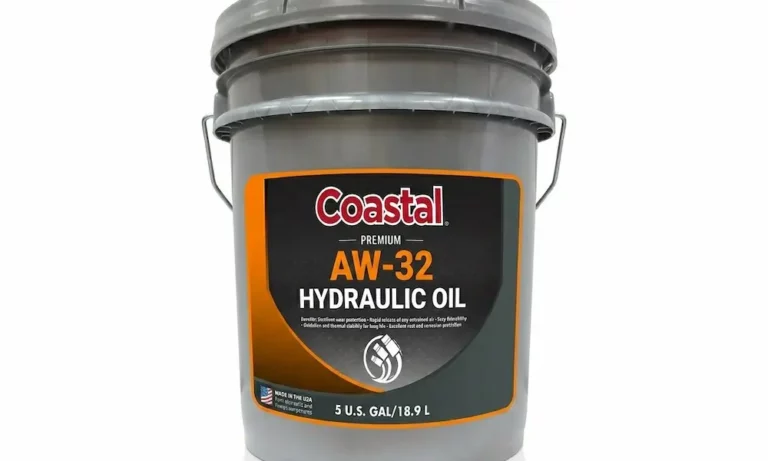
Picking the wrong hydraulic oil equivalent can destroy a pump in weeks. This guide cuts through the noise and shows you exactly which brands match AW 46, what specs to check, and how to swap fluids safely. Stick around — the compatibility section alone could save you a costly repair bill.
What Does “AW 46” Actually Mean?
The name tells you everything you need to know.
AW stands for anti-wear. The oil contains chemical additives that form a protective layer on metal surfaces inside your pump. Without this layer, high-pressure contact zones wear out fast.
46 refers to the ISO viscosity grade — specifically, the oil’s kinematic viscosity at 40°C. According to ISO 3448, a grade 46 oil must sit within ±10% of 46.0 centistokes at that reference temperature.
Put them together and you get a mid-weight, anti-wear hydraulic fluid designed for moderate-temperature industrial systems. It’s the most widely used hydraulic oil grade in manufacturing and construction worldwide.
The Standards Behind Every AW 46 Equivalent
Before you grab any bottle labeled “AW 46,” check which performance standard it meets. Not all oils are equal.
DIN 51524: The Benchmark That Matters
The German DIN 51524 standard splits hydraulic oils into three levels:
| DIN Classification | ISO Equivalent | What It Includes |
|---|---|---|
| Part 1 – HL | ISO 6743/4 HL | Rust + oxidation inhibitors only |
| Part 2 – HLP | ISO 6743/4 HM | Anti-wear additives + foam resistance |
| Part 3 – HVLP | ISO 6743/4 HV | High viscosity index for temperature swings |
A genuine AW 46 equivalent must meet DIN 51524 Part 2 (HLP) at a minimum. If a product only claims HL, it lacks the anti-wear package your pump needs.
OEM Approvals: The Extra Layer of Trust
Some pump manufacturers run their own tests. Passing these means a lot:
- Denison HF-0 — one of the toughest approvals, covering both dry and wet pump tests
- Eaton Vickers M-2950-S — focuses on vane pump protection
- Cincinnati Machine P-70 — checks compatibility with yellow metals and water
When two products both claim DIN 51524-2, OEM approvals help you pick the better one.
Global AW 46 Hydraulic Oil Equivalents
Every major oil company makes an AW 46 equivalent. Here’s a straight comparison of the top Tier 1 options.
Tier 1 Global Brand Equivalents
| Manufacturer | Product Name | Standard | Key Strength |
|---|---|---|---|
| Mobil | DTE 25 Ultra | DIN 51524-2 | Extended drain intervals, thermal stability |
| Shell | Tellus S2 MX 46 | DIN 51524-2 | Fast air release, wear protection |
| Chevron / Caltex | Rando HD 46 | DIN 51524-2 | Group II base oil, strong corrosion control |
| Castrol | Hyspin AWS 46 | DIN 51524-2 | Good filterability, thermal stability |
| TotalEnergies | Azolla ZS 46 | DIN 51524-2 | Rust and sludge resistance |
| Exxon | Nuto H46 | DIN 51524-2 | Oxidation and foam control |
| Petronas | Hydraulic 46 | DIN 51524-2 | Multi-purpose industrial use |
| Texaco | Rando HD 46 | DIN 51524-2 | Balanced mobile system performance |
All of these use Group II base oils, which resist oxidation better than older mineral oil formulations and support longer service intervals.
Tier 2 and Specialty Alternatives
These brands offer solid performance, often at a lower price point:
- Fuchs Renolin B 15 — high load-carrying capacity, popular in European industry
- Phillips 66 Megaflow AW 46 — strong water separation, common in North America
- Gulf Harmony AW 46 — meets major OEM specs, universal industrial use
- Valvoline Ultramax 46 — covers both stationary and mobile equipment
Physical Properties: What the Numbers Tell You
Don’t just match the brand. Check the technical data sheet. Here’s how leading AW 46 equivalents compare on the key figures:
| Product | Viscosity @ 40°C (cSt) | Viscosity @ 100°C (cSt) | Viscosity Index | Flash Point (°C) | Pour Point (°C) |
|---|---|---|---|---|---|
| Caltex Rando HD 46 | 45.7 | 6.9 | 107 | 226 | -36 |
| SPC HITO HD 46 | 47.6 | 7.1 | 105 | 220 | -15 |
| AP Hercules AW 46 | 46.0 | — | High | >200 | — |
| United Ultramax 46 | 46.0 | 8.4 | 156 | 212 | -33 |
Why the Viscosity Index Matters
The viscosity index (VI) measures how much an oil thickens or thins as temperature changes. A higher VI means more stable performance across a broader temperature range.
- Standard AW 46 (HLP): VI around 95–110
- High VI fluids (HVLP): VI of 150+
If your equipment runs outdoors or in varying climates, a higher VI means less wear at startup and more efficient power transfer when things heat up.
AW 32 vs. AW 46: Which One Do You Need?
This question comes up constantly. Here’s the short version.
Choose AW 32 If:
- Your system runs in cold temperatures
- Your machine manual specifies it
- You need fast startup response
Choose AW 46 If:
- You’re in a temperate or warm climate
- Your system runs at higher pressures
- Your equipment is older and showing internal wear
Switching from AW 32 to AW 46 on older equipment can help compensate for worn pump clearances. The thicker oil film plugs the gaps and reduces internal leakage. But always check your OEM manual first. Going too thick can starve the pump and trigger cavitation — which causes more damage than the wear you’re trying to fix.
Where AW 46 Gets Used
AW 46’s balanced viscosity makes it a fit for a wide range of equipment.
Industrial and Manufacturing Settings
- Injection molding machines — handles millions of cycles without valve stiction
- Hydraulic presses — metalworking and stamping lines
- Lathes and milling machines — precision clamping and tool actuation
Construction and Mobile Equipment
- Excavators and skid steers — protects high-performance piston pumps in moderate climates
- Dump trucks and aerial lifts — handles heavy shock loads on lift cylinders
- Forklifts — good indoor/outdoor compromise viscosity
Mixing Brands: What to Watch Out For
Mixing mineral-based AW 46 oils from different brands is generally low-risk. The chemistry is similar enough that short-term mixing won’t destroy your system.
But here’s where it gets dangerous:
Never mix zinc-based AW 46 with zinc-free (ashless) formulations. The incompatible additives can react, drop out of solution, and form a paste that clogs filters and seizes valves fast.
When switching to a new AW 46 equivalent, the safest move is a complete drain and flush. It takes more time upfront, but it protects the integrity of the new fluid and avoids additive interaction problems.
Special Formulations Worth Knowing
Standard mineral-based AW 46 covers most applications. But a few situations call for something different.
Zinc-free / Ashless oils — Protect silver-plated components. Also popular where environmental rules restrict zinc discharge.
Biodegradable AW 46 — Synthetic ester or vegetable oil base. Breaks down quickly in soil or water. Required in forestry, marine, and municipal maintenance near waterways.
Fire-resistant fluids — Water-glycol blends or high-flash-point synthetics for steel mills and underground mines. These need compatible seals and system materials — don’t swap them in without checking first.
Keeping Your AW 46 Working Longer
Choosing the right equivalent is only half the job. How you manage the fluid matters just as much.
Filtration — High-quality AW 46 oils are designed for excellent filterability, passing through fine filters without leaving additive deposits. Run regular oil analysis to catch wear metals early.
Water separation — Good demulsibility lets water drop out fast. If water stays emulsified, rust and sludge follow. Drain the reservoir sump regularly to remove any settled water.
Air management — Anti-foam additives help air bubbles collapse at the reservoir surface. If your controls feel spongy or your pump sounds rough, air contamination is a likely cause.
The Bottom Line on AW 46 Equivalents
Every product in this guide — from Shell Tellus and Mobil DTE to SPC HITO HD and AP Hercules — can do the job when matched correctly to your system. The key is knowing your standard (DIN 51524-2 minimum), checking your OEM approvals, and verifying the physical properties fit your operating temperature.
Don’t just match the viscosity number. Cross-reference the full spec sheet, confirm the additive type matches your pump requirements, and flush the system when you switch brands. Do those three things, and your AW 46 equivalent will protect your equipment just as well as the original product it replaces.