Your car’s acting up — rough starts, a check engine light, maybe some stalling. The culprit might be smaller than your fist. This guide walks you through camshaft position sensor replacement from diagnosis to the final relearn procedure. Stick around — skipping the last step is the most common mistake DIYers make.
What Does a Camshaft Position Sensor Actually Do?
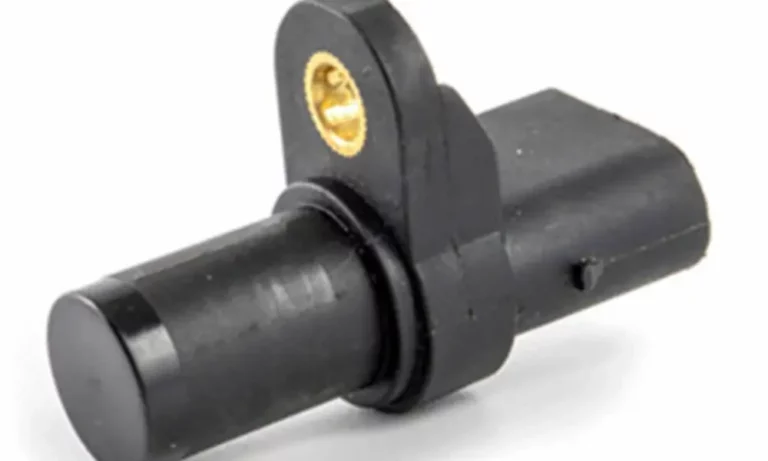
Your engine’s control module needs to know exactly where the camshaft is at all times. The camshaft position sensor tracks the camshaft’s rotational speed and angle, then feeds that data to your engine’s computer.
The computer uses this signal to:
- Time fuel injector pulses for each cylinder
- Fire spark plugs at the right moment
- Control variable valve timing systems
- Detect misfires before they damage your engine
Without this sensor, your engine control module can’t tell the difference between a compression stroke and an exhaust stroke. That confusion leads to real problems — fast.
Signs You Need a Camshaft Position Sensor Replacement
Don’t guess. These symptoms point directly at a failing sensor.
| Symptom | What’s Actually Happening |
|---|---|
| Check Engine Light (P0340) | The computer detected a circuit error or timing mismatch |
| Hard starts or no-start | The computer can’t identify the intake stroke, so fuel delivery stalls |
| Stalling at idle or highway speed | Loss of sync causes the computer to cut fuel or spark |
| Sluggish acceleration | Retarded ignition timing or disabled variable valve timing |
| Rough idle or engine shaking | Misfires from incorrect spark timing |
| Worse fuel economy | Incomplete combustion cycles waste fuel |
A P0340 code is the most direct indicator. If you’re also seeing P0016 or P0017 codes alongside it, that points to a timing correlation problem — which could be mechanical, not just the sensor. More on that below.
What Causes These Sensors to Fail?
Thermal stress, oil contamination, and vibration are the three main killers.
Heat cycles crack the plastic housing and degrade internal components over time. A failed O-ring lets engine oil into the connector, where it carries metallic particles that corrupt the signal. Constant engine vibration fatigues the internal wiring until you get intermittent signal loss — the hardest type to diagnose because it doesn’t always show up on a scan tool.
Diagnose Before You Replace
Swapping the sensor without testing first can cost you time and money. Run these checks first.
Check the Wiring First
Grab a digital multimeter. For a three-wire Hall effect sensor, you need to verify three things with the ignition on but engine off:
- Power supply — You should see 5V (or full battery voltage on some vehicles) at the power pin
- Ground integrity — Use an ohmmeter. You want near-zero resistance between the ground pin and the chassis
- Signal continuity — Any significant resistance between the sensor and the ECM signals a break or corrosion in the wiring
Read the Waveform
A multimeter confirms connectivity. An oscilloscope shows you the actual signal quality while the engine runs.
A healthy Hall effect sensor produces a clean square wave with sharp edges. Rounded edges or signal dropouts mean the sensor is failing. For an inductive sensor, you’ll see a sinusoidal wave that increases in frequency as you rev the engine. A distorted or missing wave points to an internal coil fault or a gap issue between the sensor and the trigger wheel.
Tools You’ll Need
Don’t start without these. Missing one item mid-job is frustrating.
| Tool | Why You Need It |
|---|---|
| Safety glasses and nitrile gloves | Oil, debris, and sharp edges are everywhere |
| Ratchet with 10mm socket | Most sensor retaining bolts are 10mm |
| Torque wrench | Sensor flanges crack easily if overtightened |
| Magnetic mirror | Helps locate sensors tucked behind other components |
| Locking clip pliers | Releases stuck electrical connectors safely |
| OBD-II scanner | Clears codes and runs the relearn after installation |
| Clean engine oil and dielectric grease | Lubes the O-ring and protects the connector pins |
On some Ford and GM engines, you’ll also need camshaft locking kits if the replacement requires opening the timing cover.
Step-by-Step Camshaft Position Sensor Replacement
Safety First — Don’t Skip This
Let the engine cool for at least one to two hours. Sensors often mount directly to the cylinder head, which stays hot long after you shut off the engine. Touch the radiator hose — if it’s cool and limp (not pressurized), you’re good.
Disconnect the negative battery cable before touching any connectors. This protects the ECM from accidental shorts and starts clearing the module’s temporary memory for the relearn procedure later.
Step 1: Clear the Path
Remove any obstructions between you and the sensor. Depending on your engine, that might mean pulling the air filter housing, the intake tube, or plastic engine covers. Take a photo before you start — it makes reassembly faster.
Step 2: Disconnect the Electrical Connector
Press the locking tab and pull the connector straight out. Don’t yank it sideways — bent pins mean a new connector.
Look inside the connector. If you see oil residue, brown buildup, or corroded pins, clean it thoroughly with electrical contact cleaner before installing the new sensor.
Step 3: Remove the Retaining Bolt
A single bolt (usually 10mm) holds the sensor in place. Keep it somewhere safe. Most new sensors don’t include replacement hardware.
Step 4: Extract the Old Sensor
Use a gentle twist-and-pull motion. Don’t jam a screwdriver under it — the plastic body shatters easily, and broken pieces inside the engine are a nightmare to retrieve.
Step 5: Check for the Old O-Ring
This step trips up a lot of DIYers. Verify the old O-ring came out with the sensor. If it’s missing, it’s still sitting in the mounting hole. Fish it out with a pick tool before moving on. Installing the new sensor over a stuck O-ring causes oil leaks immediately.
Step 6: Install the New Sensor
Lightly coat the new O-ring with clean engine oil. This prevents tearing when you press the sensor in. A dry O-ring can fold under pressure and leak right away.
Push the sensor firmly into the bore until it seats flush against the mounting surface.
Step 7: Torque the Retaining Bolt
Use a torque wrench. Overtightening is the number one way to crack the sensor’s mounting flange.
| Engine | Torque Spec |
|---|---|
| GM LS Series | 18 lb-ft |
| Ford 3.0L V6 | 4.7 lb-ft |
| Ford Modular V8 cam phaser bolt | 30 lb-ft + 90° turn |
| VW/Audi PD Diesel cam bearing bolts | 71 lb-in + 90° turn |
If you can’t find your specific torque value, snug the bolt and give it about one-eighth of an additional turn — firm but not forced.
Step 8: Reconnect the Electrical Connector
Press it in until you hear the locking tab click. Apply a small amount of dielectric grease to the connector pins first. This seals out moisture and stops the corrosion that causes intermittent signal loss down the road.
Reconnect the negative battery cable.
The Relearn Procedure — Don’t Skip This
Here’s where most DIYers stop too soon. The ECM needs to recalibrate its internal timing map after camshaft position sensor replacement. Skip this step and you’ll likely see a check engine light return or notice rough idle and poor fuel economy.
Scanner-Based CASE Relearn
CASE (Crank Angle Sensor Error) relearn corrects the tiny timing variations between the crank and cam sensors. An advanced OBD-II scanner puts the ECM into calibration mode. The engine needs to be at normal operating temperature — between 158°F and 168°F — before you start. Follow the scanner prompts, which typically involve holding the engine at around 4,000 RPM until the computer confirms it’s saved the new data.
Manual Drive Cycle Relearn
No scanner? This drive cycle works on most vehicles:
- Turn off the AC, radio, and all accessories
- Start the engine and idle for two minutes in park or neutral
- Accelerate to 55 mph at light throttle and hold steady for eight to ten minutes
- Decelerate to 45 mph without braking — repeat this four times
- Cruise at 55 mph for two more minutes
- Come to a complete stop and idle in gear (brake applied) for two minutes
- Shut the engine off
This lets the ECM observe sensor behavior across multiple conditions and lock in the new calibration data.
Is It Really the Sensor? Check This First
If you’ve installed a new sensor, completed the relearn, and the codes came back — the sensor might not be the actual problem.
Codes like P0016 or P0017 after replacement point to a mechanical timing issue. A stretched timing chain, a jumped timing belt tooth, or sludge blocking the variable valve timing phaser will all produce sensor-related codes. The sensor is just reporting what it sees.
Check your timing marks. If you have oscilloscope access, compare the crankshaft and camshaft waveforms simultaneously. Healthy signals with the wrong relative positions mean a mechanical repair is needed — not another sensor.
Handle the New Sensor Carefully
Hall effect sensors contain sensitive silicon integrated circuits. A static discharge from your fingertips can kill one before it ever sees the engine. Ground yourself before handling it and keep it in its anti-static packaging until you’re ready to install.
Don’t bend the wires near the sensor body, and never pull the sensor by its wiring harness. If you need to reroute a wire, make any bends at least 3mm away from the housing. The internal bond between leads and the ceramic substrate can handle almost no tension — and it won’t tell you it’s broken until the sensor gives you an erratic reading.
Keep the sensor tip away from metal shavings or magnetic tools. Even a tiny sliver of iron stuck to the magnetic tip distorts the field enough to generate ghost signals or missed pulses.