
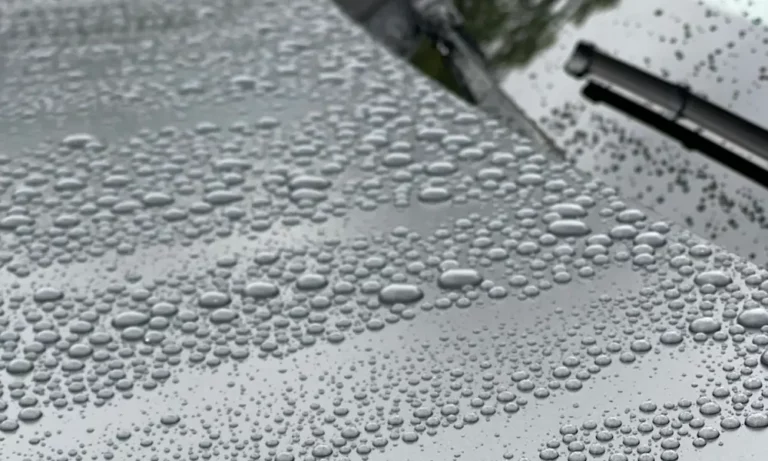
You’ve seen the ads. A gleaming car with water beads dancing off the hood like magic. “Permanent protection,” they promise. “9H hardness.” “Never wax again.”
Sounds perfect, right? Here’s the thing: ceramic coatings aren’t the bulletproof shield most people think they are. Before you drop serious cash on this popular protection, let’s talk about what the brochures don’t tell you. This guide breaks down the real ceramic coating disadvantages that matter to your wallet and your weekends.
What Ceramic Coating Actually Does (And Doesn’t Do)
Ceramic coating is a liquid polymer that chemically bonds to your car’s paint. Once cured, it creates a thin, glass-like layer over your clear coat. The operative word here? Thin.
We’re talking 1 to 2 microns thick. For context, a human hair measures about 50 microns. A sheet of paper? Around 70 microns. This matters because the coating’s extreme thinness directly impacts what it can and can’t protect against.
The “Armor” That Isn’t
The biggest misconception? That ceramic coating acts like armor. It doesn’t. The coating lacks the physical mass to absorb impact, which means it won’t stop:
- Rock chips on the highway
- Door dings in parking lots
- Shopping cart bumps
- Key scratches from vandals
Think of it this way: you’re putting a microscopic glass shield over your paint. When a rock traveling 60 mph hits that shield, it punches straight through—coating, clear coat, and all.
The 9H Hardness Myth That Fools Everyone
You’ve probably seen “9H hardness” plastered all over ceramic coating packaging. It sounds impressive. Diamond-hard protection, right?
Not quite.
That 9H rating comes from the pencil hardness test, not the Mohs mineral hardness scale. It means the coating resists scratching from a 9H pencil—which is softer than road grit, gravel, steel keys, and basically every real-world hazard your car faces.
Here’s what a 9H pencil can’t compete with:
- Silica sand (road debris)
- Granite gravel
- Metal zippers and keys
- Hard plastic (like shopping cart corners)
The coating is only marginally harder than your factory clear coat. If someone drags a key across your door? The ceramic coating won’t stop it. You’ll get the same scratch you’d get on uncoated paint.
Rock Chips: Where Ceramic Coating Fails Completely
This is where most people get disappointed. You spend $1,500+ on “protection,” drive through one winter season, and your front bumper looks like it got hit with a sandblaster.
Ceramic coating provides zero protection against rock chips. A small stone carries enough kinetic energy to blast through 2 microns of ceramic and 50 microns of clear coat like they’re not even there.
If rock chip protection matters to you—and it should if you drive highways regularly—you need paint protection film (PPF), not ceramic coating. PPF is 150 to 200 microns thick and designed to absorb impacts. It’s a different product for a different problem.
The Water Spot Problem Nobody Mentions
Here’s an ironic twist: the super-hydrophobic water beading that looks so cool in videos? It can actually damage your coating.
How the “Lens Effect” Works
When water beads up on ceramic coating, it forms tall, spherical droplets. These droplets act like tiny magnifying glasses under sunlight, focusing solar radiation onto microscopic points on your paint.
This creates localized heating that opens the coating’s pores. As the water evaporates, minerals (calcium, magnesium) concentrate in that hot spot. Instead of spreading out, they etch directly into the coating.
The Horizontal Panel Trap
This gets worse on flat surfaces. Doors and fenders? Water rolls off thanks to gravity. Hood, roof, and trunk? The beads sit there and cook.
If you park outside and it rains followed by sunshine—a common weather pattern—those horizontal panels become water spot central. The beads dry in place, etching the coating before you can dry them off.
Traditional wax actually performs better here. It lets water sheet off flat instead of beading up, reducing mineral concentration and the lens effect.
The Real Cost Nobody Tells You About
The sticker price for ceramic coating is just the beginning. Let’s break down the total cost of ownership.
Initial Investment
| Service Level | Cost Range | What You Get |
|---|---|---|
| DIY Kit | $50 – $200 | Product only, you do the work |
| Entry Professional | $500 – $1,000 | Basic wash and single-layer coating |
| Mid-Range Professional | $1,000 – $2,000 | Paint correction plus multi-layer coating |
| Premium Service | $2,500 – $4,000+ | Full correction, wheels, glass, curing |
The Paint Correction Surprise
Here’s what catches people off guard: most of that cost is paint correction, not the coating itself.
Ceramic coating is optically clear. It magnifies whatever’s underneath. Apply it over scratches and swirls? You just locked those defects in permanently under a shiny gloss.
Professional detailers won’t coat a car without polishing it first. This labor-intensive process takes 5 to 20 hours and can add $500 to $1,500 to your bill.
Even brand-new cars need correction. Dealership washing creates swirl marks. Rail dust embeds in the paint during shipping. That “new car” you bought? It needs work before coating.
The Warranty Trap
Those “5-year warranties” sound great until you read the fine print. Most require annual inspections to stay valid. These aren’t free.
Here’s the math:
- Initial coating: $1,500
- Annual inspection ($150 × 5 years): $750
- Real total: $2,250
Miss one inspection window—often just 30 days wide—and the warranty voids completely. Many owners report these “inspections” are glorified car washes where the shop applies a spray topper to temporarily restore beading.
Application Risks That Can Ruin Your Paint
Unlike wax that wipes off easily, ceramic coating cures into a rock-hard layer. Mistakes become semi-permanent disasters.
The Curing Window Crisis
The coating must stay completely dry for 24 to 48 hours after application. If rain hits during this window, water molecules interfere with the chemical bonding process.
The result? Permanent white spots, hazing, or complete hydrophobic failure. You’ll need to strip and reapply the entire coating.
Don’t have a garage? This makes professional ceramic coating nearly impossible to install safely. Your car needs to be sequestered indoors for days.
The High Spot Nightmare
Apply too much coating or fail to buff it off within minutes? It cures into “high spots”—dark, oily-looking patches that won’t wipe away.
Once cured, you can’t fix these by wiping. They require machine polishing to sand off, removing the coating entirely in that area. A botched wax job takes an hour to fix. A botched ceramic job can cost hundreds in professional correction.
Health Hazards You’re Not Warned About
Ceramic coatings contain volatile organic compounds like polysilazane and toluene. These aren’t mild chemicals.
Inhaling vapors during the multi-hour application process can cause:
- Respiratory tract irritation
- Dizziness and headaches
- Central nervous system depression
- Long-term lung damage with repeated exposure
Professional installers use organic vapor respirators in ventilated booths. Most DIYers apply these products in their garage with zero protection, breathing in hazardous fumes for hours.
The “Maintenance-Free” Lie
The marketing says “never wax again” and “wash less often.” The reality? Ceramic coating demands more attention than traditional protection.
You Can’t Use Automatic Car Washes Anymore
Automatic car washes with brushes will scratch ceramic coating. Even touchless washes use harsh, high-alkaline soaps that strip the hydrophobic top layer.
You’re stuck hand-washing. And not just any hand wash—you need the two-bucket method with pH-neutral soap. That quick 10-minute wash you used to do? It’s now a 45-minute operation every time.
The Booster Product Treadmill
To maintain the water beading everyone loves, you’ll need to apply silica spray “boosters” every 3 to 6 months. These cost $30 to $50 per bottle.
Think about that. You’re essentially waxing the ceramic coating to protect the coating that’s protecting the paint. The “maintenance-free” promise evaporates quickly.
Over time, road film clogs the coating’s microscopic pores. Restoring the beading requires iron removers and acid washes to “unclog” the coating. More products. More time. More money.
Resale Value: The Investment That Doesn’t Pay Back
Here’s an uncomfortable truth: ceramic coating adds virtually nothing to your car’s resale value.
Why Buyers Don’t Care
Valuation tools like Kelley Blue Book and NADA don’t have a field for “ceramic coating.” It’s invisible to their algorithms. Your $2,000 investment doesn’t add $1 to the book value.
Trade in your car at a dealership? They view ceramic coating as “clean paint,” nothing more. The dealer will likely polish the car anyway during reconditioning. Your coating just saved them 20 minutes of buffing.
The only scenario where you recoup value is selling privately to an enthusiast who understands and values the technology. For average buyers, a shiny car is just a shiny car.
Insurance and Accident Complications
Get into an accident and need panel repair? Your insurance probably won’t cover re-coating.
Standard policies cover the factory paint, not aftermarket enhancements. Unless you’ve added a custom equipment rider—which costs extra—adjusters deny claims for ceramic re-application.
Even if covered, the logistics are painful. The body shop paints the panel, but fresh paint needs to outgas for 30 to 60 days before coating. You drive home with mismatched protection, wait two months, then schedule a separate detailer visit.
When Ceramic Coating Actually Makes Sense
Despite these disadvantages, ceramic coating isn’t always a bad choice. It works well for specific people in specific situations.
You’re a good candidate if you:
- Have a climate-controlled garage
- Enjoy detailed hand-washing rituals
- Keep cars long-term (7+ years)
- Want maximum gloss and UV protection
- Drive primarily on clean roads, not highways
You should skip it if you:
- Park outside regularly
- Want protection from rock chips and scratches
- Use automatic car washes
- Expect maintenance-free protection
- Plan to sell in 3-5 years
Better Alternatives Worth Considering
Paint Protection Film (PPF)
PPF is 150 to 200 microns thick and absorbs impact energy. It actually stops rock chips and self-heals minor scratches. Yes, it’s more expensive ($2,000 to $6,000), but it delivers the physical protection ceramic coating can’t.
High-Quality Synthetic Sealants
Modern sealants last 6 to 12 months, cost $20 to $200, and you can apply them yourself in an hour. No paint correction required. No curing anxiety. Just solid protection and gloss.
Graphene Coatings
Newer graphene-based coatings offer similar durability to ceramic with better heat dissipation and reduced water spotting. They’re worth researching if you want long-term protection.
The Bottom Line on Ceramic Coating Disadvantages
Ceramic coating is a high-performance aesthetic enhancement, not a comprehensive protection system. It excels at UV resistance, chemical resistance, and making your car easier to wash—when you wash it correctly.
But it won’t stop rock chips. It won’t prevent scratches. It creates water spotting risks on horizontal panels. It costs thousands when you factor in paint correction and maintenance. It adds zero resale value to your car. And it demands a strict maintenance routine that eliminates convenient washing methods.
The gap between marketing promises and physical reality is where disappointment lives. That “glass shield” sounds invincible until a pebble chips your front bumper or sprinkler water etches your hood.
If you understand these limitations and still want the gloss and ease of cleaning ceramic provides, go for it. Just don’t expect armor. You’re buying beauty and chemistry, not bulletproofing.
For everyone else? A quality sealant or PPF might deliver better value for your specific needs without the downsides nobody talks about.


