You’re sitting at a red light, waiting for your Ford’s engine to shut off like it’s supposed to. But nothing happens. The dashboard icon shows a little line through it, and you’re wondering if something’s broken. Don’t worry—your truck probably isn’t failing. It’s just being smart. Let’s dig into why your Ford auto start-stop system might be taking a break, and what you can actually do about it.
What Is Ford’s Auto Start-Stop System?
Ford’s Auto Start-Stop technology is designed to save fuel by shutting down your engine when you come to a complete stop. Release the brake, and the engine fires back up. Simple idea, right?
It’s not just about saving gas. This system helps Ford meet strict federal emissions standards while potentially improving your fuel economy by five to ten percent in city driving. But here’s the thing: the system doesn’t just shut off whenever it feels like it. Your Powertrain Control Module (PCM) checks over twenty different conditions before it’ll let the engine take a nap.
Think of it like a nervous babysitter. Everything has to be perfect—battery charged, cabin temperature right, brakes ready—before it’ll let your engine rest.
Why Your Ford Auto Start-Stop System Isn’t Working
Most of the time, when your Ford auto start-stop isn’t working, it’s not broken. Your truck’s just saying “not right now.” Here’s what might be holding it back.
Your Battery Needs More Juice
This is the big one. Your Ford’s Battery Management System (BMS) constantly monitors your 12-volt battery’s charge level. If it dips below 70-75%, the system won’t risk shutting down the engine.
Why? Because restarting your engine draws massive current. If the battery can’t handle it, you’re stuck at that red light with a dead vehicle. Ford uses AGM (Absorbent Glass Mat) batteries in most start-stop vehicles because they handle repeated charging cycles better than regular batteries.
Here’s something that catches people off guard: Ford’s charging system often targets 80% charge, not 100%. That extra headroom lets the alternator capture more energy when you’re coasting. But if you’re making lots of short trips, your battery never gets fully topped off. Eventually, the system displays “Engine On Due to Charging” and refuses to shut down.
The Cabin Isn’t Comfortable Yet
Your Ford prioritizes your comfort over fuel savings. If the cabin temperature is more than two degrees away from what you’ve set on the climate control, the system stays active.
Same deal with the defroster. Turn on your windshield defroster, and the start-stop function shuts off completely. Visibility is a safety issue, so the PCM won’t risk fogging up your windshield to save a few drops of gas.
The Engine Is Too Cold (Or Too Hot)
Your engine needs to reach at least 150°F before the system activates. Cold engines need consistent running time to reach proper operating temperature for emissions control.
On the flip side, if your transmission fluid overheats, the system also backs off. The 10-speed automatic transmission in many F-150s and Explorers uses an auxiliary electric pump to maintain pressure while the engine’s off. If that fluid is too hot or too cold, the pump can’t do its job properly.
You’re on a Hill
Park on a steep grade, and your Ford’s inclinometer will keep the engine running. Slopes over 12-15% are too risky. There’s a brief delay between when you release the brake and when the engine restarts—about 300 milliseconds. On a steep hill, that’s enough time for your truck to start rolling backward.
Your Steering Wheel Is Turned
If you’re at a stop with the wheel cranked more than 90 degrees, the system won’t shut down. Why? Your electric power steering needs peak power when you’re maneuvering, and the PCM won’t risk losing steering assist.
Safety Systems Are Blocking It
Your seatbelt needs to be buckled. The driver’s door and hood must be closed. These are non-negotiable safety checks. The PCM assumes that if your door is open or your seatbelt is off, you might be getting out—and it’s not about to let the engine restart automatically while you’re climbing out of the cab.
What Those Dashboard Messages Actually Mean
Ford’s instrument cluster tries to tell you what’s going on. Here’s what those messages mean in plain English.
| Message | What It Means | What You Should Do |
|---|---|---|
| Grey Icon with Line Through It | System is temporarily disabled due to a condition | Check if your battery needs charging or cabin temp isn’t set |
| “Engine On Due to Charging” | Battery charge is below the threshold | Take a longer drive to recharge the battery |
| “Auto Start-Stop Not Available” | Multiple conditions are preventing activation | Check battery health and review operating conditions |
| “Manual Restart Required” | System attempted shutdown but detected an unsafe condition | Press the start button to restart the engine |
The Battery Management System Reset
If you just replaced your battery and the system still won’t work, you probably need to reset the Battery Management System. The BMS “remembers” your old battery’s degraded capacity and continues acting like you’ve got a weak battery installed.
The Quick Reset Method
You can reset the BMS without a scan tool. Here’s how:
- Turn the ignition on (engine off)
- Flash your high beams five times
- Press the brake pedal three times
- Watch for the battery warning light to flash
This tells the BMS to forget the old battery data and start fresh with your new battery’s full capacity.
The Scan Tool Method
If the quick reset doesn’t work, you’ll need an OBDII scanner that can access Ford’s Body Control Module (BCM). Navigate to the service functions menu and select “BMS Reset.” The tool will walk you through the process.
Real Hardware Problems That Kill Start-Stop
Sometimes your Ford auto start-stop not working actually means something’s broken. These are the expensive fixes.
Variable Camshaft Timing (VCT) Failures
This is a big deal in 3.5L and 2.7L EcoBoost engines. Ford Technical Service Bulletin 23-2143 addresses a problem where worn cam phasers fail to lock into position when the engine shuts off. When the system tries to restart, the engine rattles violently or refuses to start at all.
The repair isn’t cheap—you’re looking at replacing all four VCT units, which runs about 9.6 hours of labor. Once this failure occurs, the PCM will permanently disable the start-stop system to protect your engine from damage. You’ll see diagnostic code P164C (Powertrain Control Module Performance) if this is your problem.
Auxiliary Pump Failures
Modern Fords use several auxiliary electric pumps to keep things running while the engine is off. If your transmission fluid auxiliary pump fails, you’ll feel a harsh jolt when the transmission re-engages after a restart. This pump maintains hydraulic pressure on the clutch packs in your 10-speed automatic transmission.
The auxiliary water pump is equally important. It circulates coolant through the heater core and turbocharger while the engine is off. If this pump dies, you’ll lose cabin heat at stops and risk turbocharger damage from heat-soaking. Listen for a high-pitched buzzing sound from the engine bay after shutdown—that’s a sign the pump’s bearings are going.
Brake Vacuum Sensor Issues
Your brake booster needs vacuum pressure to provide power-assist braking. The system monitors this pressure constantly. If it drops below about 7 psi, the engine restarts automatically to rebuild vacuum.
A failed brake vacuum sensor can permanently disable the system. Ford TSB 18-2193 specifically addresses this issue in 2017 Escapes. The sensor sends false readings, making the PCM think you don’t have enough brake assist available.
How to Diagnose the Real Problem
You need more than a basic code reader to properly diagnose Ford auto start-stop problems. Many conditions that disable the system don’t trigger diagnostic trouble codes at all.
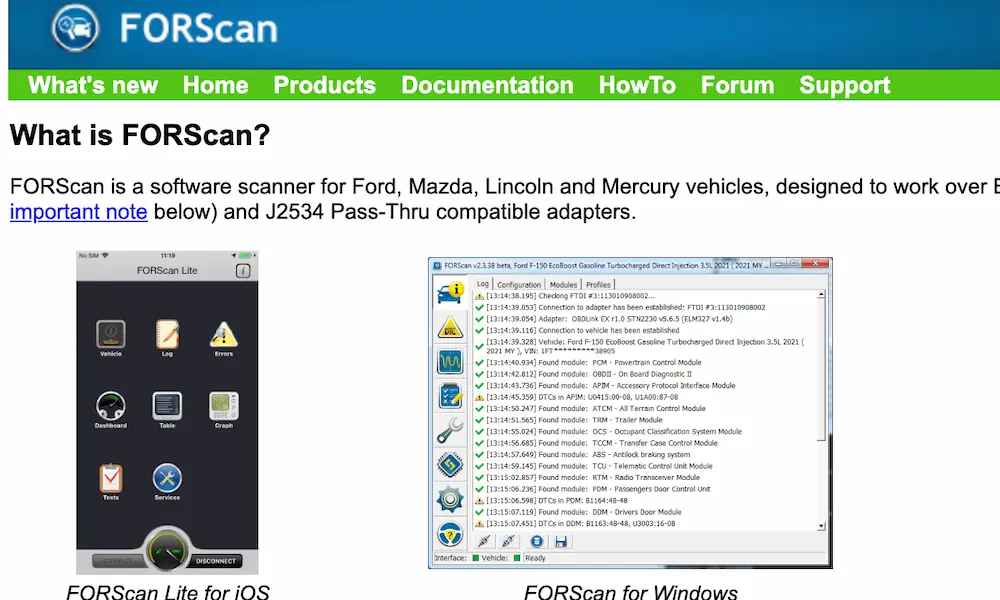
Using FORScan for Deep Diagnostics
FORScan is an aftermarket scan tool that gives you access to Ford’s proprietary data parameters. You can monitor real-time values like:
- BATT_SOC: Shows the exact battery state of charge percentage
- BATT_V: Displays battery voltage as the BMS sees it
- Start-Stop Inhibit Bits: Lists the specific reason the system is disabled
This level of detail helps you pinpoint whether you’re dealing with a bad sensor or just normal operating conditions. For example, you might discover that your brake pedal position sensor isn’t telling the PCM that you’ve fully pressed the brake, preventing the shutdown trigger from activating.
What Professional Diagnostics Cost
If you take your Ford to a dealership for diagnosis, expect to pay a diagnostic fee. In the Los Angeles area, this typically ranges from $150 to over $250 for an hour of technician time.
These fees cover the time it takes to:
- Verify your concern
- Scan all vehicle modules
- Check Technical Service Bulletins
- Test individual sensors and systems
The good news? If the repair is covered under your Ford New Vehicle Limited Warranty, the diagnostic fee is usually waived. But if it’s just an undercharged battery or a system working as designed, you’re paying out of pocket.
Ford Recalls That Affect Start-Stop Function
Several major safety recalls have indirect effects on the Auto Start-Stop system. These recalls often include PCM reprogramming that can reset the system’s learned values.
Recent Recalls to Know About
Recall 23S05 affects 2020-2022 Explorers with the 2.3L engine. An unintended PCM reset can occur while driving, potentially damaging the park system. The software update that fixes this can temporarily affect start-stop operation.
Recall 25S75 is massive—over 1.5 million vehicles including Explorer, Ranger, and Bronco. The low-pressure fuel pump can fail, causing engine stalls. The PCM update for this recall may alter idle-stop logic to prevent stalls during restarts.
For hybrid models, Recall 23S53 addresses high-voltage battery cells in 2020-2022 Explorer PHEVs. In these vehicles, the start-stop system integrates with the hybrid drive unit. Battery short circuits can permanently disable the engine-off capability.
Should You Disable the System?
Lots of Ford owners just don’t like start-stop. They worry about starter wear, oil pressure loss, and that brief moment of silence at every red light. Fair enough—it’s your truck.
Aftermarket Disablers
You can buy a Start-Stop Eliminator that plugs in behind your dashboard. These devices send an electronic pulse to the Body Control Module every time you start the vehicle, automatically pressing the “off” button for you.
The advantage? No wire cutting, fully reversible, and technically emissions-compliant since you’re just using the factory-provided disable button. The devices typically cost $50-$150 depending on your model year.
The Defroster Trick
Want a free solution? Just leave your windshield defroster on all the time. The system will never activate because the PCM prioritizes windshield visibility over fuel savings.
The catch? You’ll be running your A/C compressor constantly, which actually hurts fuel economy. You’re paying for the convenience of not dealing with start-stop by burning more gas than the system would have saved.
When the System Is Actually Helping
Here’s something worth considering: the system isn’t randomly cycling your engine. It only activates after over twenty safety and comfort checks have passed. Your battery is charged. The cabin is at temperature. The brakes have good vacuum. The road is level.
In that specific scenario—sitting at a long red light with everything perfect—shutting off the engine actually does reduce wear. Your engine isn’t fighting against load. Oil pressure isn’t critical because nothing’s moving. The starter doesn’t see any more wear than it would during a normal cold start.
The real wear happens during cold starts, which the start-stop system specifically avoids by requiring the engine to be fully warmed up first.
The Real Solution for Most Start-Stop Problems
If your Ford auto start-stop isn’t working, start with the simple stuff:
Check your battery health. Most auto parts stores will test it for free. If it’s more than four years old or showing weak performance, replace it with a Ford-approved AGM battery. Then reset the BMS using the flasher-and-brake method.
Take longer drives. Short trips don’t give the alternator enough time to recharge the battery. If you’re only driving five minutes to work and back, your battery never gets above 75% charge.
Watch your climate settings. If you’re constantly adjusting the temperature or running max A/C, the system will stay off to maintain cabin comfort.
Check for recalls. Visit NHTSA’s recall search and enter your VIN. Get any outstanding recalls completed, especially if they involve PCM updates.
Use quality parts. If you need to replace components like cam phasers or auxiliary pumps, use Ford OEM parts. Aftermarket parts don’t always meet the tight tolerances these systems require.
The reality is that Ford’s Auto Start-Stop system works exactly as designed most of the time. When it doesn’t shut off, it’s usually because your truck is protecting itself—or you—from a potentially unsafe situation. Understanding what the system is checking helps you identify whether you’re dealing with normal operation, a simple battery issue, or an actual mechanical failure that needs professional repair.