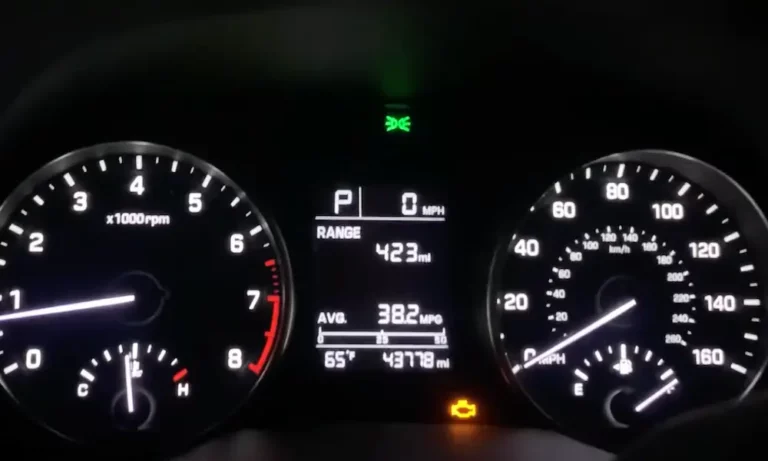
When your check engine light starts blinking and your car begins to shake, you’re facing a genuine automotive emergency. This isn’t a “schedule service when convenient” situation—it’s a “pull over now” crisis. These combined symptoms typically indicate dangerous engine misfires that can cause catastrophic damage to expensive components like your catalytic converter, potentially leading to repair bills exceeding $2,500. Let’s dive into what’s happening and what you need to do right away.
Why a Blinking Check Engine Light is an Emergency
Flashing vs. Steady: A Critical Difference
A flashing check engine light represents your vehicle’s most urgent distress signal—fundamentally different from a steady warning light. When it blinks, your car’s computer has detected active engine misfires severe enough to potentially damage critical emissions components.
Think of it this way: a steady light is your car saying, “I’ve got an issue that needs attention soon,” while a blinking light screams, “I’m actively being damaged RIGHT NOW!” This distinction matters because continuing to drive with a flashing light can transform a manageable repair into thousands of dollars in damage.
Modern vehicles monitor combustion efficiency continuously. When the system detects misfires frequent or severe enough to overheat the catalytic converter, it triggers the flashing warning to protect these expensive components.
Understanding Engine Misfires
Engine misfires occur when one or more cylinders fail to properly combust the air-fuel mixture. When this happens, three immediate problems develop:
- Unburned fuel enters the exhaust system
- Engine power drops noticeably
- Dangerous vibrations develop throughout the vehicle
The shaking sensation you’re feeling results from the engine losing its smooth, synchronized operation. When cylinders stop firing in sequence, the entire powertrain becomes unbalanced, creating the distinct vibration that accompanies a flashing check engine light.
For proper combustion, engines need three essential elements:
- Correct air-fuel ratio
- Sufficient compression
- Properly timed spark
When any of these elements fails, misfires result, causing power loss, rough idling, and vehicle vibrations that you can both feel and hear.
Common Causes of Misfires and Warning Lights
Ignition System Problems
Ignition system failures represent the most common cause of engine misfires and blinking check engine lights. The primary culprits include:
- Faulty spark plugs: Deteriorate over time, developing carbon buildup, electrode wear, or widened gaps
- Worn ignition coils: Fail due to heat stress, internal short circuits, or moisture infiltration
- Damaged plug wires: Create resistance preventing proper spark delivery
Modern vehicles typically use individual ignition coils for each cylinder, making diagnosis more straightforward. When a specific cylinder misfires, technicians can often isolate the problem to that cylinder’s ignition components.
Diagnostic trouble codes like P0301 through P0308 identify which specific cylinders are misfiring, while code P0300 indicates random or multiple cylinder misfires affecting overall engine performance.
Fuel System Issues
Fuel system malfunctions create the second most common category of misfire causes, including:
- Clogged fuel injectors: Prevent proper fuel atomization
- Failing fuel pumps: Create insufficient pressure for proper injection
- Contaminated fuel: Disrupts the combustion process
- Clogged fuel filters: Restrict proper fuel flow
- Pressure regulator failures: Create inconsistent fuel delivery
When injectors stick open or closed, they either flood cylinders with excess fuel or starve them completely. Both scenarios result in misfires that can trigger the dreaded blinking light and shaking sensation.
Fuel pump problems manifest differently but produce similar symptoms—insufficient fuel pressure prevents proper injection timing and volume, causing lean conditions that lead to misfire events.
Diagnostic Trouble Codes Explained
P0300 and Cylinder-Specific Codes
The P0300 diagnostic code indicates “Random/Multiple Cylinder Misfire Detected,” representing one of the most challenging automotive diagnostic scenarios. This code typically appears alongside specific cylinder misfire codes (P0301-P0308), providing information about which cylinders are experiencing combustion problems.
When you see P0300, it often suggests systemic issues affecting multiple engine systems simultaneously—problems with fuel delivery, ignition timing, or mechanical compression that impact overall engine performance.
Cylinder-specific codes (P0301 through P0308) offer more targeted diagnostic information:
| Code | Meaning |
|---|---|
| P0301 | Cylinder #1 Misfire Detected |
| P0302 | Cylinder #2 Misfire Detected |
| P0303 | Cylinder #3 Misfire Detected |
| P0304 | Cylinder #4 Misfire Detected |
| P0305 | Cylinder #5 Misfire Detected |
| P0306 | Cylinder #6 Misfire Detected |
| P0307 | Cylinder #7 Misfire Detected |
| P0308 | Cylinder #8 Misfire Detected |
The final digit indicates the affected cylinder number, allowing technicians to focus inspection efforts on that cylinder’s components specifically.
Diagnostic Data Analysis
Modern diagnostic systems capture “freeze frame data” when fault codes trigger, preserving crucial information about engine operating conditions at the time of failure. This data includes:
- Engine temperature
- Load conditions
- RPM
- Fuel trim values
This information helps technicians understand whether misfires occur during specific operating scenarios—cold starts, high load conditions, or idle situations.
Professional diagnostic tools can monitor misfire counters continuously, revealing whether problems are intermittent, load-dependent, or consistently affecting specific cylinders. This information proves invaluable for accurate diagnosis, preventing unnecessary parts replacement.
What to Do When Your Check Engine Light Starts Blinking
Immediate Safety Steps
When your check engine light starts blinking and your car begins shaking:
- Immediately reduce engine load: Take your foot off the accelerator
- Find the nearest safe location to pull over: Don’t continue driving if possible
- Turn off the engine completely: This prevents further damage to the catalytic converter
Do not ignore this warning under any circumstances. Even short drives can result in catalytic converter failure requiring replacement costs between $800 and $2,500. The immediate priority is stopping further damage rather than reaching your destination.
Basic Inspection You Can Perform
Once safely stopped, you can perform a basic visual inspection:
- Check that the gas cap is properly tightened
- Look for obviously disconnected vacuum hoses
- Check for loose electrical connections
- Inspect for any visible damage to ignition components
Listen carefully to engine sounds when starting the vehicle. Misfiring engines often produce distinctive popping, sputtering, or irregular firing sounds that indicate specific cylinders failing to fire properly. These audio clues, combined with felt vibrations, help confirm misfire diagnosis.
When Professional Help is Essential
OBD-II scanning represents the essential first step in professional misfire diagnosis, retrieving stored diagnostic trouble codes that pinpoint specific problem areas. While basic code readers can identify which cylinders are misfiring, accurate diagnosis often requires professional-grade equipment to distinguish between ignition, fuel, and mechanical compression problems.
Professional mechanics use specialized tools to test:
- Ignition coil output
- Fuel injector operation
- Compression levels
- Fuel system pressure
Given the complexity of modern engine management systems and the potential for expensive misdiagnosis, professional evaluation is strongly recommended for blinking check engine light scenarios.
How Misfires Damage Your Catalytic Converter
The Destructive Process
Engine misfires pose an immediate threat to catalytic converter integrity through a process of thermal overload. Here’s what happens:
- Cylinders misfire, sending unburned fuel into the exhaust
- This raw fuel ignites within the catalytic converter
- Internal temperatures spike far beyond design limits
- Ceramic honeycomb structures crack, melt, or disintegrate
The catalytic converter contains ceramic structures coated with precious metals designed to convert harmful exhaust gases into safer compounds. Excessive heat from burning unburned fuel causes these ceramic cores to fail catastrophically.
Once damaged, the converter loses efficiency and may become completely blocked, restricting exhaust flow and causing additional engine performance problems.
The Financial Impact
Catalytic converter replacement represents one of the most expensive routine automotive repairs, with costs typically ranging from $800 to $2,500 depending on vehicle make, model, and converter specifications. High-performance and luxury vehicles often require even more expensive converters, sometimes exceeding $3,000.
Beyond the immediate replacement cost, catalytic converter failure can trigger additional problems:
- Back-pressure issues affecting engine performance
- Additional diagnostic codes
- Damage to oxygen sensors and other emission components
This cascading effect often results in total repair costs significantly exceeding the converter replacement alone.
Preventing Expensive Damage
Immediate response to blinking check engine lights represents the most effective strategy for preventing catalytic converter damage. Stopping the vehicle and turning off the engine within minutes of detecting the flashing warning can prevent the thermal overload that destroys catalytic converters.
The relationship between response time and repair costs creates a critical decision point:
| Response | Likely Outcome | Potential Cost |
|---|---|---|
| Immediate stop | Ignition/fuel system repair | $150-$500 |
| Continue driving | Catalytic converter damage | $800-$2,500+ |
| Extended driving | Engine and emissions system damage | $2,000-$5,000+ |
Professional mechanics consistently emphasize that towing vehicles with blinking check engine lights, rather than driving them, represents sound financial decision-making given the potential cost consequences.
Professional Diagnosis and Repair
What to Expect in Costs
Professional diagnosis typically costs between $80 and $150, representing essential investment before undertaking any repair work. This diagnostic fee covers comprehensive system scanning, live data analysis, and component testing necessary to identify specific failure causes rather than guessing at potential problems.
Component replacement costs vary significantly:
- Spark plug replacement: $100 to $300 including labor
- Ignition coil replacement: $150 to $500 per coil
- Fuel injector service: $100 to $200 for cleaning
- Complete injector replacement: $300 to $800 for a full set
- Catalytic converter replacement: $800 to $2,500+
Quality diagnostic work prevents the common “parts cannon” approach where multiple components are replaced unnecessarily, ultimately saving money despite the upfront diagnostic cost.
Professional vs. DIY Approaches
Professional repair offers several advantages despite higher labor costs:
- Accurate diagnosis preventing costly mistakes
- Warranty coverage on parts and labor
- Access to specialized tools and diagnostic equipment
- Knowledge of common make/model-specific issues
DIY repairs can reduce costs for mechanically inclined individuals with proper tools and diagnostic equipment, particularly for straightforward spark plug or ignition coil replacement. However, modern vehicles’ complexity often requires specialized diagnostic tools, technical service bulletins, and specific procedures that exceed typical DIY capabilities.
The risk of misdiagnosis or improper installation potentially creates additional problems exceeding professional repair costs.
Long-term Prevention Strategies
Preventive maintenance represents the most cost-effective strategy for avoiding emergency misfire situations:
- Regular spark plug replacement at manufacturer-recommended intervals
- Fuel system cleaning services every 30,000-50,000 miles
- Ignition system inspection during routine maintenance
- Using quality fuel from reputable stations
- Following recommended oil change intervals to prevent carbon buildup
Component quality selection significantly impacts long-term reliability. Original equipment manufacturer (OEM) parts typically offer superior durability and performance compared to aftermarket alternatives, particularly for critical ignition system components like coils and sensors.
While OEM parts carry higher initial costs, their improved longevity and reliability often provide better long-term value through reduced failure rates and extended service intervals.
Taking Action When Your Check Engine Light Flashes
A blinking check engine light accompanied by car shaking represents a critical automotive emergency requiring immediate action. The combination of these symptoms almost invariably indicates active engine misfires that threaten catalytic converter integrity, potentially resulting in repair costs exceeding $2,500 if ignored.
Remember these key points:
- A flashing check engine light with shaking requires immediate action—pull over safely
- Engine misfires cause raw fuel to overheat and damage catalytic converters
- Continuing to drive even short distances can cause thousands in damage
- Professional diagnosis provides the most reliable path to resolution
- Preventive maintenance helps avoid these emergency situations
The critical nature of blinking check engine lights demands treating them as true emergency situations requiring immediate professional automotive attention. Your quick response can literally save thousands in unnecessary repair bills.