
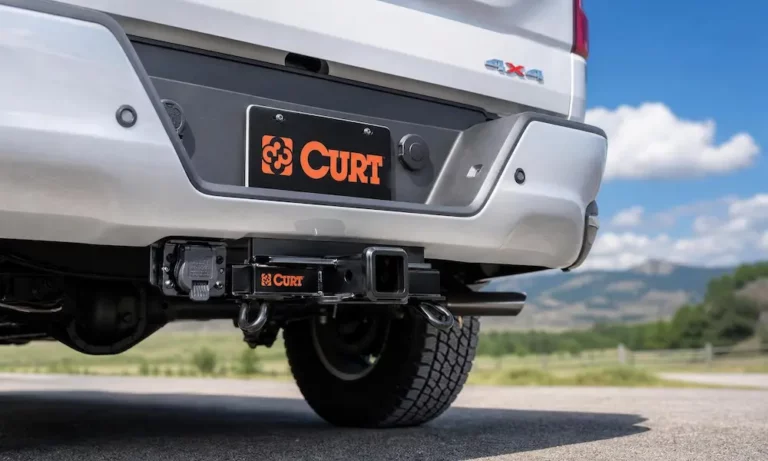
Thinking about towing a boat, camper, or utility trailer? A class III trailer tow package might be exactly what your setup needs — but there’s more to it than just bolting on a hitch. This guide breaks down every component, rating, and safety rule you need to know. Stick around, because the details at the end could save your life on the highway.
What Is a Class III Trailer Tow Package?
A class III trailer tow package isn’t just a hitch receiver. It’s a full system of mechanical, thermal, and electrical upgrades that work together to let your vehicle safely pull heavy loads.
The class III designation covers trailers weighing between 3,500 and 8,000 pounds. You’ll find this setup on midsize SUVs, full-size vans, minivans, and midsize pickup trucks. It’s the most common towing configuration in North America for good reason — it covers boats, campers, horse trailers, and most utility trailers most people actually own.
Hitch Classes at a Glance
Before you commit to anything, understand where class III sits in the lineup:
| Class | Receiver Size | Max Trailer Weight | Tongue Weight | Typical Vehicles |
|---|---|---|---|---|
| Class I | 1.25-inch | Up to 2,000 lbs | Up to 200 lbs | Compact cars, small crossovers |
| Class II | 1.25-inch | Up to 3,500 lbs | Up to 350 lbs | Sedans, minivans, small SUVs |
| Class III | 2.0-inch | 3,500–8,000 lbs | 350–800 lbs | Midsize SUVs, pickups, vans |
| Class IV | 2.0-inch | 5,000–12,000 lbs | 500–1,200 lbs | Full-size pickups, large SUVs |
| Class V | 2.5–3.0-inch | 10,000–25,000 lbs | 1,000–4,000 lbs | Heavy-duty commercial trucks |
The two-inch square receiver tube is the defining feature of class III. It’s become a near-universal standard, meaning your bike rack, ball mount, and cargo carrier all share the same receiver. No adapters needed.
The Engineering Behind the Hitch
SAE J684: The Standard That Keeps You Safe
Every class III hitch sold in the U.S. must meet the SAE J684 standard. This protocol sets minimum requirements for performance, testing, and certification of tow hitches, couplings, and safety chains.
Testing is serious. Hitches go through up to 175,000 fatigue cycles under triple-axis load stress — vertical, longitudinal, and transverse forces — to simulate a lifetime of real hauling. If a hitch passes, you know it can handle highway jolts and long-distance vibrations without cracking at the welds.
Steel, Coatings, and Corrosion
Most quality class III hitches use high-strength structural steel with a multi-stage finish. That typically means an electro-deposit liquid coating for complete coverage, followed by a powder coat layer on top. This combo fights rust, which is the #1 enemy of weld integrity over time.
In coastal regions or areas with heavy road salt use, some aftermarket options use stainless steel receiver tubes for even better protection. It’s a smart investment if your truck sits near the ocean or spends winters in the rust belt.
What’s Actually Inside a Factory Tow Package
Here’s where a lot of buyers get confused. Adding an aftermarket hitch doesn’t give you a tow package. A factory class III trailer tow package includes a full suite of upgrades engineered to protect your vehicle under load.
Transmission Cooling
Heat is the enemy of automatic transmissions. Under normal driving, transmission fluid stays around 175°F. Once you’re towing 5,000 pounds up a grade, fluid temps can spike above 220°F — the point where the fluid chemically breaks down and accelerated wear begins.
A dedicated transmission oil cooler is standard in most factory class III packages. It’s a stacked-plate or tube-and-fin heat exchanger mounted in front of the radiator. Air passes through it while you drive, pulling heat out of the fluid before it cycles back to the gearbox. This single component can add years to your transmission’s life.
Engine and Radiator Upgrades
The engine needs extra cooling capacity too. Factory tow packages often include a heavier-duty radiator with a thicker core or more cooling rows. Higher-capacity fans and optimized shrouds help push more air through, even at low speeds on steep inclines. Some packages add an engine oil cooler as well for extreme-duty scenarios.
Suspension Tuning
Tongue weight — the downward pressure the trailer places on your hitch — compresses the rear suspension. When the rear squats, your headlights point toward the sky, steering gets loose, and braking becomes unpredictable.
Factory packages counter this with stiffer rear springs, heavy-duty shocks, or even self-leveling air suspension on premium SUVs. The goal is a level ride under load so all four tires stay in solid contact with the road.
Braking Upgrades and Tow/Haul Mode
Stopping a combined vehicle-and-trailer load is a completely different challenge than stopping an empty truck. Many class III packages include upgraded brake rotors or high-friction pads to handle extra heat. The vehicle’s computer also gets reprogrammed with a Tow/Haul mode, which alters transmission shift patterns to provide engine braking on descents and reduces strain on the mechanical brakes.
Electrical Systems: More Than Just a Plug
The Seven-Pin Connector
Light trailers use a basic four-pin connector. Class III applications almost always require a seven-pin round connector that handles the full range of trailer systems:
| Pin Function | Purpose |
|---|---|
| Ground | Completes all trailer circuits |
| Tail / Running Lights | Nighttime visibility markers |
| Left Turn / Brake | Left signal and brake indication |
| Right Turn / Brake | Right signal and brake indication |
| Electric Brakes | Signal from brake controller to trailer brakes |
| Auxiliary Power | 12V feed to charge trailer battery |
| Reverse Lights | Activates rear trailer lights when backing up |
High-Output Alternator
A trailer with multiple marker lights and an onboard battery draws significant power. Standard alternators produce 65–100 amps. A class III tow package typically steps that up to 130–220 amps, ensuring the vehicle can run its own systems — A/C, headlights, infotainment — while still charging the trailer battery consistently.
Integrated Brake Controller
Most states require trailers over 3,000 pounds to have their own braking system. The brake controller tells those electric trailer brakes how hard to engage. Factory-integrated brake controllers are built directly into the dash and communicate with the vehicle’s primary computer. That means trailer brakes fire in sync with the vehicle’s ABS and stability control — something an aftermarket controller simply can’t replicate.
Understanding Weight Ratings
Don’t just look at one number. Safe towing involves a set of ratings that all apply simultaneously:
- GVWR (Gross Vehicle Weight Rating): Max weight of the vehicle itself, including passengers, fuel, and tongue weight from the trailer
- GCWR (Gross Combined Weight Rating): Max combined weight of vehicle plus trailer
- GTW (Gross Trailer Weight): Total loaded weight of the trailer
- TW (Tongue Weight): Downward force on the hitch ball — should be 10–15% of GTW
The system is only as strong as its weakest link. If your hitch is rated for 3,500 lbs but your vehicle can tow 5,000 lbs, your limit is 3,500 lbs. Full stop.
Also remember: every pound of passengers and gear in your vehicle eats into towing capacity. Two adults, luggage, and a full fuel tank can easily subtract 800–1,000 pounds from your available rating.
Safety Tech Built Into Modern Tow Packages
Electronic Trailer Sway Control
Trailer sway control uses stability sensors to detect side-to-side trailer movement. When it triggers, the system applies individual wheel brakes and cuts engine power to pull the trailer back in line — all in milliseconds, often before the driver notices anything.
Blind Spot Extension
Standard blind-spot systems only monitor the length of the vehicle. Class III packages often include an extended mode that uses radar sensors to track the full length of the trailer. This is critical when changing lanes on the interstate with a 25-foot travel trailer behind you.
Camera Systems and Hitching Assist
Modern factory packages frequently include a rear camera with a dynamic hitching line that shows exactly where the ball sits relative to the coupler. Some systems add a 360-degree bird’s-eye view or a “transparent trailer” mode using multiple cameras — a massive help when reversing into a campsite.
Legal Requirements You Can’t Ignore
Safety Chain Rules
Safety chains are legally required for all trailers in the U.S. Under SAE J684, their breaking strength must exceed the trailer’s loaded weight. They must also be crossed in an “X” pattern under the tongue to create a cradle that catches it if the coupler fails. Skip this step and you’re looking at serious liability — and a dragging tongue that can flip the trailer in seconds.
Braking Laws and Breakaway Systems
Most states require independent braking on any trailer over 3,000 lbs. Since class III hitches routinely pull 3,500–8,000 lb trailers, this almost always applies to you. Trailers also need a breakaway system — a small onboard battery and switch that locks the trailer brakes automatically if it separates from the tow vehicle.
Dimensional Limits
The law in most states caps combined vehicle-and-trailer length at 65 feet. Maximum trailer width is 102 inches (excluding mirrors). If your trailer blocks the view in your standard mirrors, extended towing mirrors aren’t optional — they’re required.
Factory Package vs. Aftermarket Hitch
This comparison comes up constantly, and the answer depends on how often and how heavy you’re towing:
Factory class III trailer tow package:
- Fully integrated — hitch, cooling, electrical, braking, and software all work together
- Covered under manufacturer’s warranty
- Includes sway control and brake controller integration that aftermarket can’t match
- Higher upfront cost, but the right choice for regular towing
Aftermarket hitch:
- Great for bike racks, cargo carriers, and light occasional towing
- Significantly cheaper and fits almost any vehicle
- Does not increase your vehicle’s factory tow rating
- Towing heavy loads without the cooling and suspension upgrades risks real mechanical damage
The bottom line: if you plan to use it seriously, buy the factory package or verify your vehicle already has one. If you just need to carry bikes to the trail, an aftermarket hitch works fine.
Driving and Maintenance Best Practices
Before Every Trip
Run through this checklist before you leave the driveway:
- Hitch pin inserted and safety clip locked in place
- Coupler fully seated and locked on the ball
- Safety chains crossed in an X pattern and clipped
- All trailer lights tested — brake lights, turns, and running lights
- Trailer tire pressure confirmed at manufacturer spec
- Breakaway battery charged and functional
On the Road
Allow double — sometimes triple — your normal stopping distance. On long descents, use snub braking instead of riding the brakes: apply firm pressure briefly, then release to let them cool. Use a lower gear to let the engine slow you down naturally.
If trailer sway starts, don’t panic and don’t steer into it. Lift off the throttle and manually trigger the trailer brakes with the brake controller override. That tensions the connection and kills the oscillation. Stomping the vehicle brakes makes sway worse, not better.
Keeping Your Equipment in Shape
- Wheel bearings: Repack with grease annually — more often if you launch into salt water
- Hitch ball: Keep lightly greased to reduce friction and noise
- Trailer tires: Inspect sidewalls for dry rot every season and replace every 5–7 years regardless of tread depth
- Structural welds: Look for paint cracking around weld points — that’s a red flag that metal fatigue is starting underneath
- Breakaway battery: Test and recharge it at least once a year so it’s ready if you ever need it
A class III trailer tow package is a serious piece of engineering. Treat it like one, and it’ll handle decades of reliable service whether you’re hauling a bass boat every weekend or moving a horse trailer across three states.


